 Перейти к содержимому
Ferrous vs. Non-Ferrous Metals: Complete Guide for Beginners
The basic physical difference between ferrous and non ferrous metals is iron. Ferrous metals have iron while non-ferrous metals do not. In ferrous metals, iron content is high. In non ferrous metals, iron is almost none.
Examples of ferrous metals are:
- Сталь
- Нержа веющая сталь
- Чугун
- and Wrought Iron.
Examples of Non-Ferrous Metals:
- Алюминий
- Медь
- Brass/Bronze
- Gold, silver, and platinum
- Titanium
This distinction matters because the last thing you want to do is select the wrong metal for your project. Your choice affects durability, performance, and cost throughout the entire service life.
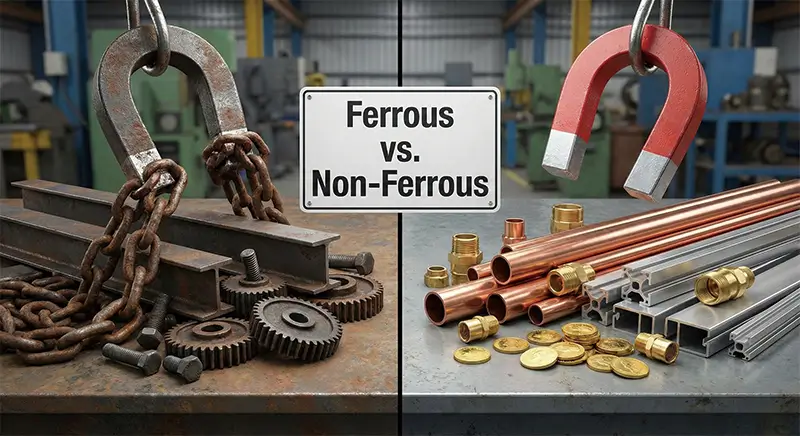
What Are Ferrous Metals?
To begin, you must learn that ferrous metals are any metal where iron is the primary component. You find iron making up more than 50% of the metal by weight. This high iron content gives these metals their special strength and magnetic features.
Originally, the word “ferrous” comes from the Latin word “ferrum,” which means iron. This is why you write the chemical symbol for iron as Fe instead of I. You will see this Latin root used in every science and metallurgy book you read.
Important Properties of Ferrous Metals
First, ferrous metals have magnetic properties. The iron content causes this feature. You can attract these metals with magnets very easily. The magnetic field aligns the tiny iron electrons easily. This is why you use a magnet to find a small nail in the dirt!
Secondly, you will see that these metals have good strength and durability. You achieve high tensile strength. This strength makes ferrous metals ideal for building construction, big bridges, and the heavy machinery we use in our fields.
Thirdly, ferrous metals are heavier and denser than non-ferrous metals. The iron content increases the weight of the metal. Furthermore, high carbon content makes most ferrous metals vulnerable to rust.
Common Types of Ferrous Metals
Углеродистая сталь
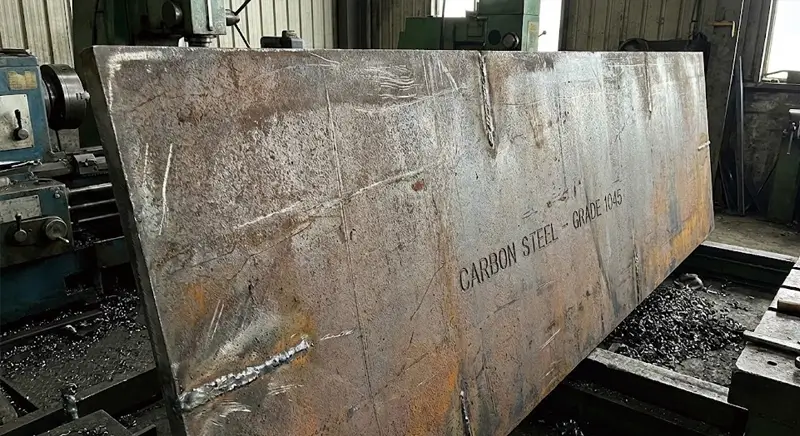
Mild steel contains low carbon content, usually 0.05-0.25%. You will find this material easy to weld, form, and machine. Next, you should select mild steel when you need general-purpose structural material.
Many people on Reddit ask, “Is carbon steel stronger than pure iron?” Sure, it is much stronger because the carbon acts like a glue that holds the iron atoms in place.
Now, all of this stated, a common question on Quora is, “Why does my carbon steel rust so fast?” Consequently, you must remember that carbon steel does not have the protection of chromium like stainless steel. Finally, make sure to apply a layer of oil or paint to keep the moisture away from the metal.
Alloy Steel 4140, 4130, 4340
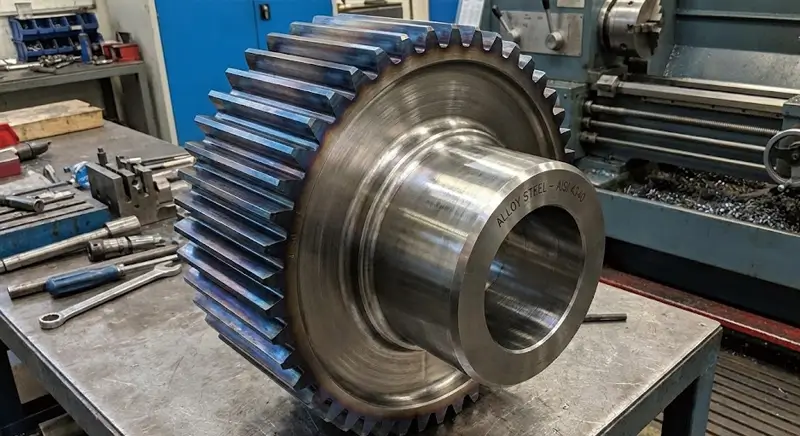
Regular carbon steel is sometimes not enough for very fast cars and airplanes. To fix this, you add special elements like chromium, nickel, and manganese. These ingredients change the metal’s personality, making it tougher against the heat of a jet engine.
Grade 4140 has хром и молибден. It also comes with higher carbon content of about 0.40%. 4140 steel is the best choice for shafts and gears.
Grade 4130 has slightly less carbon. Because of this, it offers good weldability. You prefer this for aircraft structures and race car roll cages because you can join the tubes together easily with a welding torch.
Grade 4340 is often called the king because it provides the highest strength among common alloy steels. By adding nickel to the mix, you get excellent toughness and wear resistance. People on Reddit often ask, “Is 4340 better than 4140?” Sure, it is much tougher, but just make sure you heat treat 4340 properly.
Stainless Steel 304, 316
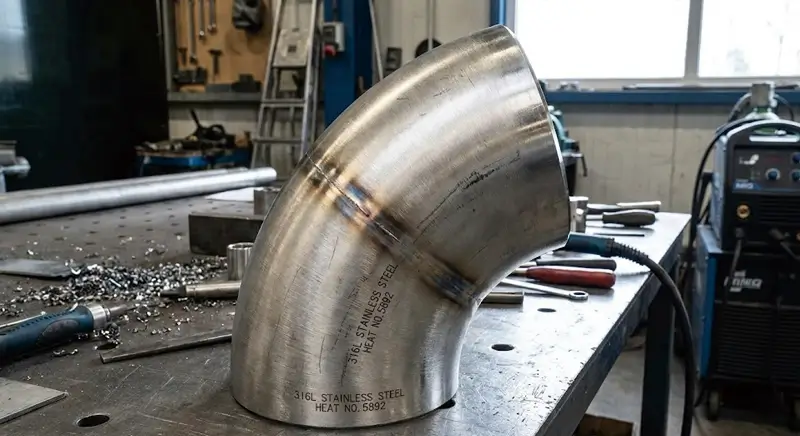
You must understand that stainless steel is not just regular iron. To make it “stainless,” you must add Chromium.
Stainless steel must contain at least 10.5% chromium. Furthermore, if you scratch the metal, the chromium reacts with the air again and “heals” the layer instantly. This is why your stainless steel spoons stay shiny for years.
Grade 304
Grade 304 contains:
- 18% Chromium
- 8% Nickel
In turn, you get excellent corrosion resistance, formability, and weldability. Many people on home-improvement forums ask, “What is the best steel for a kitchen sink?” Sure, the answer is almost always Grade 304. It handles soap, water, and heat without any trouble.
Grade 316
Meanwhile, sometimes Grade 304 is not enough. Grade 316 adds a special element called Molybdenum. This extra ingredient gives the metal superior corrosion resistance. You should specify 316 for marine, chemical processing, and even medical implants.
Note that you always want to use 316 when there are chlorides around. Grade 304 can get tiny little holes called “pitting” in salt water, but Grade 316 faces chlorides and acids much better.
Чугун
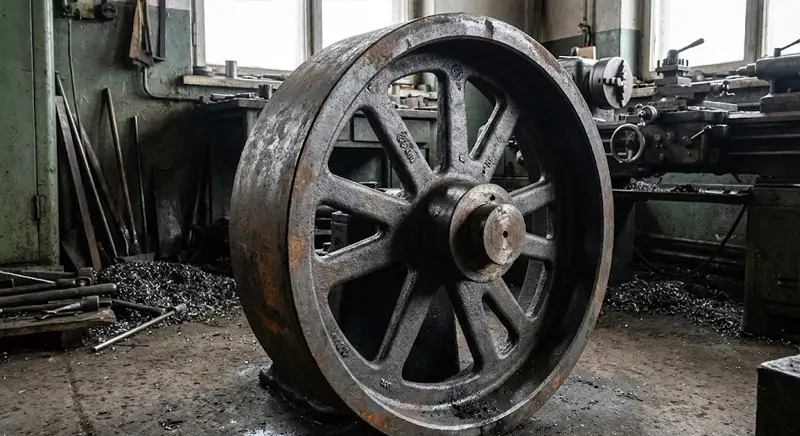
After that, cast iron contains 2-4% carbon. You get a material that pours well for casting complex shapes. The high carbon content makes cast iron brittle compared to steel but excellent for compression loading.
Gray cast iron contains graphite flakes that give good damping properties. You will find this material in engine blocks, machine tool bases, and manhole covers.
Ductile iron offers improved ductility through special treatment. You achieve properties closer to steel while maintaining castability. This material serves in pipes, automotive parts, and wind turbine parts.
Wrought Iron

Meanwhile, wrought iron contains very little carbon, often less than 0.08%. You work with nearly pure iron mixed with fibrous slag inclusions.
The slag fibers create a wood-grain appearance when fractured. You achieve high ductility and toughness. Wrought iron resists fatigue cracking better than steel. However, you sacrifice hardness and strength compared to steel.
Tool Steel
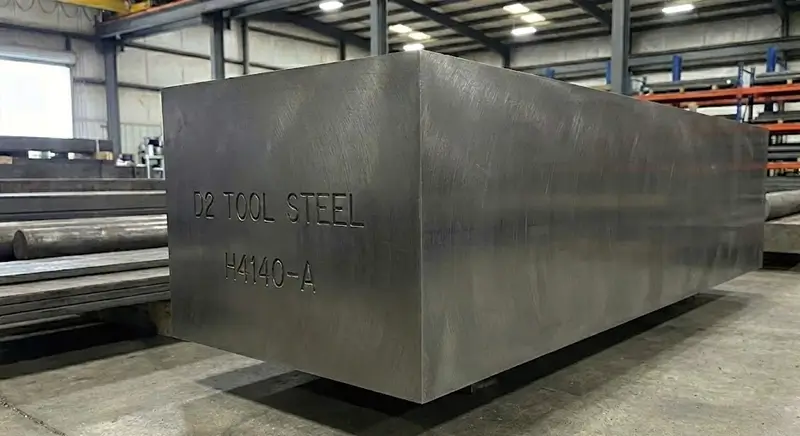
Finally, tool steel represents high-carbon and alloy steel grades. You get hardness values exceeding 60 HRC after heat treatment. This allows tools to maintain sharp edges under high stress.
Tool steel grades include water-hardening, oil-hardening, air-hardening, and high-speed steel. You select based on your application requirements. Water-hardening types cost less but crack more easily.
High-speed steel contains tungsten, molybdenum, chromium, and vanadium. You achieve red hardness, meaning the material stays hard even at high temperatures.
What Are Non-Ferrous Metals?
Non-ferrous metals represent materials without significant iron content. You work with metals containing less than 1% iron or no iron whatsoever. In their pure elemental form, all metals except iron qualify as non-ferrous.
Copper discovery around 5000 BCE ended the Stone Age and began the Copper Age. Then came the Bronze Age around 3300 BCE when people learned to alloy copper with tin.
Important Properties of Non-Ferrous Metals
First, non-ferrous metals resist corrosion naturally. This makes them ideal for outdoor and marine applications.
Secondly, these metals are non-magnetic. You can use them near sensitive electronics without magnetic interference. This proves helpful for wiring, computer components, and scientific parts.
Thirdly, you will find non-ferrous metals generally weigh less than ferrous metals. Aluminum weighs about one-third as much as steel.
Common Types of Non-Ferrous Metals
Aluminum and Aluminum Alloys
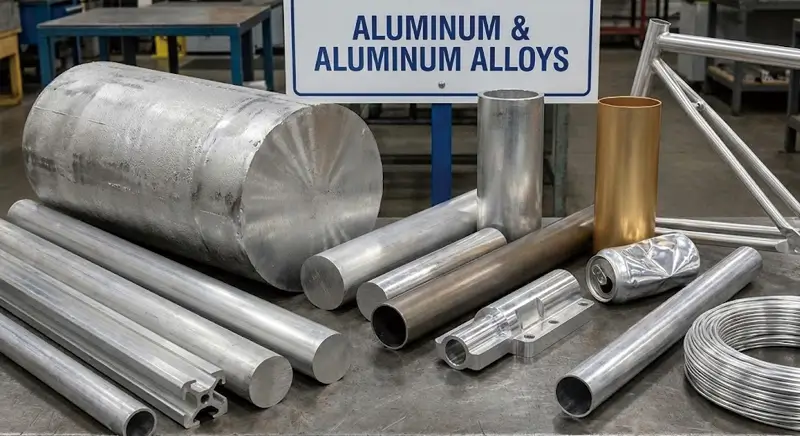
To begin, aluminum represents the most widely used non-ferrous metal today. Pure aluminum is soft, but you strengthen it dramatically through alloying.
Grade 6061 contains magnesium and silicon. You achieve good weldability, formability, and moderate strength. After that, you can extrude 6061 into complex profiles.
Grade 7075 incorporates zinc for maximum strength. You sacrifice some corrosion resistance for superior mechanical properties.
Aluminum naturally forms a protective oxide layer. You avoid rust even in harsh environments. The material accepts anodizing for enhanced corrosion protection. Soon after exposure to air, this oxide layer develops automatically.
Copper and Copper-Based Alloys
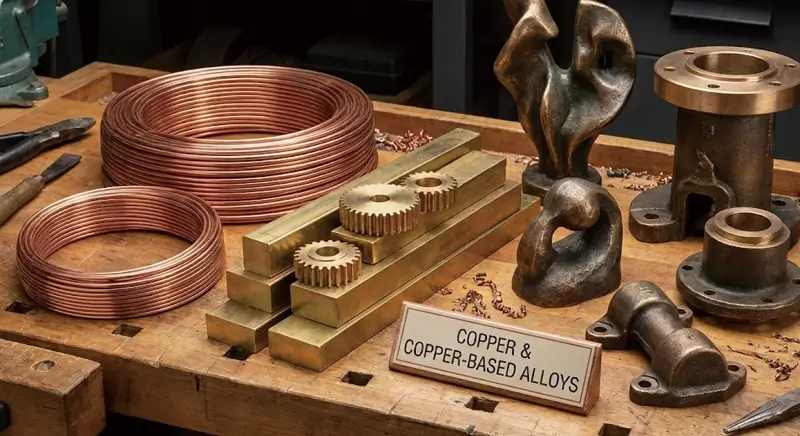
Next, copper offers the best electrical conductivity of any common metal except silver. You get 100% IACS conductivity in pure copper.
The material exhibits a distinctive reddish-orange color. You can easily identify copper by sight. Copper develops a green patina over time when exposed to the atmosphere. This patina protects against further corrosion.
You will find copper highly ductile and malleable. The material accepts forming, bending, and drawing operations readily.
Brass
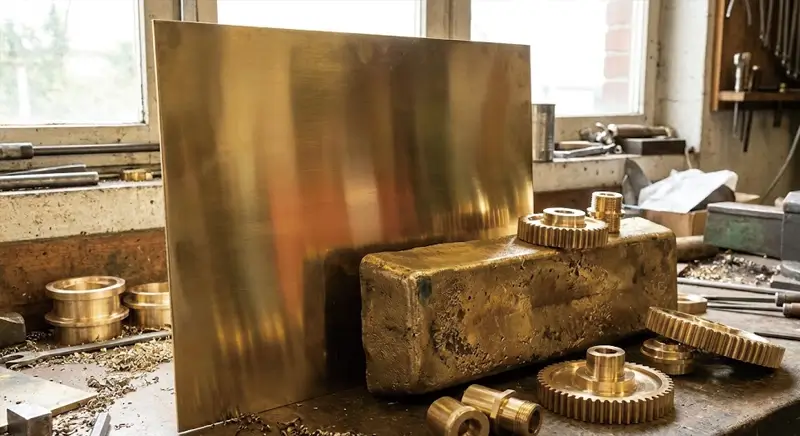
Brass is an alloy. Brass combines copper with zinc, usually 60-70% copper and 30-40% zinc.
The addition of zinc is very smart because it increases the strength of the metal and reduces the cost compared to using pure copper.
Furthermore, you can easily machine brass in the workshop. The material is a favorite of machinists because it accepts threading, turning, and milling operations very smoothly. It leaves behind an excellent surface finish that is bright and professional.
Бронза
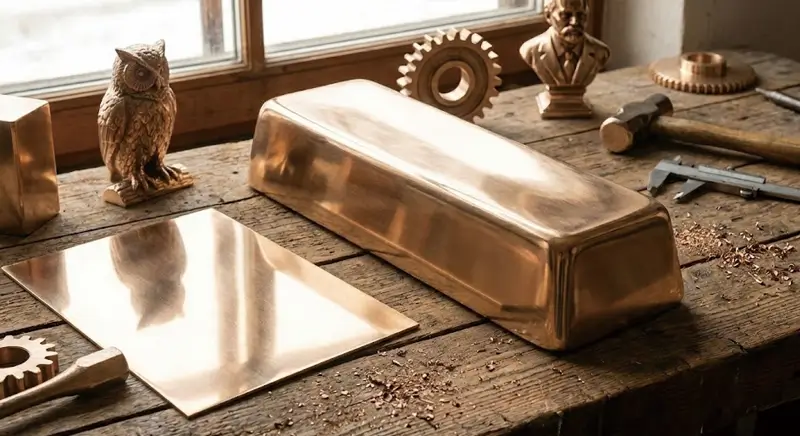
Many people get confused and ask, “Sir, is bronze the same as brass?” While brass uses zinc, bronze contains copper alloyed primarily with tin. This small change makes a huge difference. You get a material that is even harder and more corrosion-resistant than brass.
Lead
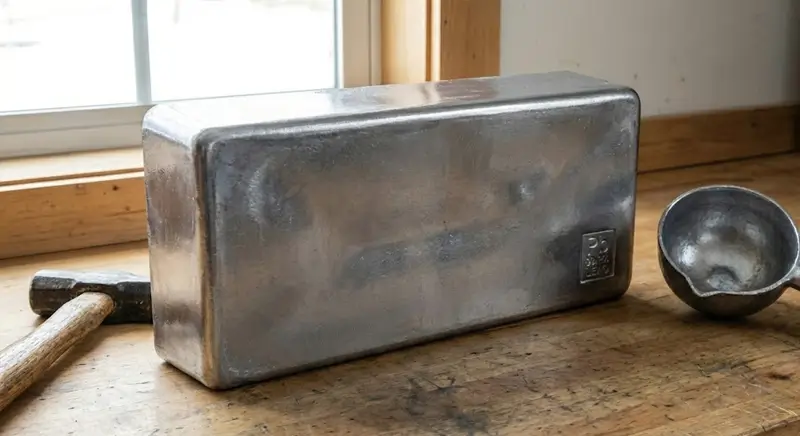
Lead is a very different kind of metal. It is very soft. It is also very dense and heavy, with a very low melting point.
The best property of lead is its high density. This density allows it to block X-rays and gamma radiation very effectively.
Lead melts at just 621°F. Because of this, you can easily cast lead into molds using just basic equipment. It is much easier to melt than steel or copper.
Zinc
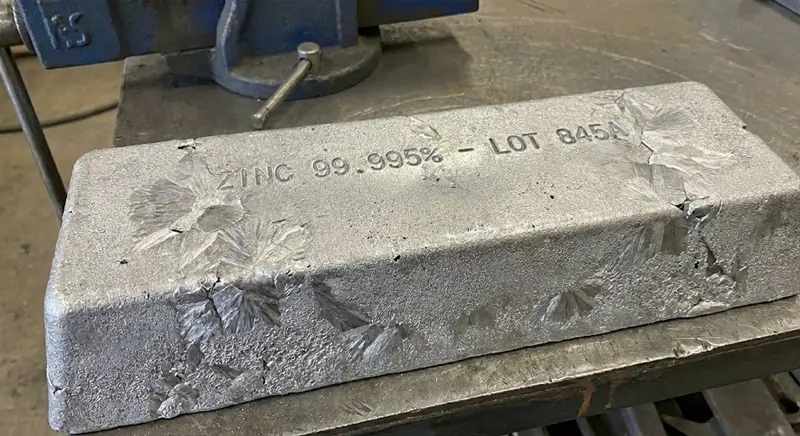
Zinc works primarily as a protective coating. We dip steel into a bath of liquid zinc. The zinc sticks to the steel to prevent rust
Zinc has a low melting point of around 787°F. Consequently, zinc die-casting is used to produce complex shapes like carburetors or small toys very economically.
Tin
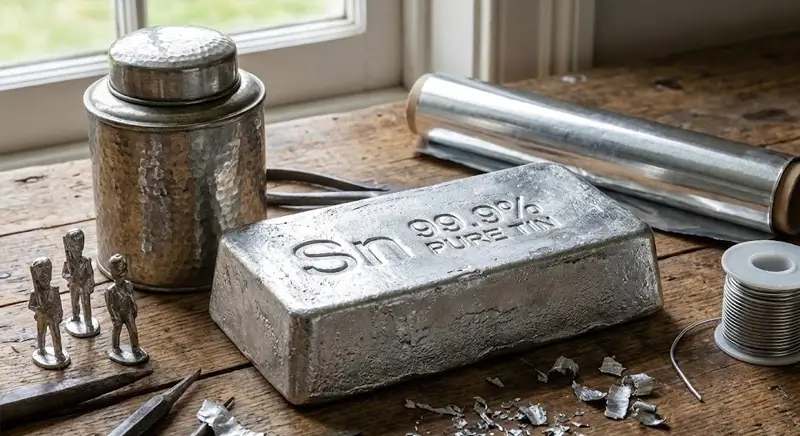
Tin metal is very special because it has low toxicity.
Tin coating steel is used to make “tin cans” we use for food packaging. The thin layer of tin prevents the iron in the steel from touching the food. Without tin, our canned fruits and beans would taste like metal and get ruined by rust!
Titanium
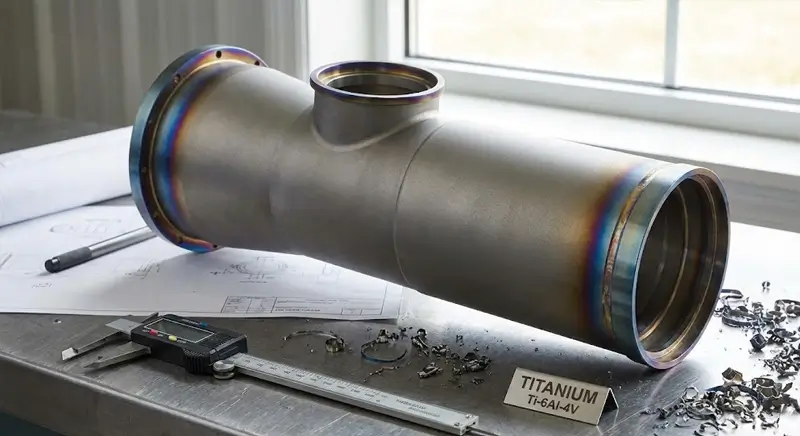
Titanium is the king of non-ferrous metals: Titanium. This is a high-performance metal that engineers love.
Furthermore, titanium forms a “tenacious oxide layer” instantly when it touches the air. This layer is even better than the one on stainless steel.
However, Titanium costs significantly more than steel or aluminum. The material is very difficult to extract from the earth and very hard to machine in the shop.
Nickel
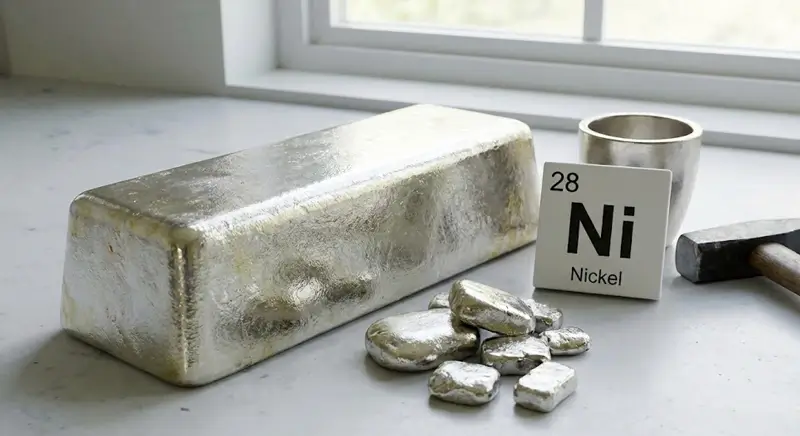
Consequently, nickel can be used both as a pure metal and alloying element. You add nickel to steel to create stainless steel and improve corrosion resistance. Pure nickel resists many corrosive chemicals and high temperatures.
Nickel alloys can face extreme conditions. Inconel contains nickel, chromium, and iron for jet engines and nuclear reactors. You protect steel from corrosion with nickel plating.
Gold, Silver, Platinum
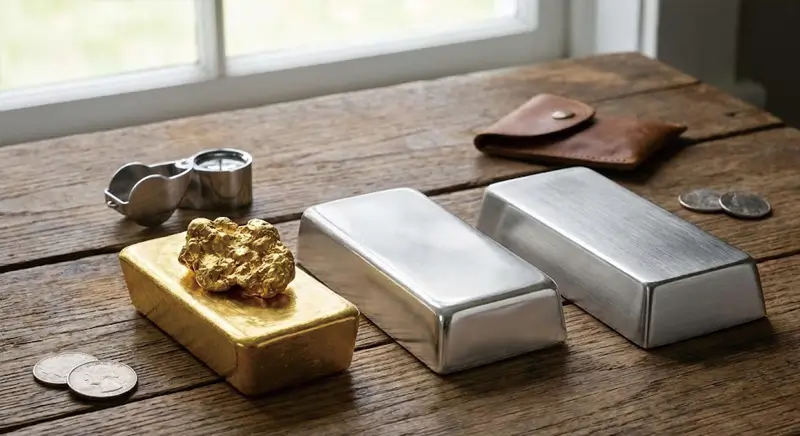
Gold shows excellent corrosion resistance and never tarnishes. You use gold for jewelry, electronics, and monetary reserves.
Silver offers the highest electrical and thermal conductivity of any metal. You achieve the best performance for high-current electrical contacts.
Platinum resists extreme temperatures and corrosion. You find platinum in catalytic converters, laboratory equipment, and medical devices. The material costs more than gold but gives good chemical resistance.
Manufacturing Ferrous and Non Ferrous Metals
Обработка на ЧПУ
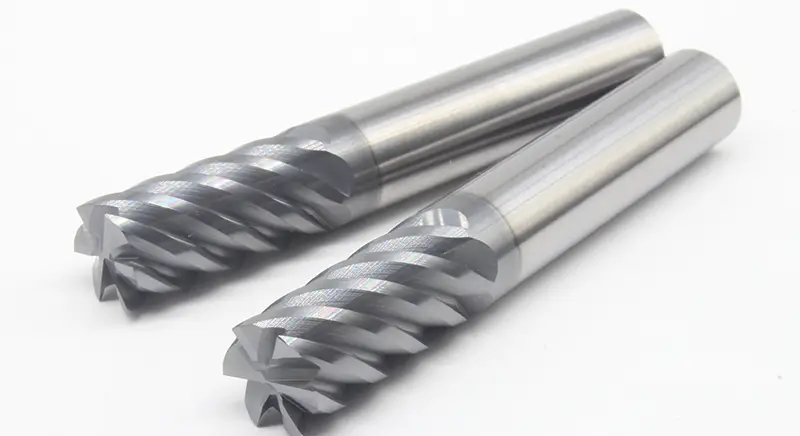
Ferrous metals are generally harder to machine than non-ferrous metals. Tool wear increases when cutting steel and iron. You must use ceramic or carbide cutting tools for production machining. such as carbide endmill, carbide drill bits
Leaded brass machines better than any other metal. You achieve high speeds with excellent surface finishes. The lead particles break chips and lubricate the cutting tool..
Aluminum machines easily with high-speed steel and carbide tools. You run faster than steel machining. However, the soft material can gum up cutting edges without proper tool geometry and cutting fluid.
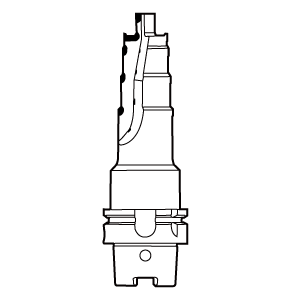
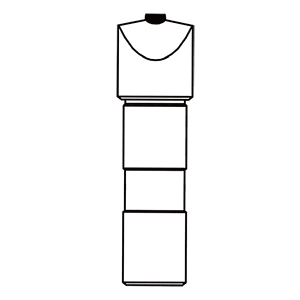
Diamond tools, specifically PCD end mills, Сверла PCDи PCD reamers, offer the perfect solution for high-precision non-ferrous metal processing.
Welding
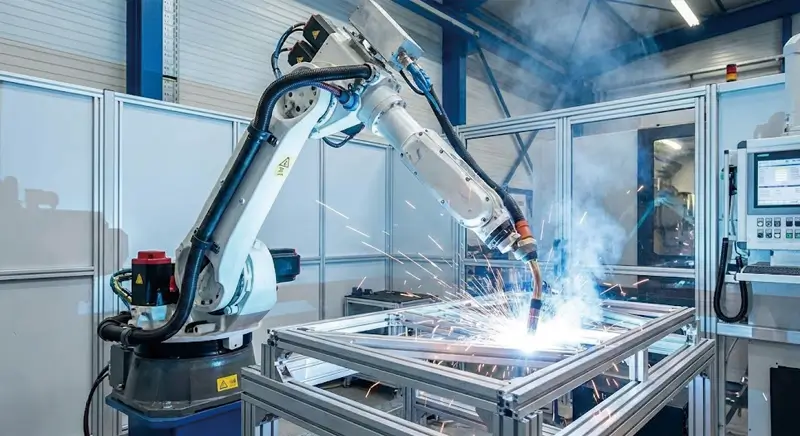
Next, steel welding is a well-understood process. You select from numerous methods including stick, MIG, TIG, and flux-cored arc welding. The material accepts these processes readily with appropriate techniques.
Aluminum welding requires more care. You must remove the oxide layer and use inert gas shielding. TIG or MIG processes with specialized equipment work best. The high thermal conductivity demands more heat input than steel.
Stainless steel welding needs attention to avoid chromium depletion. You risk sensitization and reduced corrosion resistance without proper techniques. Special filler materials and heat control maintain properties in the weld zone.
Forming and Shaping
Meanwhile, mild steel accepts cold forming for moderate bend radii. You can stamp, roll, and brake-form steel sheets. The material work-hardens during forming, increasing strength in bent areas.
Aluminum alloys vary widely in formability. You achieve excellent results with 3003 and 5052 alloys. However, high-strength 7075 requires heating for severe bends. The material cracks if formed too severely at room temperature.
Copper and brass form excellently cold. You can create deep-drawn shapes and tight bends. These materials accept spinning and other specialized forming operations. The high ductility prevents cracking during severe deformation.
Заключение
You pick ferrous metals when you need strength and low cost for big structures. You choose non-ferrous metals when you need protection from rust or light weight for electronics. Understanding these two groups helps you build things that last. Now, you can look at any metal and easily differentiate ferrous vs non ferrous metals.
Вопросы и ответы
1. What are 5 non-ferrous metals?
- Aluminium
- Медь
- Lead
- Nickel
- tin, titanium and zinc
2. Difference between ferrous and non ferrous metals in tabular form
Особенность | Черные металлы | Цветные металлы |
Primary Composition | Contain iron | Do not contain iron |
Magnetism | Magnetic | Non-Magnetic. |
Коррозионная стойкость | Prone to rusting | High resistance to rust |
Вес | Generally heavy | Usually lightweight |
Tensile Strength | Very high | Varies |
Conductivity | Lower | Excellent |
Стоимость | Generally cheaper | More expensive |
3: How to tell if metal is Ferrous or not?
Here are the four most reliable ways to tell the difference between ferrous and non ferrous material:
- The Magnet Test. It is the quickest method
- Visual Inspection
- The Spark Test
- Weight and Sound

 Russian
  English
  German
  Spanish
  French
  Portuguese