 Ir al contenido
What Is Hardness Of a Material?
In simple terms, hardness means material’s toughness against surface damage. It measures how difficult it is to scratch, and mark a material. There are three main types of material hardness; Indentation Hardness, Scratch Hardness, and Rebound Hardness. Furthermore, Mohs Scratch test, Rockwell, Brinell, Shore and Vickers are the five most common hardness measurement scales.
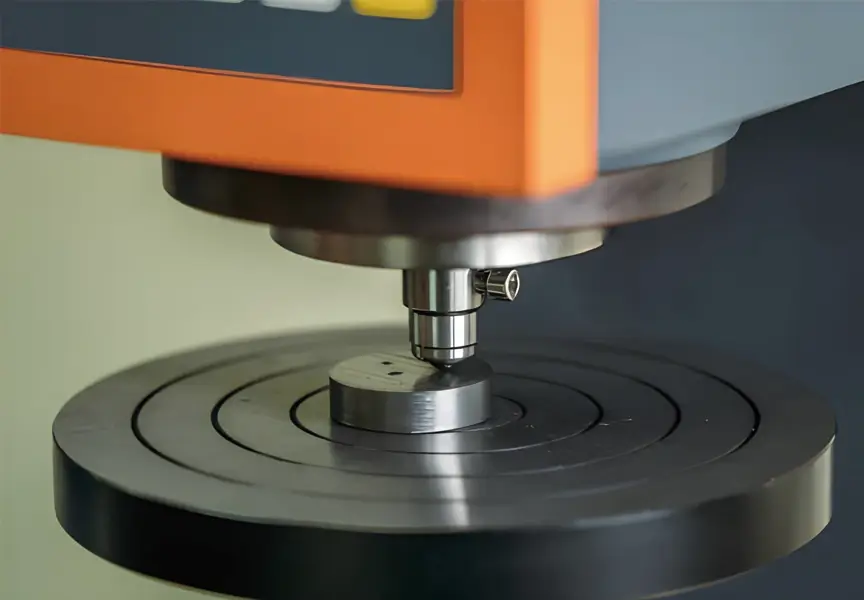
Define Hardness of The Material
Hardness vs. Strength vs. Toughness
At the onset, you must distinguish between these three properties. Hardness of the material measures surface resistance. Strength refers to the total load a material can carry before failing.
Toughness is the ability to absorb energy and deform without fracturing. It just means a material like glass is very hard but has low toughness because it shatters easily.
The Importance in Engineering
Why is the hardness of material such a vital question? Engineers use it as a primary metric for durability. First, of course, it helps you predict how long a part will survive abrasive wear. Consequently, you can choose the right materials to ensure the safety and longevity of mechanical systems.
The Fundamental Types of Hardness
Originally, scientists identified three ways to define hardness of material.
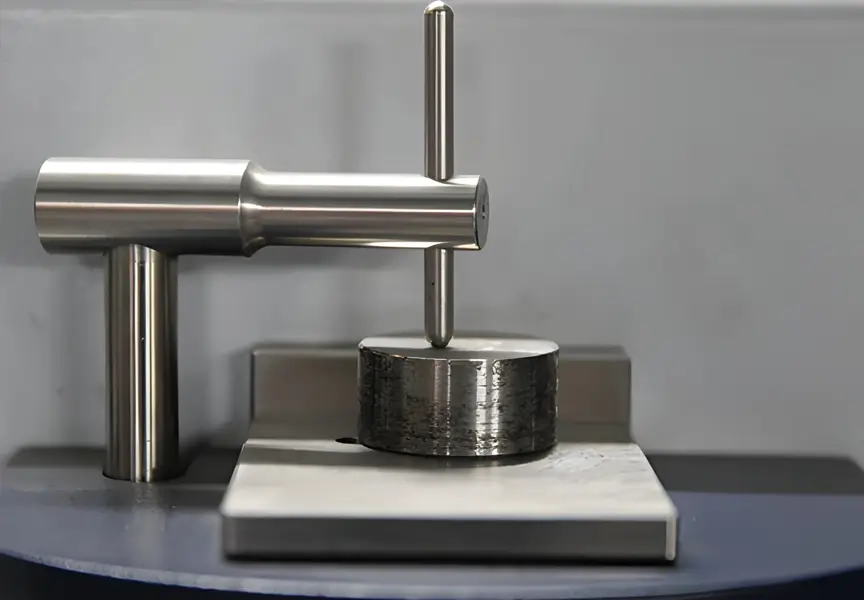
Indentation Hardness
This is the most common form. It measures resistance to permanent shape change from a constant compression load.
Scratch Hardness
This identifies how well a surface resists friction and narrow continuous indentations. This often just describes linear wear resistance.
Rebound Hardness
This measures elastic energy absorption. You measure the height of the “bounce” when an indenter hits the surface.
Primary Hardness Testing Methods
There is no single hardness unit like a meter or a gram. Instead, you use different scales based on the specific Vickers hardness test o Rockwell method.
Rockwell Hardness Test
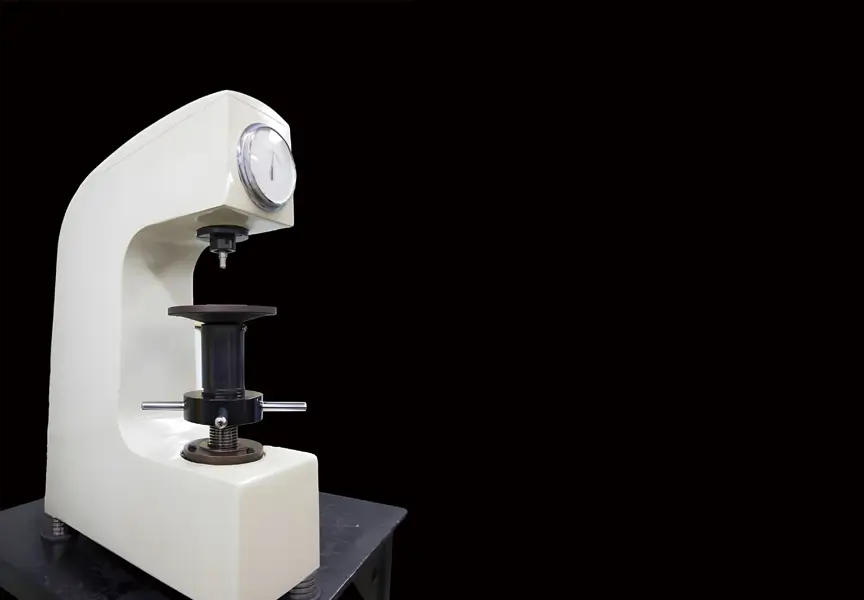
This test uses the principle of differential depth. First, you need to apply a minor load to set the zero point. Then, you should apply a major load. The machine measures the depth of the dent. You will use different scales such as HRA, HRB, and HRC for steels and plastics.
Brinell Hardness Test
Starting off with coarse materials like castings, you will use a 10mm steel or carbide ball indenter. Because the ball is large, it averages out the hardness of a material across a wider area.
Vickers Hardness Test
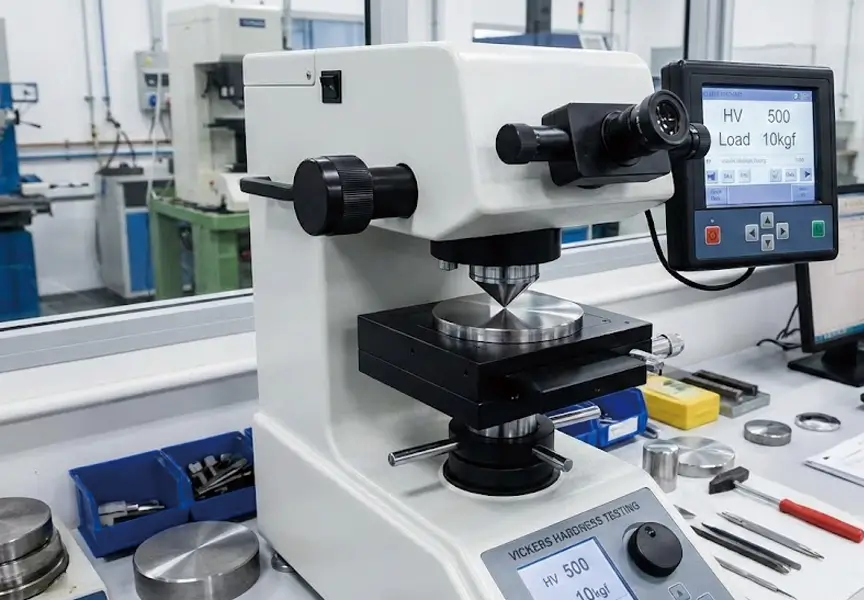
The Vickers hardness method uses a 136° diamond pyramid indenter. Because the diamond is the hardest known material, you can use it to measure almost any hardness material. The result is expressed as hardness HV or HV hardness.
Next, you measure the diagonal length of the indentation with a microscope. The Vickers hardness test remains the “universal” scale in material science hardness.
Knoop Hardness Test
For very thin coatings or brittle ceramics, you will use the Knoop test. It uses an elongated diamond indenter. This will happen when the material is too fragile for the standard Vickers hardness pyramid.
Mohs Scale of Hardness
This is a qualitative 1-10 ranking. Originally, it helped geologists identify minerals. Diamond sits at 10, while Talc sits at 1. Note that you want to always remember this scale measures scratch resistance, not indentation.
Leeb Rebound and Shore Scleroscope
When you work with big parts that cannot fit in a lab, you use dynamic impact tests. You can then use the “bounce” of a hammer to calculate the definition of hardness on-site.
Material Hardness Chart
When you look at a material hardness chart, you will see how different substances compare. So, aside from the Mohs scale for minerals, these charts help you convert values between Rockwell and Vickers hardness.
Material Example | Vickers | Brinell | Rockwell C | Rockwell B | Mohs Scale |
Diamante | 10,000+ | — | — | — | 10 |
Carburo de tungsteno | 1,400 – 1,900 | 700+ | 75 – 85 | — | 9 |
Hardened Tool Steel | 700 – 900 | 650 – 750 | 60 – 68 | — | 7 – 8 |
Case Hardened Steel | 500 – 700 | 475 – 600 | 50 – 58 | — | 6 – 7 |
Mild Steel | 140 – 160 | 130 – 150 | — | 75 – 85 | 4 – 5 |
Copper Alloys / Brass | 80 – 120 | 70 – 110 | — | 40 – 60 | 3 |
Aleaciones de aluminio | 30 – 50 | 25 – 45 | — | 10 – 25 | 2 – 3 |
Lead | 5 – 10 | 4 – 8 | — | — | 1.5 |
What factors impact material hardness?
Microstructure and Grain Size
The Hall-Petch relationship states that finer grains lead to higher hardness. After that, you realize that grain boundaries work as barriers to movement. Furthermore, smaller grains make the hardness of material much more consistent.
Composición química
The role of alloying elements is massive. First, carbon in steel creates internal tension that blocks atomic sliding. In turn, adding Chromium or Tungsten increases the material property hardness of specialized tool steels.
Heat Treatment Processes
This process starts from quenching and tempering: You heat the metal and cool it rapidly to transform its phase into martensite. This creates maximum hardness of a material.
The next process is annealing. In this process, you will soften the metal for machining. Annealing involves slow cooling to reduce internal stress.
Endurecimiento por trabajo
Later, as you physically deform a metal during manufacturing, it becomes harder. After a few bends or rolls, the internal dislocations tangle up. So, aside from the initial state, the manufacturing process itself changes the hardness of material.
Surface Hardening Techniques
You should generally avoid hardening the entire part if you need it to be flexible. There are two major techniques for it.
Carburizing and Nitriding
Carburizing and Nitriding were the most common methods for industrial steels. You diffuse carbon or nitrogen into the surface layer at high heat. The purpose is to create a chemical transformation.
Consequently, you create a case that is significantly harder than the original base metal. After that, you apply a quick quench to lock in the new crystalline structure.
Hard Anodizing
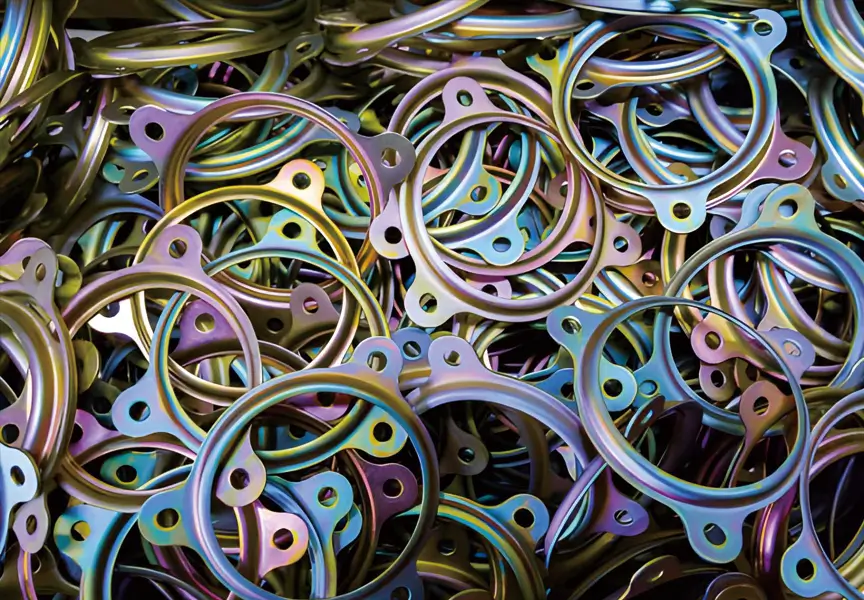
In terms of aluminum alloys, you use a different method called Hard Anodizing. This is an electrochemical process used to create a thick, integrated oxide layer. Make sure to verify the depth of this skin with a micro-hardness test. The purpose is to ensure long-term wear resistance.
Because the last thing you want to do is install a part that loses its protective shell after only a few weeks of friction.
Limitations and Considerations in Testing
Sample Thickness and Surface Finish
You’ll want to ensure your specimen is thick enough. If the metal is too thin, the indenter hits the anvil underneath. This ruins your material property hardness data. As well as almost all tests, a rough surface finish will lead to inaccurate diagonal measurements in a Vickers hardness test.
Scale Conversion Challenges
You will find a material hardness chart that converts Rockwell to Vickers. Just make sure you use these with caution. Conversions are often estimates. There is no way to know the exact value without performing the specific test required for that material.
Environmental Impact
Now, all of this stated, temperature matters. High heat can soften a material while you are testing it. You should be able to account for this by testing at the actual operating temperature of the part.
Conclusión
What is hardness of material but a calculated resistance to the world around it? Hardness is not a fundamental constant; it is a result of specific testing methods like the Vickers hardness scale. By understanding how to define hardness of material and using a material hardness chart, you can select the perfect material.
Preguntas frecuentes
What does hardness mean in materials?
It means how well a solid can stop itself from being dented. It is a way to measure if a surface is tough” or soft when something pushes on it.
What does 70 shore hardness mean?
This is a score for soft things like rubber. A 70 is medium-hard. It feels a lot like the rubber on a car tire or the bottom of a shoe.
For materials with a HRC hardness of 50°, what cutting tools should I use for machining?
For materials of this high hardness, we strongly recommend the use of sundi S650 endmill. These Carbide endmills possess outstanding hardness and wear resistance, making them exceptionally well-suited for machining HRC 50° steel. They ensure efficient and precise cutting results.
How to calculate material hardness?
You push a tool into the metal and see how big the dent is. You take the weight you used and divide it by the size of the hole to get the score.

 Spanish
  English
  Russian
  German
  French
  Portuguese