Перейти к содержимому
CBN interrupted cutting: select for the impact event, then diagnose the failure
A PCBN insert that performs well in continuous hard turning can fail quickly when a cut repeatedly enters a gap, scale band or uneven allowance. That does not prove that PCBN is wrong, nor does it mean a tougher-sounding catalog label will solve the job. CBN interrupted cutting begins with the impact event and the setup that delivers it to the cutting edge.
This guide concerns interrupted hard turning of hardened ferrous workpieces, not interrupted milling. Start by describing the impact to the tool supplier, pair the recommended grade with its edge preparation, and check the setup before testing another insert.

Build a severity profile before naming a grade
“Interrupted” is not a complete cutting condition. The width and frequency of the interruption matter, as does how the edge re-enters the work. So do stock variation, scale or inclusions, workpiece hardness, depth of cut and the dynamics of the machine, workholding and tool overhang. A shallow, regular groove pattern on a rigid part is a different selection problem from a casting skin with variable allowance or a flexible component that rings at every entry.
Start with an observation sheet rather than a grade request. Record where the interruption occurs, whether the impact is repeatable, how much stock changes around it, and whether the chip is clearing before the next contact. Note the actual tool reach, holder, work support and any visible witness marks. This separates a hard-turning application from a vague instruction to “use CBN for an interrupted cut.”
| What the interruption looks like | What to document first | What the observation changes |
|---|---|---|
| A shallow, regular interruption on a rigid part | Width, frequency, stock consistency and chip clearance | It defines a repeatable impact event that can be tested under controlled conditions. |
| Scale, inclusions or variable allowance | Stock variation, entry condition and workpiece support | It raises uncertainty around impact severity and makes supplier-specific selection more important. |
| Chipping or cracking after repeated entry | Damage location, insert edge, holder marks, overhang and coolant cycle | It directs the next check toward the mechanical and thermal system before another insert is selected. |
For supplier discussion, keep the grade family intact. PCBN content, binder, particle structure, grade and coating are selected against the work material and interruption; grade names alone do not establish equivalence between suppliers. A more severe interruption may call for a tougher grade, but the selection must also match the edge preparation and setup. Verify the recommended combination on the actual part.
Select grade and edge as a matched pair
The cutting edge needs enough resistance to wear and enough mechanical strength for the impact. Those needs can pull in different directions. A stronger chamfer, T-land or edge hone can support the wedge and reduce microchipping. It can also raise cutting force and heat. That means edge preparation cannot be selected independently of feed, nose radius, edge load and rigidity.
This is why “make the edge stronger” is a hypothesis, not a fix. If the machine or workholding deflects, a heavier preparation may shift the failure from microchipping to force-related instability. If the load is too light or the geometry is mismatched, the same change may not create the intended contact. Ask for an edge recommendation tied to the material, hardness, interruption profile and the specific supplier grade family; do not request a universal land width, angle or hone radius.
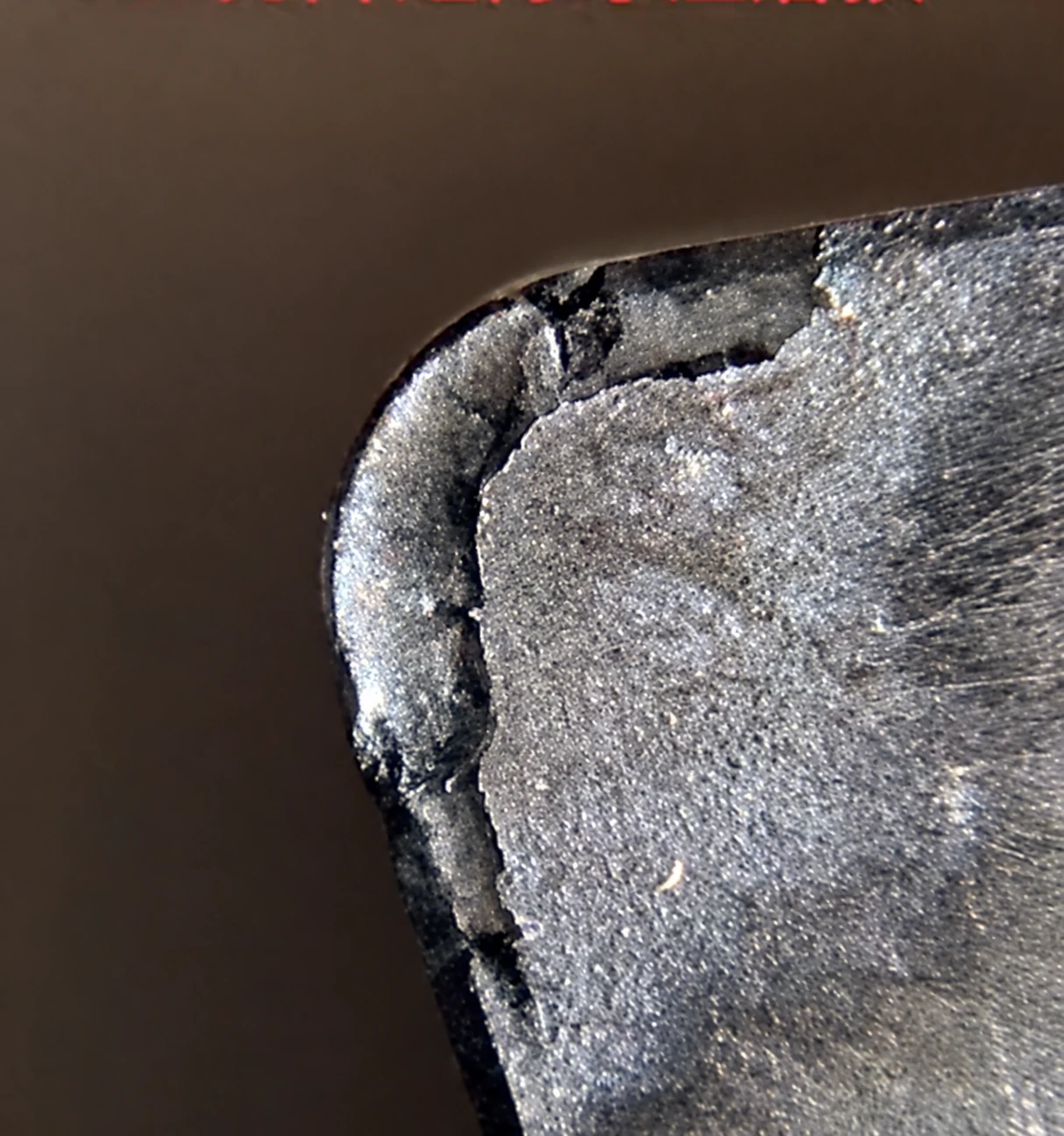
Use the first tool life as a signal. A clean, localized chip at the edge can suggest an impact or insufficient edge-strength problem, but it is not proof until the remaining load path has been checked. A gradual flank-wear pattern is a different observation from a recurring fracture at the same entry. Describe the observed pattern and location, not just the time until the insert was changed.
Read the failure before changing the insert
Before changing grade, work through the causes that can make a capable PCBN insert look unsuitable:
- Confirm whether the edge is seeing a repeatable mechanical impact at every entry.
- Check vibration, runout, deflection, reach and work support. These can change the actual load even when the program has not changed.
- Look for chip hammering or chip recutting, especially where a groove or interruption traps the chip before re-entry.
- Compare stock variation, scale, inclusions and the real interrupted feature with the assumptions used for the selection.
- Confirm the edge preparation and insert orientation are the ones intended for this grade and operation.
- Review thermal cycling alongside the coolant delivery pattern.
This list does not identify a single cause from appearance alone. It creates a controlled order: remove or measure a setup cause before blaming the insert. A reported online fix or a catalog suitability statement is useful only as a question to test on the actual setup.
Treat coolant as a consistency decision
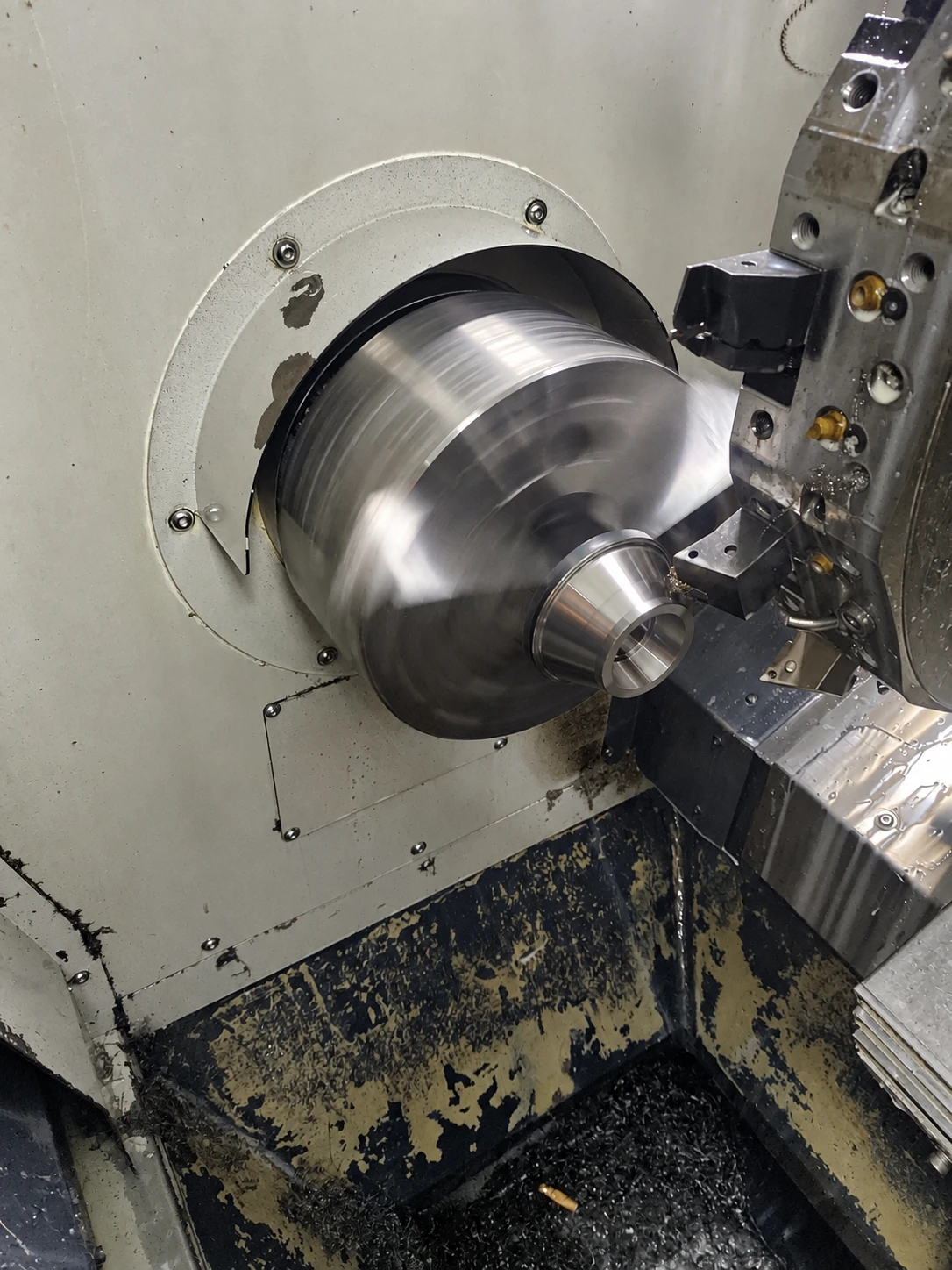
Interrupted hard turning does not support a blanket dry-or-wet rule. Intermittent wetting can amplify thermal cycling at the edge, yet some operations still need controlled cooling or chip flushing. The decision depends on the insert maker’s guidance, the grade and edge, how consistently fluid reaches the cut, chip evacuation and the validated process.
Treat “turn coolant off” and “add coolant” as process changes, not small adjustments. If cooling is needed, document delivery consistency and the observed chip path. If running dry is the supplier-supported direction, keep that condition with the selection record. Switching fluid state while also changing grade, edge or feed makes the result hard to interpret.
Validate the combination on the actual interrupted cut
Record the workpiece material and hardness, interruption geometry, insert grade, edge preparation, cutting speed, feed, depth of cut and coolant state before the trial. Keep the inspection interval and tool-life criterion consistent. Compare the edge damage and surface result at the same stage of each test so that a change in measurement does not look like a change in performance.
Change one variable within the selected tool’s application limits and repeat the same interrupted feature. Keep the result only with the conditions under which it was observed. If the interruption, work support or thermal cycle changes, validate the combination again before treating the earlier result as applicable.
Know when PCBN is not the best answer
PCBN is not automatically the best process when interruption severity, rigidity, surface-integrity risk, tolerance or economics do not fit a reliable hard-turning process. Ceramic or tough carbide, grinding, milling, a stock change or a setup change may be more appropriate. Each alternative needs its own material, geometry, finish and capability check; “not PCBN” is not yet a process plan.
A defensible test starts with the impact profile, then pairs a supplier-specific grade direction with an edge preparation and a verified mechanical and thermal setup. Change one controlled variable and keep the result with the part record. The next decision can then be traced to an observed condition instead of a generic CBN label.