Skip to content
What is Slot Milling: Types, Applications, And Advantages
The modern manufacturing industry benefits from different machining techniques. Slot milling is one of these techniques that creates long, narrow grooves into the workpiece. This versatile process can produce slots of various shapes and sizes. In this article, we’ll discuss how this process works, its types, applications, and advantages.
What is Slot Milling?
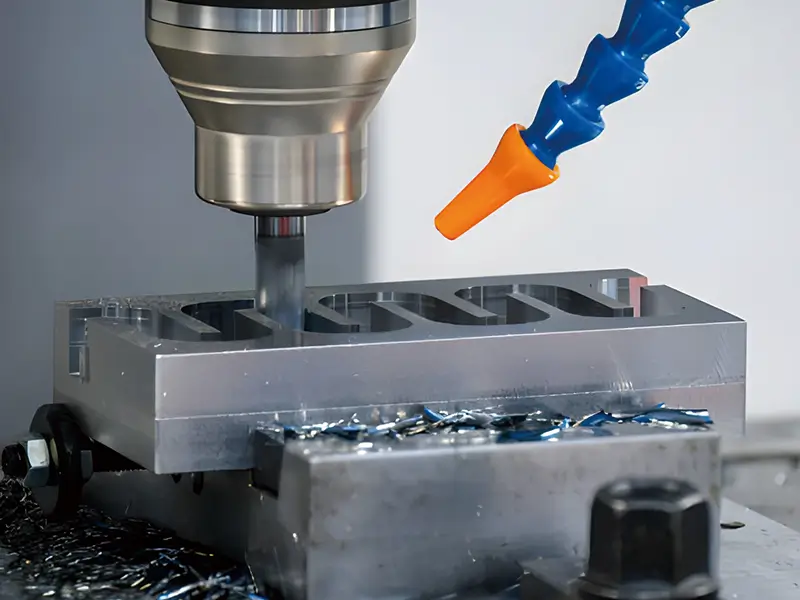
Slot milling is a machining technique in which a rotating cutter removes the material to create slots, grooves, or channels. These slots serve functional and assembly purposes. Depending on your requirements, these slots can have varied widths, depths, and lengths. Slot milling is performed on a milling machine using an end mill that rotates at high speed.
This technique can be applied to metal, plastics, and composite materials. It is used in aerospace, automotive, electronics, and various other industries. These slots have exact dimensions and geometry requirements.
Types of Slot Milling Operations
There are different types of slot milling techniques for varied applications. Each technique yields a particular type of slot and requires its own tools and parameters. Here is a brief explanation of different types of slot milling operations:
Side Milling
In side milling, the cutter cuts along the peripheral edges. It creates straight and narrow slots along the edge or size of the workpiece. This operation is suitable for parallel slots, guide ways, and keyways.
Side-and-face cutters are especially useful because they can remove material from the side and bottom surfaces of the slot. It produces an excellent surface finish.
T-Slot Milling
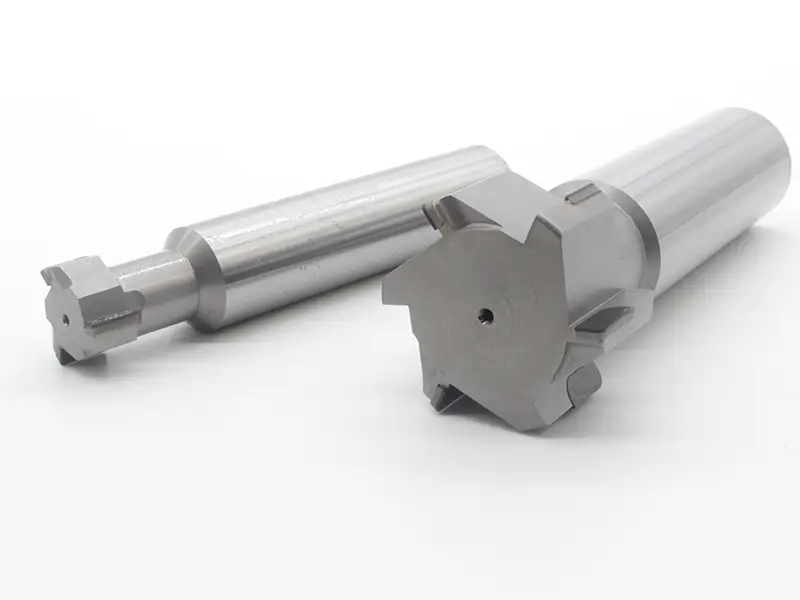
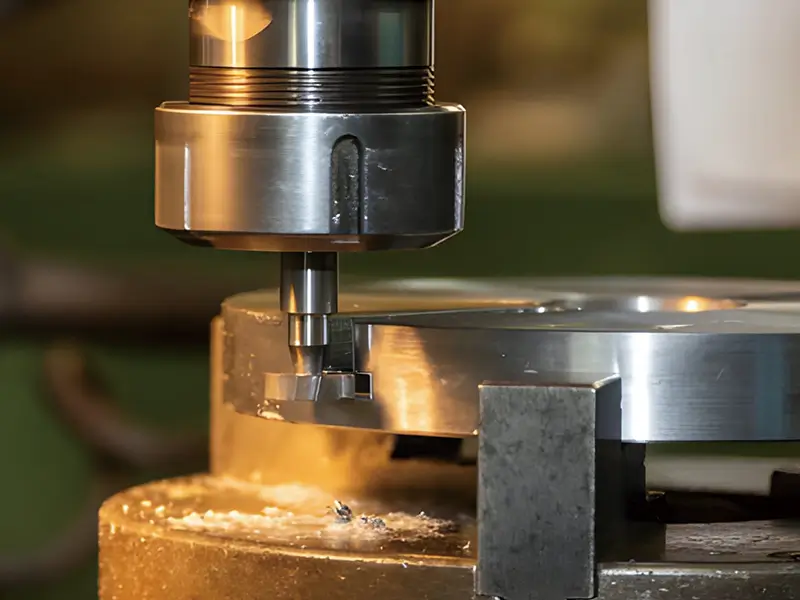
As the name suggests, T-slot milling forms T-shaped slots. It is a two-step operation.
- First, an end mill is used to cut an initial straight slot
- Then the T-slot cutter is used to enlarge the lower portion of the slot to create the undercut.
Selecting the correct T-slot cutter is essential to achieving consistent and clean undercuts without breaking the tool. Sundi Cutting Tools provides T-slot end mills that are made for rigorous slot operations. Here is what we offer:
- Custom PCD T-Slot Cutter with 2, 4, 6, or 8 teeth
- PCD Two-Flute Tipped T-Slot End Mills for aluminum and light alloys
- Flute diameters from 3 mm to 40 mm
- Coatings available: DLC, AlTiN, TiAlN, TiSiN, or diamond-like
Contact us for exceptional quality tools.
End Milling
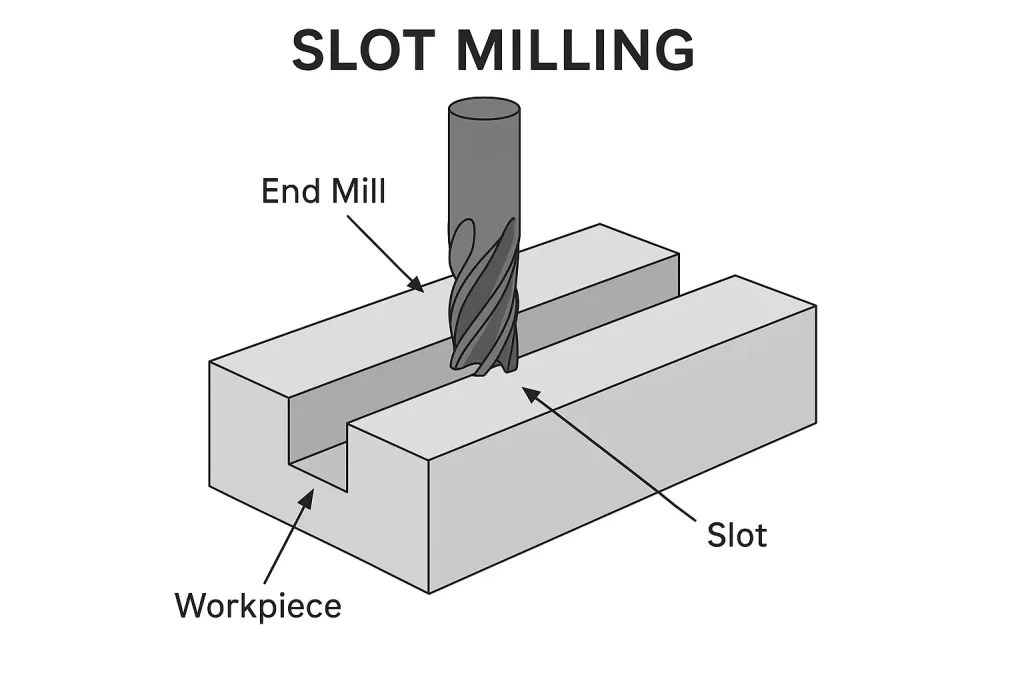
One of the most widely used and versatile slot milling operations is end milling. In this method, a standard milling cutter cuts the bottom and the sides of the slot at the same time. End milling creates slots of consistent width and depth. It is suitable for varied slot dimensions, like closed or non-linear slots.
End mills are available in various diameters, designs, and materials, and can cut different materials. With CNC milling machines, the slot’s depth, contour, and surface finish can be precisely controlled.
Gang Milling
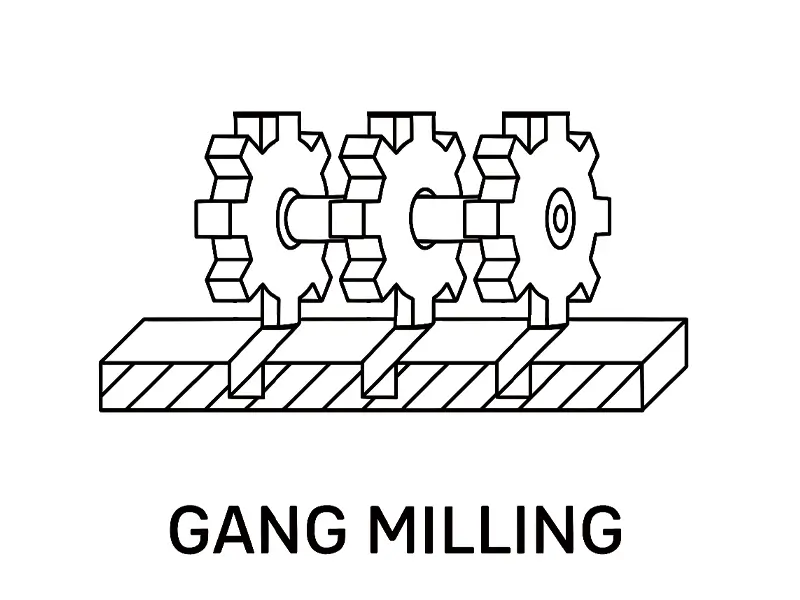
In gang milling, more than one cutters are mounted on a single arbor to machine several slots in one pass. This method is used when you need to produce several identical features on a workpiece. Gang milling is highly effective for mass manufacturing.
But a crucial factor in gang milling is that cutting tools must be aligned carefully. This is important to maintain accuracy. Gang milling is an advanced and time-saving technique, reducing cycle time by 60%.
Woodruff Key Slotting
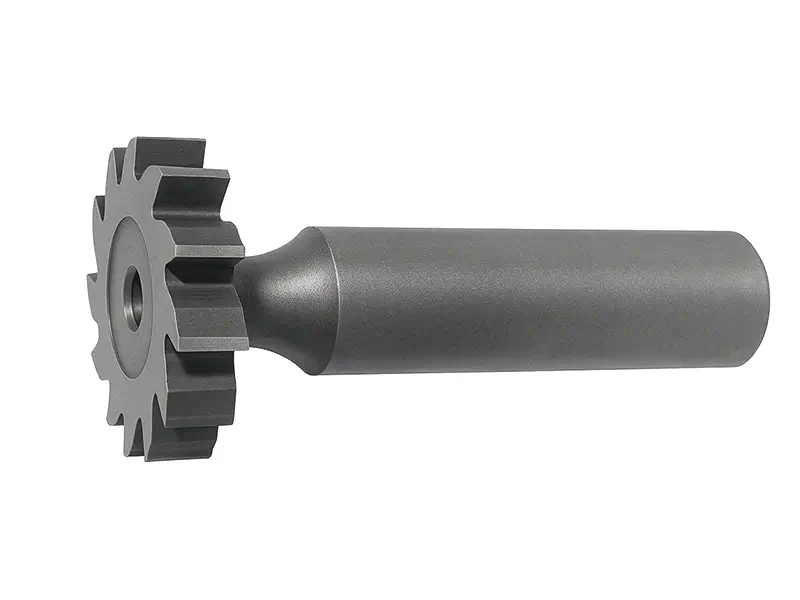
Woodruff key slotting refers to creating small, curved slots on a shaft for half-moon keys called Woodruff keys. Woodruff keys keep parts such as gears, pulleys, or couplings from slipping on the shaft when rotating. The process uses a special cutter called a Woodruff keyseat cutter, which has the curved shape of the key.
Woodruff key slotting creates a tight fit, which is an important part of many components used to transmit motion and power, such as engines, pumps, and motors.
How Slot Milling Works?
Slot milling is a highly controlled process that involves precise tool movement, regulated speed, chip removal, and other parameters. Here’s how this process works:
Choosing the Tool
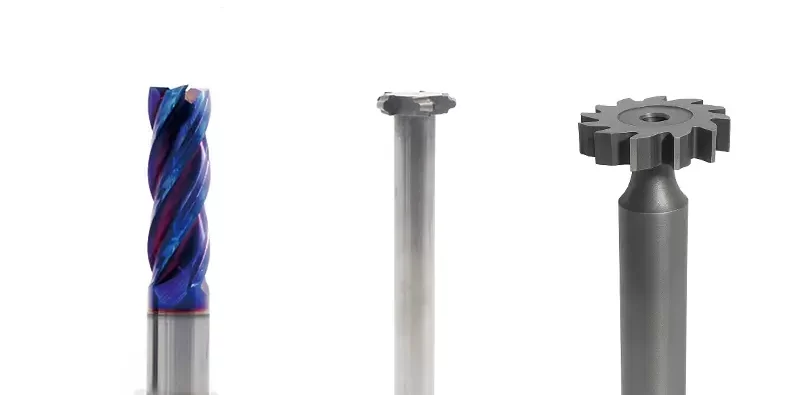
The first step is selecting the cutter based on the slot’s shape, size, and material type. Commonly used tools include end mills, T-slot cutters, and keyseat cutters.
Selecting the Parameters
For a controlled process, key parameters are defined. These parameters include cutting speed, feed rate, and the depth of the cut. Before the milling operation begins, these parameters must be balanced. Otherwise, you’ll get inconsistent results and tool wear.
Securing the Workpiece
If you want your slots to be accurate, then you will have to ensure proper alignment. Stability eliminates vibration during the milling operation. The workpiece must be held securely to the milling machine table.
Performing the Milling Operation
After your setup is completed, the rotating cutter will start to remove the material. The cutter will move along a tool path that is already defined.
Here are the tool path techniques used in slot milling:
- Conventional Tool Path: This is a very simple path to program and involves the tool moving in a direct line (straight motion).
- Trochoidal Tool Path: In this path, the tool moves in a circular motion, providing smoother cutting.
- Plunging Tool Path: The tool moves vertically, creating deep and narrow grooves.
During the process, a coolant or lubricant is used to help eliminate heat. After cutting, the slot is cleaned and measured.
Advantages of Slot Milling
Let’s look at some of the benefits of slot milling in modern manufacturing:
High Precision and Tight Tolerances
The process allows very accurate control of slot width, depth, and alignment. CNC slot milling is capable of achieving very fine tolerances. It ensures tight fits for mechanical parts such as keys, guides, and fasteners.
Versatility
Slot milling is effective on many material types, including steel, aluminum, composites, and plastics. Slot milling can also form different slot types: straight, curved, open, blind, or T-slots, which adds versatility for designs and assemblies.
Material Removal
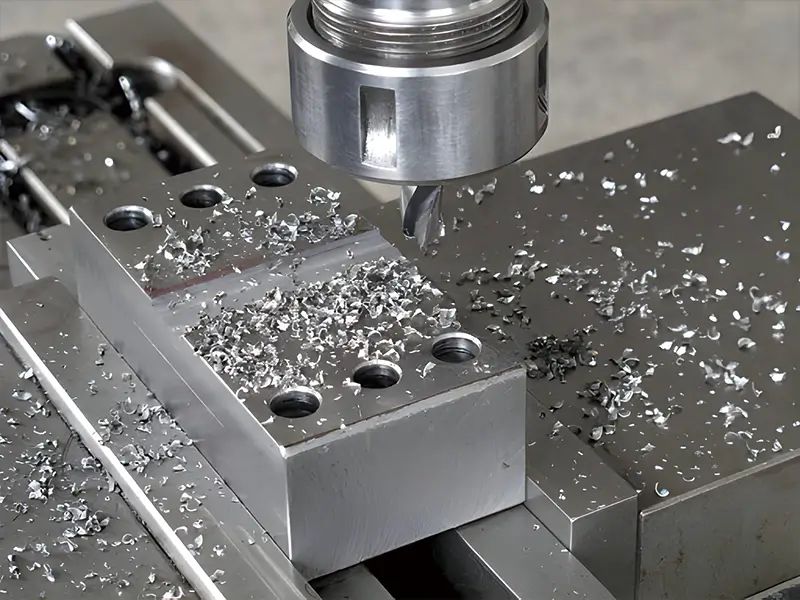
This technique can remove material very quickly when tool paths are optimized and proper feed rates are used.
Excellent Surface Finish
With proper cutting parameters and high-quality tools, slot milling yields smooth finished slot walls and bottoms. This helps reduce the need for additional finishing operations.
Improved Tool Life and Heat Management
Slot milling utilizes tool paths such as trochoidal motion and more efficient coolant delivery methods. This decreases heat buildup, improves chip removal, and increases cutter life.
Applications of Slot Milling
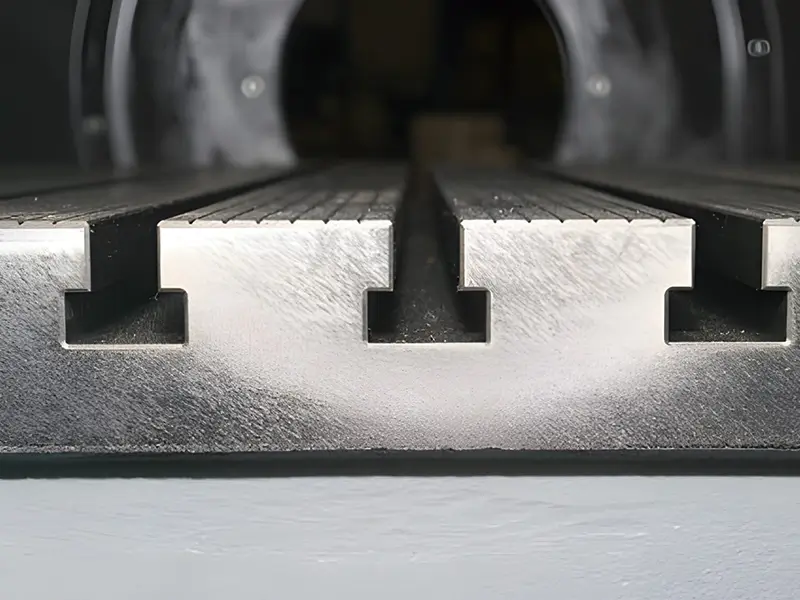
Slot milling is frequently used when grooves, channels, or keyways are required for assembly, motion, or fluid control. Its versatile application is utilized in various industries. Some are mentioned below:
- Industrial Applications: Slot milling is useful for T-slots when manufacturing machine tables and bases. These are used to attach clamps, jigs, apparatus, and fixtures.
- Automotive Component Manufacturing: Slot milling can be used to cut keyways and shaft grooves. These grooves ultimately transmit torque or present a precise alignment of parts or features.
- Aerospace Manufacturing: In aerospace, it is used for lightweight structural slots and locking channels in aluminum and composite parts.
- Mold and Die Making: Slot milling allows for uniform machining of cooling channels and guide grooves to remove heat and produce precise molded parts.
Electronics and Precision Components: Slot milling is useful for milling micro-slots, vent holes, and fine grooves in enclosures or connectors that require tight tolerances.
Conclusion
Among different milling operations, slot milling is a very precise technique. It creates precise grooves and channels to accommodate assembly, movement, and fluid flow. Slot milling is commonly used in automotive, aerospace, and tooling applications.