 Skip to content
WHAT ARE CARBIDE INSERTS?
Most likely, persons or companies who use metal cutting machines also work with carbide inserts. Carbide inserts make a huge difference in metalworking. This raises the question: how can such tiny pieces of metal have so much significance in metal precision-cutting?
In this article, we will help you understand everything you must know about carbide inserts. We will cover the fundamentals, types, use applications, and how to choose the right carbide inserts for your project.
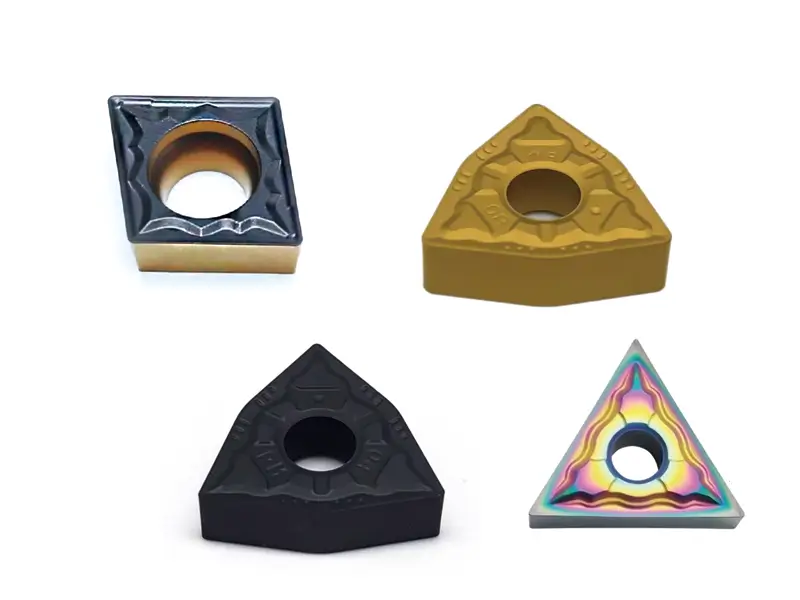
Understanding Carbide Inserts: The Fundamentals
Carbide inserts are tools used to shape malleable metals like cast iron, steel, aluminum, and high-temperature alloys. These tools are essential in machining, providing faster machining, efficiency, increased productivity, and high precision.
Typically made from tungsten carbide, carbide inserts are highly durable. They offer exceptional stability under extreme thermal conditions. These inserts allow the use of every edge for cutting, as they can be flipped and rotated without damage.
Due to some of these qualities, carbide inserts are perfect for heavy-duty, industrial machining. They bring a high degree of precision, efficiency, and consistency to your projects.
Types of Carbide Inserts
There are multiple types of carbide inserts, and in that vast world, there are various forms of carbide insert classifications. There are material-based classifications, shape-based (geometry) classifications, and function-based classifications.
For the context of this article, we will be focusing on the main types of carbide inserts under material-based classifications. They are as follows:
Titanium Carbide-Based Inserts
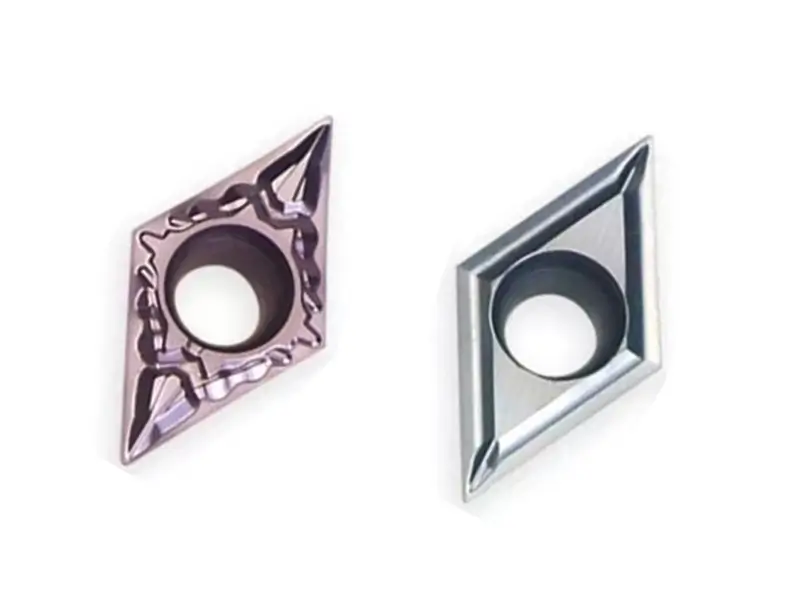
Titanium carbide is used as the main material for making these carbide inserts. By combining nickel and molybdenum as binders, these inserts offer high wear resistance at increased speeds.
While titanium carbide-based inserts offer the basic toughness needed, these types of inserts are not as tough as tungsten-based carbides.
Tungsten-Cobalt Carbide Insert (WC-Co)
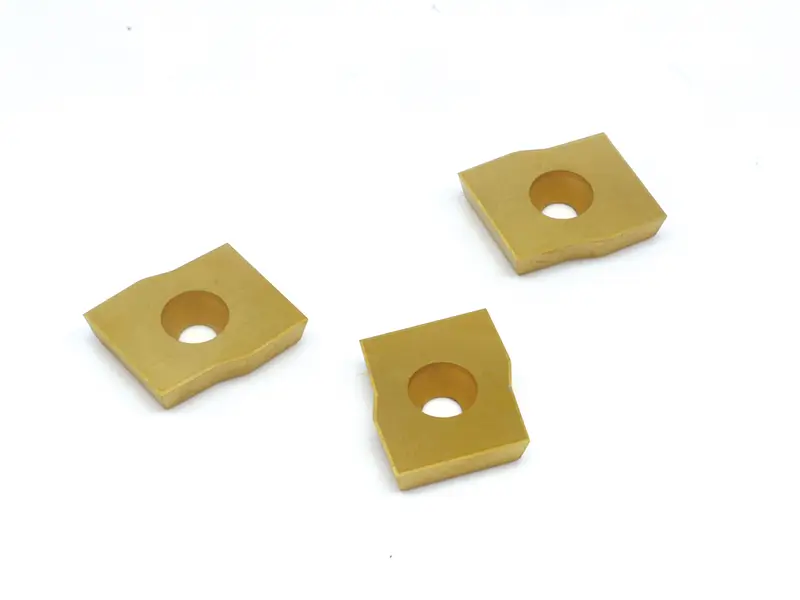
With tungsten and cobalt as its primary compositions, tungsten-cobalt carbide inserts offer impressive hardness and toughness. Tungsten provides the hardness, while cobalt, being the binder, provides the toughness.
The combination of these essential properties, in tandem with its versatility, makes tungsten-cobalt carbide insert the most commonly used type of carbide insert.
Tungsten-Titanium Carbide Insert (WC-TiC-Co)
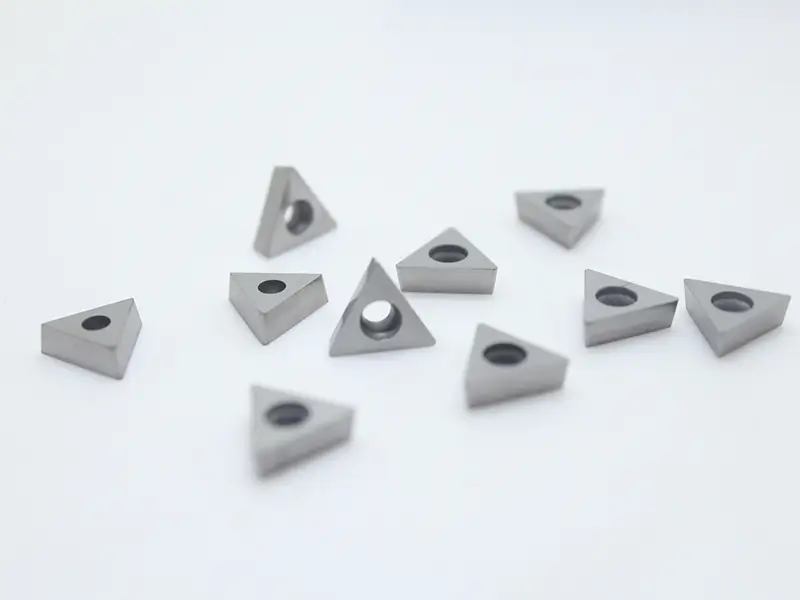
In addition to the common combination of tungsten and cobalt, this type of insert includes titanium carbide (TiC) in the base. This helps to enhance the wear resistance and hardness properties of the insert, especially for increased cutting speeds.
These types of inserts are ideal for high-temperature conditions, delivering an even greater insert performance.
Tungsten-Titanium-Tantalum Carbide Insert (WC-TiC-TaC-Co)
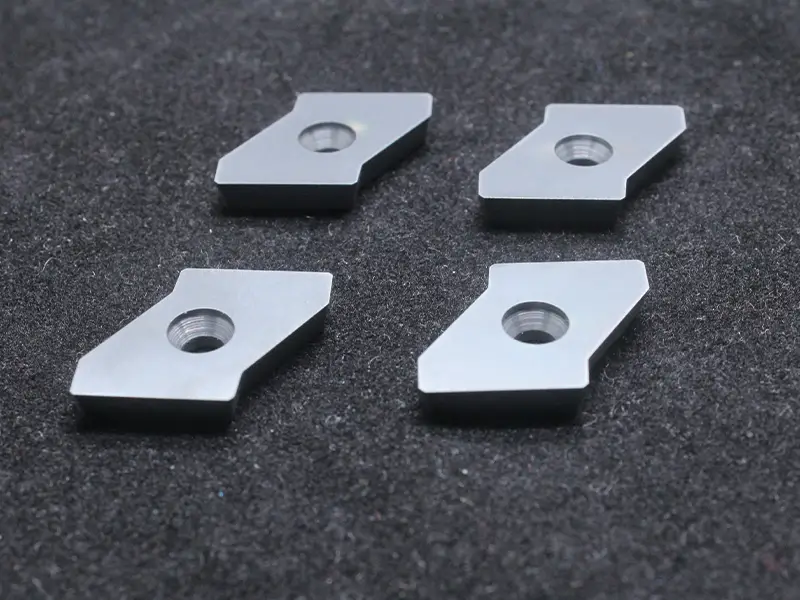
To achieve peak hardness and wear resistance, we add tantalum carbide (TaC) to the tungsten-titanium carbide base. The addition of tantalum helps to withstand thermal shock, making this type of insert ideal for use in extreme temperatures and at the highest cutting speeds.
Tungsten-Titanium-Tantalum carbide inserts are perfect for all your demanding industrial applications.
Features of Carbide Inserts
Carbide inserts are indispensable for high-speed manufacturing today. But what makes them so valuable? Why should CNC machinists or tool makers not do without them?
Well, the answer to these questions can be found in the remarkable performance that carbide inserts bring to modern machining. These performances, however, are a result of certain sets of superior features that carbide inserts possess.
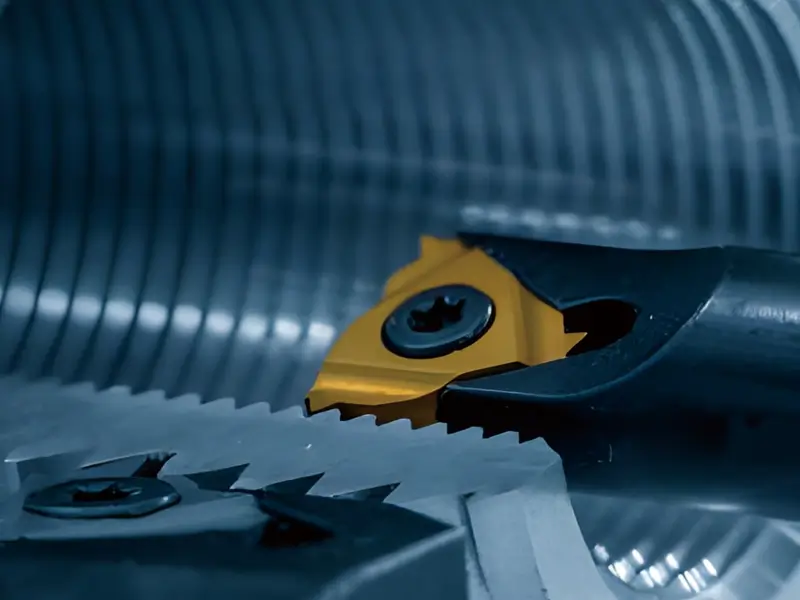
- High Hardness:
Carbide inserts are characterized by high hardness, typically going between the ranges of HRA 89 and 93. This means that carbide inserts are nearly three to four times harder than high-speed steel.
Even under high thermal conditions, carbide inserts are able to maintain their hardness, making them highly resistant to wear.
- Improved Toughness:
The high hardness property of tungsten carbide means it can get more brittle and less tough than HSS (which stands for high-speed steel, a material commonly used for cutting tools). It is for this reason that cobalt is included in the insert’s structure as a binder.
Cobalt adds fracture toughness to the insert’s core. By balancing the percentage of cobalt with tungsten carbide, different degrees of toughness are achieved. Higher cobalt content gives the insert more toughness.
- Wear Resistance:
Carbide inserts offer superior wear resistance, about 5-100 times that of HSS. The high hardness feature of carbide further helps to contribute to the excellent wear resistance you get in carbide inserts.
As a result, carbide inserts are ideal for use under high-speed cutting conditions. They help to maintain good cutting performance for a longer period of time, particularly in abrasive materials.
- High Heat Resistance:
Carbide inserts can maintain their hardness even under increased thermal conditions, thanks to their high heat-resistant properties. The ability of a carbide insert to retain its high hardness is often called “Red Hardness” or “Hot Hardness.”
The hot hardness of carbide inserts enables them to maintain their hardness in temperatures that exceed 760°C, and even reach up to 1000 °C.
Real-Life Applications of Carbide Insert
Understanding carbide inserts and material science is one thing. Knowing practical applications is another, and may be even more important. What are some practical applications of carbide inserts, and what problems do they solve?
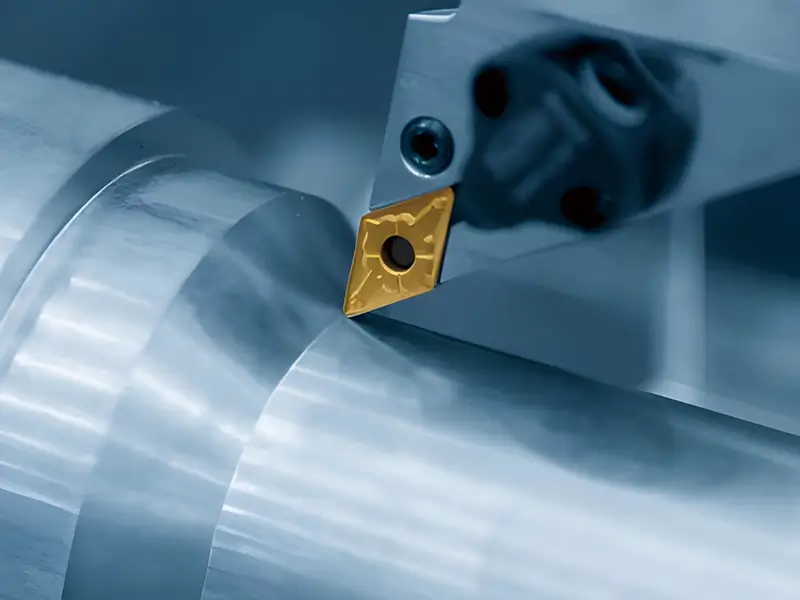
Carbide Inserts use in Aerospace
To achieve optimal precision in the machining of high-strength materials like titanium, the aerospace industry relies heavily on carbide inserts. This is due to their high resistance to the extreme heat that is generated during the shearing process.
For example, to craft a turbine blade made of Inconel, a nickel-based superalloy notorious for its extreme toughness and difficulty in cutting, an immense amount of heat will be generated. This level of heat can cause rapid tool wear.
As a manufacturing engineer involved in the production of aerospace components, the ideal solution you can proffer to this is carbide inserts. A carbide insert with a grade designed specifically to work with high-temperature alloys will resist wear caused by high-speed cutting, lasting you longer than regular inserts.
Carbide Inserts use in Automotive
Just like in aerospace, carbide inserts are equally crucial in the automotive industry. Operations such as machining the deck face of a cast-iron engine block are typical in automotive plants. This operation requires incredible speeds in order to keep up with the high volume of production.
The problem arises when tool life is shorter than predicted, resulting in unexpected downtime and slower production rates due to frequent tool changes. This can cause so many problems for the production manager or supervisor.
To avoid these challenges and maximize machine uptime, carbide inserts are highly recommended. They have a long, predictable lifespan. This means you don’t need to worry about downtime or unnecessary tool changes.
Carbide Inserts for Medical Equipment and Device Manufacturing:
The importance of carbide inserts in the manufacturing of medical equipment and devices can not be overstated; it forms a core in the industrial aspect of the health sector. An example of such medical equipment is bone screws.
For a bone screw to meet medical standards, it must be machined from 316L stainless steel using a CNC lathe, resulting in an exceptional surface finish. This operation usually makes the delicate features of the screw prone to burring.
Time and capital must then be specially allocated for deburring. As a professional CNC machinist, you can prevent burrs by using carbide inserts with a sharp cutting edge, ensuring precision and tight tolerance.
Carbide Inserts use in General Manufacturing and Metalworking:
Carbide inserts are generally vital to common tasks carried out in manufacturing and metalworking. Some of these tasks include milling, turning, and drilling.
The versatility of carbide inserts is particularly valuable to small and medium-sized metalworking shop owners. For example, when you need to carry out small shop tasks like making mild steel flanges at an economical standard, you will require a tooling solution that can handle both roughing and fine finishing.
Carbide inserts are the perfect solution for this. They are cost-effective, versatile, and improve productivity, thanks to their longer tool life.
Choosing the Right Carbide Inserts for Your Application
Having a difficult time choosing the right carbide insert for your project? Do not fret, we have created an easy-to-understand outline of things to consider when choosing a carbide insert.
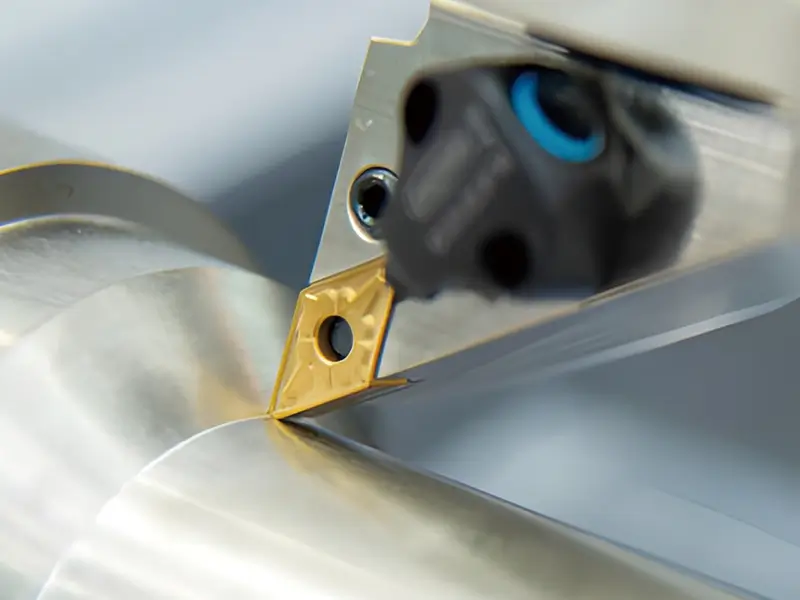
Below is a table on how to select the right carbide insert tool:
| Factors to Consider | Details |
|---|---|
| Material | The material you're dealing with is the primary determinant of the right carbide insert to use. Specific inserts are usually designed for different materials. |
| Kind of Operation | Are you turning, drilling, milling, or finishing? There are distinct types of carbide inserts designed to fit each operation. |
| Cutting Speed | Higher speeds mean more heat generated. Consider using inserts with a heat resistance level that matches the cutting speed of your material. |
| Depth of Cut | If your task involves deeper cuts, then you must select inserts with higher toughness. |
| Desired Surface Finish | To achieve a surface with finer, smoother surface, your project may require using inserts with a larger nose radius, slower feed rate, and a specific chipbreaker geometry. |
| Costs vs. Tool Life | More often than not, a costlier carbide insert translates to longer tool life. So if you need something small scale, for short-term use, go for the cheaper carbide inserts. For longer tool life, a costlier one is the best option. |
Benefits of Carbide Inserts
If you have read this article up to this point, chances are you have already identified some benefits of using carbide inserts. For an even quicker comprehension, we will again highlight the primary reasons why you need carbide inserts.
- Higher Material Removal Rates: Carbide inserts help to achieve higher material removal rates in less time. With these inserts, you can scale up your productivity to an even greater rate.
- Better Surface Finish: You get an improved surface finish when you use carbide inserts. This is due to the sharp edges of the insert.
- Longer Tool Life: Carbide inserts are highly durable and wear-resistant. They can last up to 10x longer than high-speed steel inserts.
- Heat Resistance: Carbide inserts can withstand extreme thermal levels compared to other kinds of inserts that lose hardness when exposed to high heat. This makes carbide inserts perfect for higher machining requirements.
Where to Find the Best Quality Carbide Inserts
Sourcing premium-quality carbide inserts can often be a daunting experience, especially considering the numerous subpar inserts currently flooding the market.
To avoid purchasing low-quality carbide inserts that will eventually cost you more money and reduce productivity, always get your carbide inserts from Wuxi Sundi Precision Tools, an industry leader in the production of high-quality inserts and premium cutting tools.
Conclusion
We have established that choosing carbide inserts isn’t just about the tool itself, but what it can do for you. Do you think this tool fits right into your machining project? We say absolutely, yes!
Contact us today to schedule a consultation with our team of experts and receive a complimentary quote on the highest-quality carbide inserts. Your first step to scaling up your production is now!

 English
  Russian
  German
  Spanish
  French
  Portuguese