 Skip to content
What is CFRP? Properties, Applications, And More
CFRP (Carbon Fibre Reinforced Polymer) is a very efficient material in today’s engineering space. It’s due to its extreme strength yet low weight when compared to any form of metal.
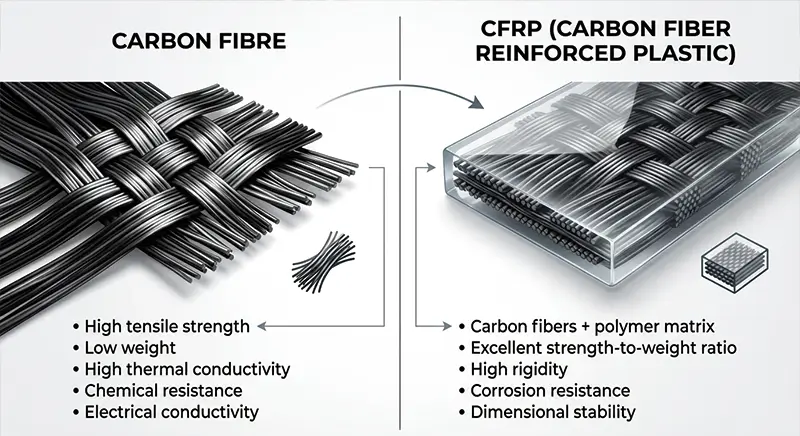
CFRP consists of carbon fibres and polymers combined into a single entity.
In addition to describing CFRP, this article will outline CFRP’s properties and many uses, as well as include comparisons of CFRP against other materials.
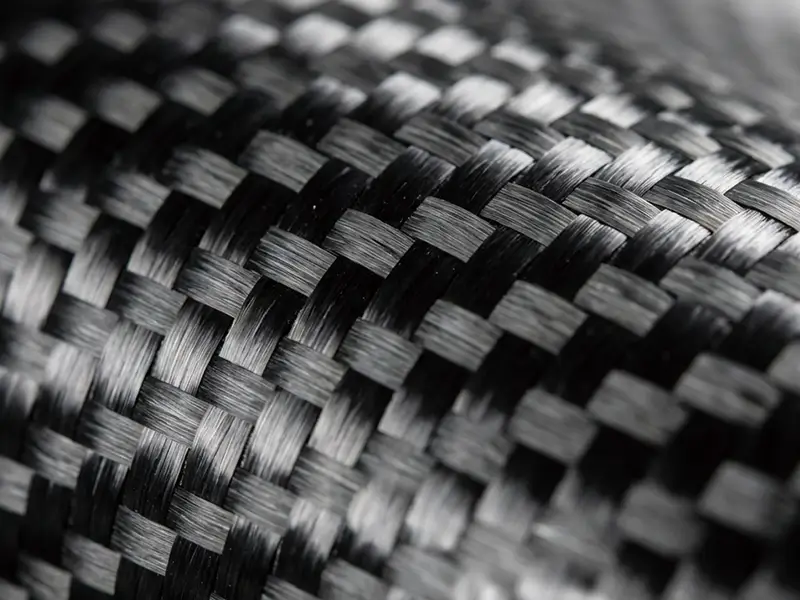
What is CFRP?
CFRP is one of the most highly engineered composite elements. It has many applications, but primarily, CFRP was created to create extremely strong and lightweight structural components. By using a combination of carbon fibres with the addition of a polymer resin (the other half of CFRP). CFRP provides an extremely high level of stiffness while maintaining low weight relative to traditional metals.
Carbon Fibres
Carbon fibres are made from very thin strands that consist of tightly bonded carbon atoms. Carbon fibres provide the majority of CFRP’s strength. These fibres prevent components from bending easily. Therefore, carbon fibres act as the primary structural backbone of CFRP.
Polymer Matrix
The polymer matrix surrounds the carbon fibres and holds the carbon fibres together. It provides the form or shape desired for the completed component.
How is CFRP Made?
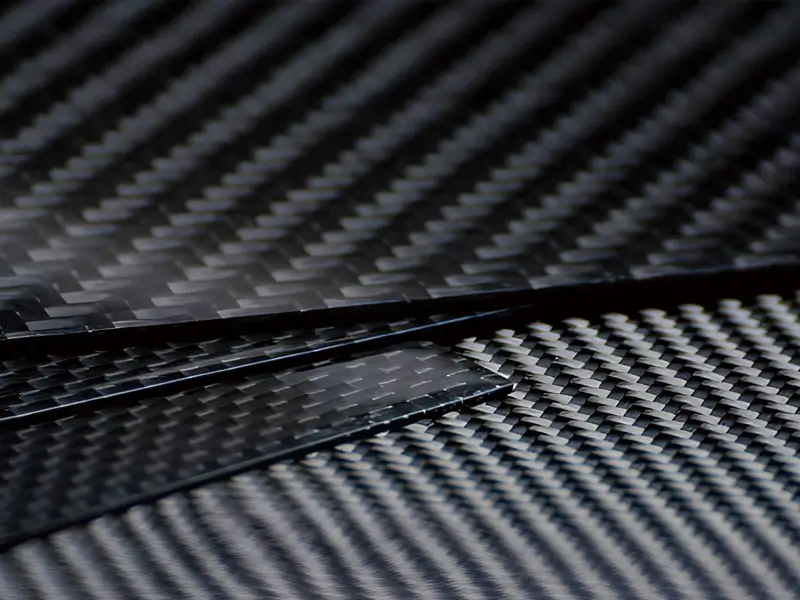
To get from raw ingredients to a CFRP object, several processes must take place in order for the fibre reinforcement to have maximum benefit while the plastic matrix holds everything together, being both lightweight and durable enough to withstand large loads and allow the composite to retain its strength over an extended period of time.
Carbon fibre and polymer resin are combined to form a strong, lightweight composite material. The method used to create CFRP is similar to that of many materials, with some important differences; for example, CFRP’s ability to be formed into complicated shapes through its processing.
One processed layer of the carbon fibres can take many forms, such as sheets, mats, or unidirectional layers of carbon fibres that have been accurately oriented according to the applied loads and stress for the finished part. Accurately setting the orientation of the carbon fibres ensures that maximum stiffness and strength of the finished part are available.
The next process in the CFRP creation is the addition of polymer resin to the layers of carbon fibre. This resin will fill any spaces between the carbon fibres when applied and will adhere the carbon fibres together, making them act as one unit.
It’s at this point that the hardening process begins, through the application of heat, pressure, or a combination of both, the resin cures completely to create a permanent bond between the polymer resin and carbon fibres that suspends the carbon fibres in the polymer matrix very securely.
When all the processes are completed, a CFRP object results that is lightweight, extremely strong, and a very functional and versatile product. The variable geometry allowed throughthe processing of CFRP allows many more complex designs that can be made using this type of material than would be possible using traditional metals.
Properties of CFRP
Here are some properties of CFRP:
- CFRP is known to have a very high amount of strength. When compared to metals like steel or aluminium, it is much more adept at carrying heavy loads while being significantly lighter.
- The stiffness of CFRP prevents it from bending or deforming when exposed to mechanical stress.
- It has excellent fatigue resistance, which means that it will not crack or lose its performance from repeated mechanical stresses.
- CFRP is naturally very lightweight. It is the perfect material for applications where reducing the overall weight is of paramount concern.
- CFRP does not corrode or rust when exposed to corrosive substances or conditions.
- It also has excellent chemical resistance.
- Additionally, CFRP maintains its shape, dimensions, and stability when exposed to high temperatures or heavy loads.
- CFRP can also be designed to provide either electrical conductivity or electrical insulation.
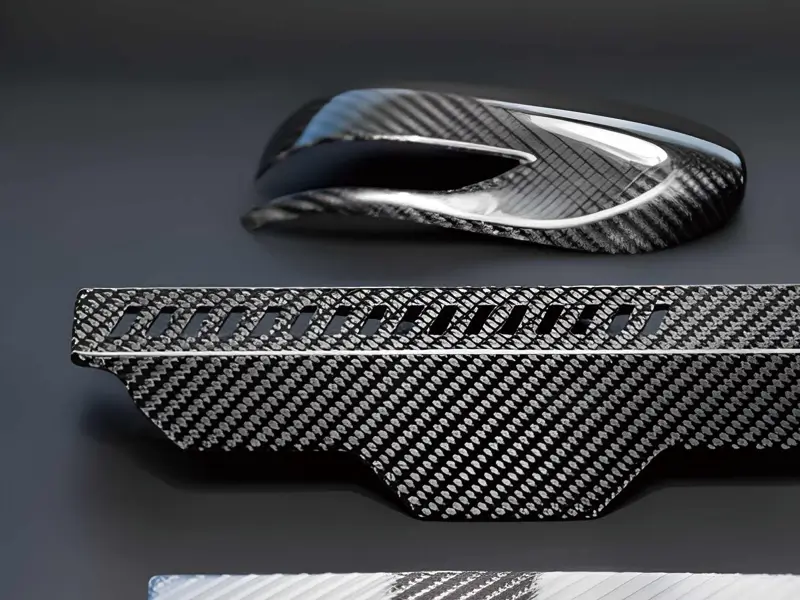
Limitations of CFRP
High Price
CFRP is more expensive than other types of materials, such as steel or aluminum. There are several reasons for this: The cost of the raw carbon fibres and the resin used to create CFRP are higher than those of metals; Also, CFRP requires both high-quality raw production and precise manufacturing processes in order to achieve the desired performance characteristics. For these reasons, CFRP is typically not the best choice for mass-produced items or products with a tight budget.
Difficult Processing
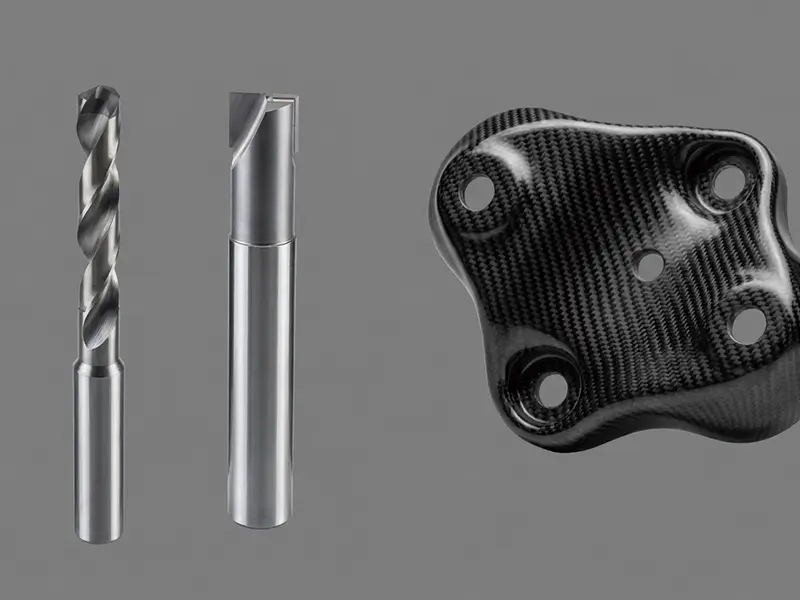
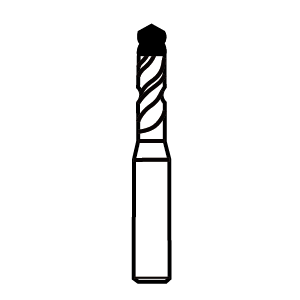
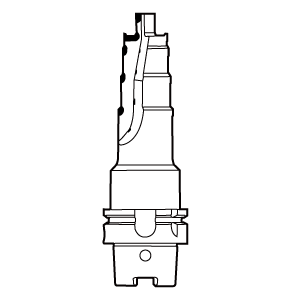
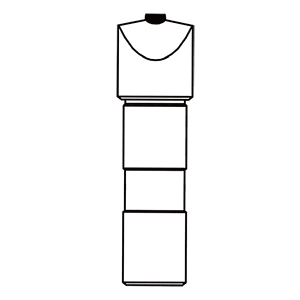
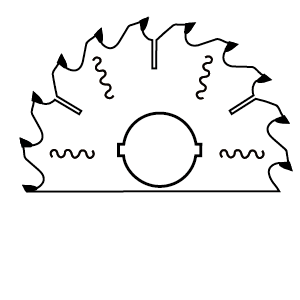
Processing CFRP is not simple and requires specialized machinery, PCD endmills, and PCD drills. PCD tools are required to properly cut, shape, and finish the material without damaging the individual carbon fibres.
Difficult to Recycle
It is very difficult to recycle CFRP due to its unique properties; namely, the strong bond between the carbon fibres and the polymer matrix makes it very difficult to separate and/or reuse. In contrast to metallic materials, there is no simple way to melt or reform CFRP. Engineers continue to explore methods to develop efficient recycling processes for CFRP, but the methods continue to be far more complicated than recycling metals.
Although there are many drawbacks and disadvantages associated with CFRP, it is still a vital material in the development of parts and components that need to achieve superior strength-to-weight ratios and high levels of performance, which outweigh the cost and processing difficulties associated with it.
Applications of CFRP
Aerospace
CFRP is widely used in lots of different parts of aircraft and spacecraft, such as the wings, fuselage, tail, and other internal structures. The weight of CFRP helps to reduce the amount of fuel used to operate the aircraft,t and the high-strength properties of CFRP provide safety & security during operation. Helicopter rotor blades and satellite components are examples of applications for CFRP, where they offer the needed stiffness and durability.
Automotive and Electric Vehicles
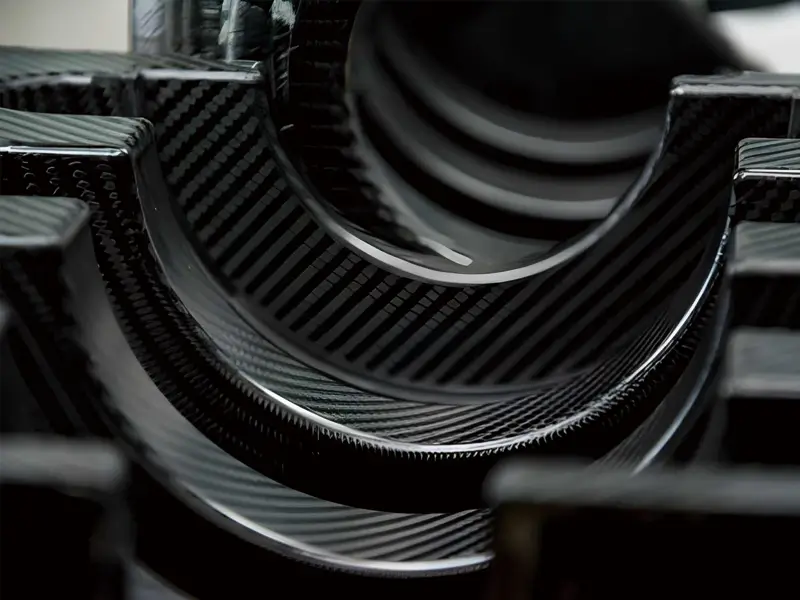
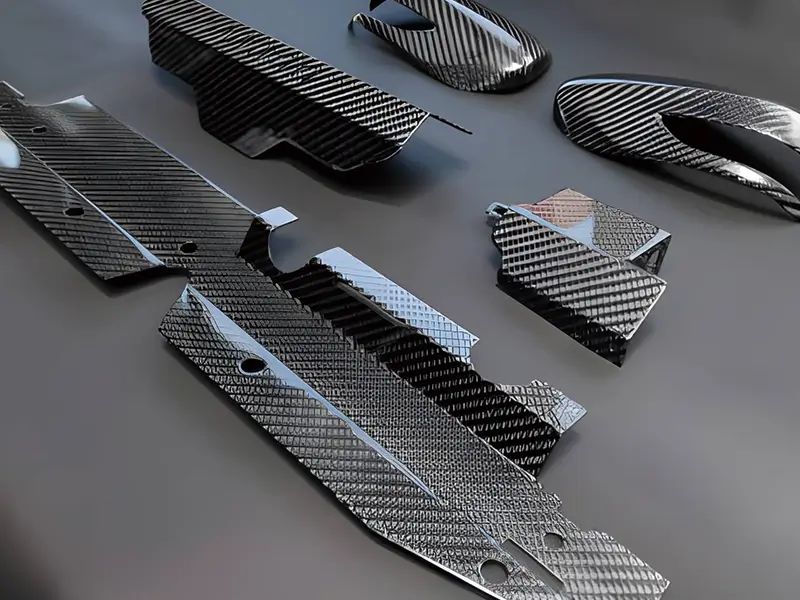
The automotive industry has utilized CFRP to create high-performance automobiles and electric vehicles by reducing the overall weight of the vehicle and improving the overall efficiency of the vehicles. Automotive applications for CFRP include, but are not limited to, body panels, structural tubs, battery enclosures, drive shafts, and aerodynamic components. The use of CFRP in vehicles helps a vehicle to accelerate more quickly without sacrificing structural integrity and handling.
Sports Equipment
Bicycles, tennis racquets, golf clubs, skis, and snowboards are a few examples of sporting goods manufactured from CFRP. CFRP offers athletes increased stiffness, strength, and lightweight materials for performance. The benefits for the athlete include enhanced maneuverability and increased precision and control during competitive sport.
Medical Devices
Prosthetics, orthotics, and mobility aids use CFRP as their material. Imaging tables and surgical supports use CFRP as it does not interfere with the X-ray and other medical imaging techniques. The lightweight and strength of CFRP facilitate easier handling by patients and healthcare professionals.
Industrial & Robotics
Robotic arms, machine components, and high-speed tooling (HST) utilize CFRP to provide strength and rigidity while reducing the overall weight of the component. The increased stiffness of the CFRP material aids in increasing performance levels and decreasing vibrations.
Civil Engineering & Energy
CFRP is used to increase the structural integrity of the majority of bridges, beams, and columns. Wind turbine structures, wind turbine blade structures, and lightweight structural panels also benefit from the high strength-to-weight ratio of CFRP;
Carbon Fibre vs CFRP
CFRP is a composite material that is created when the engineer uses carbon fibre to create a composite by combining it with a polymer resin that provides strength and creates an overall finished product. The raw carbon fibres are strong but have no utility without the added polymer; on the other hand, CFRP provides strength, rigidity, is able to hold loads of weight, and helps to resist bending and deformation in actual usable components. Most companies list their products on the market as “carbon fibre”; however, they are most often made of CFRP. CFRP allows engineers to create custom and complex structural shapes while keeping the same or greater strength as using only carbon fibre.
CFRP vs Aluminium
CFRP is lighter than aluminium and is able to support the same or greater force/lift in comparison to aluminium. CFRP helps to reduce the weight of vehicles or aircraft; therefore, FlF (flier-weight/fighter jet/aircraft) is a benefit of CFRP’s weight reduction capability. As a result, CFRP will be less likely to deform or bend under heavy loads, whereas aluminium will. Lastly, aluminium has a much lower cost than CFRP, and because of its ease of machining, it remains the material of choice for many designers when working with a lower budget.
CFRP vs Steel
Although steel has superior impact resistance/toughness to CFRP, CFRP has the advantage of having a significant weight advantage (up to 50% to 70% lighter than steel) without compromising its load-carrying capacity. Engineers typically prefer to use steel for parts that require maximum impact resistance or parts where costs are a significant consideration. CFRP is the material of choice for lightweight structural applications requiring high degrees of stiffness, strength, and fatigue resistance (e.g., aircraft frames, high-performance automotive parts).
CFRP and GFRP
GFRP is considerably cheaper than CFRP and has lower stiffness and strength than CFRP. GFRP is typically used for low-cost applications, including boats, panels, and other large construction components. CFRP is preferred over GFRP in high-stress applications requiring precision, including aerospace, electric vehicles, and sporting goods. Engineers typically select CFRP when the benefits of increased strength, stiffness,s and reduced weight outweigh the associated costs.
Conclusion
CFRP is a composite material created from carbon fibres and polymer resin, giving it both lightweight properties and very high strength. CFRP has applications across aerospace, automotive, sports,s and other industries. Despite being expensive and having processing challenges, CFRP is an important material in modern High-Performance Engineering because it has a very high strength-to-weight ratio, as well as design flexibility.
FAQs
What are the uses of CFRP?
The typical applications of CFRP include, but are certainly not limited to, aerospace, automotive, electric vehicles (EV), sporting goods, medical devices, robotics, and civil engineering applications. An engineer would select CFRP as the design material based on its superior load-carrying capacity at a lower weight than other materials.
Is CFRP stronger than steel?
Compared to steel, CFRP has a higher strength-to-weight ratio, allowing it to support as much or even more weight compared to steel but at a lighter weight overall. Steel does, however, provide superior impact resistance. CFRP is best suited for lightweight, rigid structures, while steel is still the best material to utilize in high-impact or heavy load-bearing applications.
Is CFRP real carbon fiber?
CFRP does indeed contain “real” carbon fibers; however, the carbon fiber is combined with a polymeric resin to make a composite material. Any products labelled as being made of “carbon fiber” are typically CFRP. The carbon fiber alone cannot be made into solid and useful parts without having the resin matrix.
Which is Better, CFRP or GFRP?
CFRP is more rigid, stronger, and lighter than GFRP. When deciding between CFRP and GFRP, GFRP is a more economical choice and is appropriate for low-stress and budget-sensitive applications. In contrast, CFRP is the appropriate choice for engineers to select for aerospace, automotive, and high-performance sporting applications; GFRP is suitable for use in boats, panels, and general-purpose structural applications.
What is CFRP Made Of?
CFRP is produced using carbon fibres embedded within a polymeric matrix. The carbon fibres impart stiffness and strength to the CFRP, and the resin forms, shapes, and protects the CFRP. The combined result of the two in a composite produces an extremely lightweight, high-strength,h and durable material, CFRP.

 English
  Russian
  German
  Spanish
  French
  Portuguese