 Aller au contenu
Titanium CNC Machining: The Ultimate Guide
Over the years, titanium has been established as the go-to material for use across industries such as automotive, defense, aerospace, and medical. Titanium, distinguished by its incredible corrosion resistance, heat resilience, and exceptional strength-to-weight ratio, is an ideal choice in the manufacturing of high-performance components.
Despite these highly sought-after qualities, working with titanium can sometimes prove to be challenging, especially in the absence of the right knowledge.
In this article, we explain everything you need to know about titanium CNC machining, from its use applications to specific techniques, tools you need, and even essential tips to ensure the end result of your project is success.
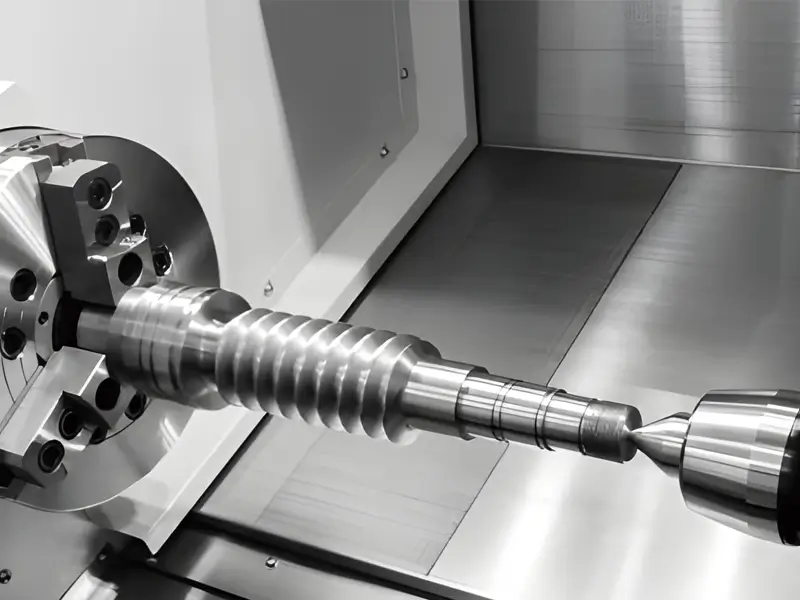
What is Titanium and Why Is It Used in CNC Machining?
Known for its extraordinary qualities, titanium is a chemical element that offers a high strength-to-weight ratio, compared to most other metals. While only slightly less strong, titanium is about 40% lighter than steel. It is an essential material for high-tech industries where performance is a top priority.
Titanium is used in Usinage CNC for many reasons, one of which is its extreme biocompatibility. It is non-toxic and the human body does not reject it. For this reason, it is the gold standard for use in critical medical and dental applications. Titanium makes up the core of CNC machining for essential products such as surgical screws, implants, and joint replacements.
Furthermore, its extraordinary fatigue resistance and ability to withstand extreme temperatures allow its use in demanding components such as jet engines and power generation turbines. The titanium CNC machining process allows these complex, high-precision parts to be created from a solid block of titanium, transforming its raw potential into functional excellence.
However, the same properties that make titanium a great choice for CNC machining also make it notoriously difficult to work with, this includes the low thermal conductivity of titanium. When cutting through titanium, the heat generated is not evenly distributed across the work piece, instead, it is concentrated centrally on the cutting tool.
Not to worry, this article will guide you through achieving peak results with titanium CNC machining.

Advantages and Applications of CNC-Machined Titanium
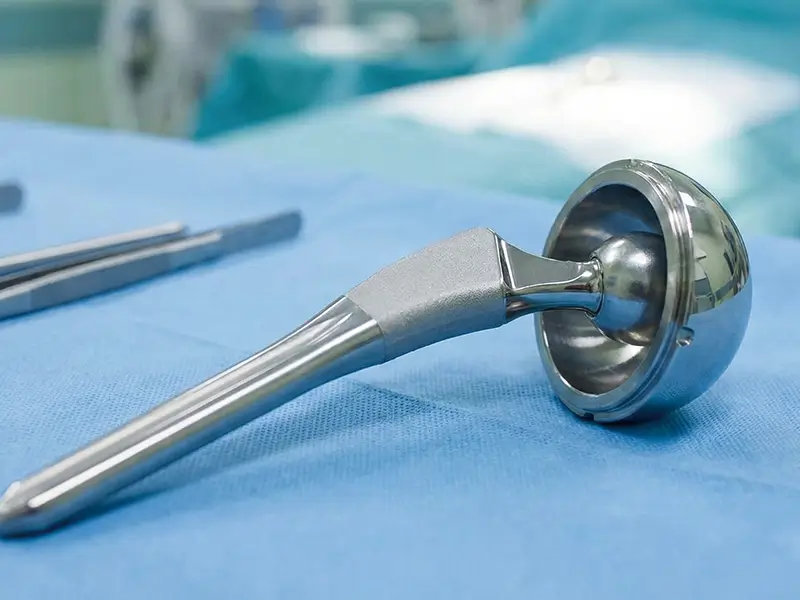
CNC-machined titanium offers you a wide range of advantages that outweighs its shortcomings by a large extent. Advantages of titanium CNC machining includes but not limited to biocompatibility, exceptional durability, and resistance to corrosion.
The special offerings of CNC-machined titanium makes it an unmistakable core material in a lot of industries. Let’s take a look at the use applications of CNC-machined titanium below.
- Aérospatiale
In the aerospace industry, titanium plays a key role in the production of aircraft frames, jet engine parts, fasteners, landing gear, etc. These components require resistance to heat and lightweightedness to reduce fuel consumption, maintain structural integrity, and generally function as they ought to. The low thermal conductivity and reduced weight of titanium fulfils all of this.
- Medical and Dental
The biocompatibility of Titanium posits it as the material standard for manufacturing implants such as bone screws, and joint replacements (hip, knee, shoulder), spinal fixation rods, and other components used in the surgical and medical field. Titanium is non-toxic, and as such, integrates safely with the human body.
- Military and Defense
Titanium possesses such properties that make it incredibly durable and resistant to corrosion. This makes it an essential resource in the production of military and defense hardware. Titanium is crucial in constructing armor, missile components, submarine hulls, and other key parts of military hardwares that operate under extreme conditions.
- Automobile
As a manufacturer of motor parts such as connecting rods, engine valves, and exhaust systems of high performance vehicles, titanium is an essential material to the success of your production. Titanium offers less mass and more high-temperature resistance to automotive components.
- Marine
Titanium is the standard in the marine industry, particularly for the manufacturing of components such as shafts and propellers. Titanium is highly resistant to corrosion caused by salt water, and is consequently ideal for all marine structure parts that are exposed to salty sea water. It significantly helps to extend the lifespan of these components.
- Industrial Manufacturing
Titanium is used for building industrial equipment and machinery such as heat exchangers, piping, and pressure vessels. Titanium’s incredible resistance to corrosive chemicals and overall reliability makes it a popular material in chemical processing plants.
- Techniques for Machining Titanium
To achieve peak titanium CNC machining, specific strategies must be employed. These strategies, designed to manage heat, minimize tool pressure, and ensure efficient evacuation of chips, can be divided into two; conventional machining techniques and advanced machining techniques.
Conventional Machining Techniques
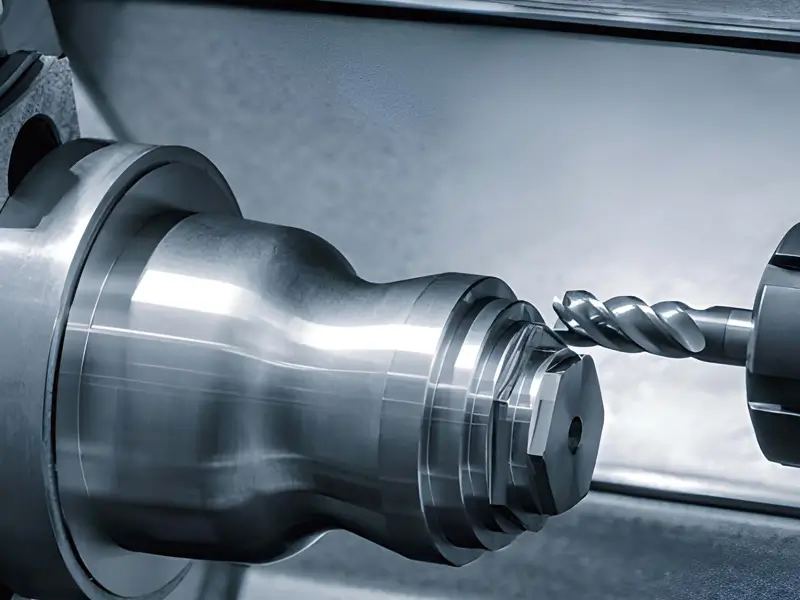
Conventional machining techniques are the foundational and most essential methods for working with titanium.
Each method, or technique, requires specific strategies to ease and effectively deal with the challenges posed by titanium. Let’s take a look at these conventional machining techniques.
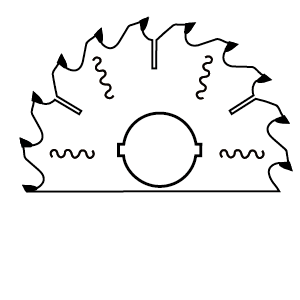
- Sawing: Abrasive or carbide tipped blades are a requirement for sawing titanium in CNC machining. You must ensure to work with a slow (or at least moderate feed rate), maintain a proper blade tension, and apply a considerable amount of coolant. The coolant keeps the material from overheating and wearing off prematurely.
- Tournage: To solve the elasticity problem of titanium, it is crucial to employ a robust setup. With sharp carbide inserts, PVD or TiAlN coatings, and low RPM with a high-torque machine, you can maintain a constant feed rate, eliminating work hardening. High pressure coolant is also essential for heat reduction and chip control.
- Perçage: The drilling technique is usually employed for tackling the intense heat that comes with titanium CNC machining. For this strategy, it is important to make use of rigid titanium aluminum nitride (TiAlN). To remove chips and prevent them from being re-cut, high pressure coolant through the spindle is best recommended. Bear in mind that a consistent feed is crucial to eliminating fretting and an increment in drilling cycle. This helps to remove chips from deep holes.
- Fraisage: This is the preferred technique for creating a thick-thin chip that ensures that heat is effectively dissipated from the workpiece. For this technique, rigid spindles and tool holders are essential for tackling the toughness of titanium. If you’re using the milling technique, make sure to keep radial engagement low (less than 70% of cutter diameter) and also use toolpaths that arc into the cut, reducing impact.
Advanced Machining Techniques
To achieve titanium CNC machining in its ultimate form, specific strategies have been set aside. While the basic and conventional titanium CNC machining techniques get the jobs done, advanced techniques take the job further up a notch.
These techniques focus on reducing thermal impact, accommodating complex component geometries, and optimizing the efficiency of the manufacturing processes.
- High-Speed Machining (HSM): although the term “high speed” is a subjectively accepted name for titanium, this technique uses high feed rates combined with low radial depths of cut. High-Speed machining helps to create thin chips that move heat more effectively and reduce the load on the tool.
- Plunge Milling: The plunge milling technique is a very effective strategy, typically used for roughing deep pockets or cavities. The plunge milling technique interacts with the material along the tool axis (axially) instead of radially, directing forces vertically into the spindle. This strategy helps to minimize tool deflection and vibration.
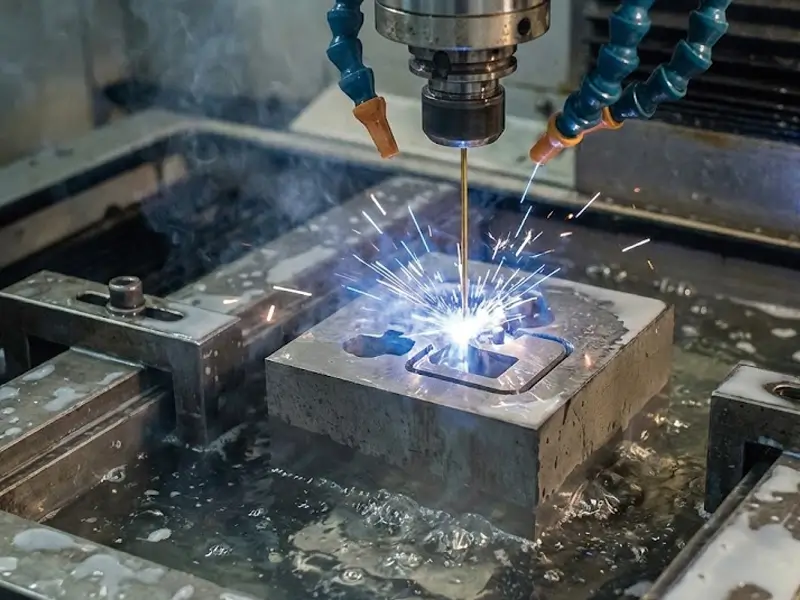
- Electrical Discharge Machining (EDM): This is a non-contact technique that makes use of electric sparks to erode the material. Electrical Discharge Machining is ideal for creating complex and intricate features that require high precision, reason being that EDM does not impose any mechanical stress on the workpiece, eliminating any potential risk of distortion.
- Waterjet Cutting: This CNC machining strategy helps to safeguard material properties and also create blanks with an almost-perfect shape before final machining. Waterjet cutting involves using a high-pressure waterjet to cut titanium without creating a heat-affected zone (HAZ).
Finishing Techniques for Titanium Parts
To meet functional requirements and aesthetic specifications such as surface roughness (Ra) reduction and durability improvement, it is undebatable to employ finishing techniques for titanium parts. What are these finishing techniques?
- Grinding: For finishing, use hard abrasive wheels (like cubic boron nitride or cBN) to achieve very close tolerance levels and smooth finishes. Low pressure and constant flow of coolant are very important to prevent surface damage.
- Polishing and Buffing: This finishing technique involves the use of fine abrasives to reduce surface roughness to a significant extent. Polishing and buffing is essential for improving the fatigue life of a component by removing microscopic stressors.
- Ébavurage: Deburring is a finishing technique that involves removing sharp edges and burrs from components. Deburring is critical for applications in industries like aerospace and Medicare. This is because defects in components can lead to faulty operations, and as a result, the deburring technique is used to improve the safety and functionality of these components.
- Bead Blasting: Bead blasting is used to create a uniform, non-directional matte surface. This technique is ideal for getting components cleaned and preparing them for subsequent processes like anodizing.
- Anodizing: This is an electrochemical process that involves creating a hard, protective oxide layer on the surface. It can be used to improve wear resistance and create a wide array of colors for identification.
How Does Titanium Compare to Other Materials?
In every engineering project, one of the most essential steps or phases that you must complete is choosing the right material for your project. Achieving this requires you to create a balance between milestones that matter the most to you, for example, cost, performance, machinability, customization, and so on.
While titanium stands out exceptionally in strength-to-weight ratio and corrosion resistance, other common metals like aluminum and stainless steel also have their own unique strengths. Identifying these will help you make better choices as to what you’re trading off for what.
The table below provides you with a direct comparison of key properties, between titanium, stainless steel, and aluminum.
Property | Titanium (Ti-6Al-4V) | Stainless Steel (316) | Aluminum (6061) |
Strength-to-Weight | Excellent | Good | Good |
Résistance à la corrosion | Excellent | Very Good | Good |
Machinability | Poor / Difficult | Fair / Moderate | Excellent |
Coût | Very High | Moderate | Low |
Thermal Conductivity | Very Low | Low | Haut |
The Right Tools for Machining Titanium
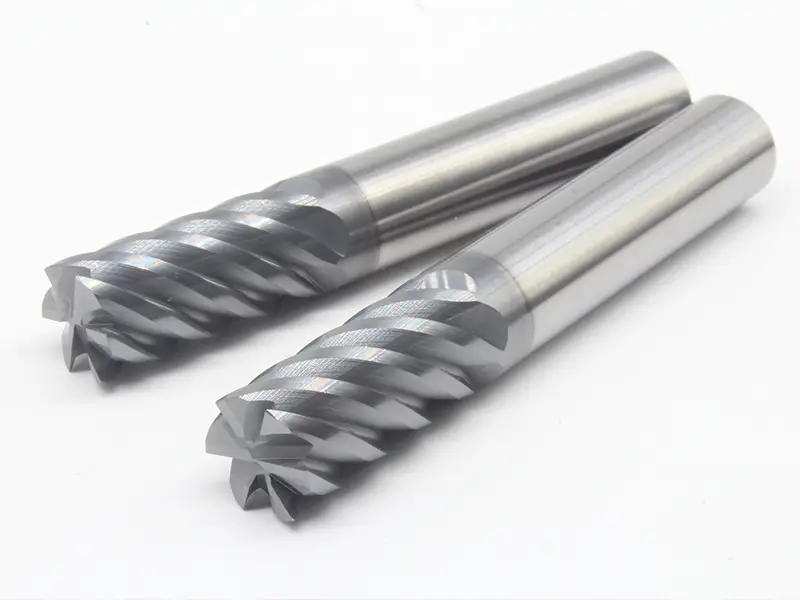
Using regular tools for titanium CNC machining can end in a disaster. There are tools designed specifically to withstand the extreme heat and abrasive nature of titanium. At Sundi Precision Tools, we ensure that the right tools for your projects are always within your reach. So what makes a tool ideal for titanium machining?
- Tool Material
To create a thermal barrier that safeguards the carbide substrate, only use tools that are protected with heat-resistant coatings like titanium aluminum nitride (TiAlN) or titanium nitride and alumina (AlTiN). Use sharp, premium-quality carbides. Sundi’s advanced carbide tools and coatings have you covered.
- Géométrie de l’outil
Use tools with a high number of flutes (5-7 flutes or more). This class of tools offer you higher feed rates at lower RPMs. Titanium end mills from Sundi Precision Tools come with a specialized pitch geometry, making it possible to disrupt harmful harmonics and eliminate vibrations.
- Cutting Edges
Your tools must be very sharp and have a positive rake angle to cut the material cleanly instead of puncturing through it. A stable corner radius is critical to avoiding chips at the most vulnerable end of the tool.
- Tool Holders
Use high-quality tool holders like shrink-fit ones. These help to prevent the tool from pulling out under high torque. It also reduces runout and ensures a uniform cut and longer tool lifespan.
Selecting the Right Titanium Alloy and Grade
There are over 40 grades of titanium, but only a handful are used commonly when it comes to CNC machining. Let’s take a quick look at these grades and their properties in the table below:
Grade | Description | Key Properties | Airframes, chemical processing, marine |
Grade 2 | Commercially Pure (CP) – “Workhorse” | Good strength, excellent corrosion resistance & formability | Common Applications |
Grade 4 | Strongest Commercially Pure (CP) | Highest strength of pure grades, excellent corrosion resistance | Cryogenic vessels, surgical hardware, airframes |
Grade 5 | Ti-6Al-4V – The most common alloy | Excellent strength, heat treatable, corrosion resistance | Aerospace structures, engines, medical devices |
Grade 7 | CP Titanium + Palladium | Superior corrosion resistance, especially in acids | Chemical processing equipment |
Grade 23 | Ti-6Al-4V ELI (Extra Low Interstitials) | Superior fracture toughness and biocompatibility | Medical/dental implants, surgical staples, orthopedic hardware |
Key Tips for Successful Titanium CNC Machining
- Ensure to keep your cutting speed low. The typical speed range should be between 30 and 60 meters per minute (m/min). Begin slowly and go up from there. Tool failures are usually a result of excessive speed.
- Keep the feed rate high and constant as it helps to prevent fretting and prevent work hardening.
- It is important to use a high-pressure coolant (over 1,000 psi) whenever you can. This is because it helps with chip removal, heat control, and seizure prevention.
- Avoid chop buildup because titanium chips are highly flammable and can go up in flames with a spark. If this happens, only use a Class D fire extinguisher, as using water aggravates titanium fire.
- Always have your approved Personal Protective Equipment (PPE), such as safety glasses and hand gloves, on.
- Confirm the machine rigidity before use, ensure the workpiece support and tool holders are tightly secure to minimize vibration and chatter.
Conclusion
Successfully machining titanium can be a very challenging task, especially if you’re unable to balance thermal management, rigidity, and correct cutting strategies. Thanks to the introduction of new and advanced high-performance tools in the market today, working with advanced materials such as titanium can now be more predictable and successful.
At Sundi Precision Tools, we provide cutting-edge tooling solutions that are specifically tailored to address your peculiar engineering concerns, especially when dealing with titanium.
Enough talking, time to turn your titanium CNC machining challenges into selling points, nous contacter today to find out how.
FAQ
Q: Can Titanium be CNC Machined?
A: Yes, definitely, titanium can be CNC machined. In fact, titanium is a machinist’s favourite material due to its great corrosion-resistance and strength-to-weight ratio.
Q: What is the Most Common Tool for Titanium Machining?
A: Carbide tools are the most preferred tools for CNC machining titanium.
Q: Which is Harder to Machine Between Titanium and Aluminum?
A : The harder material to machine between titanium and aluminum is titanium.
Q: Is Titanium Harder to Machine Than Aluminum?
A: Yes, titanium is harder to machine than aluminum.

 French
  English
  Russian
  German
  Spanish
  Portuguese