 Aller au contenu
What is Gun Drilling? A Guide to Precision Deep Hole Drilling
Gun drilling is a specialized process used to create deep, narrow holes with unparalleled precision. Initially developed for manufacturing gun barrels, this technique has since become indispensable in industries that demand the utmost accuracy in deep hole drilling. From aerospace to automotive and medical applications, gun drilling plays a crucial role in producing parts that require exceptional straightness, smoothness, and high-quality finishes.
Contenu
What is Gun Drilling and Why is It Important?
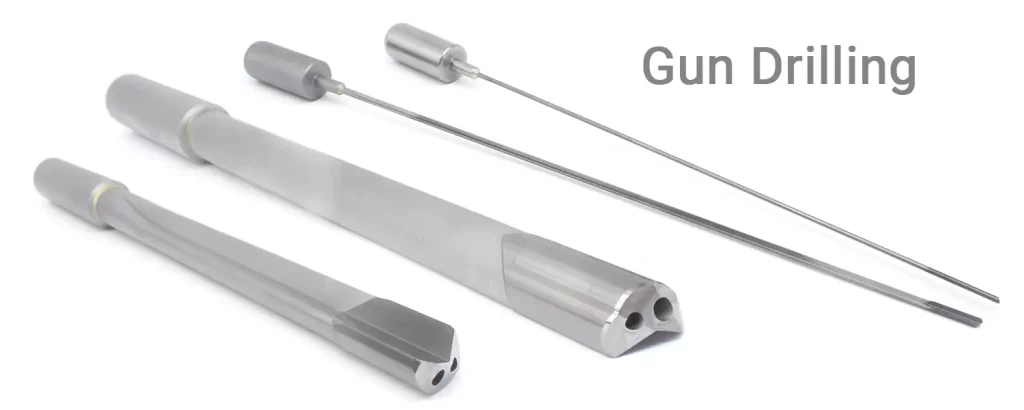
Gun drilling is a method used for drilling deep holes with high depth-to-diameter ratios, usually up to 400:1. This process uses a long, slender cutting tool known as a gundrill, designed specifically to remove chips effectively and maintain the straightness of the hole. Unlike traditional forets hélicoïdaux, which have two cutting edges, gundrills feature a single cutting edge, which provides a more controlled, efficient cut. This is especially valuable when drilling deep holes in tough materials like acier, titanium, and composites.
The gundrill tool can handle diameters as small as 1 mm, with the capability to drill holes up to 50 mm in diameter. The primary advantage of this technique lies in its ability to achieve depth-to-diameter ratios that far exceed what conventional drilling methods can handle. This makes it the go-to solution for industries that need extremely deep, narrow holes for specialized applications.
Comment fonctionne le perçage profond ?
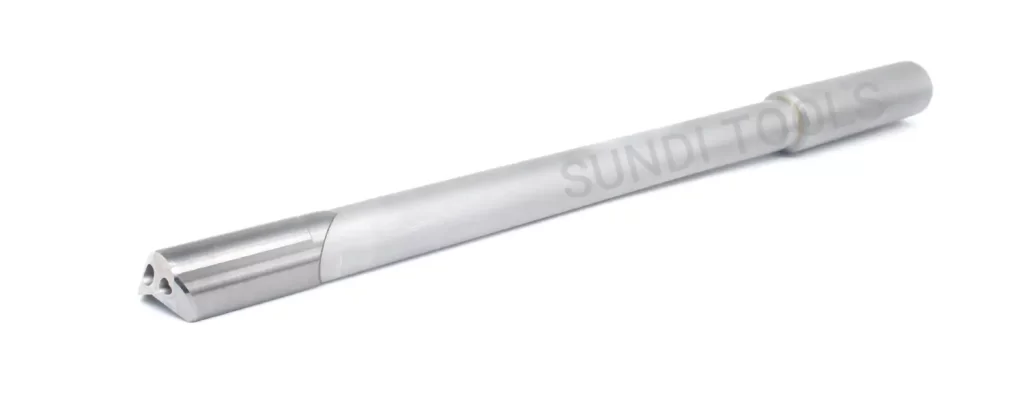
A deeper understanding of the mechanics of gun drilling reveals why it is so effective in precision applications. The gundrill tool is made up of three primary components:
Shank – The shank of the tool connects the gundrill to the machine. It is crucial for maintaining stability during the drilling process, especially when the hole extends to significant depths.
Tip – The tip is the cutting end of the tool, which is designed to make smooth, precise cuts as it advances through the workpiece. The tip is typically ground to very fine tolerances to ensure accuracy.
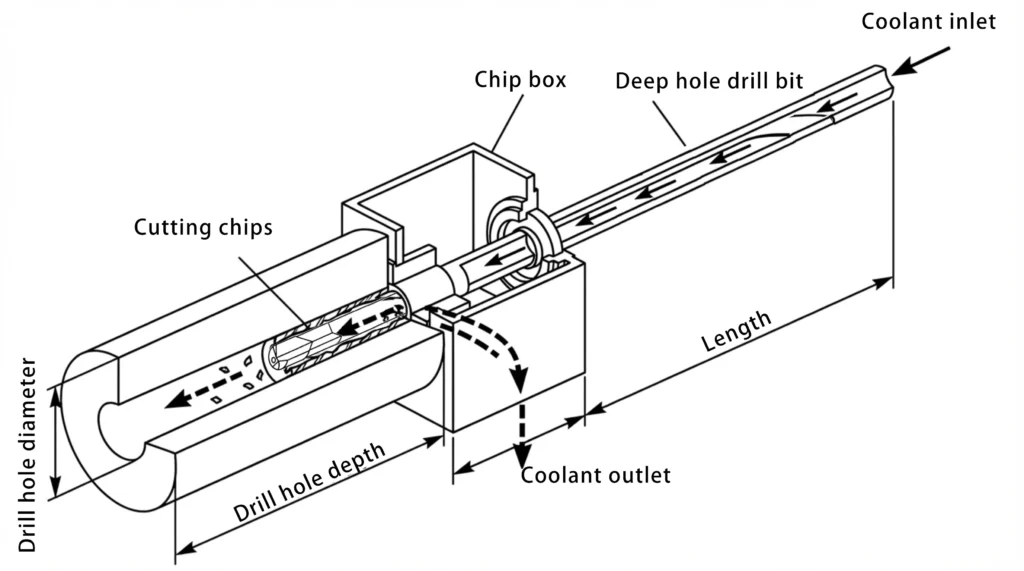
Coolant Hole – A small internal hole runs through the tool, which delivers coolant directly to the cutting area. This not only cools the tool but also helps evacuate chips, preventing them from clogging the hole and affecting the drilling performance.
The internal coolant system is vital for maintaining the tool’s efficiency. As the gundrill rotates and advances into the material, coolant flows through the internal hole, reducing heat buildup and ensuring that chips are flushed away. This allows for a smoother finish, reduces wear on the tool, and prevents overheating, which could compromise both the tool and the workpiece.
Why Gun Drilling is a Preferred Solution for Deep Hole Drilling
Gun drilling is recognized for its ability to achieve exceptional precision and efficiency in deep hole applications. Let’s explore some of the key reasons why this method is a preferred choice for high-performance industries:
Unmatched Precision: Gun drilling excels at creating holes with extremely tight tolerances. This is particularly important in industries where accuracy is paramount, such as aerospace and medical device manufacturing. The straightness of the hole, combined with the high-quality finish, ensures that parts function exactly as required.
High Depth-to-Diameter Ratios: One of the standout features of gun drilling is its ability to achieve depth-to-diameter ratios of up to 400:1. This makes it ideal for applications requiring deep, narrow holes. For example, in fuel injectors or medical tools, holes may need to be drilled deep into a component, but the diameter must remain small and precise.
Efficient Chip Removal: Traditional drilling methods often struggle with chip removal in deep holes. Gun drilling addresses this challenge by using an internal coolant system to flush out the chips. This continuous chip removal not only ensures a smooth hole but also prevents damage to both the tool and the workpiece.
Tool Longevity and Performance: The continuous flow of coolant helps keep the gundrill tool sharp and free from wear. In comparison to other deep hole drilling methods, gun drilling offers longer tool life, which translates to fewer tool changes, reducing downtime and production costs.
Applications of Gun Drilling in Modern Manufacturing
Gun drilling’s precision makes it essential in several industries that require deep, narrow holes with exact tolerances. Some of the common applications include:
Aérospatiale: Gun drilling is extensively used in the aerospace industry to drill fuel injectors, turbine blades, and engine components. These parts must meet strict tolerances for both strength and weight, making gun drilling the ideal choice for high-performance parts.
Automobile: The automotive industry relies on gun drilling for components such as camshafts, hydraulic valves, and engine parts. The need for precision in fuel systems and engine components requires the high accuracy that gun drilling can provide.
Dispositifs médicaux: In the medical field, gun drilling is used to create surgical tools, implants, and other devices where precision and cleanliness are crucial. The ability to drill deep, narrow holes with tight tolerances is essential for these applications.
Molds and Dies: Gun drilling is also a popular choice for creating cooling channels in molds, particularly for plastic injection and die-casting industries. The deep, narrow holes required in these molds benefit from gun drilling’s ability to produce highly precise results.
Gun Drilling vs. Other Drilling Methods
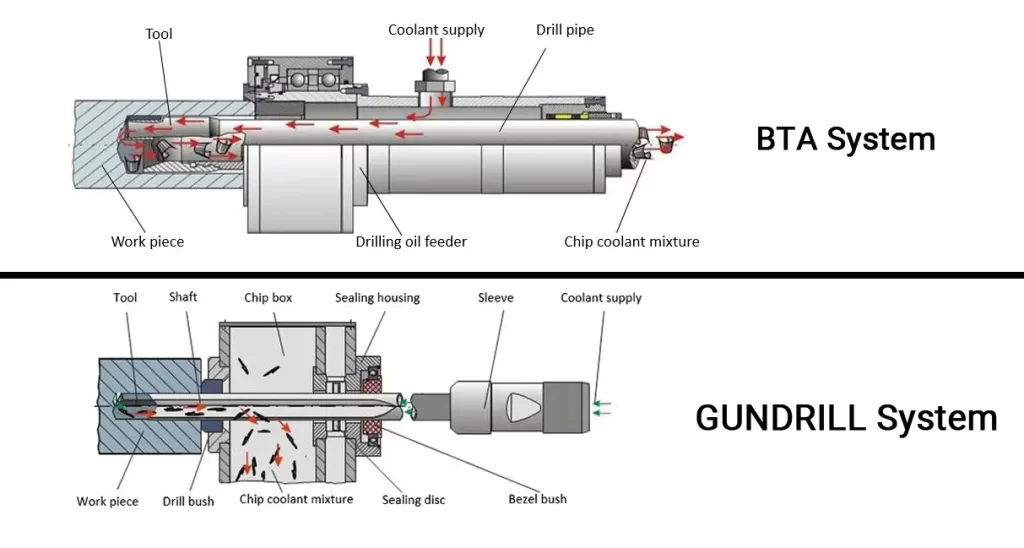
While gun drilling is an excellent option for deep, narrow holes, it’s essential to understand how it compares to other deep hole drilling methods like BTA (Boring and Trepanning Association) drilling.
Précision: Gun drilling is particularly effective for smaller diameters, where tight tolerances and straightness are required. On the other hand, BTA drilling is more suitable for larger holes but with slightly less precision than gun drilling.
Coolant Delivery: Gun drilling uses an internal coolant system, which is more effective for deep hole applications compared to BTA, which uses external coolant delivery.
Depth-to-Diameter Ratios: Gun drilling can achieve much higher depth-to-diameter ratios than other methods, making it ideal for drilling extremely deep holes.
Limitations and Considerations
Though gun drilling is a highly effective method, it does have some limitations:
Compatibilité des matériaux: While gun drilling is ideal for softer materials such as aluminum and brass, harder materials like titanium and tool steel may cause quicker tool wear. Careful consideration must be given to the material being drilled to ensure the best performance.
Cost and Setup: Gun drilling tools and machines are specialized and can be expensive. Additionally, the setup process can be more complex than traditional drilling, requiring skilled technicians to ensure optimal performance.
Hole Size Limitations: Gun drilling is best suited for smaller holes. For larger holes, other methods, such as BTA drilling or trepanning, may be more effective.
Conclusion: The Power of Precision in Gun Drilling
Gun drilling remains one of the most effective techniques for creating deep, narrow holes with unmatched precision. Whether for aerospace, automotive, medical, or mold-making industries, this method offers the accuracy, efficiency, and durability that many applications demand.
For those looking to achieve high-quality results in deep hole drilling, gun drilling provides an invaluable solution. However, it’s essential to understand its limitations, and for the best results, working with a specialized tool manufacturer who understands your specific needs is crucial.
Frequently Asked Questions (FAQ) About Gun Drilling
1. What materials can be drilled using gun drilling?
Gun drilling is effective on materials such as aluminum, steel, brass, and titanium. It also works well with plastics and composites. However, harder materials, like tool steels, may wear out the tools faster and require more careful handling.
2. How deep can gun drilling go?
Gun drilling can achieve depth-to-diameter ratios of up to 400:1, meaning a 1 mm hole can be drilled up to 400 mm deep. This makes it suitable for applications where deep, narrow holes are required.
3. Why is coolant necessary in gun drilling?
Coolant is vital to prevent the tool from overheating and to clear away chips. The coolant system keeps the tool sharp and ensures that the hole remains smooth and clean. Without coolant, the tool could wear out quickly, and the hole could become clogged with chips.
4. How is gun drilling different from BTA drilling?
Gun drilling is better for smaller, deep holes, providing higher precision. It uses an internal coolant system for better chip removal. BTA drilling, in contrast, is suited for larger holes, with an external coolant system, but it typically has lower precision for deep, narrow holes.
5. Can gun drilling be done on a regular CNC machine?
Yes, you can use regular CNC machines for gun drilling, but dedicated gun drilling machines are generally preferred for the best results, particularly when working with deep, narrow holes that require high precision.

 French
  English
  Russian
  German
  Spanish
  Portuguese