










What is Gun Drilling? A Guide to Precision Deep Hole Drilling
Gun drilling is a specialised method for producing deep, narrow holes. It can provide controlled straightness and surface finish in suitable applications, but accuracy depends on the complete process. Its industrial uses include aerospace, automotive, medical components, and mould cooling channels.
Contents
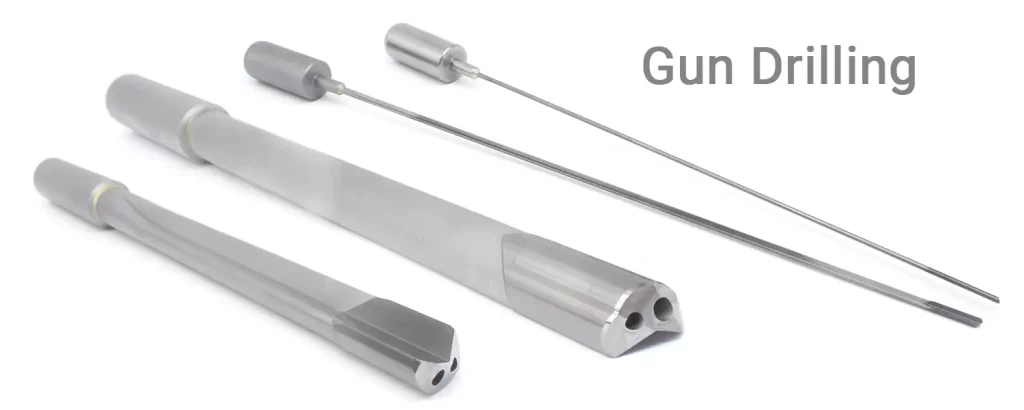
What is Gun Drilling and Why is It Important?
Gun drilling uses a slender tool with coolant supply and chip-return geometry suited to deep holes. Unlike common twist drills, a conventional single-lip gundrill has one cutting edge. Applications in steel, titanium, or composites require suitable tooling and conditions. The original 400:1 ratio describes an extreme capability, not a routine guarantee.
The gundrill tool and machine determine the available diameter and depth range. The original 1 mm to 50 mm examples are not universal limits, and their endpoints cannot automatically be combined with the maximum depth ratio.
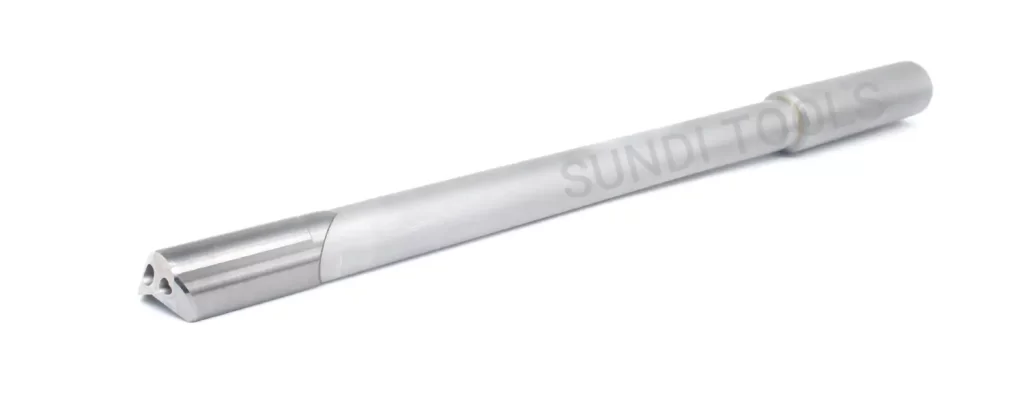
How Gun Drilling Works?
A deeper understanding of the mechanics of gun drilling reveals why it is so effective in precision applications. The gundrill tool is made up of three primary components:
Shank – The shank of the tool connects the gundrill to the machine. It is crucial for maintaining stability during the drilling process, especially when the hole extends to significant depths.
Tip – The tip is the cutting end of the tool, which is designed to make smooth, precise cuts as it advances through the workpiece. The tip is typically ground to very fine tolerances to ensure accuracy.
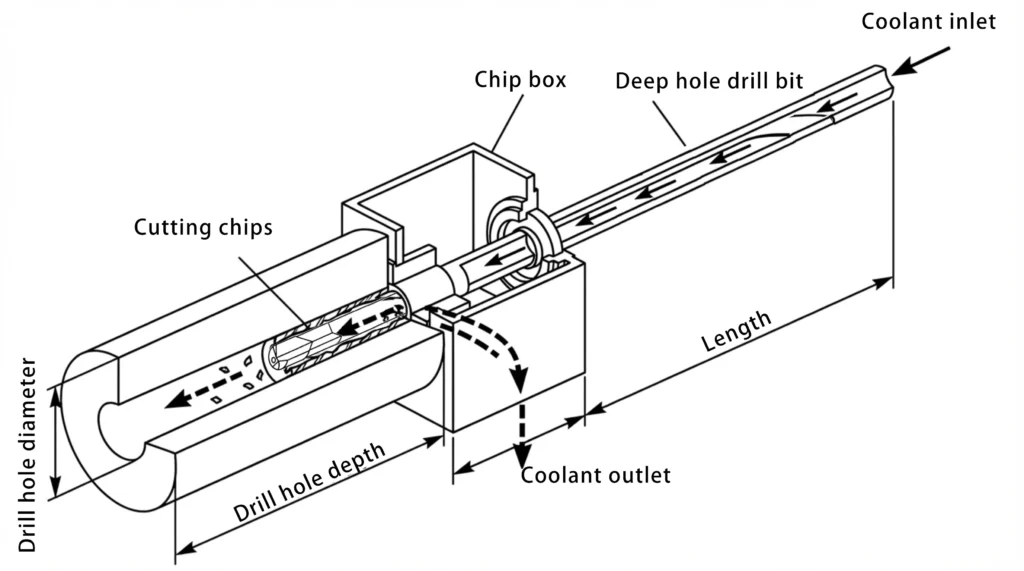
Coolant Hole – A small internal hole runs through the tool, which delivers coolant directly to the cutting area. This not only cools the tool but also helps evacuate chips, preventing them from clogging the hole and affecting the drilling performance.
The internal coolant supply reaches the cutting zone and returns with chips along the external flute of a conventional single-lip gundrill. Relative rotation may come from the tool, workpiece, or both. Suitable coolant flow supports the process but does not eliminate wear or overheating.
Why Gun Drilling is a Preferred Solution for Deep Hole Drilling
Gun drilling is recognized for its ability to achieve exceptional precision and efficiency in deep hole applications. Let’s explore some of the key reasons why this method is a preferred choice for high-performance industries:
Controlled Precision: Gun drilling can produce demanding deep holes when alignment, entry guidance, supports, tooling, and process control meet the specification. Straightness and finish must be verified rather than assumed.
High Depth-to-Diameter Ratios: The original value of up to 400:1 requires specialised equipment and a qualified process. It is not a capability guaranteed for every diameter, material, or machine.
Efficient Chip Removal: Coolant delivery and the external return flute support chip evacuation in conventional gundrilling. Chip control also depends on geometry, flow, material, and cutting data; damage is not automatically prevented.
Tool Longevity and Performance: Appropriate coolant and cutting conditions can support tool life, but the tool still wears. Compare actual life and cost per accepted hole; gundrilling does not universally outlast every other deep-hole method.
Applications of Gun Drilling in Modern Manufacturing
Gun drilling’s precision makes it essential in several industries that require deep, narrow holes with exact tolerances. Some of the common applications include:
Aerospace: Gun drilling is extensively used in the aerospace industry to drill fuel injectors, turbine blades, and engine components. These parts must meet strict tolerances for both strength and weight, making gun drilling the ideal choice for high-performance parts.
Automotive: The automotive industry relies on gun drilling for components such as camshafts, hydraulic valves, and engine parts. The need for precision in fuel systems and engine components requires the high accuracy that gun drilling can provide.
Medical Devices: In the medical field, gun drilling is used to create surgical tools, implants, and other devices where precision and cleanliness are crucial. The ability to drill deep, narrow holes with tight tolerances is essential for these applications.
Molds and Dies: Gun drilling is also a popular choice for creating cooling channels in molds, particularly for plastic injection and die-casting industries. The deep, narrow holes required in these molds benefit from gun drilling’s ability to produce highly precise results.
Gun Drilling vs. Other Drilling Methods
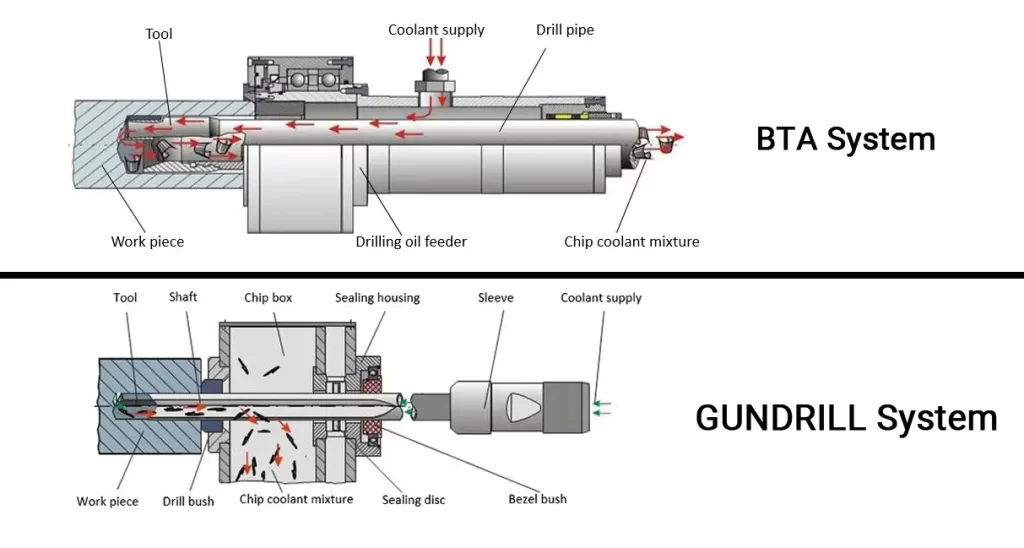
While gun drilling is an excellent option for deep, narrow holes, it’s essential to understand how it compares to other deep hole drilling methods like BTA (Boring and Trepanning Association) drilling.
Precision: Gun drilling often suits smaller deep holes, while BTA systems commonly cover larger sizes. Neither method is universally more accurate; compare validated straightness, tolerance, and finish for the actual application.
Coolant Delivery: Conventional gundrilling supplies coolant internally and returns chips externally along the flute. BTA supplies coolant outside the tube and returns coolant and chips through its interior. These different paths do not establish a universal performance ranking.
Depth-to-Diameter Ratios: Achievable depth depends on the tool, machine, material, supports, and hole specification. Gun drilling does not universally achieve a higher ratio than every other method.
Limitations and Considerations
Though gun drilling is a highly effective method, it does have some limitations:
Material Compatibility: While gun drilling is ideal for softer materials such as aluminum and brass, harder materials like titanium and tool steel may cause quicker tool wear. Careful consideration must be given to the material being drilled to ensure the best performance.
Cost and Setup: Gun drilling tools and machines are specialized and can be expensive. Additionally, the setup process can be more complex than traditional drilling, requiring skilled technicians to ensure optimal performance.
Hole Size Limitations: Gun drilling is best suited for smaller holes. For larger holes, other methods, such as BTA drilling or trepanning, may be more effective.
Conclusion: The Power of Precision in Gun Drilling
Gun drilling is one option for demanding deep, narrow holes in aerospace, automotive, medical, and mould-making applications. Select it using verified process capability rather than assuming unmatched precision, efficiency, or life.
For those looking to achieve high-quality results in deep hole drilling, gun drilling provides an invaluable solution. However, it’s essential to understand its limitations, and for the best results, working with a specialized tool manufacturer who understands your specific needs is crucial.
Frequently Asked Questions (FAQ) About Gun Drilling
1. What materials can be drilled using gun drilling?
Gun drilling is effective on materials such as aluminum, steel, brass, and titanium. It also works well with plastics and composites. However, harder materials, like tool steels, may wear out the tools faster and require more careful handling.
2. How deep can gun drilling go?
The original ratio of 400:1 is an extreme application example, not a universal depth rating. Although 1 mm multiplied by 400 is 400 mm, that arithmetic does not establish that a particular 1 mm drill can produce a conforming 400 mm-deep hole.
3. Why is coolant necessary in gun drilling?
Coolant supports heat control and chip transport in conventional gundrilling. Flow, pressure, filtration, and delivery must suit the tool and machine. It does not keep the edge permanently sharp or guarantee a clean, conforming hole.
4. How is gun drilling different from BTA drilling?
Conventional gundrilling feeds coolant through the tool and returns chips along the external flute. BTA feeds coolant around the tube and returns coolant and chips internally. Select by verified application capability; neither path inherently guarantees better precision.
5. Can gun drilling be done on a regular CNC machine?
Some CNC machining centres can perform qualified gundrilling operations when coolant delivery, entry guidance, support, spindle, and controls are suitable. A regular CNC machine is not automatically capable of every gundrilling depth; verify its limits with the machine and tool suppliers.