 Skip to content
What is Die Casting? Common Die Casting Materials
Die casting is a metal casting process in which molten metals are shaped using reusable molds under high pressure. Due to its high cost, it is mostly used for high-volume production. Common metals used in this process are zinc, magnesium, aluminum, and copper alloys. In this guide, we will cover properties and applications of each material.
What is Die Casting?
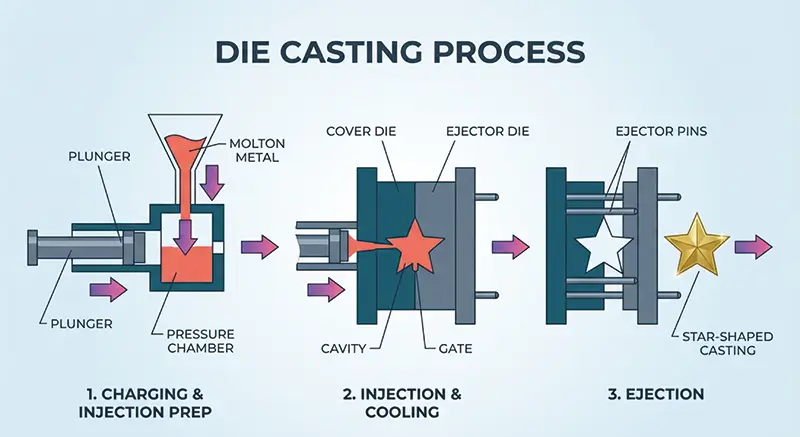
Die casting is a precise manufacturing method for metal parts. This process forces molten metal into a steel mold, or die, at high pressure. Once it cools down, the part is removed, and the die is ready for the next cycle.
Die casting is a versatile process used for making a range of parts. It works well for small electronic components to large engine blocks or automotive parts. For high-volume productions, die casting is cost-effective.
This manufacturing method excels at producing large quantities of identical parts with excellent dimensional accuracy. Parts can have thin walls, complex geometries, and smooth surfaces that require minimal finishing. Die casting reduces material waste and machining time compared to other methods.
Types of Die Casting
Here are the types of die casting:
Hot Chamber Die Casting
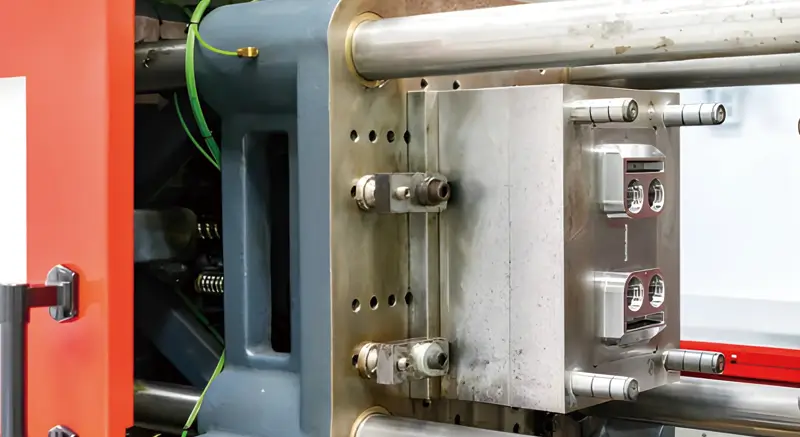
The hot chamber die-casting machines include the melting chamber, which means the metal does not require being melted separately. Hot chamber die casting is typically performed with metals that have a lower melting point, like magnesium and zinc. This process is faster and allows short production cycles.
Cold Chamber Die Casting
Cold chamber die casting does not contain a heating chamber. Instead, molten metal must be transported to the die casting machine using ladles. Therefore, the casting cycle for the cold chamber method is slower than that of hot chamber die-casting machines. It is used to cast metals that possess high melting points, such as aluminum.
Common Materials Used in Die Casting
Choosing the right material for your project is critical when it comes to die-casting. Each metal possesses unique characteristics that should conform to your requirements. Below is a breakdown of the metals commonly used for die-casting.
Zinc Alloys
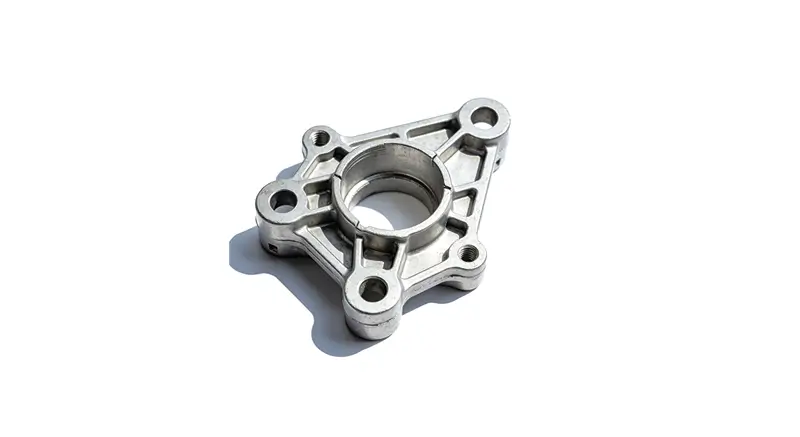
Zinc alloys are the most common die-casting metal due to their relatively low melting point (approximately 380 to 420 °C). These alloys are cost-efficient and simple to use for die-casting because of their excellent fluidity and ability to fill small or intricate configurations. Another advantage is that they have high ductility and impact strength.
Because of their excellent corrosion-resistant properties and decorative values, zinc die-cast parts can be coated with platings, paint, or chrome finishes. The general materials used for die casting of zinc are Zamak 3, Zamak 5, and ZA-8. Each alloy of zinc die casting has different properties that offer a balance between strength and ductility; Zamak 3 offers an optimal balance of properties, Zamak 5 provides higher tensile strength and hardness, and ZA-8 contains increased aluminum, which increases performance at elevated temperatures and creep resistance.
Due to the ability to cast large quantities at fast rates, hot chamber die casting is the ideal method for producing zinc alloys. Zinc die-cast parts produce excellent casting qualities with fine details, dimensional stability over the long term, thin wall thickness when compared to aluminum, and reduced die wear.
Key Characteristics
- Excellent fluidity and castability
- High ductility and impact strength
- Corrosion-resistant with plating, paint, or chrome finishes
- Can fill intricate shapes and thin walls
- Suitable for hot chamber die casting
Applications
Zinc die castings are used in a variety of automotive applications, including brackets, lock housings, and door handles, as well as consumer electronics that require compact housing and connectors. Other uses are in toys, hardware, and decorative trim. The use of zinc die-cast alloys lends itself to numerous applications for small to medium-sized parts.
Magnesium Alloys
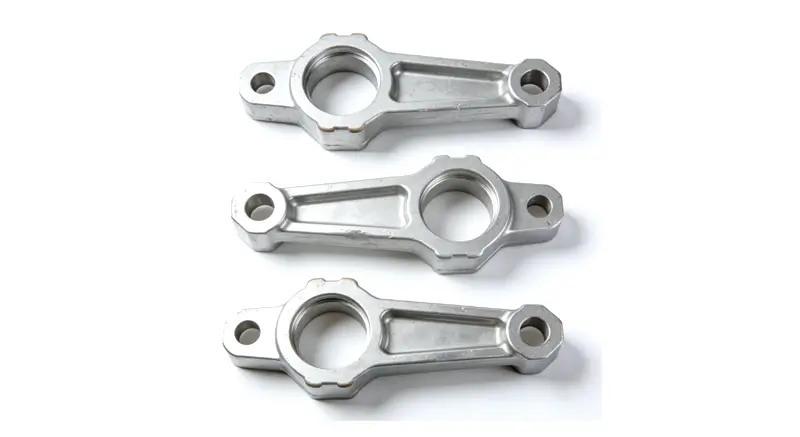
Magnesium alloys are the lightest structural metals used in die casting, weighing roughly 35% less than aluminum and about 75% less than zinc, making them highly desirable for weight-sensitive applications. They offer excellent machinability, strong electromagnetic interference shielding performance, effective heat dissipation, and good dimensional stability during use. Magnesium is more expensive than zinc or aluminum and must be handled carefully due to its reactive nature.
Common die casting alloys include AZ91D, known for its superior strength and corrosion resistance, and AM60B, valued for higher ductility and better energy absorption in impact-prone applications.
Key Characteristics
- Lowest density among die-cast metals
- Excellent stiffness-to-weight ratio
- Good EMI/RFI shielding properties
- Effective vibration damping
- Requires cold chamber die casting
Applications
Magnesium die castings are used extensively in portable electronics such as laptop and tablet housings, as well as in automotive components like steering wheel cores, transmission cases, and instrument panel structures. Aerospace applications also rely on magnesium for brackets and lightweight housings, while power tools benefit from reduced weight without sacrificing rigidity.
Aluminum Alloys
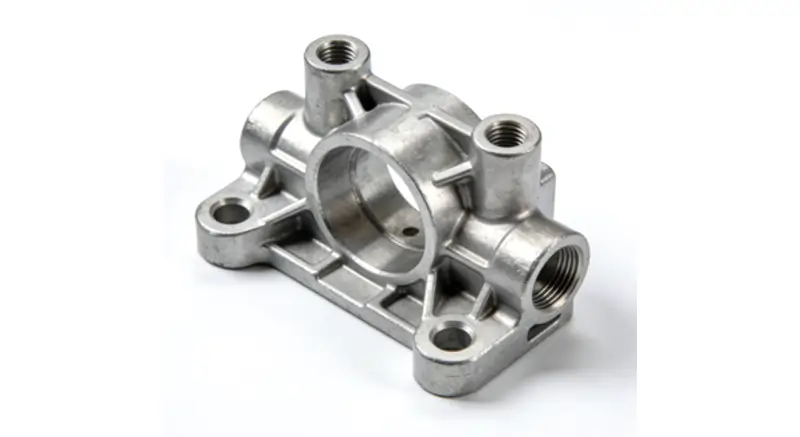
Aluminum alloys are often used to create parts because they provide a great combination of weight, strength, and resistance to rust/corrosion. Compared with zinc, aluminum is much lighter in weight, but when used as a die casting material, the two metals have relatively similar mechanical characteristics. Aluminum is also more able than zinc or magnesium to withstand higher performance temperatures. It naturally resists corrosion, especially exposure to outdoor and/or ocean conditions. Aluminum can transfer heat well, which makes it useful in managing temperature.
The most common die-casting aluminum alloy is A380; it provides good fluidity for filling the die and sufficient mechanical strength to withstand operational stresses. ADC12 provides similar qualities (and may be found more frequently in manufacturing within Asia). A383 provides superior filling capabilities and is generally recommended for highly complex and/or thin-wall die-casting geometries. The aluminum alloys should be manufactured using the cold chamber die-casting method to achieve optimal results.
Key Characteristics
- Moderate density with high strength-to-weight ratio
- Excellent thermal and electrical conductivity
- Natural corrosion resistance
- Suitable for complex geometries and thin walls
Applications
The majority of aluminum die-cast alloys designed for the automotive industry are used to manufacture engine blocks, transmission bodies, wheels, and other structural components. In addition to the automotive industry, many manufacturers of electronic equipment utilize aluminum to manufacture housings and heat sinks. Other applications include appliances, power tools, telecommunications equipment, and marine hardware requiring durable performance.
Copper Alloys
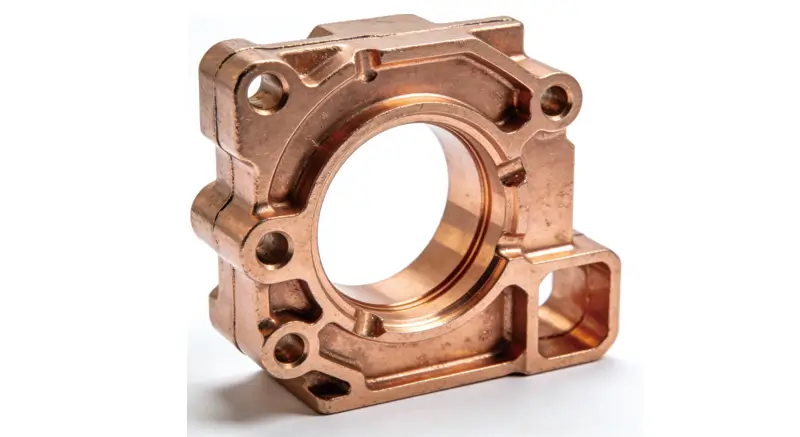
Copper alloys have better electrical and thermal conductivity than almost any other material, making them ideal for many applications that need to perform well in harsh environments with elevated temperatures or require high wear resistance. They retain strength in extreme conditions and are highly corrosion-resistant. However, their high melting temperatures (900–1000 °C) make them more difficult to die cast. Brass (copper-zinc) and bronze (copper-tin) are the primary copper-based die-casting materials. Both require more robust tooling and create greater thermal stress on dies compared to zinc, magnesium, or aluminum.
Key Characteristics
- High electrical and thermal conductivity
- Excellent wear resistance
- Retains strength at elevated temperatures
- Highly corrosion-resistant
Applications
Copper die-castings are commonly found in electrical components such as connectors, terminals, and switching devices. Brass is used in plumbing fixtures and valves due to its corrosion resistance and ease of machining. Bronze is often used in marine hardware for superior saltwater corrosion resistance. Other applications include locks, gears, bushings, ornamental architectural elements, and some musical instrument components.
Factors to Consider When Choosing Die Casting Materials
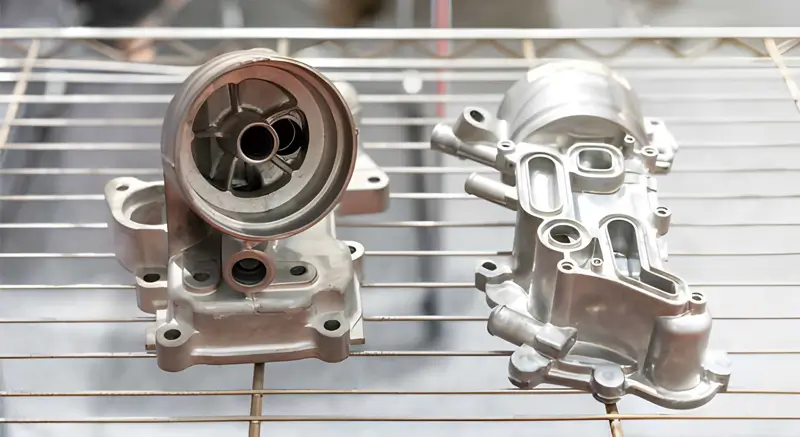
Choosing the proper die-casting alloy is necessary to ensure balanced technical performance and production considerations throughout the part’s life cycle.
- Production volume is critical in determining the proper alloy; zinc produces the quickest cycle times and longest die service life, making it suitable for extremely large production runs. Aluminum and magnesium require more meticulous die maintenance, while copper alloys wear tooling the fastest.
- Dimensional accuracy is another consideration, with zinc providing consistent tight tolerances throughout extended production runs; therefore, there is less need for post-machining. Zinc flows well into complex shapes, thin walls, and fine details.
- Post-processing also affects the choice: zinc is suitable for plating, aluminum for anodizing, and magnesium may need protective coatings.
- Environmental exposure, weight requirements, and overall cost should also guide alloy selection. Magnesium offers the best strength-to-weight ratio, aluminum balances strength and weight, and aluminum has the best natural corrosion resistance.
- Total cost must include materials, tooling, cycle time, and finishing steps.
Conclusion
Successful die casting projects begin with informed material decisions. Your choice impacts part performance, production costs, lead times, and product longevity. Zinc, aluminum, magnesium, and copper alloys each offer distinct properties suited to different applications. Choosing the right material early prevents expensive corrections later.
FAQs
Is 6061 aluminum used for die casting?
No, because it lacks the fluidity required and is prone to hot cracking, making it more suitable for extrusion and forging.
What is the strongest die-cast metal?
Copper alloys are the strongest due to the highest tensile strength per unit weight. Aluminum and magnesium are strong and lightweight options.
What materials are best for automotive structural components?
Aluminum is commonly used for engine mounting points, blocks, transmission housings, and other heavy-load areas. Zinc is used for cost-effective mass production of smaller parts.
How are die-cast materials chosen for aerospace applications?
Magnesium is used for lightweight structural members, and aluminum is selected for applications requiring higher absolute strength. Consider weight, thermal performance, corrosion resistance, and regulatory compliance.

 English
  Russian
  German
  Spanish
  French
  Portuguese