 Saltar para o conteúdo
High-Performance Aluminum Machining: A Guide to Choosing the Right End Mill
For a CNC operator, aluminum can be a deceptive material. While it is softer than steel, its “gummy” nature and high chemical affinity often lead to built-up edge (BUE) and catastrophic tool failure. Selecting the correct end mill for aluminum is not just about finding a sharp tool; it is about managing heat and chip evacuation. This guide breaks down the technical logic required to choose the right tool for every aluminum job.
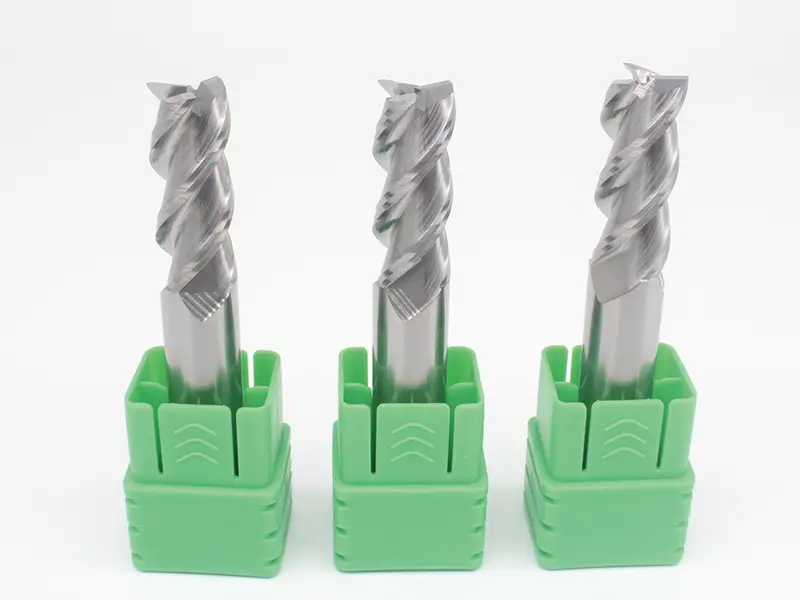
Understanding the Aluminum Challenge: Why Substrate Matters
The foundation of a successful cut begins with the tool material. For most aluminum applications, technicians should look for YG-class carbides (such as YG6 and YG8). These sub-micron grain carbides are preferred because they have a low chemical affinity with aluminum. If you use a substrate that “likes” aluminum, the material will weld itself to the cutting edge, leading to poor surface finishes and broken tools. When asking what end mill for aluminum is best for your tool crib, always start with a high-quality, non-reactive carbide base.
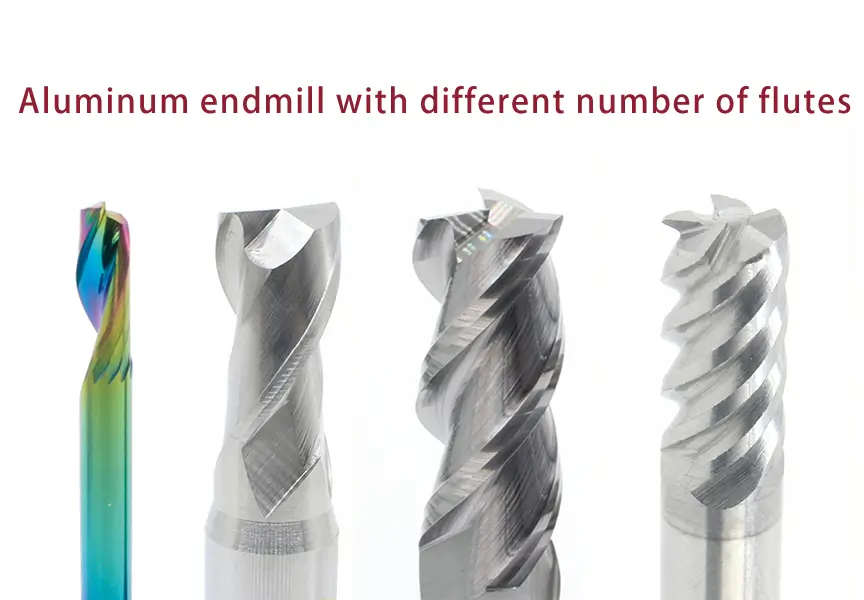
Flute Count Logic: When to Use Single, 2, 3 or 5 Flutes
One of the most critical decisions a technician makes is determining what type of end mill for aluminum to use based on the operation. The number of flutes directly impacts the space available for chip evacuation.
Single Flute end mill for aluminum: These are the kings of chip clearance. They are best used for high-speed routing or when machining “gummy” low-grade aluminum where heat buildup is extreme. They provide the most room for the chip to escape.
2 Flutes End Mill for Aluminum: The traditional workhorse for slotting and deep pocketing. The 180-degree separation between edges provides massive “valleys” for chip removal, which is essential when the tool is fully engaged in a deep channel.
3 Flutes End Mills for Aluminum Machining: This is the modern standard for high-efficiency milling. 3-flute designs offer more rigidity than a 2-flute, allowing for higher feed rates and a better surface finish, while still providing enough chip room for most profiling and light pocketing tasks.
- 5-Flute Designs: Reserved for heavy-duty aerospace roughing where extreme feed rates are required in highly stable environments.
Geometric Configuration: Balancing Sharpness and Rigidity
The geometry of an aluminum-specific cutter must facilitate rapid shearing. We recommend a high helix angle between 20° and 45°. This ensures a shearing action that reduces cutting forces and dampens vibration.
However, a critical threshold exists at 35°; exceeding this can compromise the edge strength. For technicians, the goal is to find the equilibrium between “sharpness” (for clean cuts) and “rigidity” (to prevent deflection). Large, continuous spiral flutes are non-negotiable—”gummy” aluminum chips must be ejected instantaneously to prevent catastrophic tool clogging.
Coating Strategies: The "No-Aluminum" Rule for Procurement
A common procurement error is purchasing tools with aluminum-based coatings like TiAlN for aluminum workpieces. During machining, the aluminum in the coating reacts with the workpiece, accelerating adhesive wear and causing the tool to “weld” to the part.
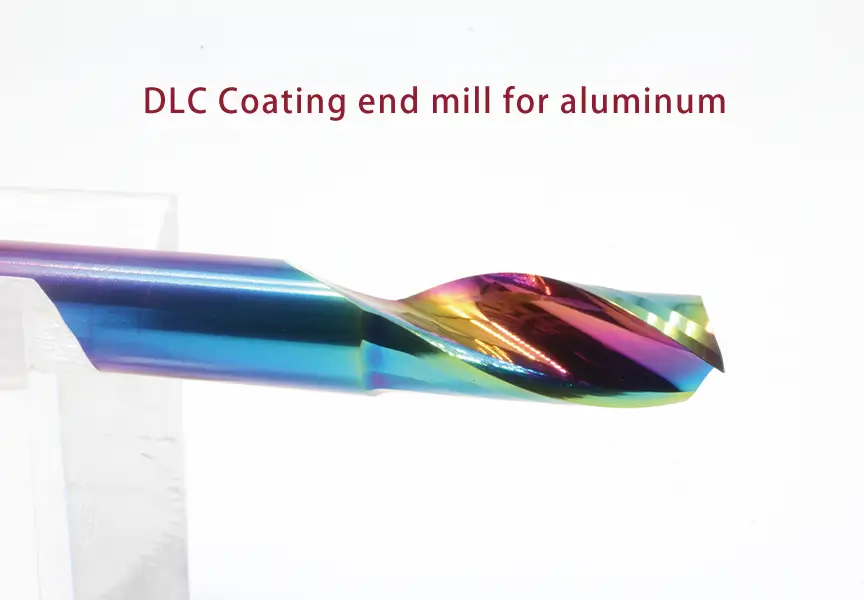
Uncoated or DLC: For high-gloss or mirror-finish applications, uncoated carbides or Diamond-Like Carbon (DLC) coatings are preferred. DLC offers an exceptionally low friction coefficient, acting like a “non-stick pan” for your chips.
High-Silicon Aluminum: For abrasive alloys, TiCN or PVD coatings are effective. However, thickness must be strictly controlled; excessive coating thickness rounds the cutting edge, destroying the sharpness required for clean aluminum shearing.
Edge Preparation and Dynamic Stability
For high-gloss 3C (Computer, Communication, and Consumer electronics) and automotive components, the cutting edge must undergo ultra-thin polishing. This minimizes cutting resistance, allowing the tool to shear the material rather than “plowing” it.
To suppress chatter in thin-walled components—like engine blocks or mobile frames—look for tools with Variable Pitch or Variable Helix designs. These features break up harmonic vibrations, allowing for stable machining even at spindle speeds of 10,000 to 30,000+ RPM. Always prioritize Climb Milling over conventional milling to further minimize chip adhesion.
Technical Summary for Tool Selection
| Características | Recommendation for Aluminum |
| Material Substrate | YG6/YG8 or Uncoated Sub-micron Carbide |
| Flute Selection | 3 Flute (General), 2 Flute (Slotting), Single Flute (Routing) |
| Helix Angle | 20°–45° (35° is the ideal balance) |
| Revestimento | DLC or Uncoated (Avoid TiAlN/Al-based coatings) |
| Cooling | High-pressure Internal Coolant (e.g., KO25) |
| Milling Strategy | High-speed Climb Milling (10k-30k RPM) |
Conclusão
Escolher o melhor end mill for aluminum is a balance of science and shop-floor intuition. For the junior or mid-level technician, the goal is simple: maximize chip evacuation and minimize heat. By prioritizing sub-micron carbide substrates, selecting the appropriate flute count (whether it’s a single flute for routing or 3 flute End Mills for high-speed profiling), and strictly avoiding aluminum-based coatings, you can significantly reduce downtime and scrap rates. Remember, in aluminum machining, the “stickiness” of the material is your primary enemy—your tool geometry and cooling strategy are your best weapons.
FAQs
What type of end mill for aluminum is best for high-speed finishing?
For finishing operations where surface quality is the priority, 3 Flute End Mills for Aluminum Machining are generally the best choice. They offer higher rigidity than 2-flute tools, which reduces deflection and allows for a higher feed rate while maintaining a mirror-like finish.
Why shouldn't I use a standard 4-flute end mill for aluminum?
Standard 4-flute end mills are typically designed for steel. In aluminum, the chip pockets (flute valleys) are too small. Because aluminum chips are large and “gummy,” they will quickly clog a 4-flute tool, leading to immediate tool breakage. Stick to 1, 2, or 3 flutes to ensure enough “chip room.”
When is a 2 flute end mill for aluminum better than a 3-flute?
A 2 flute end mill for aluminum is your go-to for heavy slotting and deep pocketing. When the tool is buried in the material, you need the maximum possible space for chip evacuation to prevent the chips from being “re-cut,” which generates excessive heat.
Can I use a TiAlN coated tool on aluminum?
No. Avoid TiAlN coatings. The “Al” in TiAlN stands for aluminum; during the cutting process, the aluminum in the coating will chemically bond with the aluminum workpiece. This causes the material to “weld” to your tool, leading to built-up edge (BUE) and poor surface finish. Use DLC (Diamond-Like Carbon) or uncoated tools instead.
What causes "chatter" when machining aluminum, and how do I fix it?
Chatter is usually caused by harmonic vibration. In aluminum, this often happens in thin-walled parts or long-reach applications. To fix this, try using a tool with a Variable Helix ou Variable Pitch design. Additionally, increasing your feed rate or switching to climb milling can help stabilize the cut.
Is a single flute end mill for aluminum only for plastics?
Not at all. A single flute end mill for aluminum is excellent for high-speed machining of thin sheets or when using lower-rigidity machines like CNC routers. Because it has only one cutting edge, it provides the largest possible space for chip ejection, making it nearly impossible to clog.

 Portuguese
  English
  Russian
  German
  Spanish
  French