



High-Performance Aluminum Machining: A Guide to Choosing the Right End Mill
For a CNC operator, aluminum can be a deceptive material. While it is softer than steel, its “gummy” nature and high chemical affinity often lead to built-up edge (BUE) and catastrophic tool failure. Selecting the correct end mill for aluminum is not just about finding a sharp tool; it is about managing heat and chip evacuation. This guide breaks down the technical logic required to choose the right tool for every aluminum job.
Contents
Understanding the Aluminum Challenge: Why Substrate Matters
Select a carbide grade and geometry recommended for the aluminum alloy. YG6 and YG8 designations alone do not establish sub-micron grain size or an aluminum-specific cutting application. When deciding what end mill for aluminum to stock, check the supplier’s grade specification, chip clearance, edge preparation, and application data.
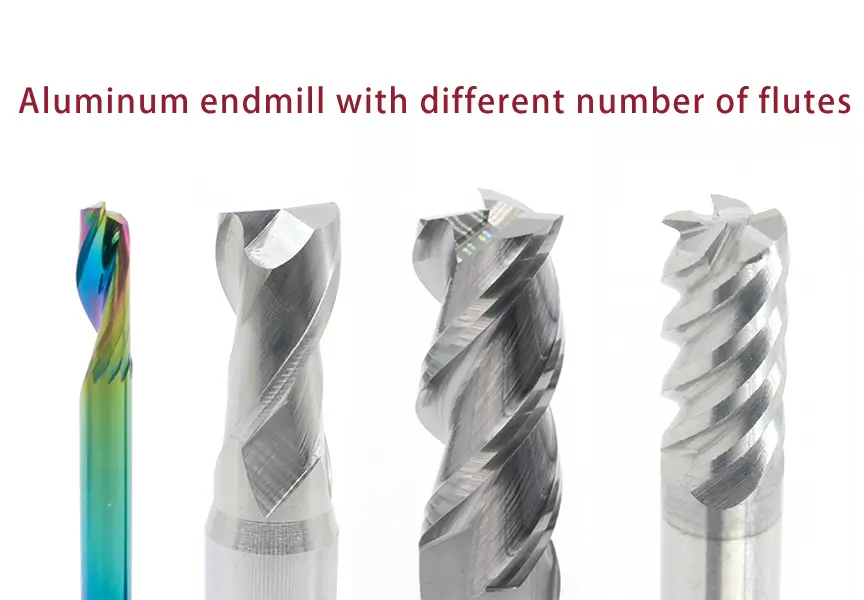
Flute Count Logic: When to Use Single, 2, 3 or 5 Flutes
One of the most critical decisions a technician makes is determining what type of end mill for aluminum to use based on the operation. The number of flutes directly impacts the space available for chip evacuation.
Single Flute end mill for aluminum : A single-flute design can provide substantial chip space for suitable routing operations. Match geometry and cutting conditions to the alloy and machine; a single flute does not prevent every clogging or heat problem.
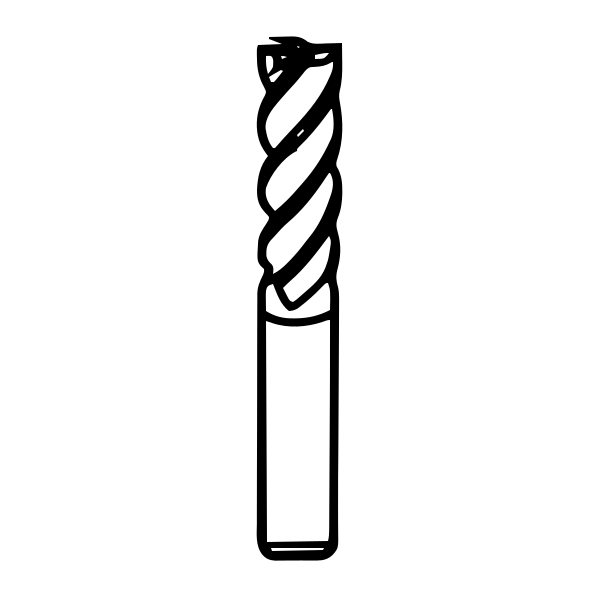
2 Flutes End Mill for Aluminum : Two-flute designs can provide useful chip clearance for slotting and pocketing. Flute spacing, core size, reach, and chip evacuation depend on the tool design, and deep cuts require application-specific limits.
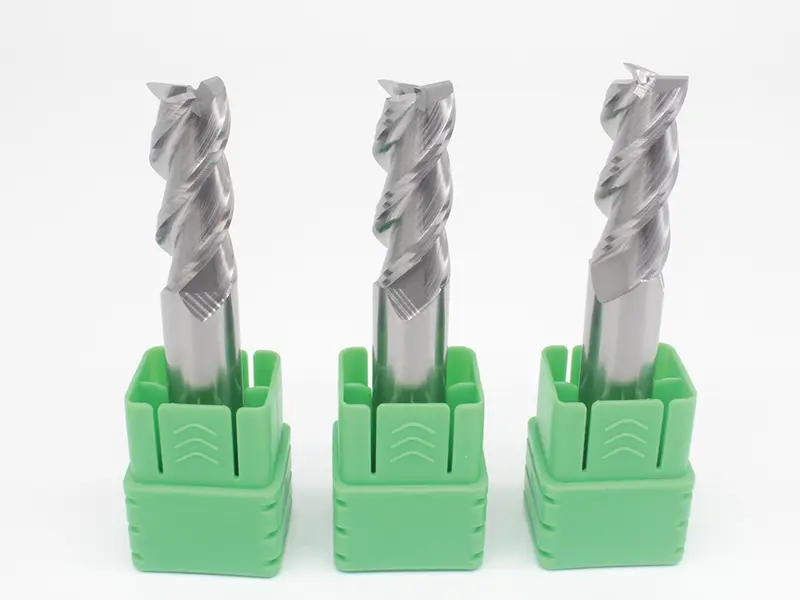
3 Flutes End Mills for Aluminum Machining : Three-flute designs can balance chip clearance and feed capacity for suitable aluminum operations. Rigidity and finish also depend on core geometry, reach, runout, and engagement; flute count alone does not guarantee improvement over two flutes.
- 5-Flute Designs: Suitable designs can be used for selected aluminum operations with sufficient chip clearance. They are not reserved exclusively for aerospace roughing, and higher flute count does not justify extreme feeds without tool-specific data.
Geometric Configuration: Balancing Sharpness and Rigidity
Helix angle affects cutting action, axial forces, chip evacuation, and edge support. The original 20°–45° range describes possible designs, not a universal high-helix recommendation; select a geometry validated for the alloy, operation, and setup.
There is no universal failure threshold at 35°. Balance edge geometry, core strength, reach, chip space, and axial load using the tool manufacturer’s recommendations. Effective chip evacuation reduces recutting and clogging risk but cannot guarantee their elimination.
Coating Strategies: Match the Coating to the Aluminum Alloy
Select a coating specifically recommended for the aluminum alloy and operation. TiAlN is generally not the default choice for adhesive aluminum applications, but chemical composition alone is not a complete selection rule. Surface finish, coating system, geometry, and cutting conditions all affect built-up edge.
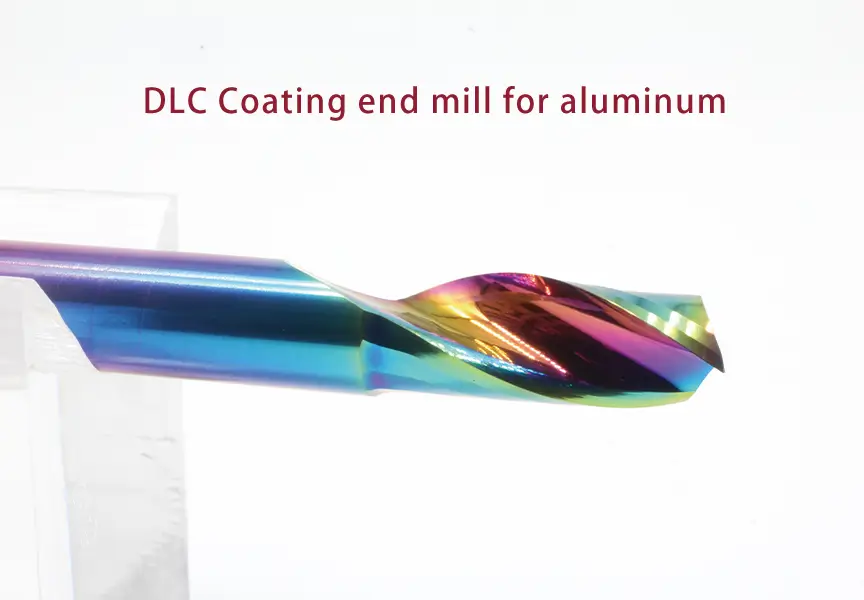
Uncoated or DLC: Polished uncoated carbide or suitable Diamond-Like Carbon (DLC) coatings can reduce adhesion in selected aluminum applications. A mirror finish still depends on the complete tool and process, not coating choice alone.
High-Silicon Aluminum: Abrasive alloys require a wear-resistant tool system validated for their silicon content. PVD describes a deposition process, not one coating chemistry. Select the substrate, coating, thickness, and edge preparation together; suitable diamond tooling may also be considered.
Edge Preparation and Dynamic Stability
For high-gloss electronics and automotive components, control edge sharpness and flute surface finish. Polishing is an edge-preparation operation, not an ultra-thin coating specification; the required finish depends on the application.
Variable Pitch or Variable Helix designs can reduce chatter tendency, but do not guarantee stability at 10,000 to 30,000+ RPM. Choose speed for cutter diameter, tool rating, and the setup. Prefer Climb Milling over conventional milling only where the machine, backlash control, workholding, and application permit it.
Technical Summary for Tool Selection
| Feature | Recommendation for Aluminum |
| Material Substrate | Carbide grade qualified for the alloy; YG6/YG8 alone do not specify sub-micron grain size |
| Flute Selection | 3 Flute (General), 2 Flute (Slotting), Single Flute (Routing) |
| Helix Angle | 20°–45° are example designs; 35° is not a universal optimum |
| Coating | DLC or uncoated may suit the application; validate coating suitability with the tool supplier |
| Cooling | Application-approved cooling and chip evacuation; verify the original KO25 designation before specifying equipment |
| Milling Strategy | Climb milling where appropriate; 10k-30k RPM is not a universal setting |
Conclusion
Choosing an end mill for aluminum requires matching the alloy, geometry, chip clearance, and cutting conditions. A single flute or 3 flute End Mills may suit particular operations, but substrate, coating, coolant delivery, and machine capability must be considered together. Verify performance through a controlled machining trial rather than relying on one universal selection rule.
FAQs
What type of end mill for aluminum is best for high-speed finishing?
3 Flute End Mills for Aluminum Machining can be suitable for finishing, but are not universally best. Core geometry, reach, runout, edge quality, and cutting conditions determine stiffness and finish; a mirror-like surface is not guaranteed by flute count.
Why shouldn't I use a standard 4-flute end mill for aluminum?
Some general-purpose four-flute end mills have insufficient chip space for demanding aluminum slotting, while aluminum-specific four-flute tools can suit selected operations. Choose according to the actual geometry, engagement, and chip evacuation rather than rejecting every four-flute design.
When is a 2 flute end mill for aluminum better than a 3-flute?
A 2 flute end mill for aluminum is your go-to for heavy slotting and deep pocketing. When the tool is buried in the material, you need the maximum possible space for chip evacuation to prevent the chips from being “re-cut,” which generates excessive heat.
Can I use a TiAlN coated tool on aluminum?
The rule “Avoid TiAlN coatings.” is not a complete selection method. TiAlN is generally not the default for adhesive aluminum applications; use the tool supplier’s guidance to choose an appropriate uncoated or coated tool for the alloy and operation.
What causes "chatter" when machining aluminum, and how do I fix it?
Chatter is a self-excited vibration influenced by the tool, holder, workpiece, machine, and cutting conditions. Variable Helix or Variable Pitch may help, but first check rigidity, overhang, runout, and workholding. Adjust speed, engagement, and feed within validated limits; increasing feed is not a universal cure.
Is a single flute end mill for aluminum only for plastics?
A single-flute end mill for aluminum can be suitable for routing and other applications where chip clearance is important. It is not limited to plastics, but it can still clog or break if geometry, engagement, feed, or chip removal are unsuitable.