 Zum Inhalt wechseln
The Ultimate Guide to Double Margin Drills: Precision, Stability, and Cost-Efficiency
In the high-stakes world of CNC machining, precision is not just a goal—it’s a requirement. Machinists often face the “walking” drill bit phenomenon, where a standard twist drill deviates from its center, leading to oversized holes, poor concentricity, and a rough surface finish.
If you’ve struggled with these issues, the Double Margin Drill might be the engineering solution you need. In this guide, we’ll explore the mechanics of the double margin design, its comparative advantages, and why it is becoming the industry standard for high-performance drilling.
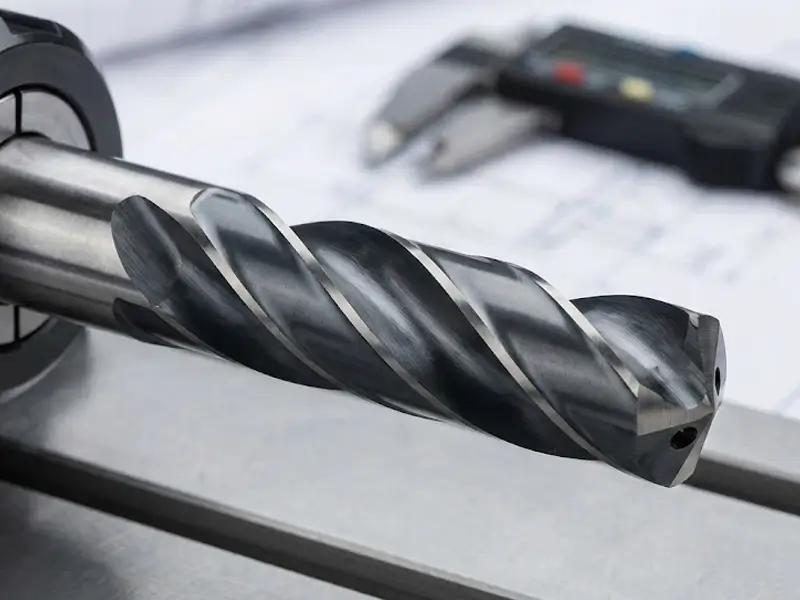
What Exactly is a Double Margin Drill?
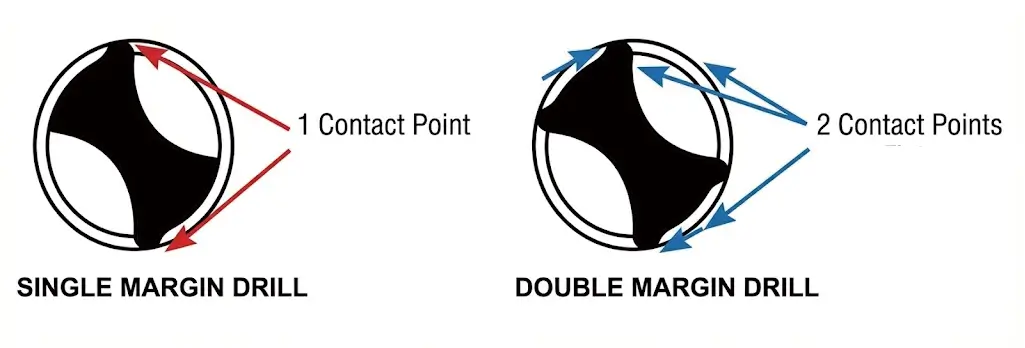
To understand a double margin drill, we must first look at a standard drill. A typical twist drill has one margin per flute—a narrow, raised surface that guides the drill as it cuts.
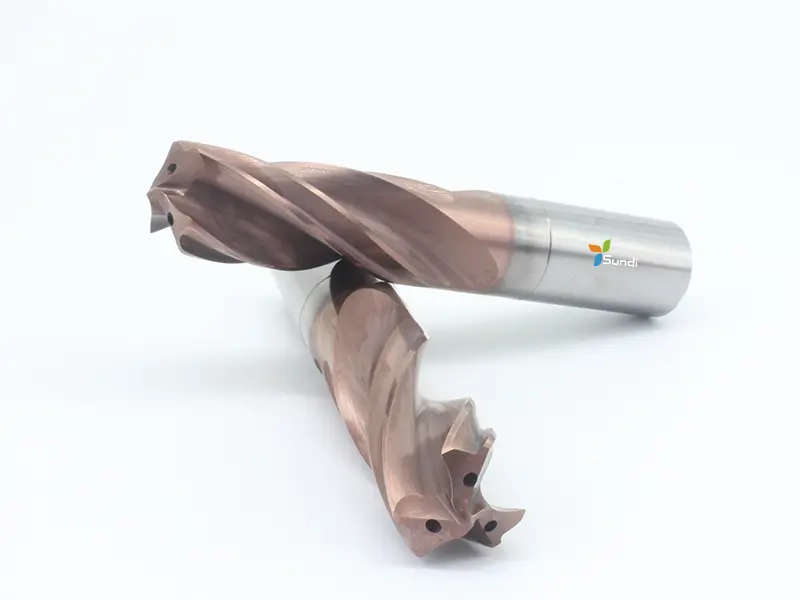
A Double Margin Drill features two margins on each flute (four in total).
Leading Margin: Located at the cutting edge to perform the primary guiding.
Trailing Margin: Positioned further back on the land to provide secondary support.
This “four-point” contact system creates a 360-degree stabilization effect inside the hole, acting like a built-in guide bushing that prevents the drill from “wobbling” or “shaking” during the feed process.
Why Machinists Prefer Double Margin Geometry
Why bother with the extra margins? The advantages are significant for high-performance machining.
1. Unmatched Stability and Accuracy
The primary benefit is significantly reduced vibration. Because four points are contacting the hole wall, the drill cannot wobble or deflect as easily as a standard drill.
Better Hole Straightness: The drill tracks much truer, which is vital for deep hole drilling (e.g., 5xD, 8xD or more).
Superior Surface Finish: Less vibration means less chatter. The resulting hole walls are smoother, with a lower roughness average (Ra).
Reamer-Class Quality: In many applications, the finish achieved by a double margin drill is so high that it approaches the quality of a reamed hole. This can sometimes eliminate secondary finishing operations, saving time and money
2. Enhanced Chip Evacuation and Heat Dissipation
Drilling is a friction-heavy process that generates immense heat and chips. If chips clog, the tool breaks.
Double margin designs are often paired with optimized flute geometries. The structure allows for wider, more efficient channels for chips to escape, which is a lifesaver in deep-hole applications. Furthermore, smoother chip evacuation means hot chips aren’t dragging against the newly finished hole wall, protecting the surface quality.
Crucially, these designs also improve coolant delivery. The margins help direct coolant right to the cutting zone, acting like a high-efficiency cooling system for an engine, keeping the tool temperature down.
3. Improved Tool Life and Economics
Stability and heat management directly translate to durability. A drill that doesn’t vibrate doesn’t chip its cutting edges easily. A drill that runs cooler wears down slower.
While double margin drills may have a higher initial cost, their longevity makes them economical. Furthermore, many high-quality carbide double margin drills can be professionally reground. A properly reground drill can often achieve over 80% of the life of a new tool, significantly lowering your cost-per-hole over time.
Applications: Where it Outperforms the Rest
Hard Metals: Steel and Cast Iron
In the automotive industry, drilling components like brake discs or engine blocks requires high speed and high reliability. The double margin design handles the high radial forces of cast iron with ease, preventing the “bell-mouth” effect at the hole entrance.
Soft & Gummy Metals: Aluminum Alloys
Aluminum is soft but tricky; it loves to create nasty burrs, especially on hole exits. The stability of a double margin drill significantly reduces exit burrs and provides the mirror-like bore finishes often required in aerospace and automotive components.
Aerospace Composites (CFRP & Stacked Materials)
Drilling through Carbon Fiber Reinforced Polymer (CFRP) stacked with Aluminum is a nightmare for standard drills. The double margin design (especially when paired with PCD—Polycrystalline Diamond Drills) ensures that the composite layers do not delaminate while maintaining a tight tolerance in the metal layer.
Maintenance and Economics: The Power of Regrinding
A common misconception is that high-performance drills are “disposable” due to their complexity. This is false. High-quality carbide double margin drills can be professionally reground.
Performance Recovery: A specialized regrinding service can restore the drill to 95-100% of its original geometry.
Tool Life: A reground tool can often provide over 80% of the service life of a brand-new drill. By regrinding a single tool 3 to 5 times, your Cost Per Hole (CPH) drops dramatically, making it a far more sustainable choice than cheaper, low-performing alternatives.
Schlussfolgerung
A double margin drill is more than just a cutting tool; it’s a stability system for your holes. By providing four points of contact, it turns shaky, uncertain drilling operations into precise, predictable processes. Whether you are tackling deep holes in steel or delicate aerospace composites, switching to a double margin design could be the key to higher quality parts and lower production costs.
Would you like a custom speed and feed recommendation for your specific material? Contact our technical team today!
FAQs
Q: Can I use a double margin drill on a manual drill press?
A: It is not recommended. Double margin drills require high rigidity and consistent feed rates found in CNC machines to perform correctly.
Q: Are double margin drills prone to more friction?
A: While there is more surface contact, the use of high-end coatings (like TiAlN or AlTiN) and internal coolant mitigates friction, turning it into a beneficial burnishing action.

 German
  English
  Russian
  Spanish
  French
  Portuguese