 Skip to content
PCD Chip Breaker Inserts
Stop Stringy Chips from Halting Your Production
Are “bird’s nests” (long, stringy chips) scratching your high-value parts or clogging your automated chip conveyors?
Standard PCD inserts often fail to break chips in sticky materials like 6061 Aluminum or pure Copper. Sundi PCD Chip Breaker Inserts solve this problem using advanced 3D Laser Ablation technology. We carve precise chip-breaking geometries directly into the diamond layer, forcing chips to curl and break into manageable pieces—guaranteeing process security for automated and unmanned cells.
Ideal Applications for Controlled Chips
Sundi PCD Chip Breaker Inserts are essential for specific scenarios where chip evacuation is the main bottleneck.
Internal Boring: Chips trapped inside a bore can ruin surface finish. Our inserts break chips small enough to be flushed out by coolant.
Wrought Aluminum (6061, 2024, 7075): These materials produce long, stringy chips that flat PCD tools cannot handle.
Oxygen-Free Copper: Notorious for its sticky nature; our sharp geometries shear and break copper chips cleanly.
Automated Production Cells: Ensures 100% uptime by preventing chip wrap-around errors on loaders.
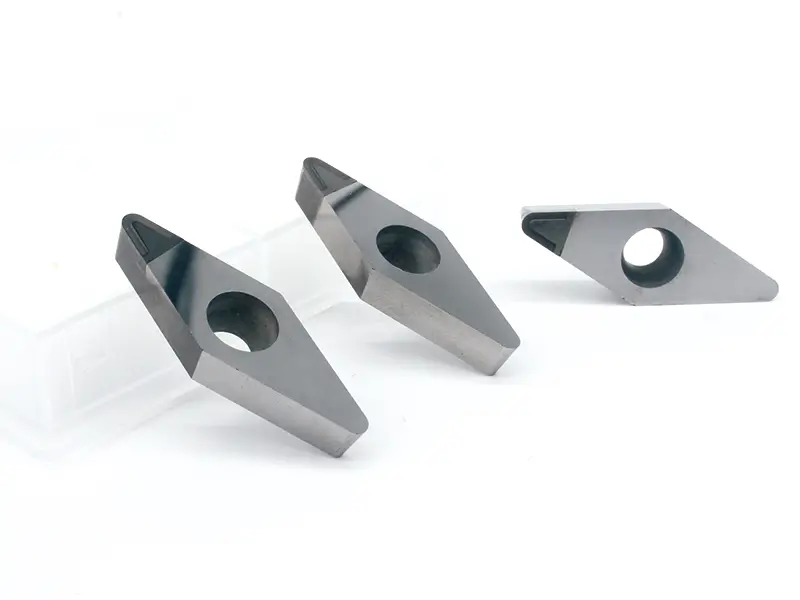
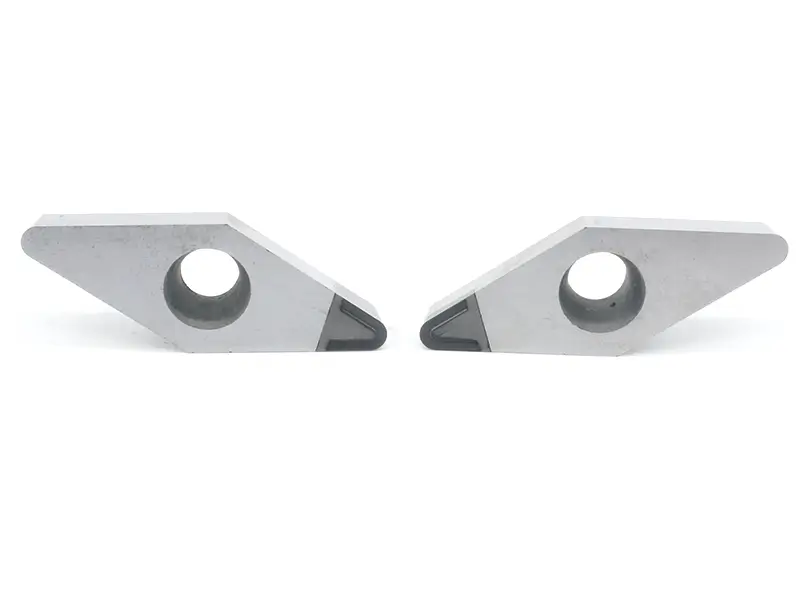
- High wear resistance
- Reduce the machine time
- Stable Performance
- Easy to use
Main Features and Benefits of PCD Chip Breaker Inserts
PCD (Polycrystalline Diamond) Chip Breaker Inserts are cutting tools that offer several features and benefits in metalworking operations, including:
- Smooth chip breaking without affecting the normal cutting
- High efficiency and long life.
- Support customization and professional process processing
- Effectively deal with the problems of chip wrapping and chip scratching on the workpiece surface in automated production lines
- Smoother chip evacuation in inner hole machining to meet high machining surface requirements
- Prevent tool damage, tool holder breakage, and workpiece scrapping caused by poor chip evacuation
In general, the cutting of PCD/PCBN turning inserts is single-edged continuous cutting. If chip breaker measures are not taken, the cut products will not break naturally and will always be wrapped around the workpiece and the tool. In this case, the surface quality of the product cannot be guaranteed, especially for some products that require relatively high surface smoothness. Moreover, the tool is also easy to wear, which affects the life and processing efficiency, and the cut product wire is also prone to safety accidents. Therefore, the PCD Chip Breaker Inserts can not only ensure product quality, processing efficiency, and tool life but also improve operator safety.
Technical Specifications
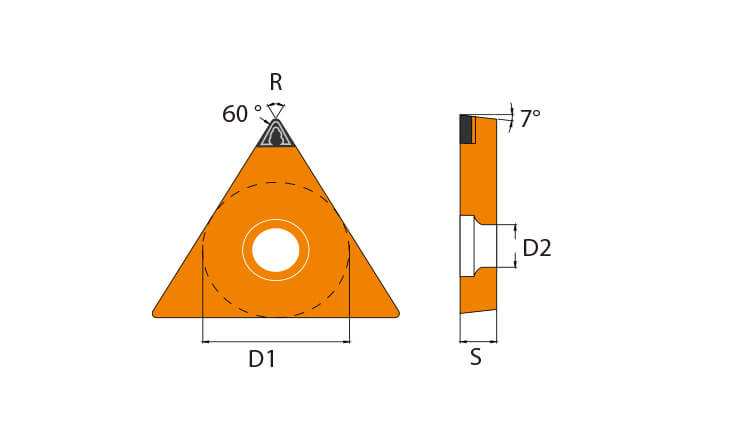
| Tech Data | |
|---|---|
| Type | ISO Indexable PCD inserts |
| Angle | Positive/ negative |
| PCD Grade | PCD 850/ PCD 010/PCD 025/PCD302 |
| Tolerance | G/M |
| Work piece material | Aluminum and aluminum alloys Copper, brass and bronze alloys Carbon Fiber Graphite composites Reinforced plastics Ceramic Wood Fiberglass Composites Fiber Reinforced Plastics (FRP) Tungsten Carbide |
| Shape | Designation | D1 [mm] | D2 [mm] | S [mm] | R [mm] |
|---|---|---|---|---|---|
 | CCGW060204 | 6.35 | 2.8 | 2.38 | 0.4 |
| CCGW09T304 | 9.525 | 4.4 | 3.97 | 0.4 | |
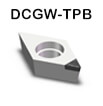 | DCMW070202 | 6.35 | 2.8 | 2.38 | 0.2 |
| DCGW11T304 | 9.525 | 4.4 | 3.97 | 0.4 | |
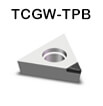 | TCGW090202 | 5.56 | 2.5 | 2.38 | 0.2 |
| TCGW110204 | 6.35 | 2.5 | 2.38 | 0.4 | |
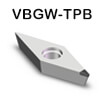 | VBGW160402 | 9.525 | 4.4 | 4.76 | 0.2 |
| VBGM160404 | 9.525 | 2.8 | 4.76 | 0.4 | |
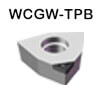 | WCGW040204 | 6.35 | 2.8 | 2.38 | 0.4 |
| WCMW06T304 | 9.525 | 4.4 | 3.97 | 0.4 |
Take Control of Your Chips Today
Don't let stringy chips slow down your high-speed production. Upgrade to Sundi PCD Chip Breaker Inserts for reliable, automated, and scratch-free machining.
FAQ
Most frequent questions and answers
A: The manufacturing process involves an additional, high-tech step: Laser Ablation. Carving hard polycrystalline diamond requires sophisticated laser equipment and time, but the investment pays off by eliminating machine downtime caused by chip tangles.
A: Generally, no. Standard PCD inserts are flat on top. In brittle materials (like high-silicon casting), the material breaks itself. But in sticky materials (like 6061 Aluminum), flat inserts produce long strings. You need a 3D chip breaker geometry for these applications.
A: It is difficult. Because the chip breaker geometry is laser-cut into the top surface, regrinding the top would destroy the geometry. We typically recommend Edgeline Reprocessing (only grinding the flank) or replacing the insert to maintain consistent chip control performance.