



Máquinas CNC horizontales y verticales: ¿cuál es la diferencia?
El fresado es uno de los procesos de mecanizado. Una herramienta giratoria elimina material de una pieza fija o en movimiento. Existen distintos tipos de fresadoras, entre ellas las horizontales y las verticales. Este artículo explica sus diferencias y los criterios de selección.
Contenido
¿Qué es una máquina CNC vertical?
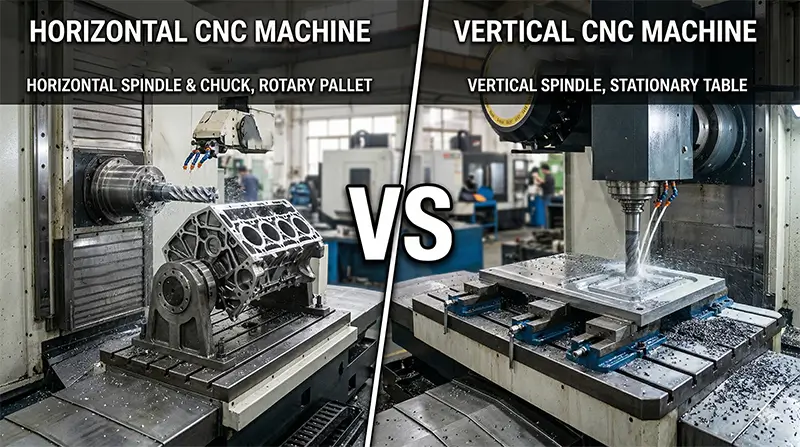
Una fresadora CNC vertical tiene un husillo orientado verticalmente. Los movimientos de los ejes pueden realizarse mediante el cabezal, la mesa o ambos. Las fresadoras tradicionales de torreta y de bancada son ejemplos de configuraciones verticales, pero los centros de mecanizado verticales modernos también utilizan otras arquitecturas.
- Fresadoras de torreta: Muchas fresadoras tradicionales de torreta emplean una consola y una mesa móviles, con el cabezal montado sobre un carnero. La disposición de los ejes varía; la rigidez y las vibraciones dependen de la máquina y del montaje concretos.
- Fresadoras de bancada: Las máquinas de bancada apoyan la pieza sobre una bancada rígida; los movimientos de los ejes dependen del diseño. Pueden mecanizar ranuras, cajeras, agujeros y otros elementos con herramientas adecuadas. No todos los centros de mecanizado verticales modernos deben clasificarse como fresadoras tradicionales de bancada.
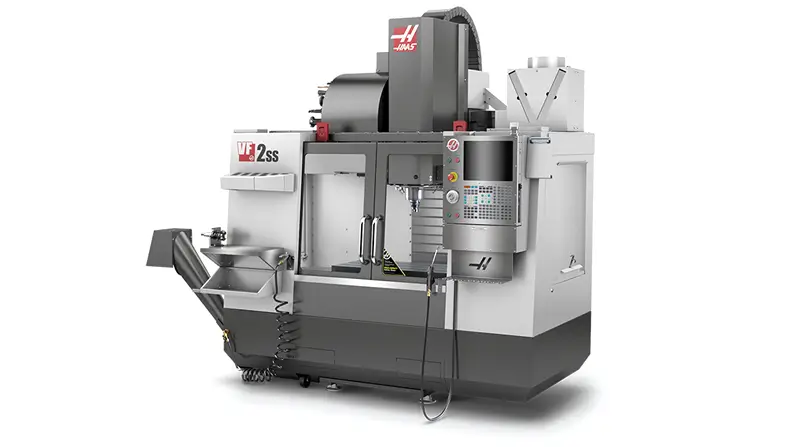
Fuente: HAAS
Ventajas de las máquinas CNC verticales
- Preparación y manejo sencillos
Las máquinas CNC verticales permiten al operario observar bien el mecanizado. Una zona de trabajo accesible facilita el ajuste de la posición de las herramientas y las operaciones de medición.
- Versatilidad
Una máquina CNC vertical puede realizar distintas operaciones, como taladrado, fresado con fresa de mango, fresado frontal y roscado con macho.
- Rentabilidad
Las máquinas CNC verticales básicas suelen tener un precio de compra inferior al de sistemas horizontales automatizados de tamaño comparable, pero las especificaciones varían. Las herramientas y los costes de explotación dependen de la interfaz de herramientas, la operación, la sujeción, la automatización y los requisitos de servicio.
- Precisión
La tolerancia alcanzable depende de la máquina, el estado térmico, las herramientas, la sujeción, la medición y la geometría de la pieza. Valide la tolerancia requerida en el proceso real, en lugar de utilizar una cifra universal para las máquinas verticales.
Desventajas de las máquinas CNC verticales
- Capacidad de corte limitada
La capacidad de arranque de material depende de la potencia y el par del husillo, la rigidez de la máquina, el contacto de la herramienta y la sujeción. Los centros verticales adecuados pueden realizar desbaste pesado; la orientación del husillo por sí sola no determina la capacidad de corte.
- Evacuación deficiente de virutas
Durante el mecanizado vertical, las virutas pueden acumularse sobre superficies horizontales o en cajeras. Un refrigerante, aire, trayectorias y evacuación adecuados ayudan a evitar el recorte y los daños; el resultado depende de la pieza y del proceso.
- Requisitos de automatización de la producción
Las piezas con varias caras pueden requerir reposicionamiento en una máquina básica. Los ejes giratorios, los sistemas de palés o la carga robotizada pueden reducir la manipulación, y los centros verticales adecuadamente equipados pueden producir grandes series.
¿Qué es una máquina CNC horizontal?
Un centro de mecanizado horizontal tiene un husillo horizontal, por lo que la herramienta se aproxima a la pieza lateralmente. La sujeción, los ejes giratorios y el acceso de la herramienta determinan qué elementos pueden mecanizarse.
Las piezas pueden montarse en útiles o torres de sujeción sobre un palé o una mesa giratoria. El indexado permite acceder a varias caras en una sola sujeción, según la máquina y el útil. El acceso indexado no equivale a mecanizar todas las caras simultáneamente.
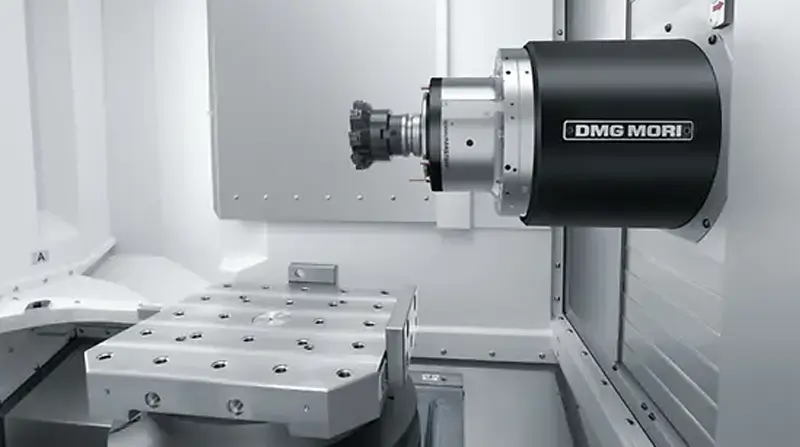
Fuente:DMG MORI
Ventajas de las máquinas CNC horizontales
- Excelente evacuación de virutas
La disposición horizontal del husillo suele facilitar que las virutas caigan fuera de la zona de corte. La alimentación de refrigerante, las cavidades, los útiles y los transportadores siguen influyendo en la evacuación; aún pueden producirse recorte de virutas y daños superficiales.
- Producción en grandes series
Un cambiador automático de palés permite mecanizar una pieza mientras se carga otra fuera de la zona de trabajo. Al terminar el ciclo, el sistema cambia el palé automáticamente. Esto reduce los tiempos de inactividad entre trabajos y mejora el aprovechamiento de la máquina.
- Alta tasa de eliminación de material
Un centro horizontal adecuado puede ofrecer un mecanizado productivo, pero el avance y la profundidad admisibles dependen de la potencia, el par, la rigidez, las herramientas, la sujeción y el material. La orientación por sí sola no justifica parámetros de corte agresivos.
- Acabado superficial
El acabado depende de las vibraciones, el estado de la herramienta, el descentramiento, los parámetros de corte, el material y el control de virutas. Una buena evacuación ayuda, pero no garantiza vibraciones mínimas ni un acabado superior.
Desventajas de las máquinas CNC horizontales
- Mayor coste
Los costes de compra y propiedad varían según el tamaño, los ejes, la automatización, las herramientas y el servicio. Los sistemas horizontales suelen exigir mayor inversión, pero no existe un múltiplo fijo del precio; compare ofertas actuales para requisitos de producción equivalentes.
- Preparación compleja
El posicionamiento giratorio y el trabajo multieje pueden requerir programación y planificación de útiles adicionales. La complejidad de preparación depende de la pieza, los ejes, la sujeción, el software y la experiencia del operario, no solo de la orientación del husillo.
Máquinas CNC horizontales y verticales: diferencias principales
Orientación del husillo
Fresadoras verticales: el husillo está orientado verticalmente y la herramienta de corte apunta hacia abajo, hacia la mesa.
Fresadoras horizontales: el husillo está orientado horizontalmente, paralelo al suelo. La herramienta de corte se aproxima a la pieza desde un lateral en lugar de desde arriba.
Geometría de la herramienta
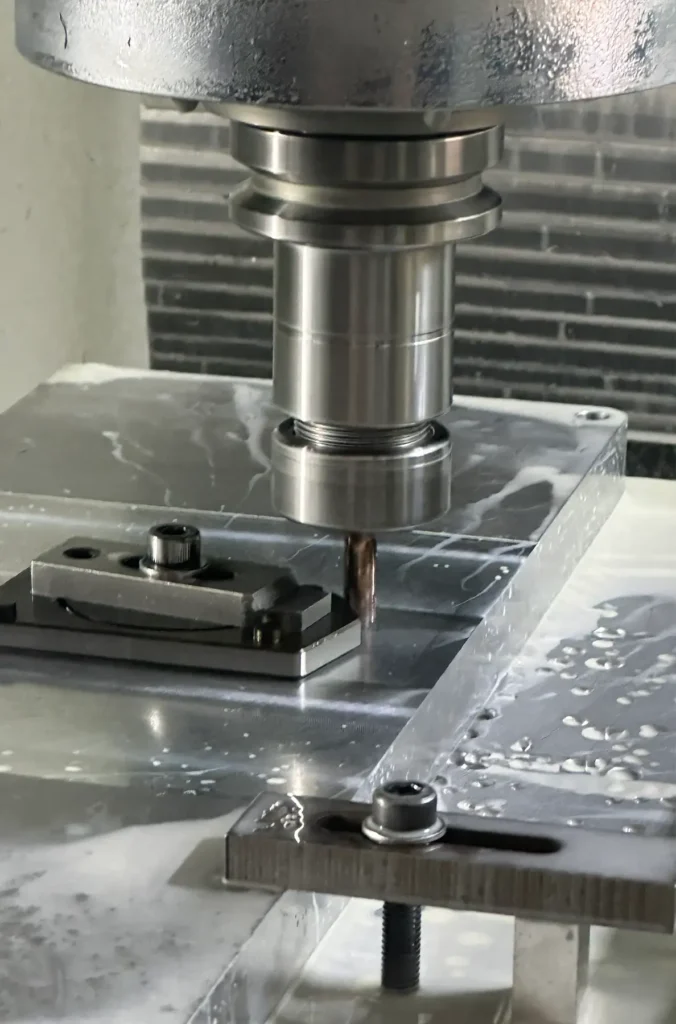
Las fresadoras verticales utilizan principalmente fresas de mango, fresas de planear y brocas. La longitud de la herramienta puede influir considerablemente en la eficiencia del mecanizado: al aumentar la longitud, también aumenta la flexión durante la operación.
Las fresadoras horizontales tradicionales pueden apoyar por ambos extremos un árbol portafresas. Los centros horizontales modernos también utilizan fresas de mango, fresas de planear y brocas montadas en el husillo. El apoyo y el voladizo de la herramienta determinan la rigidez, no solo la orientación.
Coste
Fresadoras verticales: las configuraciones básicas suelen ofrecer un precio inicial inferior. Al estimar el coste, compare las especificaciones completas, las herramientas, la automatización, el mantenimiento y la producción requerida.
Fresadoras horizontales: los sistemas de palés y mesas giratorias pueden aumentar la inversión inicial, pero reducir la manipulación y mejorar la utilización del husillo. Evalúe el coste por pieza terminada, en lugar de asumir costes de funcionamiento siempre superiores.
Evacuación de virutas
Fresadoras verticales: las virutas pueden acumularse sobre la mesa o en cavidades. Su evacuación depende de las trayectorias, la alimentación de refrigerante o aire, la sujeción y la gestión de virutas; diseñe el proceso para evitar el recorte y los daños superficiales.
Fresadoras horizontales: la gravedad puede ayudar a evacuar las virutas, pero las cajeras, los útiles y las condiciones de corte pueden retenerlas. Sigue siendo necesaria una alimentación adecuada de refrigerante o aire y una gestión de las virutas.
Requisitos de mecanizado
Fresadoras verticales: la capacidad depende de la máquina y del montaje. Las máquinas verticales adecuadas pueden realizar operaciones de desbaste pesado. Compruebe la potencia del husillo, el par, la rigidez, el contacto de la herramienta y la sujeción antes de seleccionar los parámetros de corte.
Fresadoras horizontales: una fresadora adecuada puede responder a una producción exigente, pero el avance, la profundidad de corte, la precisión y la vida útil de la herramienta dependen de la máquina, las herramientas, el material, la sujeción y la validación del proceso.
Volumen de producción
Fresadoras verticales: las configuraciones adecuadas pueden servir para prototipos, series pequeñas y grandes series. La automatización, el tiempo de cambio y los requisitos de las piezas determinan la idoneidad.
Fresadoras horizontales: el cambio de palés y el acceso a varias caras favorecen una producción en serie eficiente. También pueden adaptarse a trabajos variados con útiles y planificación adecuados; no todas las máquinas incluyen la misma automatización.
Tasa de arranque de material
Fresadoras verticales: la tasa de arranque de material depende de la potencia y el par disponibles, la rigidez, las herramientas, el contacto y el material, no de un límite fijo asociado a la orientación.
Fresadoras horizontales: un buen acceso, una buena evacuación y un buen uso de los palés pueden mejorar la productividad, pero la tasa de arranque y el tiempo de ciclo requieren comparar las piezas y los procesos reales.
Caras que mecanizar
Fresadoras verticales: un montaje básico suele dar acceso a la cara superior. Las mesas giratorias, los ejes basculantes, los cabezales angulares o el reposicionamiento permiten otros accesos; las máquinas verticales no están universalmente limitadas a una sola cara.
Fresadoras horizontales: el indexado giratorio permite acceder a varias caras en una sola sujeción, según el espacio del útil y el acceso de la herramienta. Esto no significa que se mecanicen todas las caras simultáneamente ni que todos los trabajos se ejecuten sin intervención del operario.
Cómo elegir entre máquinas CNC horizontales y verticales
Estos son algunos factores que conviene considerar al elegir entre máquinas CNC horizontales y verticales:
Volumen de producción
Estime las cantidades, la variedad, los tiempos de cambio y las necesidades de funcionamiento sin supervisión. Ambas orientaciones pueden servir para volúmenes bajos o altos con el equipo adecuado. Compare útiles, palés, carga, tiempo de ciclo y coste para la combinación de producción prevista.
Tamaño de la pieza
Para piezas de varias caras, compare el acceso de la herramienta y la sujeción en las máquinas propuestas. Un montaje horizontal con mesa giratoria puede reducir el reposicionamiento, mientras que una máquina vertical multieje adecuada también puede alcanzar varias caras. Elija según la geometría, la precisión, el tiempo de ciclo y el coste reales.
Compruebe el volumen de trabajo, la carga de la mesa, el espacio de sujeción, el alcance de la herramienta y el acceso de carga para la pieza concreta. Existen máquinas verticales y horizontales de distintos tamaños; no hay un límite universal de tamaño de pieza.
Tipo de material
Seleccione las herramientas y las condiciones de corte según el material y la operación. El titanio y los aceros endurecidos no requieren universalmente velocidades y avances agresivos. Compare la rigidez, el par, la refrigeración y la estabilidad de la máquina y siga recomendaciones de herramientas validadas.
Espacio disponible
Compare la superficie instalada, el acceso de mantenimiento, el espacio de carga, la gestión de virutas y la disposición de la automatización. Las máquinas verticales compactas suelen adaptarse a espacios limitados, pero las dimensiones dependen del modelo; consulte el plano de instalación en lugar de asumir una diferencia fija.
Preguntas frecuentes sobre máquinas CNC horizontales y verticales
¿Cuál es la diferencia entre una fresadora vertical y una horizontal?
La principal diferencia entre fresadoras horizontales y verticales es la orientación del husillo. En las verticales, el husillo es perpendicular a la superficie de la mesa; en las horizontales, es paralelo a ella. Esta orientación influye en la evacuación de virutas y en las posibilidades de mecanizado.
¿Qué materiales se pueden fresar horizontalmente?
Las máquinas horizontales pueden mecanizar aluminio, aceros, titanio, latón, plásticos y otros materiales adecuados. Las herramientas, la capacidad de la máquina, la sujeción y las condiciones de corte determinan la idoneidad; los materiales duros también pueden mecanizarse en máquinas verticales adecuadas.
¿Qué mecanizado CNC es más preciso: horizontal o vertical?
Ambas orientaciones pueden ofrecer resultados precisos con una máquina y un proceso adecuados. La precisión depende del comportamiento geométrico y térmico, la calibración, las herramientas, la sujeción y las cargas de corte. Verifique la tolerancia requerida en la pieza real.
¿Cuáles son las desventajas del fresado horizontal?
Las posibles desventajas incluyen mayor inversión, mayor superficie instalada y requisitos de útiles o programación más exigentes. Dependen de la máquina y la aplicación seleccionadas; por ello, compare sistemas de producción completos.
¿Qué fresadora es más rentable?
Una máquina vertical básica suele ofrecer un coste inicial inferior, mientras que un sistema horizontal automatizado puede reducir el coste por pieza en una aplicación adecuada. Compare precio, herramientas, preparación, personal, tiempo de ciclo, mantenimiento y utilización prevista.
Conclusión
Elija una fresadora CNC según la geometría, las cargas, la tolerancia, el material, la combinación de producción, la automatización, el espacio y el presupuesto. Ninguna orientación es universalmente más versátil o productiva; valide el proceso completo.