










Horizontal vs. Vertical CNC Machines: What’s the Difference?
Milling is one of the various processes used in machining. In milling, the rotating cutting tool removes material from the stationary or moving workpiece. There are different types of milling machines, including horizontal and vertical. In this article, we will discuss the differences between these two machines and how to choose one.
Contents
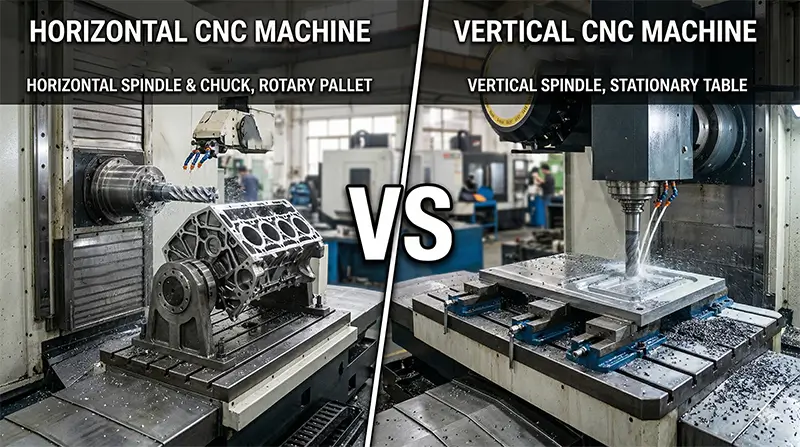
What is a Vertical CNC Machine?
A vertical CNC milling machine has a vertically oriented spindle. Axis movements may be provided by the spindle head, table, or both. Traditional turret and bed mills are examples of vertical layouts, but modern vertical machining centers also use other configurations.
- Turret Mills: Many traditional turret mills use a movable knee and table, with a spindle head mounted on a ram. Axis arrangements vary; rigidity and vibration depend on the specific machine and setup.
- Bed Mills: Bed-type machines support the workpiece on a rigid bed, with axis movements depending on the design. They can machine slots, pockets, holes, and other features with suitable tooling. Modern vertical machining centers should not all be classified as traditional bed mills.
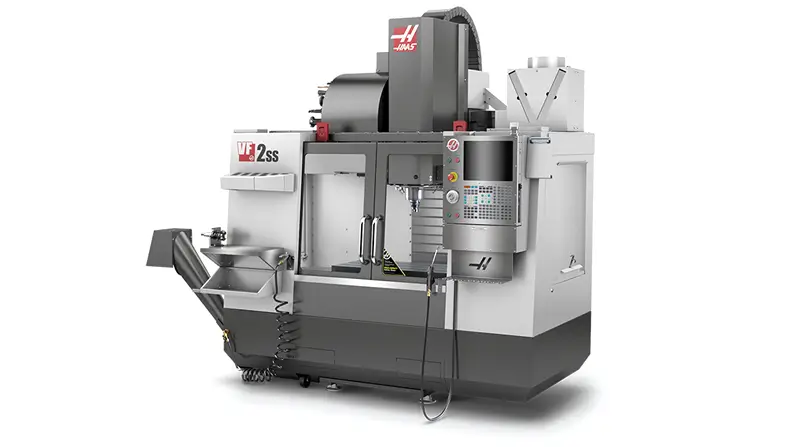
Source: HAAS
Advantages of Vertical CNC Machine
- Easy Setup and Operation
Vertical CNC machines allow an operator to see the complete cutting operation. With an open cutting area, tool position and measurement adjustments can be made easily.
- Versatile
The vertical CNC machine can perform various functions, including drilling, end milling, face milling, and tapping.
- Cost Efficient
Entry-level vertical CNC machines often have a lower purchase price than comparably sized automated horizontal systems, but specifications vary. Tools and operating costs depend on the tooling interface, operation, workholding, automation, and service requirements.
- Precision
Achievable tolerance depends on the machine, thermal condition, tooling, workholding, measurement, and part geometry. Validate the required tolerance on the actual process rather than using one universal figure for vertical machines.
Disadvantages of Vertical CNC Machine
- Limited Cutting Capacity
Material-removal capacity depends on spindle power and torque, machine stiffness, tool engagement, and workholding. Suitable vertical machining centers can perform heavy roughing; spindle orientation alone does not establish cutting capacity.
- Poor Chip Evacuation
Chips may accumulate on horizontal work surfaces or in pockets during vertical machining. Suitable coolant, air, toolpaths, and chip removal help prevent recutting and damage; the outcome depends on the part and process.
- Production Automation Requirements
Multi-face parts may require repositioning on a basic machine. Rotary axes, pallet systems, or robotic loading can reduce handling, and suitably equipped vertical machining centers can support high-volume production.
What is a Horizontal CNC Machine?
A horizontal machining center has a horizontally oriented spindle, so the tool approaches the workpiece from the side. Workholding, rotary axes, and tool access determine which features can be machined.
Parts may be mounted on fixtures or tombstones on a pallet or rotary table. Indexing can expose several faces in one setup, depending on the machine and fixture. Indexed access is not the same as machining all faces simultaneously.
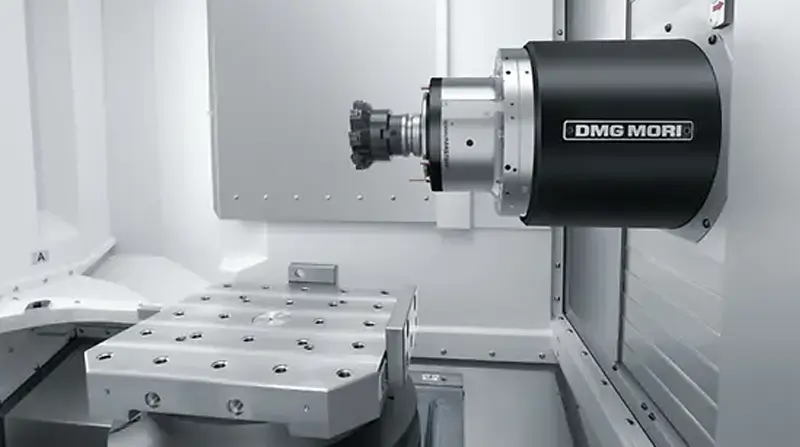
Source:DMG MORI
Advantages of Horizontal CNC Machine
- Excellent Chip Evacuation
A horizontal spindle arrangement often helps chips fall away from the cutting zone. Coolant delivery, part cavities, fixtures, and chip conveyors still affect evacuation; chip recutting and surface damage remain possible.
- High Volume Production
An automatic pallet changer can be used to produce the first part while the second is being loaded externally. The changer switches the pallet automatically when the original has completed its run. This drastically reduces idle time between projects, maximizing machine utilization.
- High Material Removal Rate
A suitable horizontal machining center can support productive cutting, but allowable feed and depth depend on power, torque, stiffness, tooling, workholding, and material. Orientation alone does not justify aggressive cutting parameters.
- Surface Finish
Surface finish depends on vibration, tool condition, runout, cutting parameters, material, and chip control. Good evacuation helps, but does not guarantee minimal vibration or a superior finish.
Disadvantages of Horizontal CNC Machine
- Higher Cost
Purchase and ownership costs vary with machine size, axes, automation, tooling, and service. Horizontal systems often require greater investment, but no fixed price multiple applies; compare current quotations for equivalent production requirements.
- Complex Setup
Rotary positioning and multi-axis work may require additional programming and fixture planning. Setup complexity depends on the part, axes, workholding, software, and operator experience rather than spindle orientation alone.
Horizontal vs. Vertical CNC Machines: Key Differences
Spindle Orientation
Vertical Milling Machines: The spindle is oriented vertically, with the cutting tool pointing downwards towards the table.
Horizontal Milling Machines: The spindle is oriented horizontally, with the spindle extending outward parallel to the floor. The cutting tool approaches the workpiece from the side instead of the top.
Tool Geometry
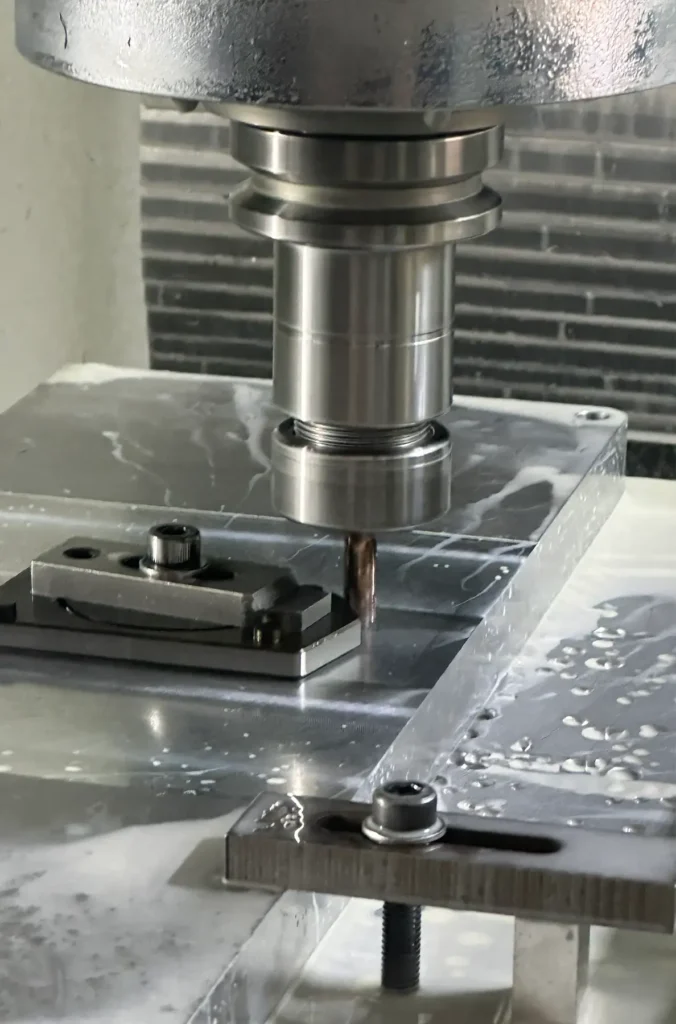
Vertical Mills: Vertical mills most commonly use end mills, face mills, and drill bits. Tool length can be critical to machining efficiency. Because, as the tool length increases, the deflection of the tool will increase as well during operation.
Traditional horizontal mills may support arbor-mounted cutters at both ends. Modern horizontal machining centers also use spindle-mounted end mills, face mills, and drills. Tool support and overhang, rather than orientation alone, determine rigidity.
Cost
Vertical Mills: Basic configurations often offer a lower entry price. Compare the complete machine specification, tooling, automation, maintenance, and required output when estimating cost.
Horizontal Mills: Pallet and rotary-table systems can raise initial investment but may reduce handling and improve spindle utilization. Evaluate cost per completed part rather than assuming uniformly higher running costs.
Chip Evacuation
Vertical Mills: Chips can collect on the table or inside cavities. Evacuation depends on toolpaths, coolant or air delivery, workholding, and chip handling; design the process to avoid recutting and surface damage.
Horizontal Mills: Gravity can assist chip evacuation, but pockets, fixtures, and cutting conditions may trap chips. Suitable coolant or air delivery and chip handling are still necessary.
Cutting Specifications
Vertical Milling Machines: Capability depends on the machine and setup. Suitable vertical machines can perform heavy roughing operations. Check spindle power, torque, stiffness, tool engagement, and workholding before selecting cutting parameters.
Horizontal Milling Machines: A suitable milling machine can support demanding production, but feed rate, depth of cut, accuracy, and tool life depend on the actual machine, tooling, material, workholding, and process validation.
Production Volume
Vertical Milling Machines: Suitable configurations can serve prototypes, small batches, and high-volume production. Automation, changeover time, and part requirements determine suitability.
Horizontal Milling Machines: Pallet changes and multi-face access can support productive series manufacturing. They can also suit mixed work when fixtures and scheduling are planned appropriately; not every machine includes the same automation.
Material Removal Rate
Vertical Milling Machines: Material-removal rate depends on available power and torque, stiffness, tooling, engagement, and material, rather than a fixed limit associated with orientation.
Horizontal Milling Machines: Good access, evacuation, and pallet utilization can improve productivity, but material-removal rate and cycle time require a comparison of the actual parts and processes.
Sides of Machining
Vertical Milling Machines: A basic setup often accesses the top of the part. Rotary tables, tilting axes, angle heads, or repositioning can provide additional access; vertical machines are not universally limited to one face.
Horizontal Milling Machines: Rotary indexing can expose several faces in one setup, subject to fixture clearance and tool access. This does not mean every face is cut simultaneously or that all jobs run without operator intervention.
How to Choose Between Horizontal vs. Vertical CNC Machines
Here are some factors to consider when choosing between horizontal and vertical CNC machines:
Production Volume
Estimate part quantities, variety, changeover time, and unattended-running needs. Both orientations can support low or high volumes with suitable equipment. Compare fixtures, pallet systems, loading, cycle time, and cost for the intended production mix.
Part Size
For multi-sided parts, compare tool access and workholding on the proposed machines. A horizontal rotary-table setup may reduce repositioning, while a suitable vertical multi-axis machine can also reach several faces. Select by the actual geometry, accuracy, cycle time, and cost.
Check work envelope, table load, fixture space, tool reach, and loading access for the actual component. Both vertical and horizontal machines are available in different sizes; a single part-size cutoff is not universal.
Material Type
Choose tools and cutting conditions for the specified material and operation. Titanium and hardened steels do not universally require aggressive speeds and feeds. Compare machine stiffness, torque, cooling, and stability, and follow qualified tooling recommendations.
Space Availability
Compare the installed footprint, service access, loading clearance, chip handling, and automation layout. Compact vertical machines often suit limited space, but dimensions depend on the model; obtain the installation drawing rather than assuming a fixed difference.
FAQs About Horizontal vs. Vertical CNC Machines
What is the difference between a vertical vs horizontal milling machine?
The main difference between the horizontal and vertical types of milling machines is the spindle orientation. In vertical milling machines, the spindle is perpendicular to the table surface. In horizontal milling machines, the spindle is parallel to the table surface. The chip evacuation process and cutting capabilities are influenced by this difference in spindle orientation.
What materials can be milled horizontally?
Horizontal machines can process aluminium, steels, titanium, brass, plastics, and other suitable materials. Tooling, machine capability, workholding, and cutting conditions determine suitability; hard materials can also be machined on suitable vertical machines.
Which is more accurate: horizontal vs. vertical CNC machining?
Either orientation can achieve precise results with a suitable machine and process. Accuracy depends on geometric and thermal behavior, calibration, tooling, workholding, and cutting loads. Verify the required tolerance on the actual part.
What are the disadvantages of horizontal milling machining?
Potential disadvantages include a larger investment, greater installed footprint, and more demanding fixture or programming requirements. These depend on the selected machine and application, so compare complete production systems.
Which milling machine is cost-effective?
A basic vertical machine often offers a lower entry cost, while an automated horizontal system may reduce cost per part in a suitable application. Compare machine price, tooling, setup, staffing, cycle time, maintenance, and expected utilization.
Conclusion
Choose a CNC mill by matching part geometry, loads, tolerance, material, production mix, automation, floor space, and budget. Neither orientation is universally more versatile or productive; validate the complete machining process.