Skip to content
What is Swiss Machining?
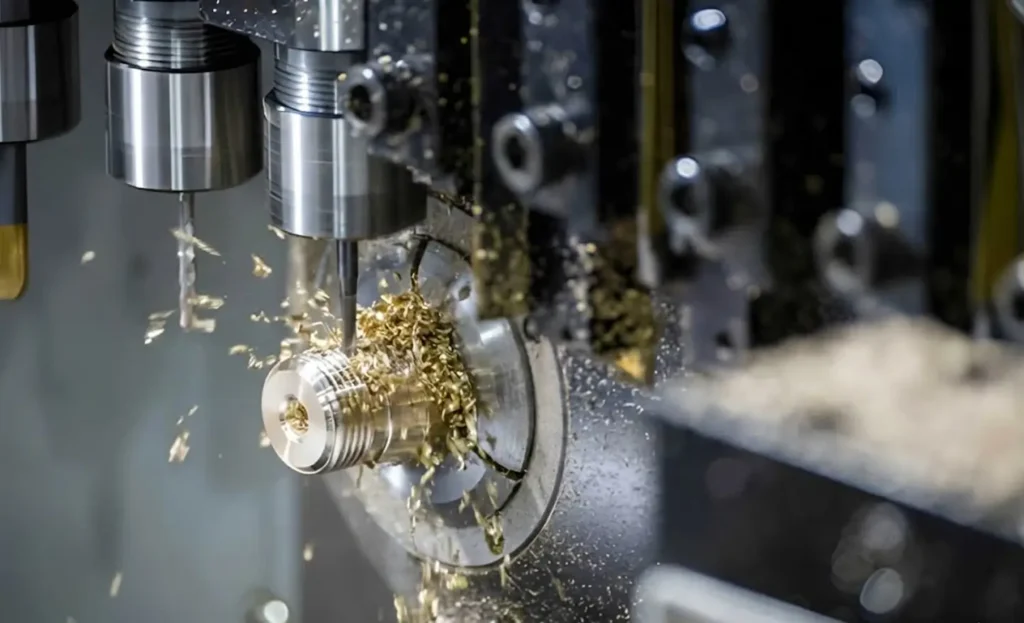
Swiss machining is a high-precision manufacturing process used to create small, complex parts. You will find this method essential when you need to produce parts with very tight measurements. It uses a sliding headstock to move metal bars through a guide bushing for maximum stability. This unique design ensures every cut is perfect.
Swiss Machining Principles
First, you need to understand the mechanical design of these machines. Unlike standard lathes, the Swiss-style machine moves the material itself while the tools stay in a fixed position.
Sliding Headstock and Guide Bushing
The core of this technology is the guide bushing. To begin, you feed the metal bar through a sliding headstock. This part holds the material and pushes it forward through the guide bushing. Because the cutting tools stay right next to the bushing, the material cannot bend. This stops the shaking or deflection you would normally see with long, thin parts.
Bar Feed and Automatic Feed Mechanism
Starting off, the machine uses an automatic bar feeder. You can load long metal rods into the machine to allow for continuous production. This helps you keep the machine running for hours without stopping to reload by hand.
Multiple Tool Stations and Live Tooling
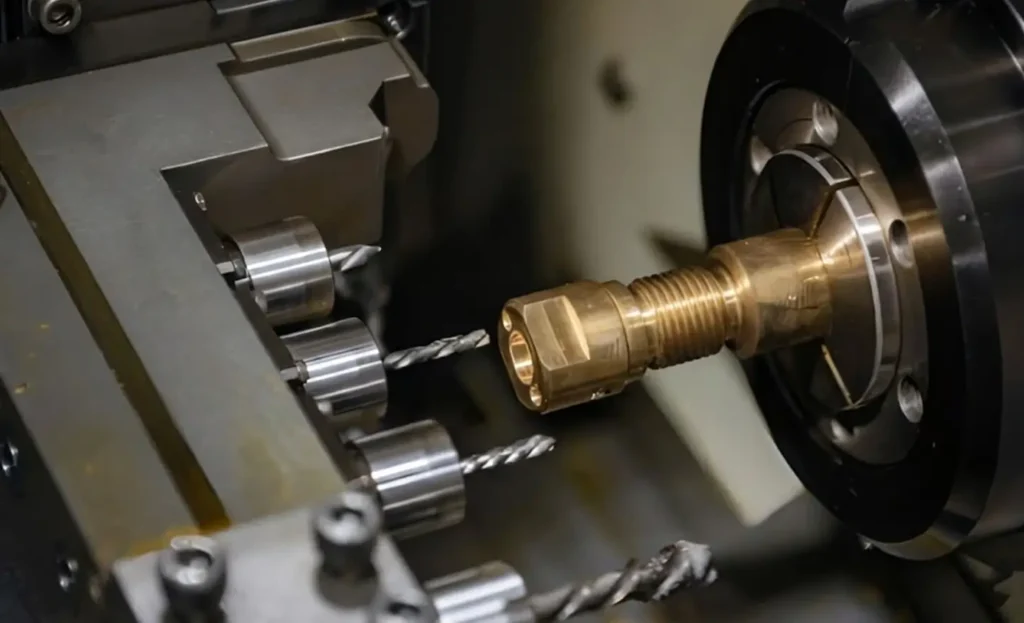
Next, you should look at the tool layout. Swiss machines feature many tool stations that surround the workpiece. You can use live tooling, which means the tools spin like a drill while the part stays still. This allows you to perform different tasks, such as cutting slots or holes, in a single session.
How Swiss Machining Works Step-by-Step
First, of course, the process starts with the raw material. Here is how you achieve such high precision during the build.
Material Feeding and Support
The machine pushes the bar stock through the guide bushing. Only the tiny section being cut is ever exposed. Because the cutting tool works right at the face of the bushing, the part does not move or vibrate. This is a helpful way to keep the part perfectly straight even if it is very long and thin.
Simultaneous Operations
Then, in turn, different tools hit the part at once. You can have a drill working on the front while a different tool shapes the side. Many machines even have a sub-spindle. This second spindle grabs the part once the first side is done. It can finish the back side while the main spindle starts a brand-new part. This will happen: you double your work speed.
Swiss Machining vs. Conventional Machining
In terms of engineering, Swiss machines work differently than traditional CNC turning centers.
Important Differences from Traditional CNC Turning
In a standard lathe, the part stays in a fixed grip and the tool moves along the length of it. This often just leads to the part bending if it is too thin. On the other hand, Swiss machining moves the part past the tool, which provides much better support.
Workpiece Movement and Support Method
The best way to do this is by supporting the metal right at the point of the cut. You’ll want this method because it stops the material from flexing under the pressure of the blade.
Tolerance and Precision Capabilities
You should be able to reach tolerances as tight as ±0.0002 inches. Conventional lathes usually struggle to keep this level of accuracy for small parts.
Advantages of Swiss Machining
You will need Swiss machining for projects where small mistakes are not allowed.
High Precision
The guide bushing ensures the metal stays steady. Because the last thing you want to do is create wobbly parts, this support is vital. It allows you to hit measurements as small as a human hair.
Complex, Small Parts
You can then use this process for parts with tiny diameters and many detailed features. You can make parts that are 20 times longer than they are wide, which is impossible on a regular lathe.
Speed and Efficiency
Since the machine does many tasks at once, this will happen: your production time drops. You do not need to move the part to a second machine to finish it.
Less Waste
Higher accuracy means you throw away fewer bad parts. This saves you money on expensive metals like titanium.
Limitations and Challenges
Note that you want to always remember that no machine is perfect for every single job.
Not for Large Parts
You should generally avoid this for heavy or thick items. Most Swiss machines only handle metal bars up to 1.25 inches thick. If you have a part that is 5 inches wide, you will need a standard CNC lathe instead.
High Initial Costs
Originally, these machines cost more to buy than basic lathes. The setup takes more time because you have to align the guide bushing and the tools perfectly. You also need a person with special training to program the complex paths.
Applications of Swiss Machining
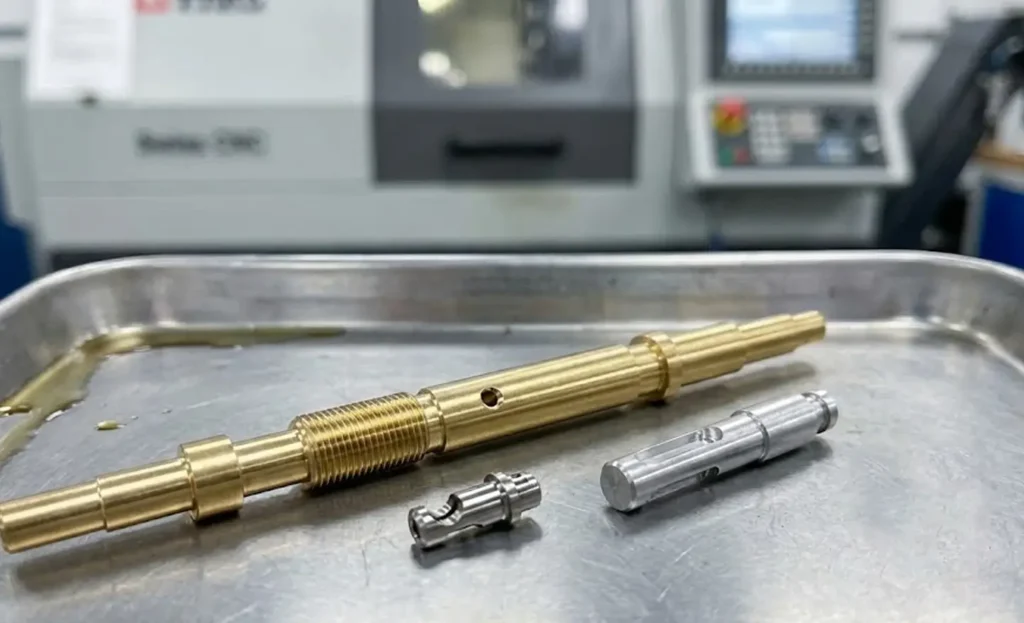
Here’s what the experts say about where you will see these parts most often in the world today.
Medical Devices
Bone screws, dental implants, and heart tools require the tiny, sharp details this machine provides. These parts must be perfect because they go inside the human body.
Aerospace
You prefer this for high-strength bolts, sensors, and fuel parts that must not fail. These parts must survive high heat and pressure in space or jet engines.
Electronics
It is a helpful tool for making the tiny pins and connectors inside your phone or computer. As gadgets get smaller, the need for Swiss machining grows.
Automotive
Makers use it for fuel injectors, brake sensors, and precision valves. These parts help your car run smoothly and stay safe.
Materials Suitable for Swiss Machining
You have many choices when it comes to the metal you use. Stainless steel is very popular because it is strong and resists rust. Aluminum is a good choice if you need a lightweight part. Titanium is often used for medical and space parts because it is very tough.
In addition, you can use plastics like PEEK or Teflon for medical tubes and insulators. Just make sure the material is straight and smooth so it fits the feeder. This is a helpful way to avoid jams in the machine.
Conclusion
Swiss machining is the best way to make tiny, high-quality parts. You use a guide bushing to keep the metal steady while the tools cut. This leads to better accuracy than any standard lathe can offer. Although the machines are complex, they save time and reduce waste. You should use this method for any small, important parts.
FAQs
What makes Swiss Machining different from conventional lathe turning?
The main difference is that the part moves while the tool stays near the support. In a regular lathe, the part stays in one place while the tool moves far away from the support.
What industries use Swiss machining the most?
The medical and aerospace industries use it the most because they need perfect, tiny parts.
What part sizes is Swiss machining best suited for?
It is best for parts under 1.25 inches wide. It is perfect for parts that are very long and skinny.
What tolerances can Swiss machining achieve?
You can reach tolerances as small as ±0.0002 inches.
Can Swiss machining perform multiple operations in one setup?
Yes. You can turn, mill, and drill the part all at once. This saves you from having to move the part to another machine.