










CNC Turning: Basic Guide for Beginners
CNC turning removes material from a rotating workpiece with a cutting tool that usually does not rotate but advances along controlled axes. This guide covers the process, operations, materials, and design considerations.
Contents
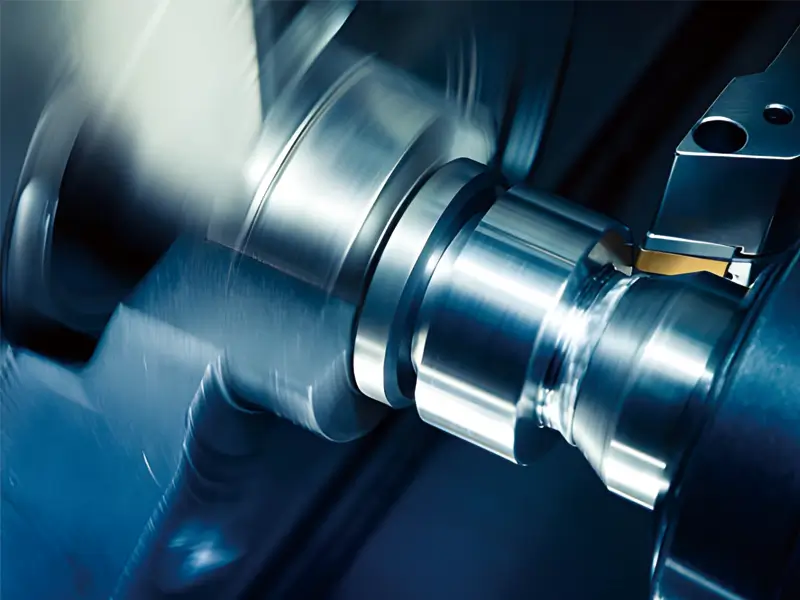
How CNC Turning Works?
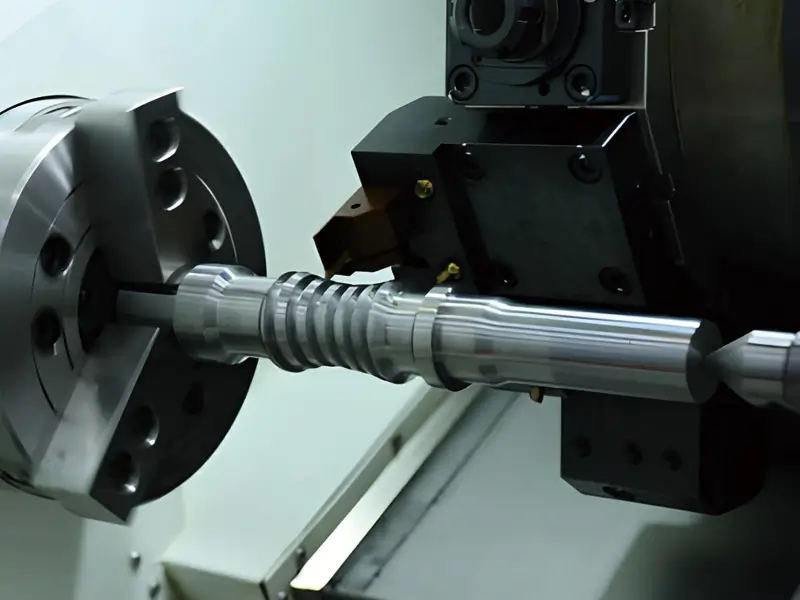
The fundamental process involves spinning the raw material while the cutting tool moves across its surface. This continuous action removes material to achieve the desired geometric shape.
Parts of a CNC Turning Machine
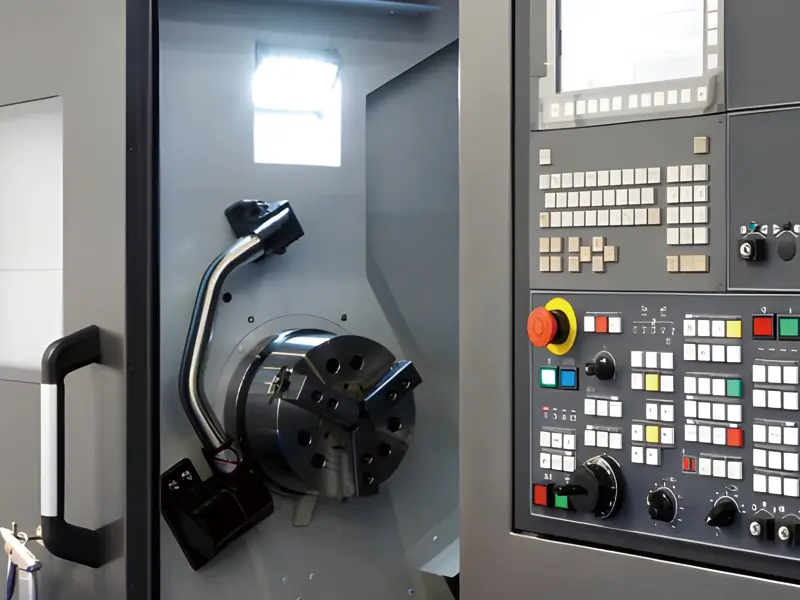
A central spindle holds and spins the material, securing it with a chuck. In turn, the cutting tools are mounted in a turret. The control unit directs all movements, using coolant and chip removal systems to maintain efficiency.
Types of Machines and Axes
Basic 2-axis lathes only control the tool in the X and Z directions. Next, multi-axis turning centres add live tooling and other C. Y, B axes. This allows the machine to perform both milling and drilling operations.
The Workflow from Design to Part
The process starts with a finished design in CAD. Secondly, you move the design into CAM software to generate the necessary tool paths. These paths become G code. The machine then reads this code to execute the physical cutting.
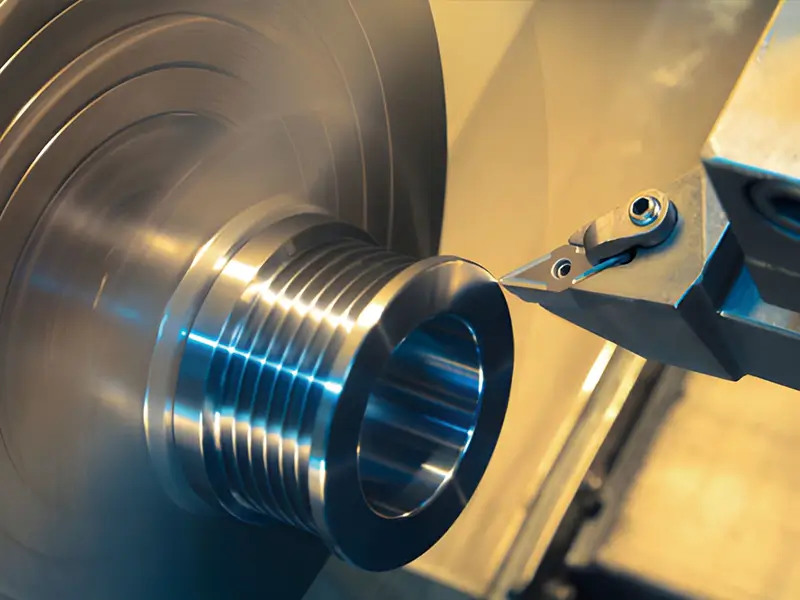
Common CNC Turning Operations
In CNC turning, you can make different cuts of basic and complex features. However, the question is What kind of parts can a CNC lathe make?
Straight and Rough Turning
Rough turning removes stock before finishing. Straight turning produces a cylindrical surface by feeding along the workpiece axis; it can include both roughing and finishing passes.
Facing, Tapering, and Threading
Facing produces an end face perpendicular to the rotation axis when the setup and machine alignment are correct. Taper turning creates conical surfaces, while threading produces external or internal screw threads. Verify the specified dimensions and geometry.
External vs Internal Turning
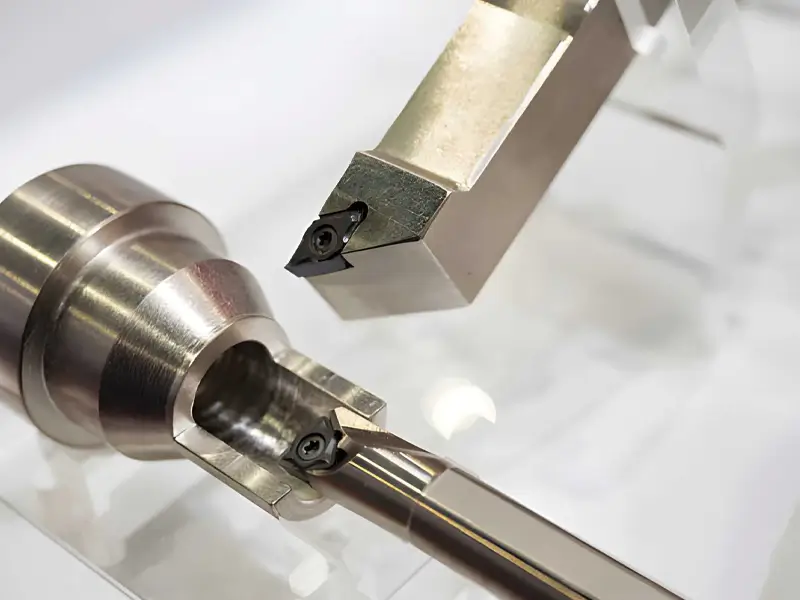
External turning shapes the outside diameter of the workpiece. Meanwhile, internal turning is also known as boring. In this process, you enlarge an existing hole inside the material.
Specialised Operations
Hard turning machines hardened materials with suitable tooling, a rigid setup, and appropriate cutting conditions. Material hardness and toughness are different properties; neither difficult geometry nor a complex machine alone defines hard turning.
What Are the Common Tool Types Used in CNC Turning?
CNC turning uses particular tools to shape metal and plastic parts. These tools are often small cutting tips called inserts.
Carbide Inserts
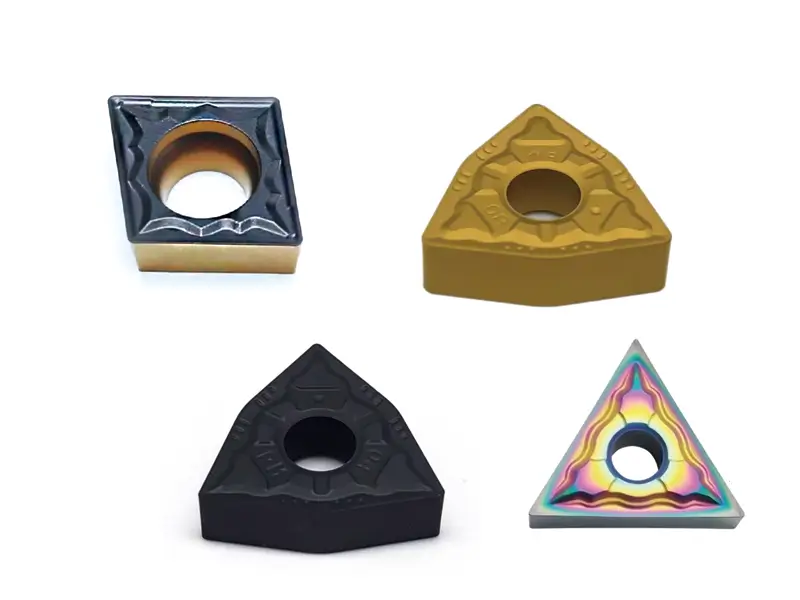
Carbide inserts are the most common cutting tools. They are very hard and work well for many materials. They handle most general turning jobs.
High Speed Steel Tools
High-speed steel tools can be ground to special profiles and used in suitable low-speed applications. Material suitability, cost, and tool life depend on the operation; they are not limited to soft workpieces.
Cermet Inserts
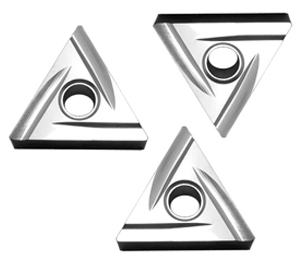
Cermet inserts combine ceramic constituents with a metallic binder. Suitable grades can finish steel and selected stainless steels; choose the grade and cutting conditions for the specific application.
PCD Inserts
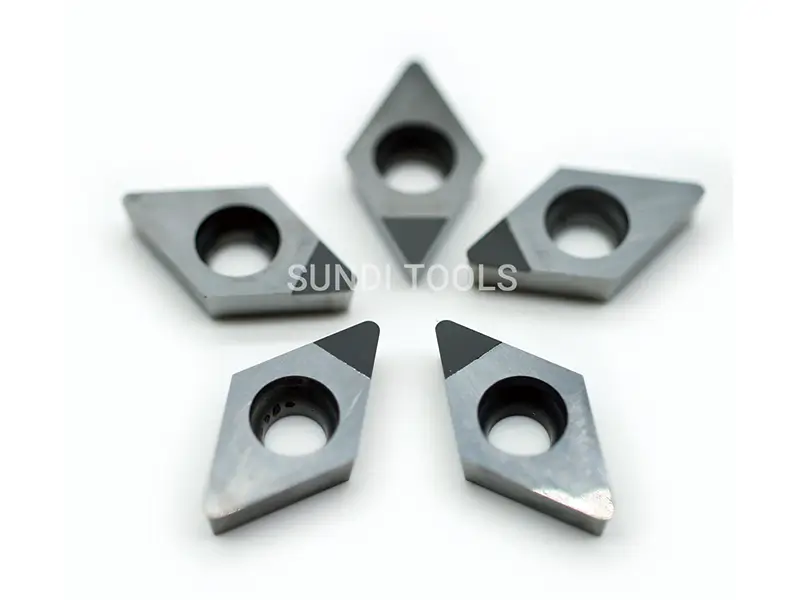
PCD inserts use polycrystalline diamond cutting edges for suitable non-ferrous materials, such as selected aluminium and copper alloys. Selection depends on the alloy and operation; workpiece toughness alone is not a reason to require PCD.
CBN Inserts
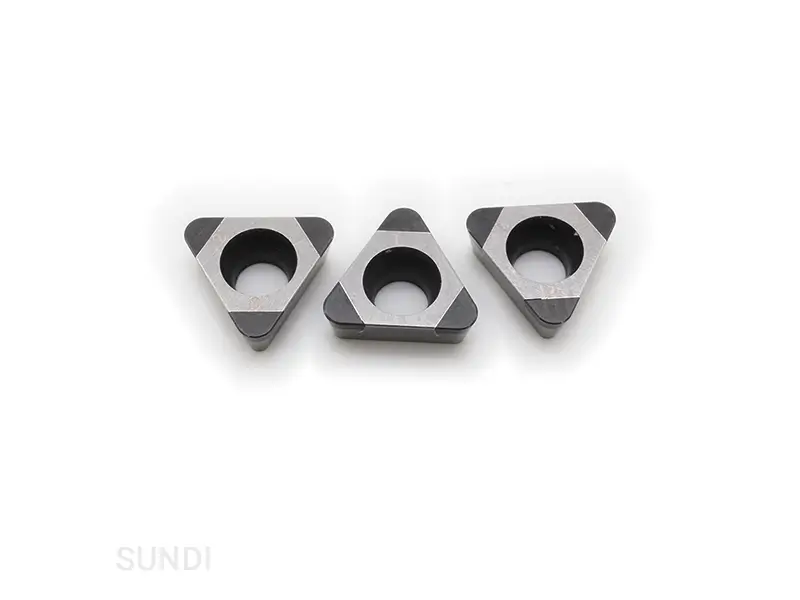
CBN inserts are commonly used for hard turning with grades selected for the material and cutting conditions. Typical applications include hardened steels and selected cast irons; suitability for superalloys requires application-specific guidance.
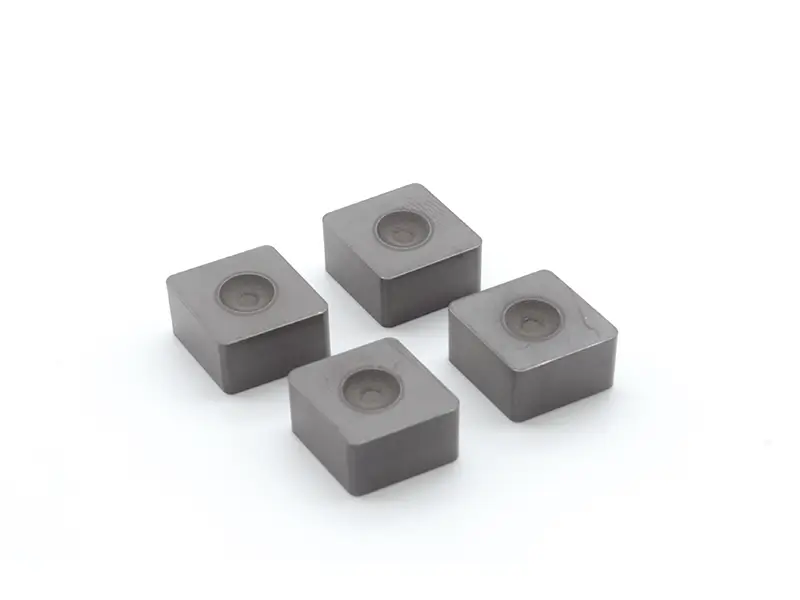
Solid PCBN inserts use a polycrystalline cubic boron nitride body rather than only a brazed cutting tip. Composition, grade, and edge preparation vary; they do not automatically outperform every tipped insert or suit every hard-material operation.
What Materials you can use for CNC Turning?
The best choice depends on your application. But many materials work well if you hold and place them rght. So What is the easiest metal to machine on a lathe?
Common Turnable Materials
Standard materials for CNC turning include aluminium 6061, different steels and brass, and Nylon. You should choose a material based on its final application, not just how easy it is to cut.
Anoher important point is that you must check the material’s machinability. It affects chip formation and tool wear. Another important thing is the material’s rigidity to prevent the part from bending during a long cut.
Advantages and Limitations of CNC Turning
Turning is efficient for rotational parts but has specific cost and geometric limits. When is turning better than milling?
Advantages
CNC turning can provide close tolerances and repeatability with a capable process. A tolerance of 0.005 mm must be validated for the actual machine, setup, material, thermal conditions, and measurement method; it is not a universal capability.
Limitations
Consequently, turning is best for round parts and struggles with block geometries. The initial investment in a multi axis machine, tool setup, and programming is a significant upfront cost.
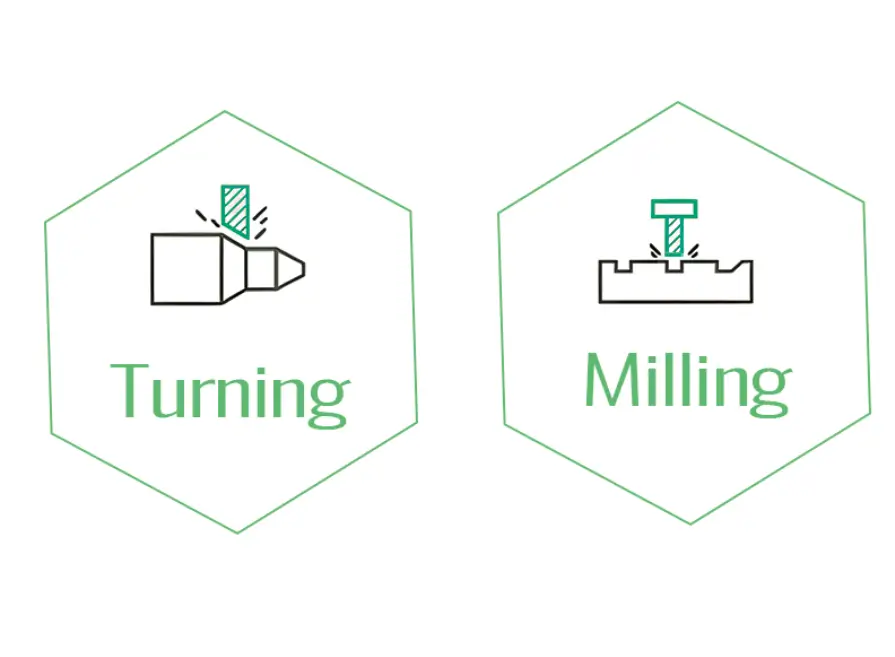
Turning vs Milling
You prefer turning for parts requiring fast material removal on rotational surfaces and OD/ID. However, milling is good for complex, prismatic shapes.
CNC Turning Applications
Turning is a highly versatile process used across almost every industry to solve specific dimensional problems. Where is CNC turning used most?
Automotive and Industrial Shafts
First, you need to consider the automotive industry’s constant need for precise shafts, axles, and pins. Turning creates rotational components that can face high stress and high RPMs. It is crucial for smooth engine and gearbox operation.
Medical Implants and Devices
Turning is used for medical and dental components such as bone screws, fittings, and instruments made from materials including stainless steel or titanium. Dimensional accuracy and surface requirements need validation; machining does not itself make a part sterile.
Aerospace Fasteners and Connectors
Aerospace applications include fasteners and connectors with specified material and dimensional requirements. Turning repeatability supports production, but compliance with flight-safety requirements also depends on qualified processes, inspection, and traceability.
Design Considerations and Best Practices
Design choices heavily influence the cost and quality of your final component.
Tool Accessibility and Fixturing
First, you need to ensure the cutting tool can reach all surfaces without colliding with the chuck or machine components. Tool size limits the minimum diameter and maximum depth of internal features like bores.
Feature Stability
Long, slender features and thin walls need suitable support, workholding, tooling, and cutting conditions to control deflection and vibration. Assess manufacturability with the machining partner rather than treating these features as universally unsuitable.
Parameter Optimization
Select spindle speed, feed rate, and depth of cut for the material, tool, and setup. Validate their effects on surface finish, tool wear and energy consumption in the actual process.
Practical Collaboration
Finally, make sure to verify all toolpaths and material offsets with your machining partner before production starts. Early prototyping saves cost and confirms the feasibility of all complex design elements.
Conclusion
CNC turning is well suited to many rotational components. Choose the process by comparing geometry, tolerance, material, production volume, and total cost with alternative methods.
FAQs
Q: What is CNC turning?
A: CNC turning produces rotational features by feeding a cutting tool against a rotating workpiece under computer control.
Q: What is a CNC turning machine?
A: It is a machine that uses computer control to automate the turning process. The machine holds the material and rotates it. The computer guides the cutting tool precisely to make the part.
Q: How to turn a 3D printer into a CNC?
A: Replacing a printer head is not enough to create a suitable CNC cutting machine. Cutting requires appropriate rigidity, drives, workholding, guarding, and validated controls. A conversion for milling is also different from building a turning machine.
Q: How to turn a picture into a CNC carving?
A: Prepare suitable vector geometry or relief data from the image, then use CAM software to generate and verify toolpaths. A photograph does not automatically provide accurate 3D depth information.
Q: How to use G41 and G42 in CNC turning?
A: On a lathe, G41 and G42 commonly select tool nose radius compensation to the left or right of the programmed path relative to the direction of travel. Follow the control manual for the active plane, tip orientation, offsets, and entry and exit moves.