 Skip to content
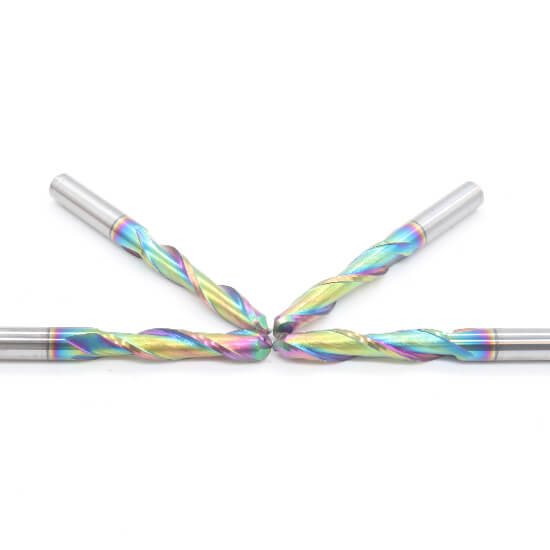
Solid Carbide Ball Nose Spiral Router Bit
Standard solid carbide ball nose spiral router bits are fundamental tooling for 3D surface machining in CNC woodworking. Featuring a pure hemispherical cutting tip and a uniform cylindrical shank, these bits are engineered to distribute cutting forces evenly across the tool. While tapered bits are reserved for intricate fine details and deep cavities, standard ball nose bits excel in large-area 3D contouring, initial roughing operations, and machining broad, continuous sweeping arcs in solid wood and MDF.
Versatile Applications:
- Target Operations: Furniture curve machining, 3D roughing passes, large-radius edge fluting, and broad surface relief profiling.
- Target Materials: Solid hardwoods, softwoods, standard MDF, and structural plastics.
Tool Selection Note: If your application requires intricate 3D relief carving, clearing sharp vertical corners, or reaching into deep/narrow cavities without leaving residual material, please explore our [Tapered CNC Carving Bits]. Standard ball nose bits are optimal for broad contouring but cannot process sharp right angles due to straight shank interference.
- Quality Assurance
- OEM/ODM Service
- Cost Saving
- Fast Delivery
Description
Technical Features & Advantages
-
Uniform Force Distribution
The pure spherical tip combined with a straight cylindrical shank ensures consistent, uniform cutting forces during multi-axis tool paths. This makes the tool highly stable when routing broad curved surfaces or hemispheres.
-
High-Volume Material Removal
Due to the robust straight shank architecture, standard ball nose bits are the primary choice for 3D roughing passes. They can efficiently clear bulk material to establish the basic 3D shape before a tapered bit is used for fine detailing.

-
Surface Scallop Control
During large-area finishing passes, the rounded tip allows for smooth stepovers, effectively controlling and minimizing the height of material ridges (scalloping) on continuous curved surfaces.
-
Industrial Solid Carbide Construction
Machined from sub-micron tungsten carbide to maintain continuous edge sharpness and prevent premature tool wear during extensive surface milling operations.
Working Principle of Solid Carbide Ball Nose Router Bits
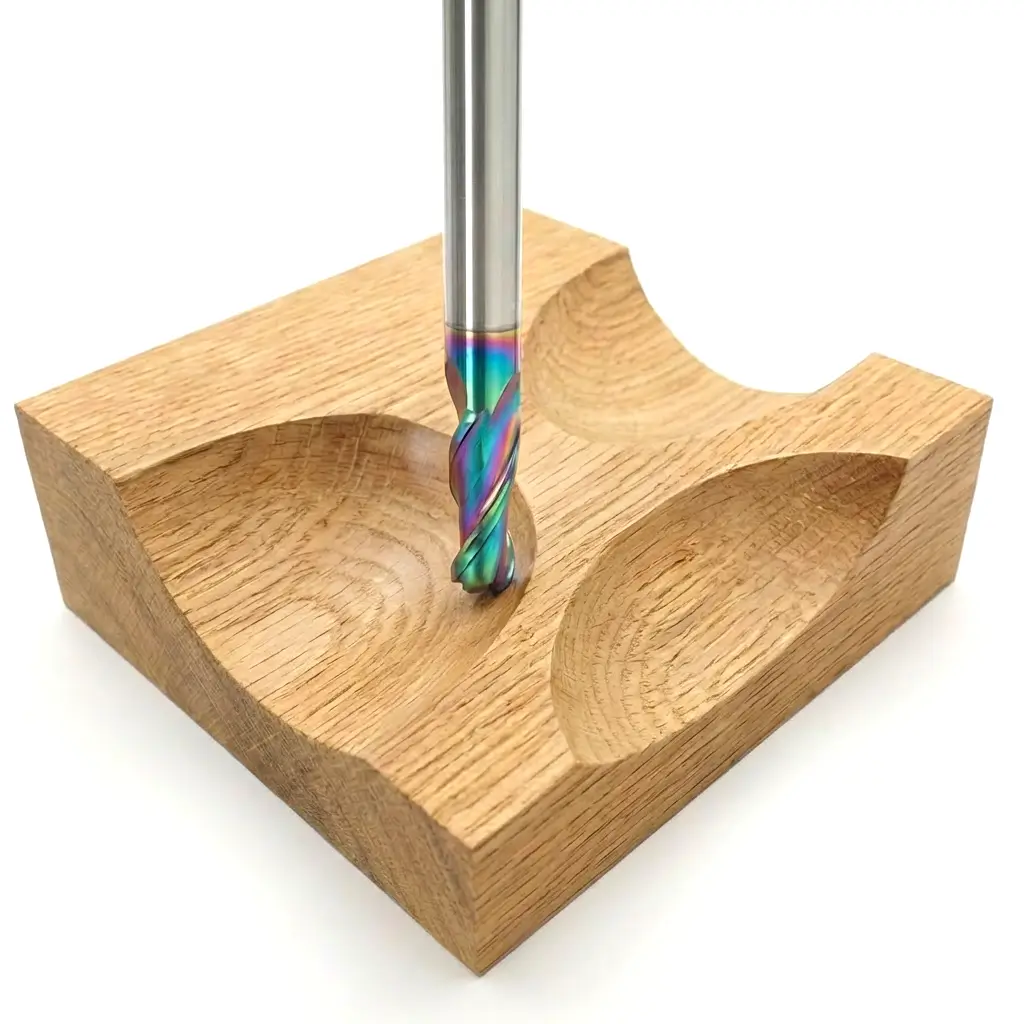
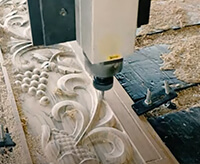
Ball nose spiral router bits achieve smooth, continuous 3D surfaces through a specialized hemispherical cutting tip. Unlike flat-bottom bits that leave sharp stair-step marks during multi-axis machining, the rounded geometry of the ball nose creates overlapping, curved tool paths.
- As the tool moves across the workpiece, it overlaps its previous cut by a specific CNC programmed distance, technically known as the “stepover.”
- The spherical tip cuts rounded grooves, and the intersection of these overlapping passes leaves small, curved ridges called “scallops.” By optimizing the stepover percentage relative to the tool’s radius, the height of these scallops is strictly controlled.
Specification:
Below are some commonly used dimensions for reference. If you require other specifications or custom shapes, please feel free to contact us.

| Item Code | Outside Diameter | Flute Length | Overall Length | Shank Diameter |
|---|---|---|---|---|
| WB-2-D312 | 3.175 | 12 | 38 | 3.175 |
| WB-2-0422 | 4 | 22 | 45 | 4 |
| WB-2-0625 | 6 | 25 | 50 | 6 |
| WB-2-0852 | 8 | 52 | 80 | 8 |
| WB-2-1030 | 10 | 30 | 60 | 10 |
| WB-2-1080 | 10 | 80 | 120 | 10 |
| WB-2-10100 | 10 | 100 | 150 | 10 |
Why Choosing us
Professional
we have multi top class production lines which help us to offer better performance tools and extend the range of our products.
Quality
Every year, we spend a lot of money upgrading and maintaining our equipment.
I stock
We have an ample supply of goods in stock.
Team
We follow standard procedures and have an excellent team of designers.
OEM
We have many years of leading OEM and ODM manufacturing experience in this field.
Delivery
Receiving goods as fast as 3 days around the world.
Request a Quote for Ball Nose Router Bits
All information and uploads are secure and confidential.
FAQ
Most frequent questions and answers
A: Scallop height is strictly determined by two geometric factors: the tool’s diameter and the programmed stepover distance. To minimize these ridges and achieve a smoother surface, you must either decrease the stepover percentage (typically setting it between 8% and 12% of the tool diameter) or use a ball nose bit with a larger diameter for the finishing pass. While a smaller stepover yields a superior finish and reduces manual sanding, it will proportionally increase the total CNC machining cycle time.
A: While Sundi’s ball nose bits feature a center-cutting geometry that allows for direct vertical plunging, our engineers strongly recommend utilizing a ramping entry (either helical or linear) whenever the toolpath allows. At the exact bottom center of a ball nose tip, the rotational cutting speed effectively drops to zero. Plunging vertically creates excessive axial pressure and heat at this dead center. Ramping distributes the cutting load across the curved edge, facilitating better chip evacuation and significantly extending the tool’s lifespan.
A: Yes, it is highly recommended. Standard ball nose bits are often preferred over flat-bottom straight bits for 3D roughing (such as terracing or raster roughing). The hemispherical tip distributes cutting forces more evenly and lacks the fragile 90-degree corners of a square end mill, making the ball nose bit highly resistant to chipping under heavy chip loads. It efficiently clears bulk material to establish the basic 3D contour before a smaller tapered bit is introduced for fine detailing.
Wuxi Sundi Precision Tools Co.,LTD
- +86 18168312921
- +86 18168312921
- +86 18951588639
- info@sundicuttingtools.com
Our team is here to help you! We provide personalized solutions to meet your unique needs. Contact us to learn more.