


How to Read End Mill Dimensions Without Choosing the Wrong Tool
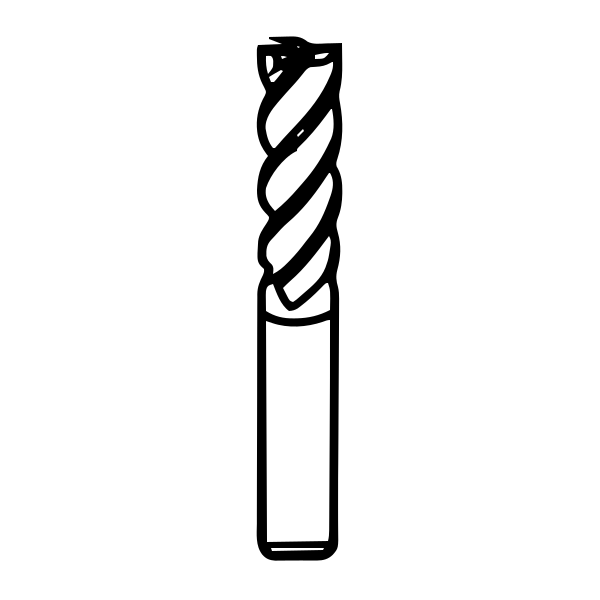
An end mill listing can look simple: diameter, flute length, overall length, shank, flute count. The mistake is reading those numbers as labels instead of behavior. Each dimension changes what the tool can reach, how much it deflects, what features it can cut, and how risky the setup becomes.
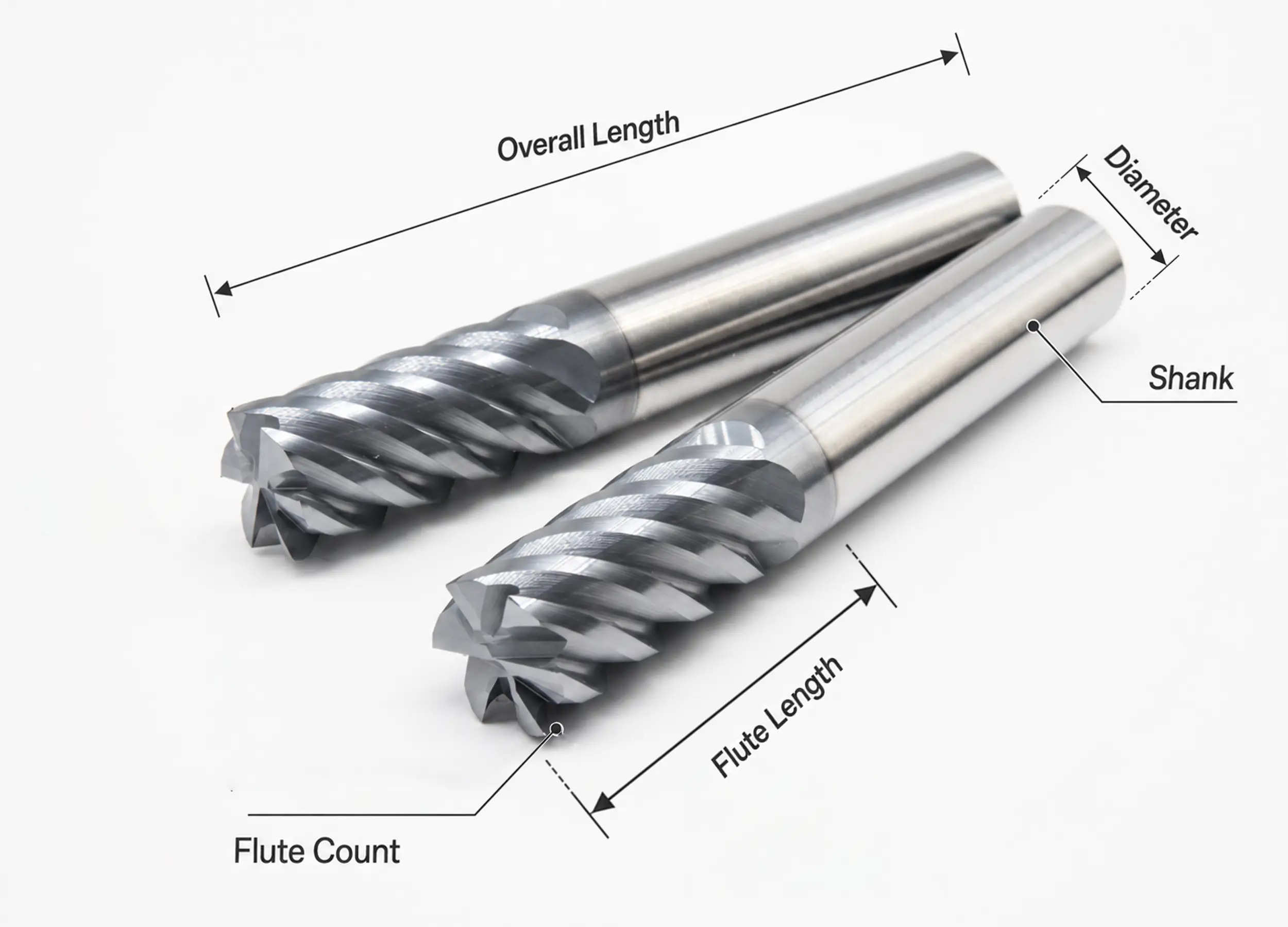
Start with the dimensions printed in a tool listing
Most catalog listings put the important numbers close together. Read them as a connected set, not as separate facts.
Diameter
Diameter affects feature size, corner access, cutting load, and usable speed range. A larger diameter is stronger, but it may not fit the internal radius or narrow slot. A smaller diameter reaches finer features, but it bends more easily.
Flute length
Flute length is the length of the cutting portion. It tells you how deep the tool can side cut, but it does not mean the tool should be buried to that depth in every operation.
Long flute length increases reach, but it also increases the flexible cutting portion of the tool. That matters on deep walls and thin features.
Overall length
Overall length is the full tool length from end to end. It can suggest possible reach, but the actual machining risk depends on stickout from the holder.
A long overall length does not automatically mean a stable tool. It may simply give you the ability to hang more tool out, which can make deflection worse.
Shank diameter
The shank must fit the holder correctly. A mismatch between shank, holder, and machine setup can create runout or poor grip. Shank rigidity also affects how well the cutting edge stays on path.
Flute count
Flute count affects chip space, feed capability, and finish behavior. More flutes can support smoother cutting in some materials, but they leave less room for chips. Fewer flutes can help chip evacuation, especially in softer materials or deeper cuts.
Use the table as a reading aid, not as a substitute for setup judgment.
| Dimension | What it affects | Common mistake |
|---|---|---|
| Diameter | Feature size, strength, load, RPM | Choosing too large for the corner or too small for rigidity |
| Flute length | Side-cutting depth | Treating full flute length as safe cutting depth |
| Overall length | Possible reach | Ignoring actual stickout from the holder |
| Shank diameter | Holder fit and rigidity | Buying a shank the holder cannot support well |
| Flute count | Chip evacuation and finish | Choosing by finish expectation without considering material |
How dimensions change cutting behavior
Diameter changes feature access and load
Diameter is both a geometry constraint and a cutting-force decision. If the cutter is too large, it cannot make the feature. If it is too small, it may chatter, deflect, or take too long.
For narrow pockets, inside corners, and small slots, the tool must fit the feature. For heavier milling, the tool must also be strong enough to handle the load.
Flute length is not the same as safe reach
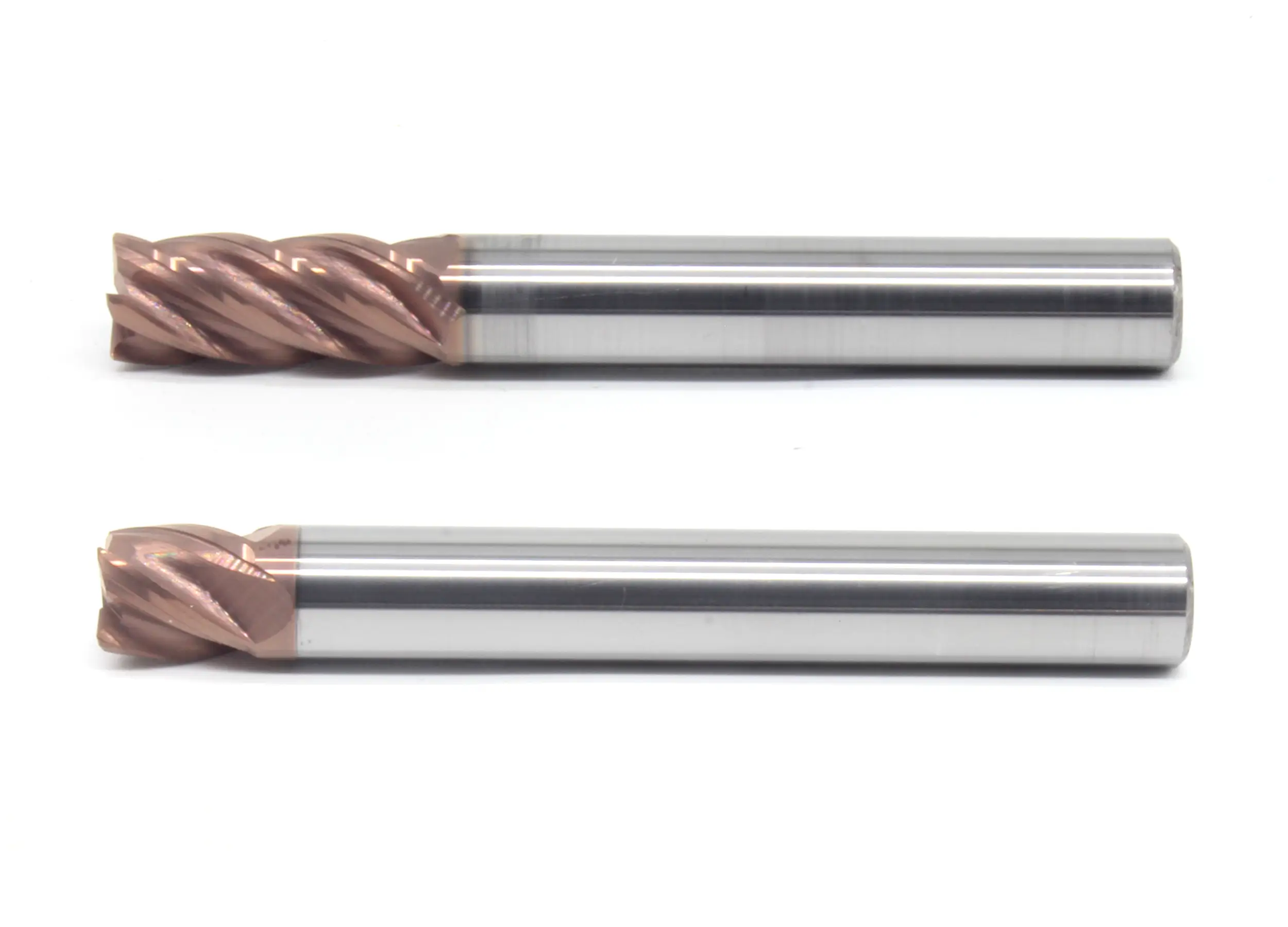
A long flute length lets the cutting edge contact a deeper wall. It does not remove the need for rigidity. If the operation only needs a short axial depth, a shorter flute tool can be stronger and more stable.
The practical question is not “Can the flute reach?” It is “Can the tool cut at that reach without bending, vibrating, or leaving a poor finish?”
Shank and holder fit affect rigidity
A good tool still performs poorly if the holder setup is weak. Runout, poor clamping, excessive stickout, and unsupported length all make the edge behave differently from the catalog description.
Stickout, reach, and deflection
Stickout is the exposed length from the holder to the cutting end. It is often the hidden dimension that decides whether the selected end mill works.
More stickout means more leverage. That can produce chatter, tapered walls, poor finish, or tool breakage. When a job needs reach, choose the shortest tool and stickout that can physically clear the part. If a long-reach tool is unavoidable, reduce cutting load and expect a narrower process window.
Flute length, overall length, and stickout should be considered together. A long overall length with unnecessary stickout can make a rigid-looking tool behave like a flexible one.
Dimension choices and process settings are connected
Dimensions are not separate from feeds and speeds. A smaller diameter usually changes RPM, chip load, and allowable radial engagement. A longer flute or longer stickout may require lighter cuts. A higher flute count changes chip space and feed calculation.
That is why choosing dimensions first and feeds later can cause problems. The two decisions should be made together.
Common selection mistakes
One mistake is choosing the longest flute length available “just in case.” That can reduce rigidity for no benefit. Another is choosing a small diameter because it fits the feature, without checking whether the tool can survive the depth and material.
A third mistake is treating overall length as useful cutting length. Overall length helps only when the holder and setup can support the needed stickout. Otherwise it increases risk.
A practical workflow for choosing dimensions
Start with the feature: slot width, pocket corner, wall height, and required depth. Choose a diameter that fits the feature and has enough strength. Then choose the shortest flute length that can cut the needed wall. After that, check overall length and holder clearance.
Finally, check rigidity. If the setup needs long stickout, reduce load or choose a different milling tool geometry. If the cut requires deep reach and good finish, plan the operation around deflection instead of assuming the catalog dimensions solve it.
Example: reading a listing without overbuying reach
Suppose two tools share the same diameter, but one has a much longer flute length and overall length. The longer tool may look more versatile, but it is not automatically the better choice. If the part only needs shallow cutting, the shorter flute tool will usually be more rigid.
Use the longer tool only when the feature requires it. Otherwise, the extra length can invite chatter, wall taper, and poor finish. This is one of the most common ways a dimension choice creates a machining problem before the cut even starts.
What to send a supplier when asking for help
Instead of asking only for “an end mill dimension,” send the feature size, material, cutting depth, required reach, holder type, and whether finish or metal removal is the priority. A supplier can make a better recommendation when the dimensions are tied to the job.
If the tool is for a deep pocket or tall wall, include the required stickout and wall height. If it is for small slots or corners, include the minimum internal radius. Those details matter more than a generic request for a standard end mill.
Quick buying check
Before ordering, confirm three things: the diameter fits the feature, the flute length reaches only as far as needed, and the shank fits the holder rigidly. If any one of those is wrong, the tool may be the correct “size” on paper and still be the wrong tool for the job.
FAQ
Is flute length the same as cutting depth?
No. Flute length is the cutting-edge length, but safe cutting depth depends on material, tool diameter, stickout, rigidity, and engagement.
Does a longer end mill give better reach?
It gives possible reach, but it may reduce rigidity. Use only as much length as the setup needs.
Which end mill dimension should I check first?
Start with diameter because it determines feature access. Then check flute length, stickout, shank, and flute count as a system.