




Types of Brass: Complete Guide to Alloys, Properties, and Applications
The following list gives 7 commonly used brass names. It is not an exhaustive classification, and trade names can overlap; confirm the specified alloy designation and product standard.
- Yellow Brass
- Red Brass
- Cartridge Brass
- Naval Brass
- Free Machining Brass Alloy 360
- Architectural Bronze Alloy 385
- Gilding Metal
You need to understand brass alloys to select the right material for your project. Every type of brass comes with different mechanical properties and applications.
Contents
What is the definition of Brass?
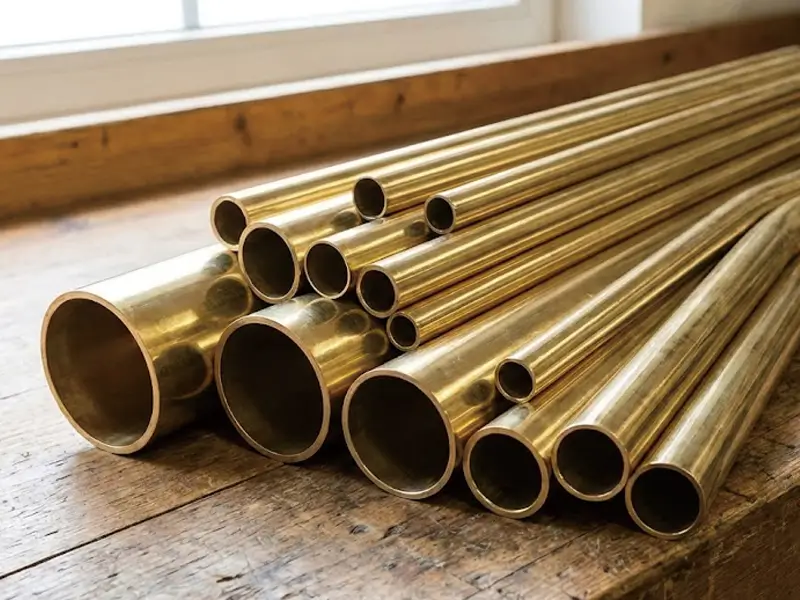
Brass is a family of copper-zinc alloys. Copper, zinc, and permitted additions vary by grade and product specification. Use a defined alloy designation and certified composition rather than treating one broad composition range as a purchasing specification.
Zinc content, other additions, phase structure, and temper influence strength, ductility, color, and processing. Higher copper contents often give redder tones, but color alone does not establish grade or performance.
Note: Brass has no single universal copper-to-zinc ratio. Obtain the composition limits for the specified grade.
Three Primary Brass Types
Alpha Brass
Alpha brasses have an alpha solid-solution structure under the relevant conditions. Cartridge brass C26000, nominally 70% copper and 30% zinc, is a familiar example. Phase boundaries depend on temperature and additions; this example does not define all alpha brasses.
Suitable alpha brasses offer good cold formability for drawing, stamping, and bending. Temper, reduction, geometry, and intermediate annealing affect achievable deformation. They strengthen by cold work rather than conventional quench hardening; severe forming is not guaranteed to be crack-free.
Alpha-Beta Brass
Alpha-beta brasses contain both alpha and beta-related phases under the relevant conditions. Zinc content, additions, and temperature affect the phase balance; use the specified alloy and condition rather than treating one composition interval as universal.
The beta-containing structure can increase strength and favor hot working, but cold formability depends on grade and condition. Do not assume the same cold-working capability as a ductile alpha brass.
Beta Brass
Beta-rich brasses contain a zinc-rich phase whose structure and ordering depend on temperature. They generally have more limited cold formability than alpha brasses. Select by the actual composition, phase condition, and process requirements.
A beta-rich structure can favor hot working, but it does not automatically qualify a brass for die-casting. Casting suitability depends on the specified alloy, mold process, temperature control, and required properties.
Common Brass Alloy Grades
Yellow Brass Alloy 260
C26000 is commonly called cartridge brass and has a nominal 70/30 copper-zinc composition. Its specified copper range is 68.5–71.5%, with zinc as the remainder subject to permitted impurities. Do not describe it as a 67/33 alloy while calling it 70/30.
C26000 is used for drawing, stamping, spinning, and bending when the temper, tooling, and process suit the part. Severe forming may require intermediate annealing; success is not independent of geometry or material condition.
Red Brass Alloy C23000
Wrought red brass C23000 is nominally 85% copper and 15% zinc. It must not be confused with cast 85-5-5-5 copper-tin-lead-zinc alloys, which have different designations and properties. Check product form, specification, and service conditions.
Naval Brass Alloy 464
Naval brass C46400 is a copper-zinc-tin alloy. Tin can reduce the tendency toward dezincification, but the specified composition and service environment still matter. Use the grade specification rather than a universal seawater recipe.
Naval brass is used for suitable marine hardware, shafts, and fittings, but is not immune to seawater corrosion or degradation. Assess flow, deposits, temperature, stress, and the exact application before selecting a grade.
Admiralty Brass
Admiralty brasses are copper-zinc-tin alloys used in selected condenser and heat-exchanger tubing. Some grades contain inhibitors against dezincification. Specify the exact grade and assess water chemistry and flow; tin alone does not guarantee suitability for every seawater service.
Leaded Brass Alloy 360
Leaded free-cutting brass C36000 is designed for high machinability. Lead assists chip breaking, but no fixed percentage increase in cutting speed applies to all operations. Verify the alloy specification, cutting data, and any lead-content requirements for the end use.
Suitable free-cutting brasses can serve turned fittings, valve components, and precision hardware. Choose a grade that meets mechanical, corrosion, and end-use requirements; do not assume leaded brass is permitted for every application.
Muntz Metal Alloy 280
Muntz metal C28000 is nominally a 60% copper and 40% zinc brass. Its phase balance and working behavior depend on composition and temperature. Confirm the specified product condition and process instead of assuming this composition defines a universal phase boundary.
Muntz metal has a history of use in sheathing and other formed products. Modern applications require a specified grade, product form, mechanical condition, and corrosion assessment; a historical use is not sufficient evidence of suitability.
Aluminum Brass
Aluminium brass C68700 is nominally about 76% copper, 22% zinc, and 2% aluminium, with controlled additional elements. It is used in suitable heat-transfer tubing. Protective film formation and corrosion behavior depend on grade, water chemistry, flow, and service conditions.
Aluminum brass is good for condenser tubes in power plants and marine heat exchangers. The material accepts both hot and cold forming methods.
For electronic and industrial cooling projects, engineers often choose aluminum or copper instead of brass for custom aluminum heat sinks, cold plates, and other thermal management components that require efficient heat dissipation.
Manufacturing Processes That Work Best With Brass
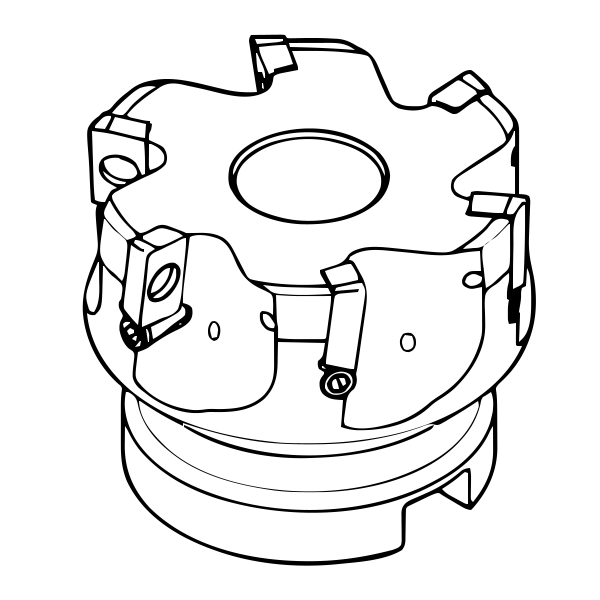
CNC Machining
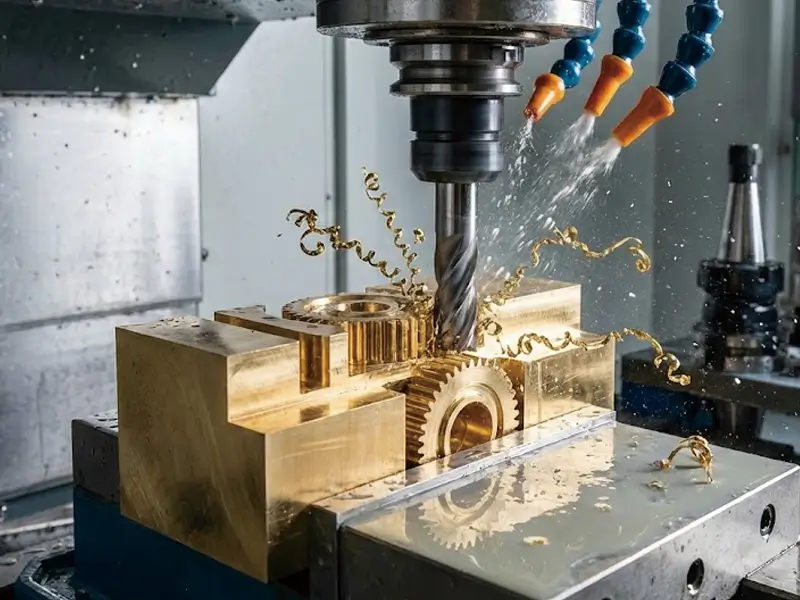
Brass machinability varies by grade, temper, and operation. Free-cutting grades can offer good productivity, but cutting speed, tool wear, and achievable tolerance require process-specific data. Select our products to suit the actual alloy, geometry, and finishing requirements.
Some free-cutting brasses produce short chips, while other grades behave differently. Chip control, cutting conditions, and geometry affect evacuation and surface quality. Complex features still require appropriate tooling, workholding, and inspection.
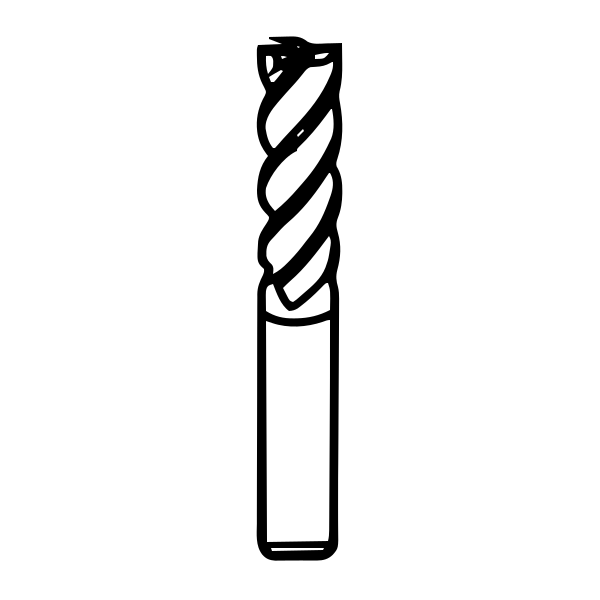
Choose an appropriate carbide end mill or PCD drill for the alloy and operation. Cutting-edge geometry, rake, support, and cutting data must be selected together; positive rake and minimal cutting force are not universal requirements, and tool life is not guaranteed.
Extrusion
In extrusion, a billet is forced through a die to produce a section. The selected brass grade determines the suitable temperature and process; hot extrusion is used for appropriate alloys. Use the manufacturer’s processing guidance rather than an unspecified very high temperature.
Extrusion can produce suitable solid or hollow profiles. Tube integrity and mechanical performance depend on the process, alloy, dimensions, and subsequent treatment. Compare material yield and total processing costs with alternative manufacturing routes.
Extrusion is useful for appropriate continuous profiles, but it cannot make every geometry. Cartridge cases and other drawn parts should not automatically be described as extruded products; distinguish extrusion from drawing and other forming operations.
Hot and Cold Forging
Hot forging can produce suitable brass valve bodies and hardware with controlled material flow. Grade, billet temperature, die design, lubrication, volume, and finishing determine performance and cost; it is not automatically cheaper than casting or machining.
Suitable alpha brasses can be cold formed, with work hardening increasing strength and hardness. Forming limits and any annealing requirements depend on temper, reduction, and geometry.
Later, you must decide between hot or cold forging. First, of course, you must evaluate how many parts you need and how difficult the shape is. Next, you should remember that hot forging can handle very complex shapes. However, it needs more machines and a lot of heat energy.
Casting Methods
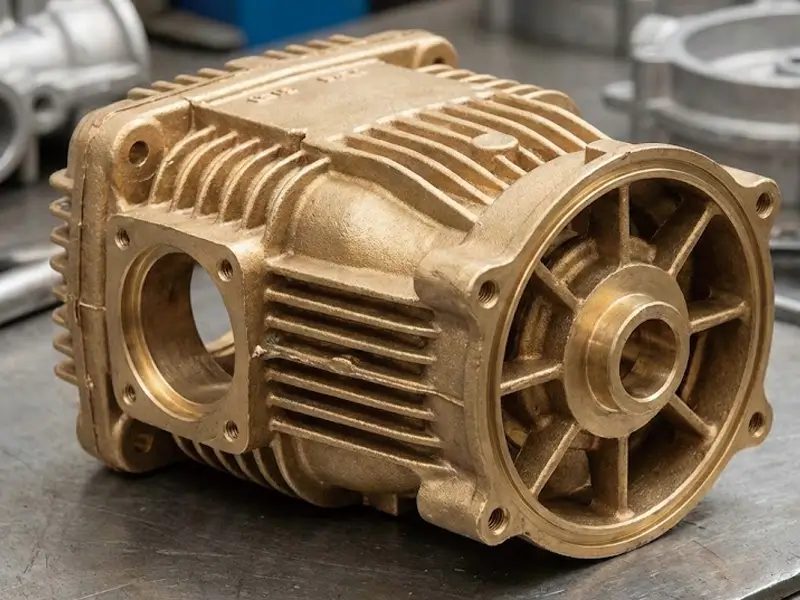
You make complex shapes by melting brass and pouring it into a mold. This process is casting. You choose from sand casting, permanent molds, and die-casting.
Select a specified casting alloy for sand casting, permanent-mold casting, or pressure die casting as appropriate. A beta-phase label or high zinc content alone does not establish fluidity, process suitability, or final properties.
Pressure die casting can produce detailed parts, but copper-alloy temperature, die life, porosity, and finishing requirements need specialist assessment. Compare actual tolerances, production rate, and machining requirements for the chosen process.
Casting may reduce machining and material use for suitable shapes. Tooling investment, production volume, yield, finishing, and quality requirements determine cost per part. No casting process is automatically the cheapest for every complex component.
Sheet Metal Stamping
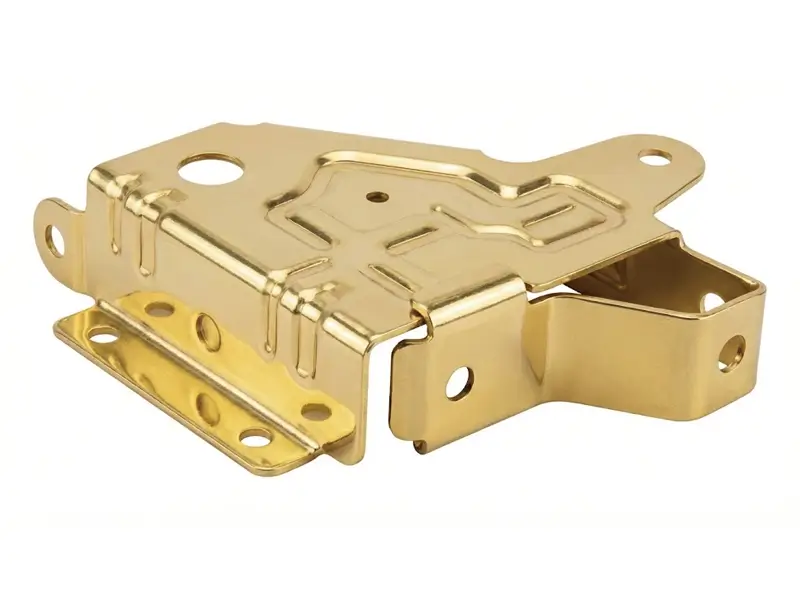
Sheet metal stamping is best at producing parts in bulk very fast. You use a powerful machine to press brass sheets into specific shapes.
Select a formable brass grade and temper for the required draw or bend. Suitable alpha brasses can support deep drawing, but strain, tooling, lubrication, and annealing requirements must be checked; cracking remains possible.
Then, you should use a machine with progressive dies. This special machine performs many different operations every time it moves down. After that, you will see the metal change shape step-by-step.
Stamping can be economical for suitable sheet parts at an appropriate production volume. Compare die investment, material yield, cycle time, finishing, and alternative routes; there is no universal requirement to produce millions of pieces.
Conclusion
You now understand the different types of brass for your work. This summary helps you choose the best metal for your project. You will see how zinc content and manufacturing methods change the metal. Now, you can pick the right brass to save money and ensure high quality.
FAQs
How to identify pure brass?
Brass is an alloy, not a pure element. A magnet can help identify some ferrous substrates, but lack of attraction does not prove an item is brass or identify its grade. Use documentation and appropriate composition testing when identification matters.
Color is only a preliminary clue: surface finish, coatings, oxidation, and lighting affect appearance. Common descriptions include:
- Yellow brass looks very golden and bright.
- Red brass has a reddish hue because it contains more copper.
- Gilding metal looks slightly pinkish.
What is high quality brass?
High-quality brass meets the specified chemistry, product standard, temper, dimensions, and inspection requirements. A higher zinc content or a beta-phase label does not by itself mean higher quality.
Match machinability, formability, corrosion behavior, and mechanical properties to the application. Free-cutting and naval brasses serve different needs; use traceable material certification and end-use requirements.
Yellow and red brasses offer different appearances, but color does not prove composition or quality. Select the finish and grade together, considering exposure and maintenance.
What brass does not tarnish?
Polished brass describes a surface finish, not a separate alloy family. It can give a bright appearance, but the surface may tarnish during exposure.
Brass can tarnish through surface chemical reactions; tarnish is not simply dirt. A suitable clear lacquer or other protective finish can slow discoloration, but coating condition, environment, and maintenance still matter.