










What is Die Casting? Common Die Casting Materials
High-pressure die casting injects molten metal into reusable dies. Tooling investment often favors series production. Common alloy families include aluminium, zinc, and magnesium; selected copper-alloy applications require specialist assessment. This guide compares material-selection considerations.
Contents
What is Die Casting?
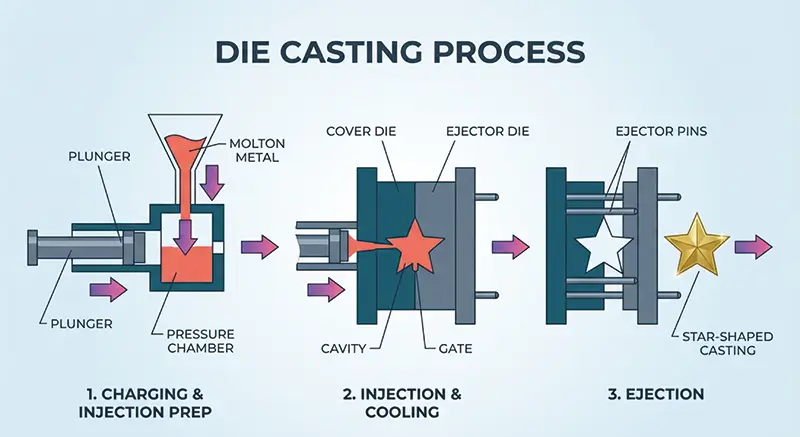
Die casting is a precise manufacturing method for metal parts. This process forces molten metal into a steel mold, or die, at high pressure. Once it cools down, the part is removed, and the die is ready for the next cycle.
Die casting is a versatile process used for making a range of parts. It works well for small electronic components to large engine blocks or automotive parts. For high-volume productions, die casting is cost-effective.
Die casting can produce complex shapes and thin walls with repeatable dimensions. Required finishing, scrap, and machining depend on the alloy, geometry, tooling, and process; savings over other methods need a project-specific comparison.
Types of Die Casting
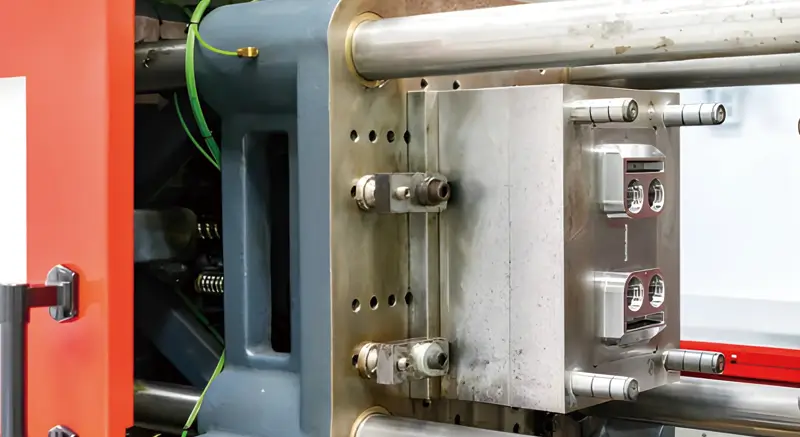
Here are the types of die casting:
Hot Chamber Die Casting
In hot-chamber die casting, the injection system draws metal from a heated reservoir associated with the machine. Suitable zinc and magnesium alloys can use this method. Machine compatibility and alloy chemistry matter as well as melting temperature.
Cold Chamber Die Casting
In cold-chamber die casting, molten metal is transferred into a shot sleeve for injection, commonly by ladling or automated dosing. Aluminium commonly uses this route. Cycle time depends on the complete process, not simply the chamber type.
Common Materials Used in Die Casting
Choosing the right material for your project is critical when it comes to die-casting. Each metal possesses unique characteristics that should conform to your requirements. Below is a breakdown of the metals commonly used for die-casting.
Zinc Alloys
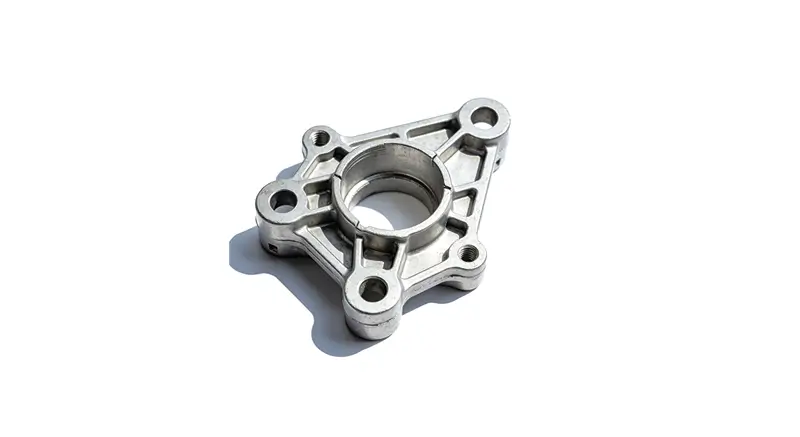
Zinc alloys are widely used in die casting, particularly for detailed components. The approximate 380 to 420 °C range is alloy-dependent and is not a universal machine setting. Check the specified alloy’s casting, mechanical, and service properties.
Because of their excellent corrosion-resistant properties and decorative values, zinc die-cast parts can be coated with platings, paint, or chrome finishes. The general materials used for die casting of zinc are Zamak 3, Zamak 5, and ZA-8. Each alloy of zinc die casting has different properties that offer a balance between strength and ductility; Zamak 3 offers an optimal balance of properties, Zamak 5 provides higher tensile strength and hardness, and ZA-8 contains increased aluminum, which increases performance at elevated temperatures and creep resistance.
Suitable zinc alloys can be processed efficiently in hot-chamber machines. Achievable detail, wall thickness, dimensional stability, and die life depend on the alloy and process; verify them for the actual part.
Key Characteristics
- Excellent fluidity and castability
- High ductility and impact strength
- Corrosion-resistant with plating, paint, or chrome finishes
- Can fill intricate shapes and thin walls
- Suitable for hot chamber die casting
Applications
Zinc die castings are used in a variety of automotive applications, including brackets, lock housings, and door handles, as well as consumer electronics that require compact housing and connectors. Other uses are in toys, hardware, and decorative trim. The use of zinc die-cast alloys lends itself to numerous applications for small to medium-sized parts.
Magnesium Alloys
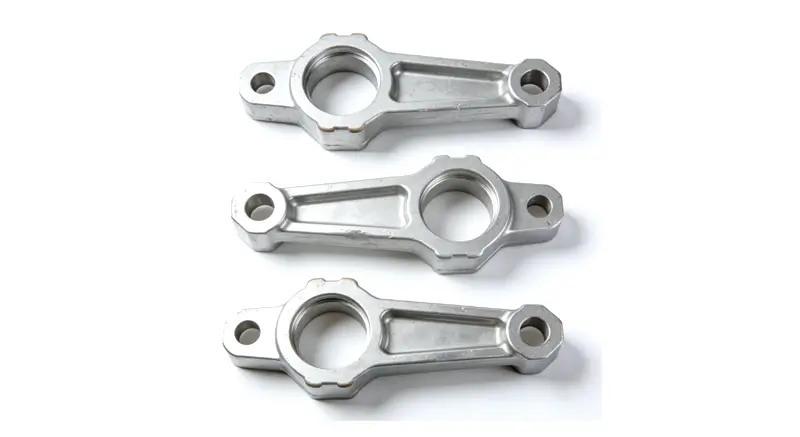
Magnesium alloys offer low density and can suit weight-sensitive parts. Comparisons such as 35% less than aluminium and 75% less than zinc refer approximately to density, not guaranteed component mass savings. Grade, geometry, protection, processing, and current prices affect the final choice.
Common die casting alloys include AZ91D, known for its superior strength and corrosion resistance, and AM60B, valued for higher ductility and better energy absorption in impact-prone applications.
Key Characteristics
- Lowest density among die-cast metals
- Excellent stiffness-to-weight ratio
- Good EMI/RFI shielding properties
- Effective vibration damping
- Can use hot-chamber or cold-chamber equipment, depending on alloy, machine, and part requirements
Applications
Magnesium castings are used for selected electronic housings, automotive components, and power-tool housings. Aerospace use requires application-specific material and process qualification; low density alone does not establish suitability.
Aluminum Alloys
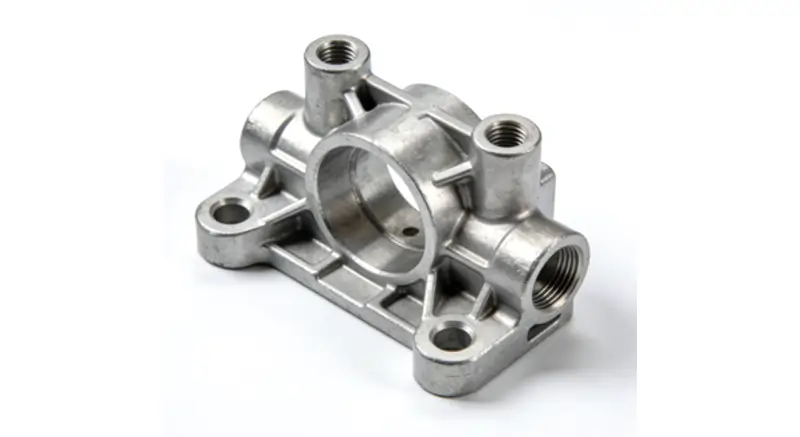
Aluminium die-casting alloys offer a useful balance of mass, strength, castability, and heat transfer. Mechanical properties, service temperature, and corrosion resistance depend on alloy and environment. Marine exposure may require additional protection; do not treat all aluminium alloys as equivalent.
A commonly specified aluminium die-casting alloy is A380. Other options include ADC12 and A383; compare their actual chemistry and properties rather than assuming interchangeability. Cold-chamber processing is common for aluminium, with the exact process chosen for the part.
Key Characteristics
- Moderate density with high strength-to-weight ratio
- Excellent thermal and electrical conductivity
- Natural corrosion resistance
- Suitable for complex geometries and thin walls
Applications
Aluminium die castings are used for suitable automotive housings and structural parts, electronics housings, heat sinks, appliances, power tools, and telecommunications equipment. Not every aluminium component is made by high-pressure die casting; wheel and marine applications require specific process and material assessment.
Copper Alloys
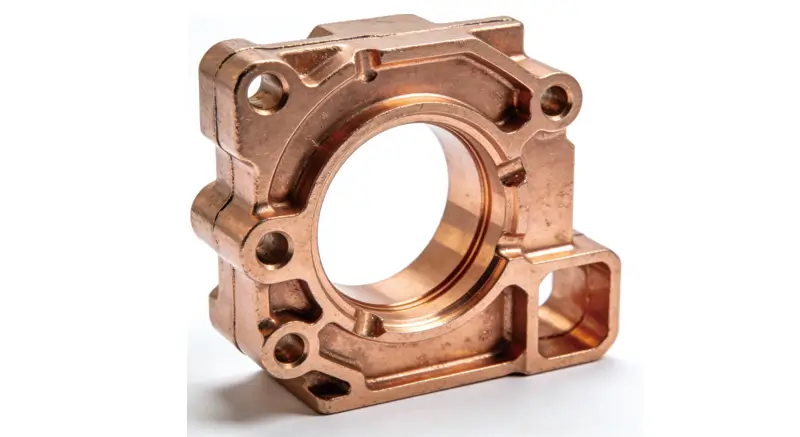
Copper alloys vary considerably in conductivity, wear resistance, corrosion behavior, and temperature capability. Brass and bronze may be considered for selected applications, but not every copper-alloy casting is die cast. The 900–1000 °C range is not universal; confirm alloy-specific thermal data and tooling requirements.
Key Characteristics
- High electrical and thermal conductivity
- Excellent wear resistance
- Retains strength at elevated temperatures
- Highly corrosion-resistant
Applications
Copper-alloy components include connectors, fittings, valves, bushings, and decorative parts. They may be made by several casting or forming methods. Confirm that die casting is suitable for the selected alloy, geometry, service environment, and required properties.
Factors to Consider When Choosing Die Casting Materials
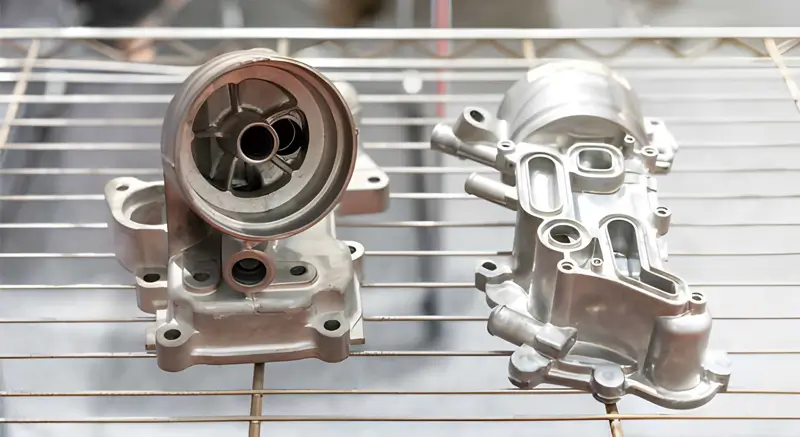
Choosing the proper die-casting alloy is necessary to ensure balanced technical performance and production considerations throughout the part’s life cycle.
- Production volume affects tooling cost recovery and process choice. Cycle time and die life depend on alloy, geometry, temperature control, and maintenance; avoid ranking all alloys by a single universal order.
- Dimensional accuracy depends on part design, alloy shrinkage, tooling, and process control. Zinc can fill detailed shapes, but tight tolerances and reduced machining must be validated for the actual component.
- Post-processing affects alloy choice. Plating, painting, anodizing, or other protection must be compatible with the specific alloy and required appearance or corrosion performance. Not every aluminium die-casting alloy produces the same anodized finish.
- Assess environmental exposure, mass, strength, stiffness, temperature, and overall cost together. No alloy family universally has the best strength-to-weight ratio or corrosion resistance.
- Total cost must include materials, tooling, cycle time, and finishing steps.
Conclusion
Successful die casting projects begin with informed material decisions. Your choice impacts part performance, production costs, lead times, and product longevity. Zinc, aluminum, magnesium, and copper alloys each offer distinct properties suited to different applications. Choosing the right material early prevents expensive corrections later.
FAQs
Is 6061 aluminum used for die casting?
6061 is principally a wrought aluminium alloy and is not a conventional choice for high-pressure die casting. Select a specified casting alloy for the process rather than treating wrought and casting designations as interchangeable.
What is the strongest die-cast metal?
There is no universally strongest die-cast metal. Compare the specified alloys using the required property, such as yield strength, fatigue resistance, or strength relative to density, under the actual service conditions.
What materials are best for automotive structural components?
Aluminum is commonly used for engine mounting points, blocks, transmission housings, and other heavy-load areas. Zinc is used for cost-effective mass production of smaller parts.
How are die-cast materials chosen for aerospace applications?
Aerospace selection requires qualified alloy and process specifications together with fatigue, temperature, corrosion, inspection, and traceability requirements. Do not select aluminium or magnesium solely by a broad strength or weight ranking.