Skip to content
End Mill vs Face Mill for Surface Finish, Flatness, and Material Removal
- Quick answer: start with the job geometry, then ask whether finish and flatness still support the same tool choice
- What each tool is really good at
- Finish and flatness: where the comparison becomes real
- When a face mill is the better answer
- When an end mill is the better answer
- Tooling choices and nonferrous finishing
- Common comparison mistakes
- Practical checklist before choosing
- Conclusion
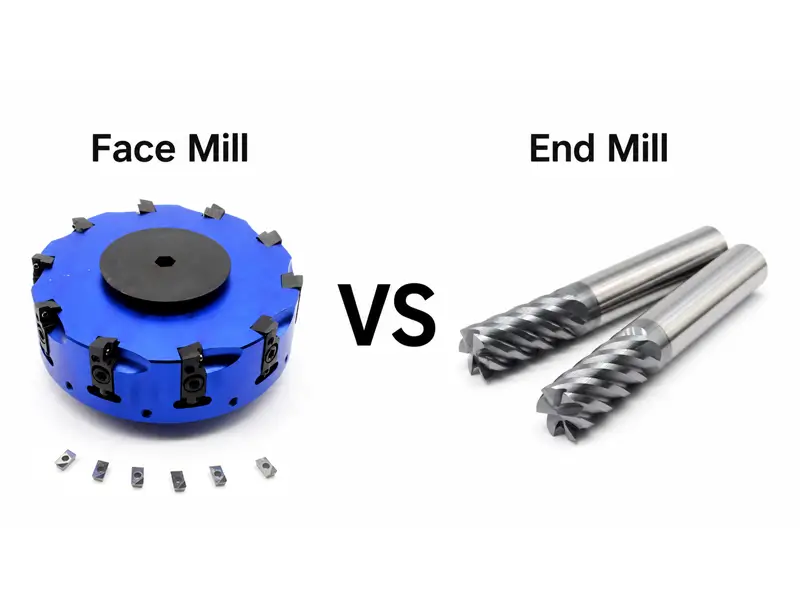
The right framing is boundary and overlap. A face mill is the natural answer for broad, open surfacing when the machine can swing it cleanly. An end mill is the natural answer when geometry, access, walls, pockets, or smaller features control the choice. There is overlap at the edges, but treating them like interchangeable alternatives from the first paragraph is exactly what makes the article drift away from real machining logic.
Quick answer: start with the job geometry, then ask whether finish and flatness still support the same tool choice
If the job is an open, broad surface, the face mill is usually the starting answer. If the job is a pocket, wall, slot, or interrupted feature where access controls everything, the end mill is usually the starting answer. Only after that should the article compare finish quality, flatness, material-removal rate, or nonferrous tooling.
This is why the topic should not open like a balanced scorecard. The first decision is not “which cutter is better?” The first decision is “what kind of surface or feature is this job actually asking me to machine?”
| Job reality | Start with an end mill when… | Start with a face mill when… |
|---|---|---|
| Geometry and access | The tool must enter pockets, follow walls, or reach confined features | The cut is mostly open surfacing with enough room for a larger cutter |
| Surface width | The feature is narrow, interrupted, or too constrained for a face mill to work cleanly | The surface is broad enough that multiple insert engagement makes sense |
| Flatness and finish | Geometry forces the tool choice even if finish takes more care | The machine and cutter can exploit surfacing efficiency and flatness control |
| Tooling economics | A smaller tool is mandatory because the feature gives no real alternative | A larger surfacing tool can do the job more cleanly and productively |
What each tool is really good at
End mills
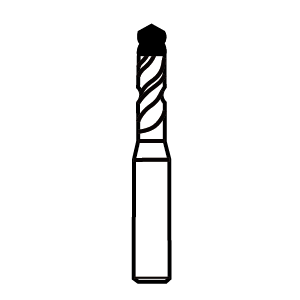
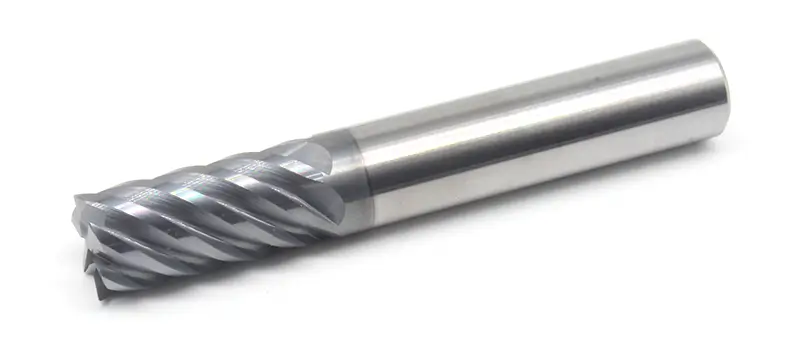
An end mill is versatile. It can side mill, slot, pocket, interpolate, finish walls, and reach features a face mill cannot touch. That flexibility is why it often stays in the spindle even when it is not the most efficient way to flatten a large open surface.
Face mills
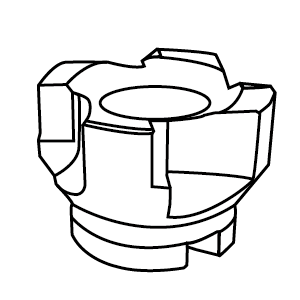
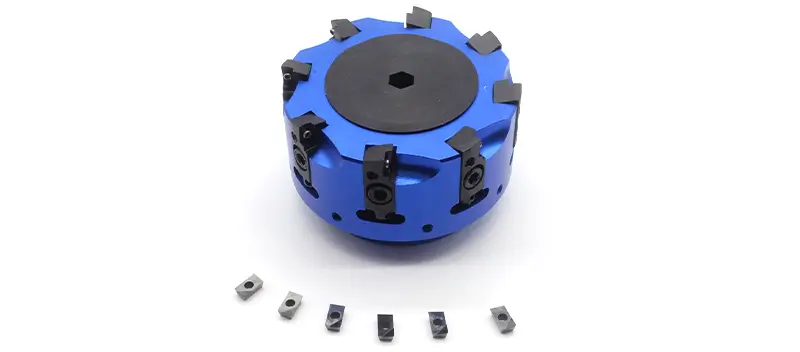
A face mill is built to sweep a broad flat area. Its strength is surface coverage and productivity. It is often the right choice for making a face, cleaning a plate, or finishing a wide flat on aluminum or steel when the machine and setup support it.
The article becomes more useful when it admits a basic truth: a face mill often wins on a broad face, but it cannot go where the geometry does not allow it to go.
Finish and flatness: where the comparison becomes real
Many comparison articles stop too early. Shops rarely argue about end mill versus face mill because they forgot the definitions. They argue when the face does not come out the way they expected.
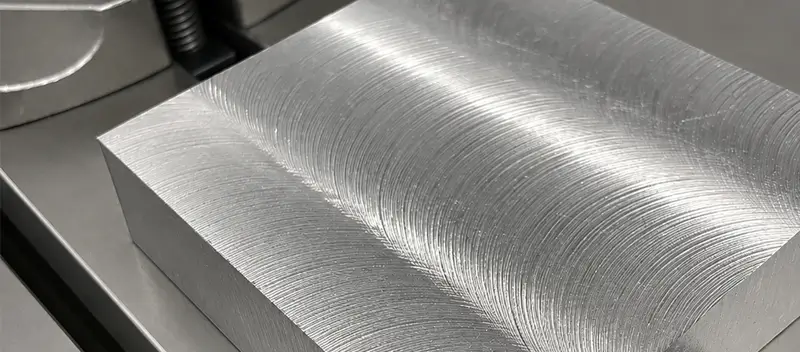
A face mill can still leave a bad flat
One of the most useful practical lessons from real shop discussion is that a face mill is not always the thing creating the visible defect. A convex or non-flat surface in aluminum may come from workholding distortion, jaw lift, or clamping stress rather than from the insert pattern alone. That matters because shops sometimes switch cutters before checking fixturing.
An end mill can clean up a problem but not always efficiently
A small end mill can skim and correct local areas, especially when the face-milled surface showed where the part had moved or flexed. But that does not mean the end mill was the ideal first tool. It means the face mill exposed a setup problem and the end mill became the local correction tool.
When a face mill is the better answer
Broad open surfaces
If the workpiece offers a clear flat with enough room, a face mill usually gives better productivity and more natural coverage than stepping across the surface with a small end mill.
Aluminum finishing with the right insert strategy
A high-quality aluminum surfacing job may benefit from insert choice, wiper geometry, and a tool selected for fine finish rather than roughing strength. This is where a pcd face milling cutter enters the conversation. In the right nonferrous production setting, it can deliver excellent finish consistency and long tool life.
For automotive deck finishing, cylinder head resurfacing cutters need to balance flatness, finish, and gasket requirements.
Production economics
An Indexable milling cutter can make sense when broad surfacing happens frequently enough to justify insert-based efficiency and repeatability. The shop is not choosing by fashion. It is choosing by the cost of time and the quality of the final face.
When an end mill is the better answer
Pockets, sidewalls, and interrupted geometry
If the tool must enter a pocket or follow geometry the face mill cannot physically reach, the answer is straightforward. Use the end mill. That sounds obvious, but it matters because some shops still try to stretch a surfacing tool into work that really belongs to a smaller cutter.
Tight features and local cleanup
An end mill shines when the feature is narrow, internal, or requires side-cut control. It is also useful for cleanup where the face mill would be excessive or physically impossible to position.
Thin parts with sensitive workholding
A large face mill on a thin part may expose fixturing weaknesses fast. In some cases, an end mill with lighter local engagement can be easier to control, though the real issue may still be the workholding and not the cutter family itself.
Tooling choices and nonferrous finishing
The comparison also changes when material and finish target change.
PCD Milling Cutters and nonferrous work
PCD Milling Cutters are relevant when nonferrous production, finish consistency, and edge life justify them. They are not required to explain the end mill versus face mill boundary, but they are worth mentioning because aluminum surfacing questions naturally lead there.
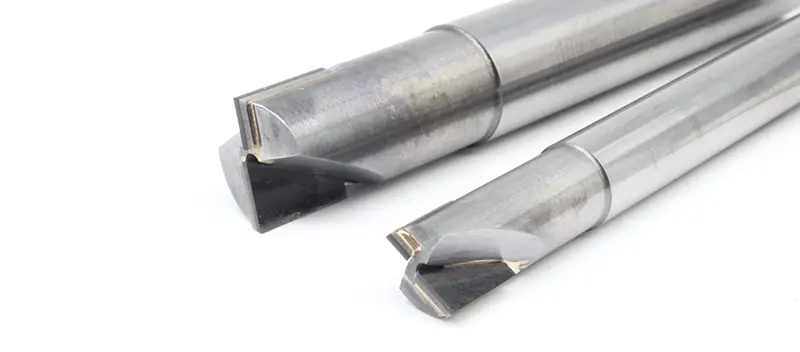
The pcd face milling cutter example
A pcd face milling cutter is a specialized answer for the right aluminum or nonferrous job. It belongs in the article as a high-end tooling example, not as the universal answer to every flatness complaint.
Common comparison mistakes
| Mistake | Why it leads to bad decisions |
|---|---|
| Using a face mill when the geometry needs pocket access | The tool simply does not fit the real cut |
| Using a small end mill to surface a broad face by habit | The process gives up productivity and often surface consistency |
| Blaming the face mill for a non-flat part before checking fixturing | Workholding distortion can mimic cutter problems |
| Treating premium tooling as a fix for bad setup | Tool quality cannot erase clamping stress or poor machine condition |
Practical checklist before choosing
- Is the surface broad and open, or internal and restricted?
- Is the goal local feature control or wide-area surfacing?
- Does the part risk distortion under clamping?
- Is finish appearance or actual flatness the controlling requirement?
- Will an Indexable milling cutter improve economics, or is a solid tool more sensible here?
- Is the material and volume high enough to justify PCD Milling Cutters or a pcd face milling cutter?
Conclusion
End mill vs face mill is best answered by access, finish goal, and process risk. A face mill is usually the better broad-surface tool. An end mill is the better choice for features, pockets, and local control. The real-world wrinkle is that flatness problems are often fixturing problems first and cutter-family problems second.
When the shop reads the part correctly, the comparison becomes practical instead of tribal. Then a solid end mill, an Indexable milling cutter, PCD Milling Cutters, or a pcd face milling cutter can each appear where they actually belong.
FAQ
Is a face mill better than an end mill for flat surfaces?
Usually yes, when the surface is broad and accessible and the setup supports a surfacing tool.
Can an end mill replace a face mill?
Sometimes, but usually with lower efficiency and not always with the same finish or coverage quality.
Why did my face-milled aluminum part end up convex?
Often because of workholding distortion, jaw lift, or clamping stress rather than the face mill alone.
When should I use a pcd face milling cutter?
In the right nonferrous or aluminum production environment where finish stability and edge life justify the tooling cost.