










Comprehensive Guide to Spot Drills
What is a Spot Drill?
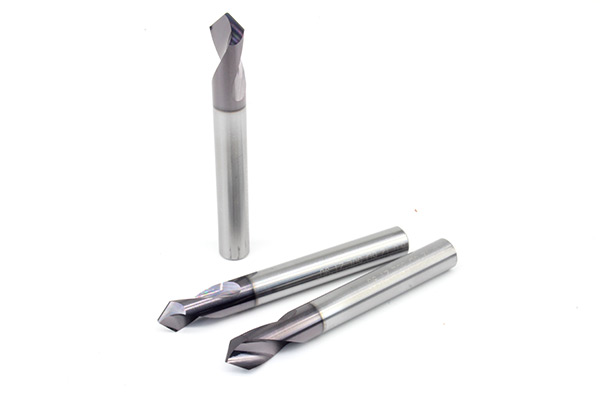
A spot drill is a type of drill bit used to make a shallow locating feature before a subsequent drilling operation. A spot is not the same as a deeper pilot hole. Use spotting only when appropriate to the following drill and its entry requirements.
Importance of Spot Drills in Various Industries
Spot drills are crucial in many industries, such as metalworking, woodworking, plastics manufacturing, electronics, automotive, and aerospace. They provide the accuracy and precision needed to begin drilling operations correctly, leading to higher-quality results and reducing the risk of damage to materials and tools.
Types of Spot Drills
High-Speed Steel (HSS) Spot Drills
HSS spot drills are known for their toughness and ability to withstand high temperatures. They are widely used for general-purpose drilling in various materials, including metals, plastics, and wood.
Carbide Spot Drills
Carbide spot drills offer high hardness and wear resistance in suitable applications. Their performance and life depend on rigidity, runout, material, geometry, and cutting conditions; carbide does not guarantee longer life in every setup.
Cobalt Spot Drills
Cobalt spot drills are commonly made from cobalt-alloyed HSS. Cobalt is an alloying addition rather than a separate drill material, and suitability for a hard metal depends on the specific grade and tool design.
Titanium Coated Spot Drills
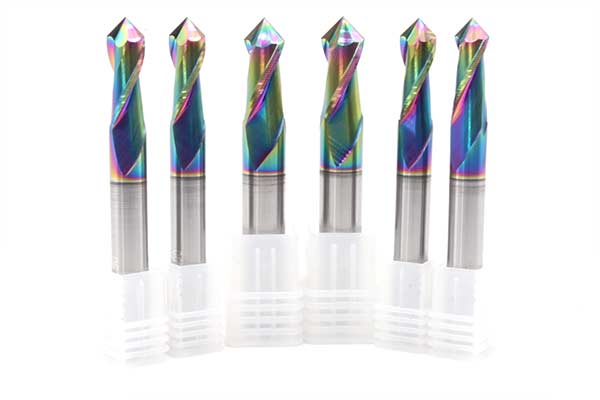
Titanium-coated spot drills feature a layer of titanium nitride or titanium aluminum nitride, enhancing their hardness and reducing friction. This coating improves the drill’s lifespan and performance, especially in high-speed applications.
Diamond-Coated Spot Drills
Diamond-coated spot drills can suit selected abrasive non-ferrous materials and composites. Hardness alone does not establish suitability; do not assume a diamond coating makes a tool appropriate for every hard metal.
Applications of Spot Drills
Metalworking
In metalworking, spotting can establish a starting location when the subsequent drill requires it. A shallow spot does not replace a specified pilot hole or guarantee that a drill will not wander.
Woodworking
In woodworking, a suitable locating operation may help position a hole. Select the tool for the wood, hole, and following drill rather than assuming a metalworking spot drill is essential.
Plastics Manufacturing
For plastics, use an entry preparation compatible with the material and subsequent drill. Spotting alone does not guarantee a smooth finished hole.
Electronics Industry
Electronics manufacturing uses specialised small-hole drilling processes. A spot drill may prepare an entry where specified, but it should not be described as the general tool for drilling finished PCB holes.
Automotive Industry
Automotive components may use spotting before a compatible drilling operation. Required accuracy still depends on the complete setup and inspection.
Aerospace Industry
Aerospace components may require a controlled spotting operation. Tool selection and process qualification must follow the component requirements; spotting alone does not establish safety or performance.
Design and Specifications of Spot Drills
Drill Point Angle
Choose the spot angle to suit the following drill, not simply material hardness. The original 90-degree and 120-degree examples are not universal selections. Follow the drill supplier’s guidance; an incompatible spot can load the drill corners before its centre engages.
Flute Design
Spot drills may have straight or helical flutes. Select geometry suited to the material, spotting depth, and chip clearance; spiral flutes are not a defining feature of every spot drill.
Shank Types
Spot drills come with various shank types, including straight shank, taper shank, and reduced shank. The choice of shank type depends on the drill chuck and application requirements.
Overall Length
Overall length affects access and rigidity. Extra length may provide reach into a recess, but a spot drill is not a deep-hole drill. Use the shortest suitable reach and follow the tool’s depth limits.
Coating and Material
Select substrate and coating together for the application. Materials include HSS and carbide; cobalt is commonly an alloying addition to HSS. Coatings do not make every substrate suitable for every workpiece.
Manufacturing Process of Spot Drills
Material Selection
Common substrates include HSS, cobalt-alloyed HSS, and cemented carbide. Choose the material according to the tool’s intended application.
Forging and Forming
The manufacturing route depends on the substrate. Steel blanks and sintered carbide blanks are produced differently, and flutes may be ground. Not every spot drill is forged to form its body and flutes.
Heat Treatment
Steel tools require an appropriate heat-treatment sequence to develop hardness and toughness. Annealing and tempering alone do not describe the complete hardening process, and carbide tools do not use the same route.
Grinding and Sharpening
The drill’s cutting edges are ground and sharpened to precise angles, ensuring optimal cutting performance. This step involves using specialized grinding machines to achieve the desired geometry.
Coating Application
Coatings such as titanium nitride or diamond are applied to the drill’s surface to enhance its hardness and reduce friction. This step improves the drill’s lifespan and performance in demanding applications.
Benefits of Using Spot Drills
Precision and Accuracy
A compatible spotting operation can improve the starting location of a subsequent hole. It does not establish the finished hole’s dimensional accuracy or surface finish by itself.
Durability and Longevity
Manufactured from high-quality materials and enhanced through heat treatment and coatings, spot drills are built to last. They offer exceptional durability and longevity, reducing the need for frequent replacements.
Versatility
Spot drills are versatile tools that can be used in various applications, from metalworking and woodworking to plastics manufacturing and electronics. Their adaptability makes them indispensable in many industries.
Cost-Effectiveness
Compare the added spotting operation with the requirements of the following drill and the total cost per accepted hole. Spotting is not automatically economical or necessary for every drilling process.
Reduced Drill Bit Wear
Correct spotting can benefit compatible drill bits. An unsuitable spot angle or diameter can instead damage the following drill; tool life is not automatically extended.
Improved Hole Positioning
Spot drills help in accurately positioning holes before drilling larger diameters. This improves the accuracy of hole placement and ensures better alignment in assembly operations.
Challenges and Limitations
Wear and Tear
Over time, spot drills can experience wear and tear, affecting their performance and precision. Regular maintenance and proper usage are essential to extend their lifespan.
Material Compatibility
Not all spot drills are suitable for all materials. Selecting the appropriate drill material and coating is crucial to ensure compatibility and optimal performance.
Maintenance Requirements
Spot drills require regular maintenance, including cleaning, sharpening, and inspection, to maintain their performance and longevity. Neglecting maintenance can lead to reduced efficiency and increased operational costs.
Maintenance of Spot Drills
Regular Inspection
Routine inspections help identify any wear or damage early, preventing more severe issues. Regular checks ensure the drill’s cutting edges remain sharp and effective.
Cleaning Procedures
Keeping the drills clean is essential for optimal performance. Removing debris and residues prevents clogging and heat buildup, ensuring smooth and efficient drilling.
Sharpening Techniques
Regular sharpening maintains the drill’s cutting efficiency and precision. Using specialized sharpening tools and techniques helps restore the drill’s sharpness and prolong its lifespan.
Proper Storage
Storing drills correctly prevents damage and maintains their condition. Keeping them in a dry, organized environment reduces the risk of corrosion and physical damage.
Choosing the Right Spot Drill
Material Considerations
Selecting the right material based on the application ensures the drill performs well and lasts longer. Factors such as hardness, toughness, and heat resistance should be considered.
Application-Specific Needs
Different applications require different drill specifications. Understanding the specific needs of the task helps in choosing the right drill for optimal performance.
Manufacturer Reputation
Manufacturer reputation can support supplier selection, but does not guarantee a result. Check the actual tool specification, quality documentation, and suitability for the application.
Innovations in Spot Drills
Advanced Materials
New materials are continually being developed to improve the performance and longevity of spot drills. Innovations in material science enhance the drill’s hardness, toughness, and heat resistance.
Improved Manufacturing Techniques
Innovations in manufacturing processes enhance the precision and quality of spot drills. Advanced techniques such as CNC grinding and automated heat treatment improve the drill’s performance and consistency.
Enhanced Coating Technologies
Advanced coatings offer better wear and corrosion resistance, extending the drill’s life. Innovations in coating technologies enhance the drill’s cutting performance and reduce friction.
Future Trends in Spot Drills
Sustainable Materials
The industry is moving towards more sustainable materials to reduce environmental impact. Developing eco-friendly materials and manufacturing processes is a key trend in the future of spot drills.
Automation in Manufacturing
Automation improves efficiency and consistency in drill production. The integration of robotics and AI in manufacturing processes enhances precision and reduces production costs.
Customization Options
Increasing demand for customized drills tailored to specific needs is shaping the future of the industry. Customization options allow for specialized geometries, coatings, and materials to meet unique application requirements.
Conclusion
Summary of Key Points
Spot drills are vital tools in many industries, offering precision, durability, and versatility. Understanding the types, applications, and maintenance of spot drills is essential for optimizing their performance and lifespan.
Importance of Correct Practices in Using Spot Drills
Implementing best practices in selecting, using, and maintaining spot drills enhances production efficiency and ensures high-quality results. Proper usage and maintenance are crucial for achieving the best outcomes in drilling operations.
Future Prospects of Spot Drills in Various Industries
Advancements in materials, automation, and customization will continue to drive improvements in spot drills. These innovations offer new opportunities for enhancing the capabilities and performance of spot drills in various industries.
FAQS
Q:What is a spot drill used for?
A: A spot drill makes a shallow locating feature before a compatible drilling operation. It is distinct from a deeper pilot hole and is not required for every drill design.
Q:How can I improve the longevity of my spot drills?
A:Regular maintenance, including cleaning, sharpening, and proper storage, can significantly improve the longevity of spot drills. Using the appropriate drill for each material also helps extend their lifespan.
Q:Why is the material of the drill important?
A:The material of the drill affects its hardness, toughness, and heat resistance, impacting its performance and durability. Selecting the right material ensures optimal drilling efficiency and longevity.
Q:Can spot drills be customized for specific applications?
A:Yes, spot drills can be customized to meet specific application requirements. Customization options include specialized geometries, coatings, and materials tailored to unique needs.
Q:What are the latest innovations in spot drill technology?
A:Recent innovations in spot drill technology include advanced materials, improved manufacturing techniques, and enhanced coating technologies. These advancements improve the drill’s performance, durability, and efficiency.