



Helix Angle in End Mills and How It Affects Chip Evacuation and Finish
Helix angle becomes bad content the moment it turns into a frozen catalog definition. Readers usually land on it because a tool is chattering, packing chips, smearing aluminum, or leaving a finish that does not match what the catalog seemed to promise. So the article has to stay tied to process symptoms from the first paragraph.
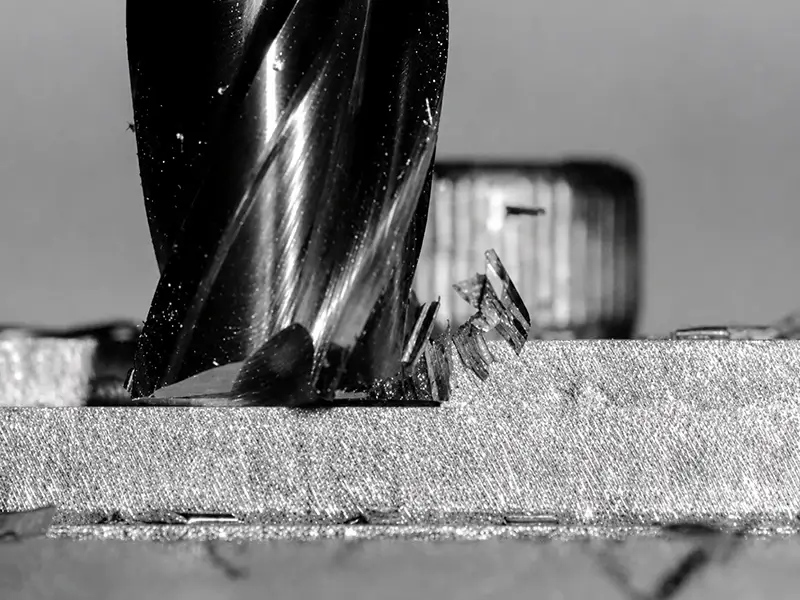
In practice, helix angle matters because it changes how the cutter lifts chips, how it loads the edge, and how smooth or abrupt the cut feels. A high helix can feel freer and cleaner in some materials. A lower helix can protect the edge and keep the tool from getting too eager in others. The better article question is not "what angle is a helix?" It is "what changes if I pick the wrong one for this cut?"
Quick answer: higher helix helps chip flow and smooth cutting, lower helix protects edge strength and force control
That quick answer is useful only if the reader also sees the tradeoff. Higher helix is not automatically "better." It often helps with chip evacuation and smoother action, especially in softer materials, but it can also pull harder axially and reduce edge support. Lower helix often gives a tougher feel and stronger edge support, but it may not clear chips or finish as cleanly in the wrong material.
| Helix direction | What usually improves | What the reader still has to watch |
|---|---|---|
| Higher helix | Smoother cut, better chip lift, often cleaner finish in freer-cutting materials | Axial pull, edge support, and stability in tougher cuts |
| Lower helix | Edge strength, force control, and more grounded cutting feel | Chip evacuation and finish quality when chips need help getting out |
| Variable helix | Harmonic control and chatter resistance in the right setup | It is not a magic cure if stickout or engagement is already wrong |
What helix angle changes in the cut
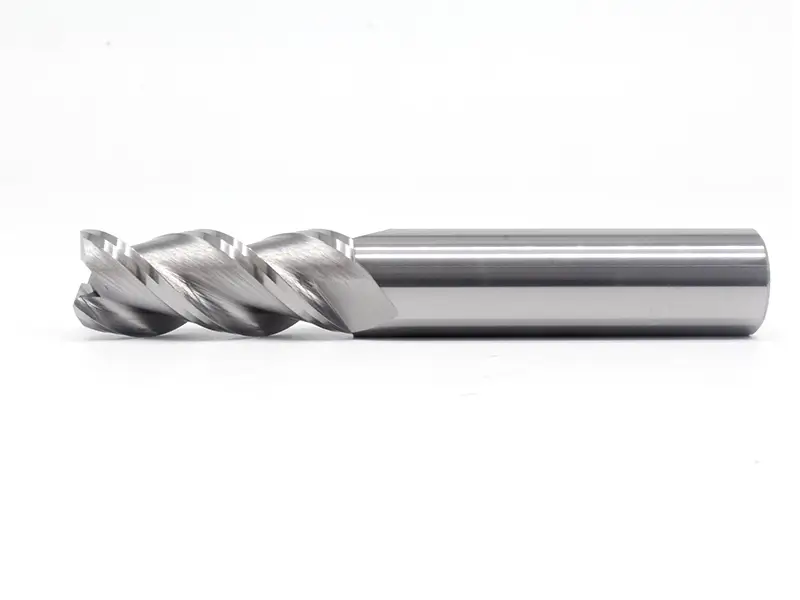
Chip evacuation
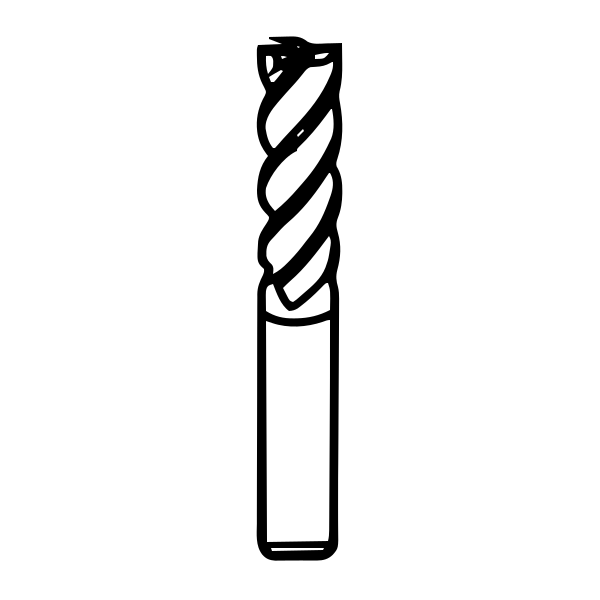
Helix angle changes how the flute lifts and moves the chip. A higher helix tends to pull chips upward more efficiently, which is one reason it is often associated with aluminum and freer-cutting materials. When chips need room to move and not recut, that can be a real advantage.
Cutting force direction
The helix changes how the cutting force is split between radial and axial behavior. A higher helix often feels smoother because it shears the material more gradually. A lower helix can feel more solid and direct, which may help when the material or the edge condition needs more support.
Finish and stability
Helix angle also influences surface finish and vibration behavior. A smoother shearing action can improve the visible finish, but that same geometry does not erase poor workholding or too much stickout. Variable helix tools are often used specifically to break up vibration patterns that would otherwise repeat flute by flute.
Why aluminum often likes higher helix
Aluminum is one of the easiest materials for readers to connect to helix choice because chip evacuation is such an obvious part of the result.
Chip flow matters more than brute edge strength
In many aluminum cuts, the shop wants the tool to shear cleanly and move the chip out fast. High helix geometry often helps with that. It can reduce smearing, improve finish, and keep the cut from feeling harsh when the rest of the setup is right.
The whole setup still matters
That does not mean "high helix equals aluminum, full stop." If the tool is too long, the holder is weak, or the chip load is wrong, the finish can still collapse. Helix angle is influential, but it is not magical.
Why lower helix still matters
A lot of weak geometry articles accidentally make lower helix sound outdated. It is not. Lower helix tools still make sense when the process values edge strength, controlled force, and a geometry that behaves well in tougher or less forgiving conditions.
This is especially relevant when the material is less friendly than aluminum or when the tool is seeing heavier engagement and needs a more robust edge character.
Where variable helix enters the discussion
Variable helix is often presented as a chatter-fighting feature. That is fair, but it needs context.
It helps by disrupting repetition
If every flute enters the cut in exactly the same repeating timing, the system can build a stable vibration pattern. Variable helix changes that rhythm. That can reduce the clean repetition chatter likes.
It is not a substitute for rigidity
A weak setup can still chatter with a fancy variable-helix tool. Variable helix helps a real process window; it does not create one from nothing.
Common helix-angle mistakes
| Mistake | Why it causes trouble |
|---|---|
| Assuming higher helix is always better | Some cuts need more edge support than a softer-feeling geometry provides |
| Choosing by catalog trend, not material behavior | The chip and force pattern may not fit the job |
| Expecting variable helix to rescue poor setup | Geometry cannot fully compensate for bad workholding or excess stickout |
| Ignoring flute count and chip space | Helix angle works together with the rest of the tool geometry |
How to choose helix angle more intelligently
Start from the material and the real problem.
- If the cut is in aluminum and chip evacuation is central, higher helix is often worth considering.
- If the cut feels harsh, finish is poor, and vibration repeats, a variable-helix option may help if the setup is already respectable.
- If the material is tougher and the edge needs support, a lower or more moderate helix may be more stable.
The key is to use symptoms as clues. Poor finish, recut chips, and chatter are not only speed-and-feed questions. They are often geometry questions too.
Where Carbide End Mills fit in this conversation
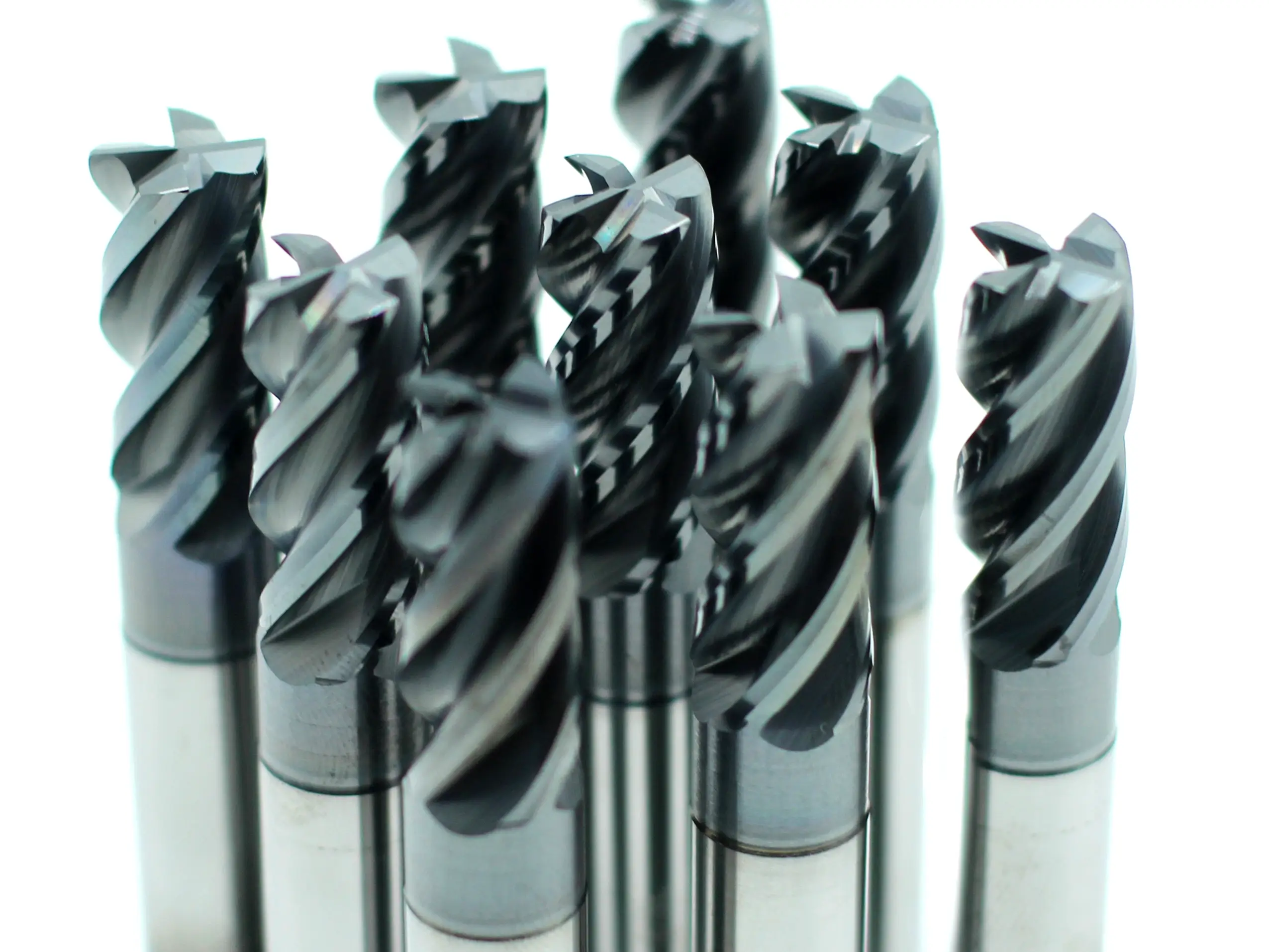
Most shops meet helix-angle decisions through Carbide End Mills because carbide tools dominate modern milling choices. That makes geometry more visible: flute count, helix, edge prep, coating, and stickout all get discussed together. The article becomes much more useful when it explains helix as one member of that geometry family rather than as an isolated angle in a diagram.
Conclusion
Helix angle matters because it changes how a tool shears material, moves chips, and behaves under load. Higher helix often helps aluminum and smoother cutting. Lower helix often supports a tougher edge behavior. Variable helix helps interrupt chatter patterns. None of those truths are universal without setup and material context, but all of them are practically useful.
The best way to think about helix angle is not as a catalog fact. Think of it as a force-and-chip-management choice that becomes visible through finish, sound, chip behavior, and stability. That is when geometry starts helping instead of confusing.
FAQ
What is helix angle on an end mill?
It is the angle of the flute relative to the tool axis, and it changes chip flow, cutting force behavior, and stability.
Is higher helix better for aluminum?
Often yes, because it can improve chip evacuation and cutting smoothness, but the setup still has to support the cut.
Does lower helix mean stronger?
Often it means the edge is supported in a way that can feel stronger or more controlled in tougher cuts, though the exact result depends on the full geometry.
What does variable helix do?
It helps break up repeating vibration patterns that contribute to chatter.
Should I choose helix angle before flute count?
Treat them together. Helix angle, flute count, chip space, and edge geometry work as a system.