










Table Saw Vs Circular Saw Vs Miter Saw
Table saws, circular saws, and miter saws serve different woodworking tasks. A handheld circular saw is generally easy to carry. A miter saw needs stable support during use, not a stand merely to move it. Table saws range from portable jobsite models to large stationary machines.
Contents
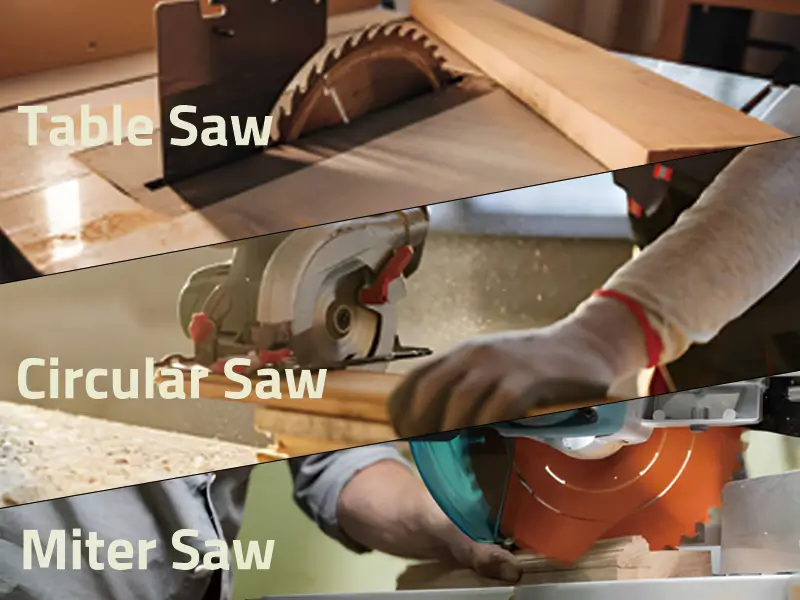
What is the difference between table saw, circular saw, and miter saw?
To begin, you must know what each machine is.
A Table Saw is a big machine where the blade sticks up through a table. You push the wood into the blade.
Next, a Circular Saw is a handheld tool. You hold it and push the round saw blade through the wood.
Subsequently, a Miter Saw has a blade on an arm that you pull down onto the wood.
If you are seeking What is the most versatile saw for a beginner? The best one depends completely on the kind of work you plan to do first.
What is the function of each saw?
Compare the cuts you need, workpiece size, available support, and each machine’s capacity. These factors are more useful than choosing a saw from sample cuts alone.
Table Saw Strengths
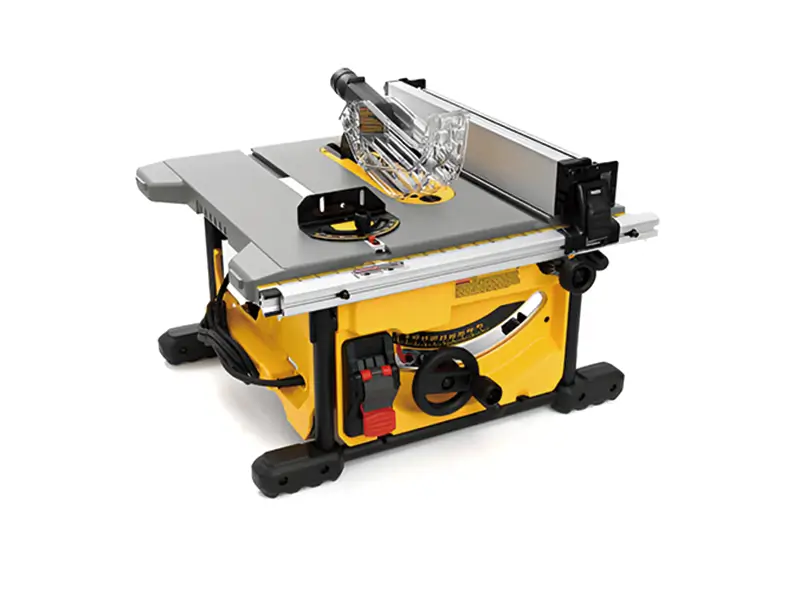
A table saw is best for certain powerful woodworking cuts.
Rip Cuts
First, you need to recognize the table saw is great at rip cuts. These cuts go with the wood grain. A guide called a fence keeps the wood straight. This makes it perfect for cutting big boards into narrower, long strips.
Crosscuts and Bevels
Then, you should note a table saw can also make crosscuts using a special sliding guide. You can also tilt the blade to make bevel cuts, which are helpful for making cabinets.
Circular Saw Strengths
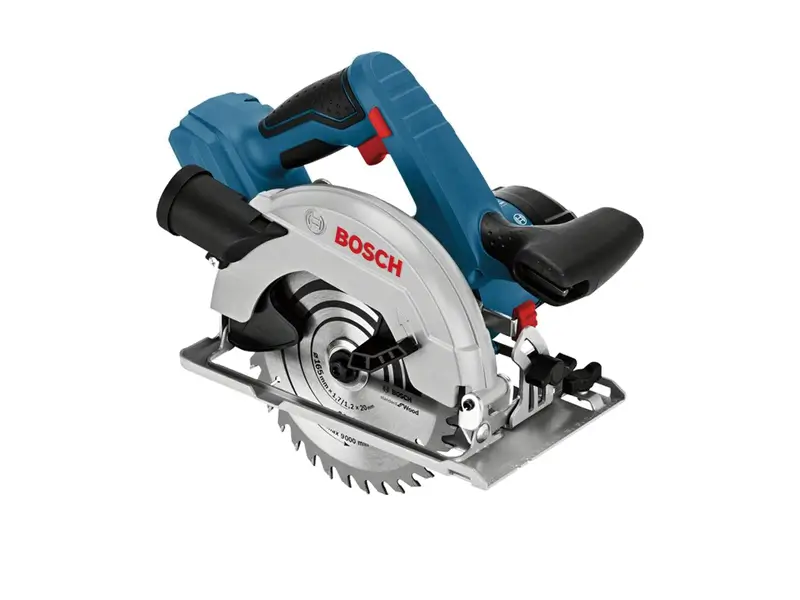
Image from: bosch
The circular saw is flexible and easy to move.
Cutting for All Purposes
A circular saw can make rip cuts and crosscuts, and suitable models can make bevel cuts. Starting inside a board is a plunge cut; perform it only with a saw and blade approved for that operation and the specified procedure.
Portable
Next, the biggest strength is that you can carry it easily. You would rather take this lightweight tool to the material, especially if you are cutting big sheets of wood or working outside.
Miter Saw Strengths
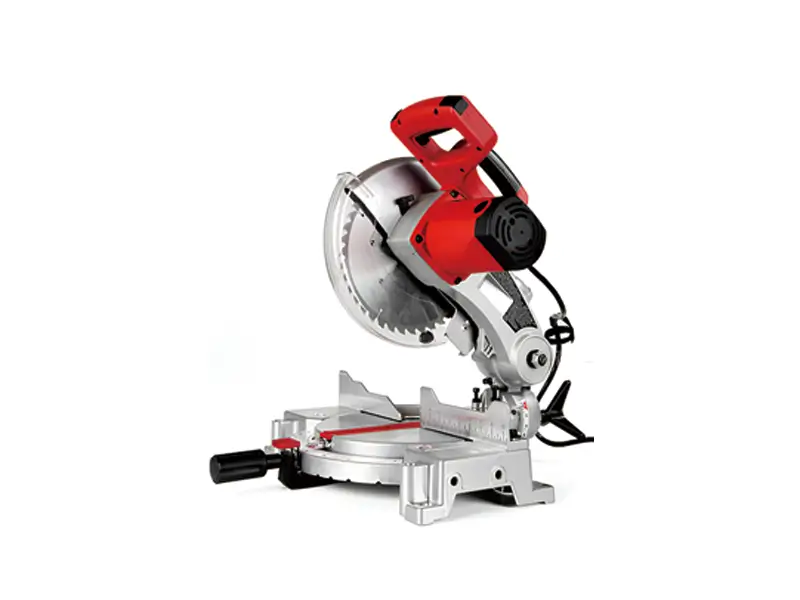
The miter saw is the specialist for clean, perfect corner cuts.
Precision Corner Cuts
A miter saw makes crosscuts and miters for work such as picture frames and window trim. Compound models also tilt for bevel cuts. Joint accuracy depends on setup, blade condition, and work support.
Make Identical Cuts
Moreover, you can set the angle once and cut the same piece many times without changing the setting. This feature is vital for installing trim. You need many pieces that look exactly alike.
How Each Saw Works
The design of every saw is different so does their functions.
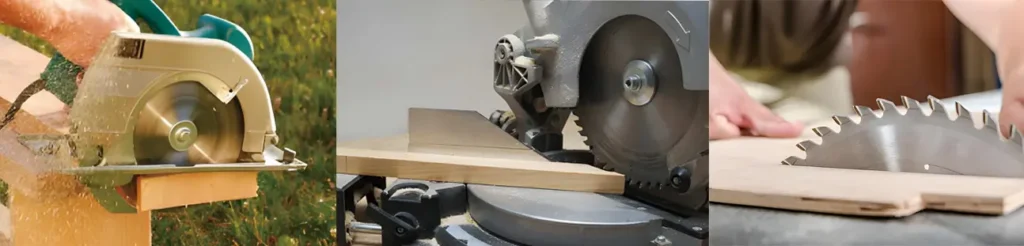
Table Saw Design
The table saw blade is fixed under the table. You push the material over the table and through the blade. This design helps make long cuts very straight. A Table Saw often uses a thicker Full Kerf blade 1/8″ for stability.
Circular Saw Design
A circular saw is guided over supported material by the operator, often with a suitable straightedge or rail. Some blades have a thin kerf, such as 3/32″, but kerf varies; select a blade compatible with the particular saw and material.
Miter Saw Design
Next, the miter saw has a blade on an arm that moves. The wood sits against a fence, and you pull the blade down to cut it. This limits how wide a board you can cut.
Accuracy and Cut Quality of Every Saw
Accuracy is how well you hit the exact mark; you must check this element thoroughly.
Table Saw Accuracy
A correctly set table saw can make accurate, repeatable straight cuts using a suitable fence, miter gauge, or sled. Check alignment and test cuts; the machine does not guarantee perfect results.
Circular Saw Accuracy
Next, the circular saw’s accuracy depends a lot on your skill. Without a guide, you will get less perfect and less consistent results than with a table saw.
Miter Saw Accuracy
Then, the miter saw is good at making high precision angle cuts. The settings are very reliable, letting you cut many pieces of trim that fit together.
Safety and Risks to Use Table, Miter and Circular Saw
You must prioritize safety to avoid injury.
Table Saw Safety Risks
Kickback and Exposed Blade
Blade contact and kickback are serious hazards. Use the guarding and riving-knife arrangement specified for the permitted operation, support the stock, and use suitable push devices when required. Do not treat a push stick alone as protection against incorrect setup.
Circular Saw Safety Risks
Unstable When Held
A circular saw can kick back if the blade binds or is misaligned. Support and secure the work so the cut does not close on the blade, check the guard, and use the grip and feed procedure specified by the manufacturer.
Miter Saw Safety
Blade Guard and Workholding
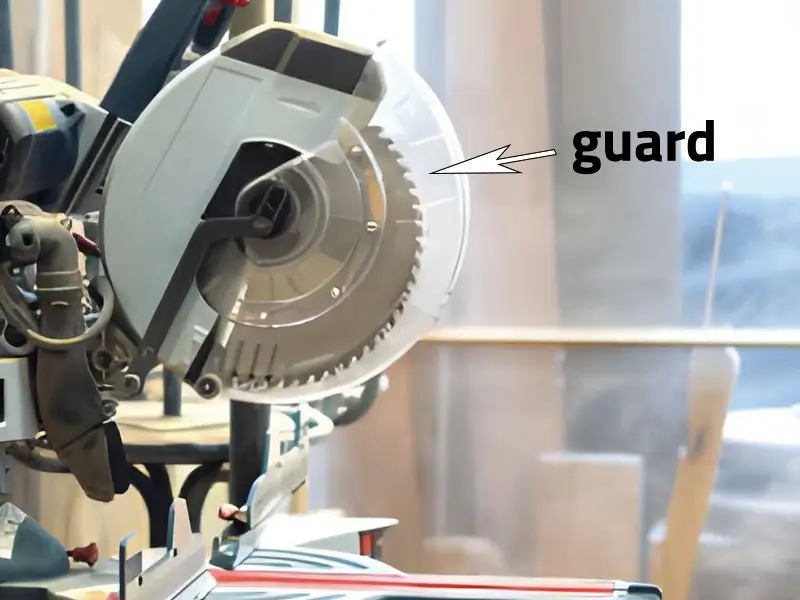
A miter saw still presents blade-contact and workpiece-movement hazards. Use its guard and specified clamping or work support, and follow the correct feed sequence, especially on sliding models. This article provides no comparative accident data to rank it as generally safer than a table saw.
Final Thoughts
Table saws suit supported rip cuts and other guided operations, with portability varying by model. Circular saws bring the tool to the material and can make clean guided cuts. Miter saws suit repeat crosscuts and angles within their capacity.
Buy a Circular Saw for basic repairs and site work. Next, get a Miter Saw for clean trim and framing. You would rather buy a Table Saw for complex building projects.
FAQs
What’s better, a table saw or a miter saw?
Neither saw is strictly better; they do different main jobs. A table saw is best for ripping woods and cutting large plywood. A miter saw is best to make precise crosscuts and angled cuts on trim.
Can a table saw do everything a miter saw can?
No, a table saw cannot do everything a miter saw can. While a table saw can make straight crosscuts, it often cannot match the speed of a miter saw for quick, repetitive angled cuts on long pieces of trim or lumber.
Which is better, a circular saw or a table saw?
It depends on the job and your needs. A table saw is better for accuracy, and making repetitive rip cuts. A circular saw is portable, budget, and making initial rough cuts on large sheets.
Can you rip a 2×4 with a table saw?
A suitable table saw can rip a sound 2×4 to a narrower width within its capacity. Use a correctly aligned fence, supported stock, and the specified guard, riving knife, and push devices. Do not attempt a cut that leaves inadequate support or hand clearance.