


Wood Router Bits Types | Complete Guide for Beginners
You need the right router bit for any woodworking work. For instance, different bit types are used in particular cuts, profiles, and finishes. Some of the most common wood router bits are flush trim router bits, straight router bits, and chamfer router bits. This guide shares fundamental knowledge of each router bit type and its applications.
Contents

What Are Router Bits?
Router bits are cutting tools that attach to wood routers. You insert them into the router’s collet system. They will spin at high speeds to cut, shape, and to make a profile of wood surfaces.
Subsequently, Router bits have sharp cutting edges. These are made from carbide and high speed steel. The cutting edges remove material as the bit rotates. You guide the router along your workpiece to create desired shapes.
Straight Router Bits

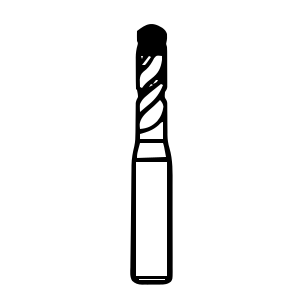
Straight bits are very common in router bit types. You use them for cutting grooves, dados, and rabbets. They have straight cutting edges parallel to the bit’s axis.
Straight bits are available in a range of diameters, including sizes from 1/8 inch to 1 1/2 inches in some ranges; these are not universal limits. Match the bit, shank, speed, and router capacity to the groove and material. An internal plunge also requires a bit designed for plunge cutting.
Straight bits may have one or two flutes. Flute count affects chip space and cutting frequency, but feed rate and finish also depend on the geometry, material, speed, and depth of cut. Two flutes do not automatically mean faster cutting.
Flush Trim Router Bits

Flush trim bits use a guide bearing to follow a sound reference edge or template. Bearing position may be at the tip, near the shank, or both, depending on the design. They can trim laminate, edge banding, or other suitable material flush with that reference.
The bearing guides the cut laterally; it is not an automatic depth stop or a guarantee against damaging the underlying work. Set the bit height so the bearing runs on the reference surface and the cutters remove only the intended excess.
A pattern bit commonly has a bearing near the shank. With a handheld router above the work, that bearing follows a template on top of the workpiece; a tip bearing can follow a template underneath. The arrangement reverses when the router is table-mounted, so set up according to the particular bit and router.
Chamfer Router Bits

Chamfer bits cut angled edges on wood surfaces. You create decorative bevels and remove sharp corners with these bits. Usually, they cut 15, 22.5, 30, and 45 degree angles.
These bits have angled cutting edges that match the desired bevel angle. You can adjust cutting depth to control bevel size. Chamfer bits work well on solid wood and plywood edges.
You will use chamfer bits for furniture edges, cabinet doors, and decorative molding. They create professional looking finished edges that feel smooth to touch.
Roundover Router Bits

Roundover bits create rounded edges on wood surfaces. You use them to soften sharp corners and create comfortable grip areas. These bits come in various radius sizes.
Common roundover radii include 1/8, 1/4, 3/8, and 1/2 inch. Larger radii create more pronounced curves. You can make partial roundovers by adjusting the cutting depth.
A guide bearing follows a suitable reference edge while the cutters form the roundover. Keep the bearing in contact and the router supported; uniformity depends on the reference edge, bit height, and feed.
Roman Ogee Router Bits

Roman ogee bits create S shaped profiles with convex and concave curves. You use them for traditional furniture edges and architectural molding. They combine roundover and cove shapes in one cut.
These bits create classic furniture profiles found on table edges and cabinet doors. The double curve adds visual interest to plain wood surfaces. Roman ogee profiles work well with traditional and colonial furniture styles.
Changing bit height can alter which parts of an ogee profile engage the edge, but it does not change the cutter’s built-in curve radii. Set the height for the intended profile and test it on suitable scrap.
Edge Forming Router Bits

Edge forming bits create decorative profiles along wood edges. You shape cabinet doors, furniture, and trim pieces with these specialized bits. They include ogee, thumbnail, and complex molding profiles.
These bits often have bearing guides for consistent results. You follow the wood edge while the bit cuts the desired profile. Multiple passes may be needed for complex shapes.
Edge forming bits require sharp cutting edges for clean results. Dull bits cause tear out and burn marks on wood surfaces.
Rabbeting Router Bits

Rabbeting bits cut L shaped grooves along wood edges. You create joints for cabinet backs, picture frames, and box construction. These bits have cutting surfaces on both bottom and side edges.
On compatible rabbeting bits, changing the bearing diameter adjusts the rabbet’s radial width. The router’s bit-height or depth setting controls its depth into the face. Use only the bearing sizes and assembly specified for the bit.
You will use rabbeting bits for door and window construction. They create recesses for glass panels and weather stripping. The clean cuts ensure tight fitting joints.
Dovetail Router Bits

Dovetail bits cut angled slots for strong woodworking joints. You create drawer joints, box corners, and decorative inlays with these bits. They cut expanding grooves that lock pieces together.
Use the router bit, guide, and jig combination specified for the joint. For through dovetails, many systems use a dovetail bit for the tails and a straight bit for the pins; other joint systems differ. A jig does not guarantee a perfect fit without setup and test cuts.
A dovetail’s interlocking geometry can resist separation in particular directions. Joint strength still depends on grain, dimensions, fit, adhesive where used, and load; it is not an unlimited resistance to pulling apart.
Core Box Router Bits

Core box bits form concave, rounded grooves for fluting and decorative channels. They do not directly form the raised convex profile of a reed; a suitable reeding profile or a separately planned sequence is required for that shape.
These bits work well for architectural columns and furniture details. You can create parallel grooves for visual texture. Variable spacing creates different decorative effects.
Core box bits require steady router control for consistent results. You should use edge guides and templates for straight, parallel cuts.
V Groove Router Bits

V groove bits cut triangular channels in wood surfaces. You create decorative lines, sign lettering, and architectural details with these bits. They have angled cutting edges that meet at a point.
Common V groove angles include 60, 90, and 120 degrees. Narrower angles create sharp, deep lines while wider angles make broader channels. You can vary cutting depth for different effects.
These bits work well with router templates for lettering and patterns. The sharp point creates clean, precise lines in both hardwood and softwood.
Keyhole Router Bits

Keyhole bits cut T shaped slots for hanging systems. You create hidden mounting solutions for cabinets, mirrors, and artwork. The bit cuts a narrow slot that opens into a wider recess.
A keyhole bit has an enlarged cutting head and a narrower cutting neck. The head forms the recess for a screw head, while the neck forms the slot for the screw shank. Follow the specified entry and exit procedure; the plain clamping shank is not a cutting edge.
Keyhole bits can make concealed screw-hanging slots for suitable pictures or other light fixtures. They do not form a French cleat, which uses interlocking beveled supports. Mounting strength depends on the material, slot geometry, fastener, wall fixing, and load.
Conclusion
You now understand the main router bit types and their applications. Choose bits based on your specific cutting needs and wood species. Quality bits with sharp edges produce the best results in your woodworking projects.