




Carbide vs Diamond Saw Blades
You will face a difficult situation when selecting circular saw blades for your cutting needs. The choice between carbide and diamond saw blades affects your work quality, budget, and overall project success. Many people struggle with this decision because both blade types look similar at first. However, their construction, performance, and ideal applications are significantly different.
Contents

Understanding Carbide Saw Blade
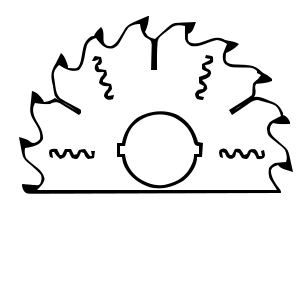
Carbide saw blades of the tipped type use cemented tungsten-carbide cutting tips attached to a steel body, commonly by brazing; the tips are not dipped in steel. Mohs hardness around 9 is only an approximate description of tungsten carbide, not a specification for every commercial cemented-carbide grade.
These blades will have sharp teeth, which will cut through the materials by chipping off small pieces at a time. The steel body is used to offer structural support, whereas the carbide tips do the real cutting job.

How Diamond Saw Blades Are Made and Function
Diamond saw blades can use different constructions. This comparison mainly concerns abrasive diamond-rim blades for masonry and stone, rather than toothed PCD blades for wood, composites, or selected non-ferrous metals. Diamond has Mohs hardness 10, and industrial blades commonly use synthetic diamond particles.
An abrasive diamond blade typically has a steel core supporting a diamond-bearing rim or segments. The grains are held in a bond that wears to expose cutting particles. Rim construction and attachment vary; not every diamond blade has welded segments or lacks cutting teeth.

Best Materials for Carbide Blade Cutting Applications
Carbide blades work exceptionally well on softer materials, where their sharp teeth will create clean cuts efficiently. You should use carbide blades when working with wood, plywood, MDF, and particle board. These blades excel in woodworking shops where precision and smooth finishes matter most.
Suitable carbide blades handle plastics and selected non-ferrous metals, including aluminum, brass, or bronze. Choose a blade and machine expressly designed for the material; tooth geometry, speed, support, and feed affect the result.
Do not use a standard woodworking carbide-tooth blade on concrete, stone, or masonry. Specialized carbide tools exist for some abrasive building materials, so suitability must follow the actual tool specification rather than a blanket hardness rule.

When Diamond Blades Outperform Other Cutting Tools
Suitable diamond blades are widely used on concrete, asphalt, and natural stone. For ceramic tiles, porcelain, or marble, choose a rim and bond rated for that material. Correct setup can reduce chipping, but no blade guarantees chip-free edges.
Some diamond blades are rated for reinforced concrete containing rebar. This does not make every masonry blade suitable for metal cutting. Select the specified blade for the structure, reinforcement, machine, and cutting method; cutting life depends on those conditions.

Comparing Cutting Speed and Precision Between Both Blade Types
Diamond-blade cutting quality can change with wear, glazing, damage, and the material being cut. Neither consistent finish throughout its life nor thousands of precise cuts is guaranteed. Inspect performance and service or replace the blade as specified.
Carbide teeth also wear with use. Dull or damaged teeth may increase cutting load, tear-out, or burrs; inspect the blade and have it serviced or replaced when appropriate. Wear does not make the cutting edges sharper.
Cost Analysis: Initial Investment vs Long-Term Value
The quoted figures—10 to 12 times the price, 200 to 400 dollars for a diamond blade, and 20–40 dollars for a carbide blade—lack a dated, like-for-like specification and cannot establish a general price rule. Compare current quotations for blades suited to the actual material and machine.
Likewise, 500 to 1,000 cuts for carbide and 5,000 to 7,000 or more for diamond are not transferable service-life guarantees without the workpiece, cut size, machine, blade specification, and end-of-life criteria. Compare cost per acceptable cut under documented, comparable conditions.
How to improve blade life?
Inspect and maintain diamond blades as specified. Use water only where both the blade and machine permit wet cutting. Bond wear can expose fresh diamond grains, but glazing may require manufacturer-approved dressing; the blade does not remain effective indefinitely without attention.
Carbide blades need more frequent attention because their teeth dull during use. You will sharpen carbide-tipped blades to extend their lifespan if you have proper equipment and send them to professional sharpening services. However, sharpening costs add up over time and do not always restore the original cutting quality.
Tool Compatibility for Diamond and Carbide Blades
Diamond blades work best with angle grinders, tile saws, and masonry saws designed for their specific requirements. You need equipment that will handle the grinding action and potential heat generation. Many diamond blades require water cooling systems to prevent overheating during extended use.
Some carbide blades fit standard circular saws, miter saws, or table saws. Confirm the permitted diameter, arbor, speed, kerf, rotation, material, and guarding requirements; matching the general blade type is not sufficient.

Safety Tips for Different Saw Blade Types
Use appropriate safety glasses and other protection specified for the tool and exposure. Gloves may be appropriate for handling a stopped, isolated blade but can create entanglement hazards near rotating machinery; follow the machine’s guidance. Dust from dry cutting requires suitable dust controls and, where necessary, appropriate respiratory protection. PPE alone does not guarantee safety.
You then are supposed to allow the blade to cut at its own pace without straining it through materials. Excessive pressure leads to heat overload, early wear and possible blade failure. This applies to carbide or diamond blades, but more so with the diamond tools.
How to select the right blade?
For general-purpose cutting of wood, plastics, or selected non-ferrous metals, a suitable carbide blade may be economical. Choose the actual tooth design and compatible saw for the material rather than assuming any carbide blade serves all three.
For concrete, masonry, stone, or ceramics, select a blade and cutting system approved for the material. Diamond blades are common choices, but the material name alone does not identify the correct rim, bond, or wet/dry method.