










How to Drill a Hole: A Step-by-Step Guide
Getting holes drilled right matters more than you’d think – cracked plastic or wandering bits ruin workpieces fast. We’ll walk through metal, wood, plastic and concrete drilling with pro tips from the shop floor.
Contents
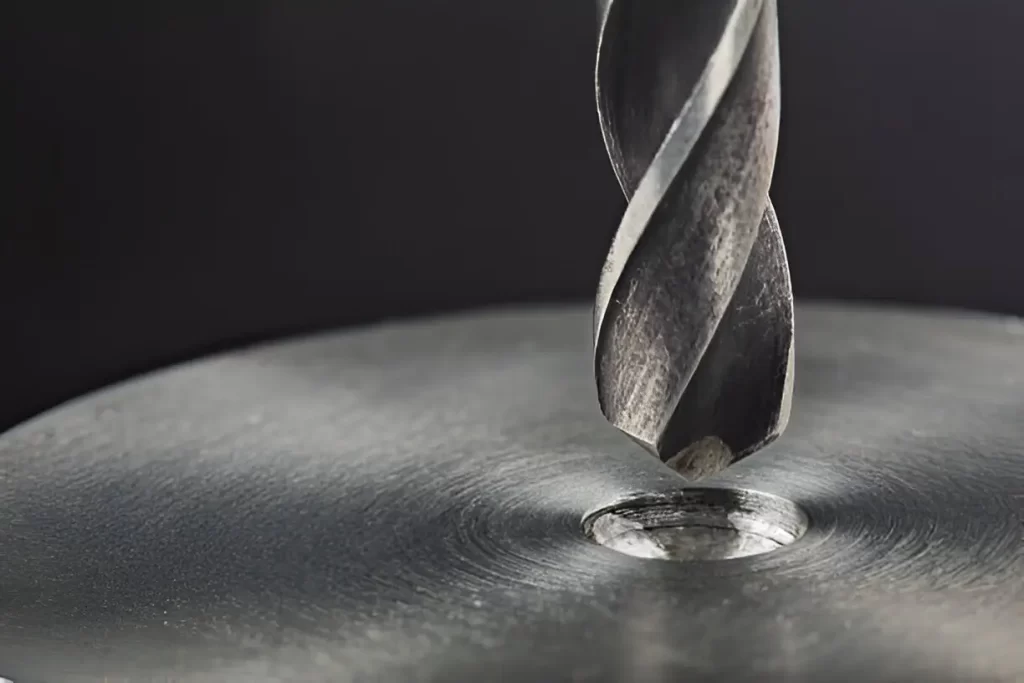
How to Drill a Hole in Metal
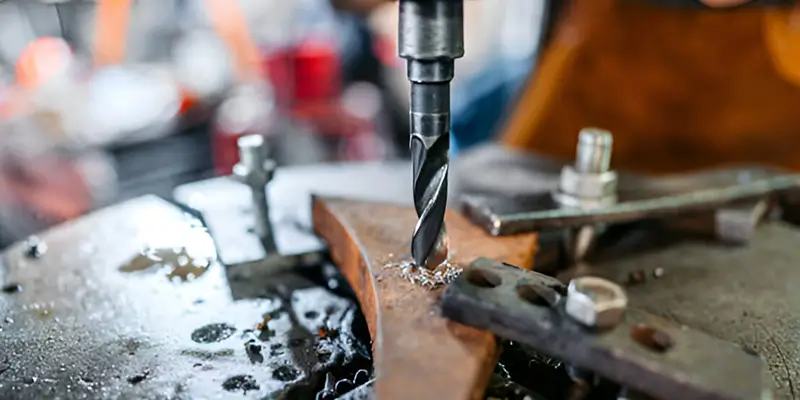
Recommended Drill Bits for Metal
HSS Twist Bits: General-purpose for aluminum and mild steel
Cobalt-alloyed HSS bits: Suitable options for some stainless-steel applications; cobalt content and suitability depend on the grade and drill design.
TiN-coated bits: Select the complete drill grade for the material and hardness; a TiN coating alone does not make a bit suitable for hardened tool steel.
Tungsten Carbide Bits: Suitable grades and geometries serve titanium and nickel alloys in appropriately rigid, aligned setups; follow the drill supplier’s cutting and coolant recommendations.
PCD Bits: Diamond-edged for carbon fiber/composites
Step-by-Step Drilling Process
Secure the workpiece with machinist clamps
Locate the hole using a center punch, spot drill, or direct-entry method appropriate to the drill and workpiece. Do not assume every precision drill requires a punched or predrilled start.
Use a cutting fluid approved for the workpiece, tool, and machine, following its handling instructions. Do not prescribe kerosene or sulfurized oil as a universal choice.
Set spindle speed from the recommended cutting speed and the actual drill diameter, within the tool and machine limits:
Mild steel: Use the drill supplier’s cutting data for the steel grade, diameter, and hole depth; there is no single RPM range for all drills.
Aluminum: Select speed for the alloy, drill diameter, tool design, and machine capability rather than applying a universal minimum RPM.
Use the recommended entry and feed strategy, maintain alignment, and do not force the drill. For manual drilling, control the feed as the bit breaks through; CNC breakthrough settings must follow the tool and process recommendations.
Common Mistakes to Avoid
Insufficient clamping causing workpiece spin
Using an unsuitable entry or locating method can cause wandering; choose the method for the drill design and workpiece rather than requiring center punching in every case.
Excessive speed can contribute to heat and wear, but chip color alone does not establish whether the process is acceptable. Check the cutting data, tool condition, and hole quality.
How to Drill a Hole in Wood
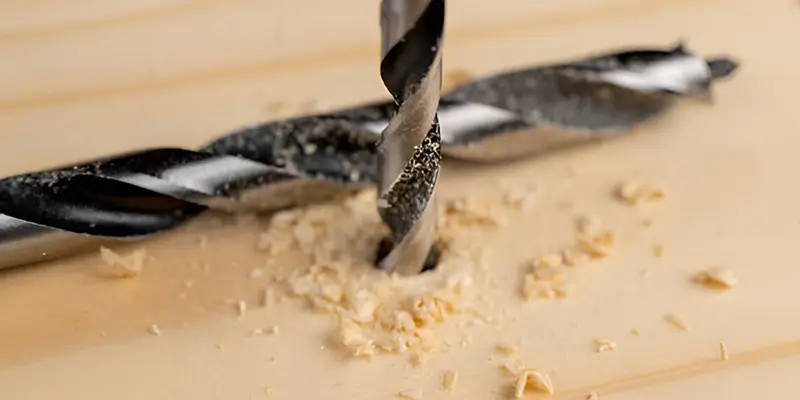
Best Drill Bits for Wood
Brad-point bits: Useful for locating holes and making clean entries in suitable wood; support the exit face to reduce breakout.
Spade Bits: Rapid material removal for construction lumber
Forstner bits: Suitable for relatively flat-bottomed holes, usually with a center-point mark; verify the tool’s geometry and depth requirements.
Drilling Steps for Clean Results
Mark location with carpenter’s pencil
Apply masking tape over drill point
Start perpendicularly using drill guide block
For through-holes: Place sacrificial wood underneath
Safety Tips for Wood Drilling
Wear appropriate certified eye protection and follow the machine’s guarding and clothing requirements. Do not wear gloves where they can become entangled in rotating equipment.
For handheld high-torque drilling, use the manufacturer’s auxiliary handle and prescribed grip. On a drill press, clamp the work securely and keep hands clear of rotating parts.
Use suitable dust extraction and the respiratory protection required by the task assessment; dust collection alone does not guarantee elimination of inhalation hazards.
How to Drill a Hole in Plastic

Suitable Drill Bits for Plastic
Use a drill geometry recommended for the specific plastic. Suitable modified HSS drills can work for acrylic, but one point angle is not a universal specification for all plastics.
Select flute and rake geometry for the particular plastic and thickness; acrylic and PVC should not be treated as having identical drilling requirements.
Step bits can suit selected sheet-plastic applications when the material, sheet thickness, and required hole geometry are compatible with the bit.
How to Prevent Cracks or Melting
Choose speed according to drill diameter, plastic grade, and the tool or sheet manufacturer’s guidance; no universal RPM ceiling applies.
Use a feed and chip-clearing strategy that limits rubbing and heat for the specific plastic and hole depth. Do not use a fixed three-second drilling cycle for every application.
Use backing board for thin sheets
Step-by-Step Drilling Instructions
Apply painter’s tape to both surfaces
Secure and support the sheet, align the drill with the intended hole axis, and use a suitable guide where needed. Do not start at an arbitrary angle and straighten the rotating bit inside the hole.
Clear chips using a controlled method suitable for the material and equipment. Stop the tool before manual cleaning and use appropriate extraction or a brush rather than casually blowing chips and dust into the surrounding area.
Apply a controlled feed appropriate to the plastic and bit; reduce grabbing at breakthrough and avoid both forcing the bit and prolonged rubbing.
How to Drill a Hole in Concrete

Tools and Bits for Concrete
Choose a hammer drill or rotary hammer with the chuck and capacity appropriate to the hole and bit; SDS-Plus is one system, not a requirement for every concrete hole.
Tungsten-carbide tipped masonry bits
Use an appropriate core-drilling system where the required diameter and application call for it. A diameter alone does not determine the method; confirm reinforcement, utilities, anchoring, and equipment requirements.
Using a Hammer Drill Effectively
Use hammer-and-rotation mode only with bits and materials approved for that mode. Diamond core drilling and other systems may require rotation without hammer action; follow their instructions.
Set depth gauge to required measurement
Use only the dust-control and cooling method specified for the drilling system. Do not add water to a dry-use electric drill or apply an arbitrary timed water cycle; wet systems require compatible equipment and electrical protection.
Drilling Technique and Tips
Before drilling concrete, check for concealed services and confirm that the hole location and any encounter with reinforcement are permitted. Use the drilling system’s approved locating or starting method rather than prescribing a star chisel for every hole.
Follow the bit manufacturer’s guidance on direct drilling, pilot holes, or staged enlargement. Do not apply one sequence of increasing diameters to every concrete drill or core system.
Use a compatible dust shroud and extraction system with the required airflow and filtration, and follow the task’s silica-control procedure. For hole cleaning, use an appropriate filtered vacuum and any additional measures specified for the application.
Conclusion: Matching Bits to Materials
Successful hole drilling requires selecting the proper tool to drill a hole:
Metal: Select HSS, cobalt-alloyed HSS, carbide, and any coating for the actual material, hardness, drill diameter, and machine.
Wood: Brad-point or Forstner bits
Plastic: Select the geometry and cutting conditions for the particular plastic and sheet or part thickness.
Concrete: Carbide-tipped masonry bits
For specialized applications like fiberglass or tile, see our complete Types of Drill Bits selection guide covering step drills, countersinks, and diamond core bits.
Inspect cutting-edge condition as well as alignment, clamping, chip evacuation, and cutting data. A dull drill can cause problems, but no unsupported percentage should be assigned to all drilling failures.