










Jointer vs. Planer: Ultimate Guide (2026)
A jointer flattens one face and squares an adjacent edge. A thickness planer uses a flat reference face to make the opposite face parallel at the chosen thickness. Producing an S4S board also requires preparing the remaining edge to width; these two machines are a common workflow, not the only method.
So what is the basic difference between planer and jointer? This guide will explain which is the best machine to buy or should you buy only a jointer or planer for woodworking?
Contents
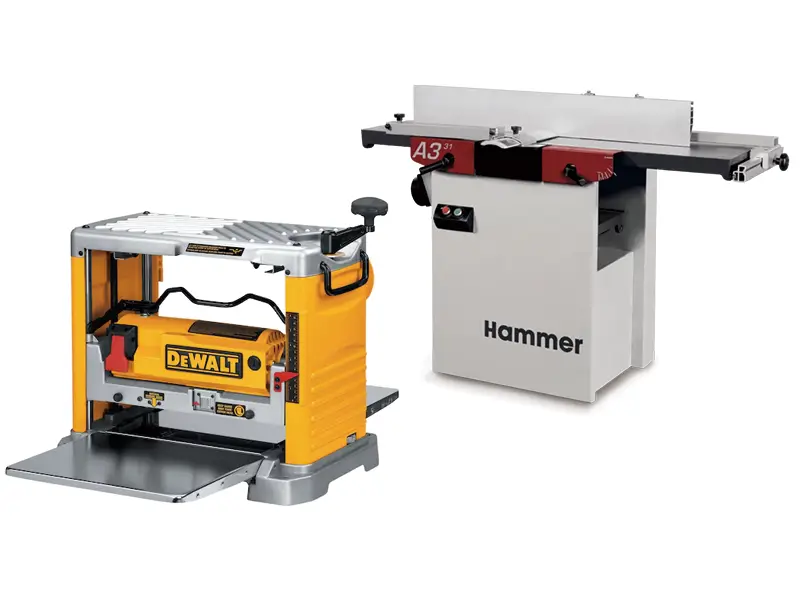
What Is a Jointer?
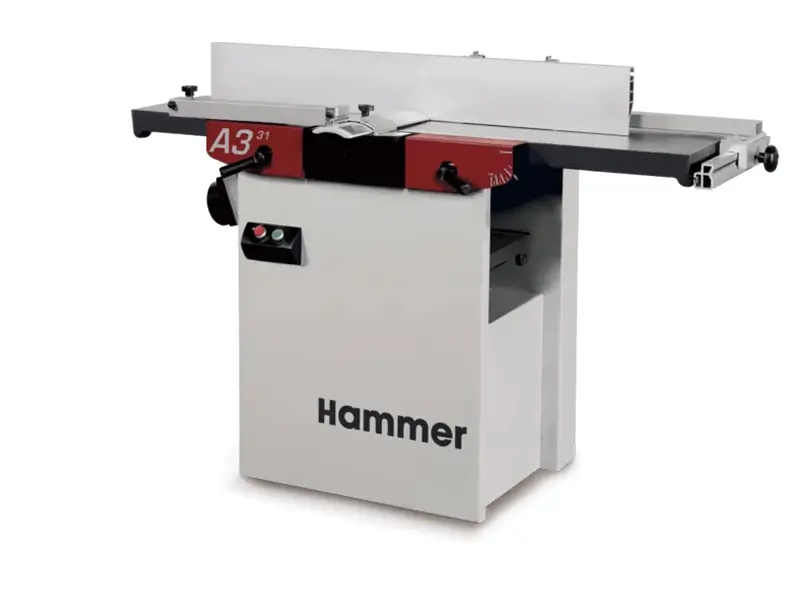
(Source: felder-group)
Basic Definition and Purpose
A jointer is a woodworking machine that creates a perfectly flat surface along the length of a board. Originally, woodworkers used long hand planes to achieve this, but a power jointer automates the process. You use it primarily to flatten one face and square up one edge of a board.
How a Jointer Works
The machine features two tables: an infeed table and an outfeed table. A spinning cutter head sits between them. First, you adjust the infeed table to determine the depth of the cut. As you slide the wood over the cutter head, it shaves off the high spots. Consequently, the wood becomes flat as it moves onto the outfeed table.
Pros and Cons of Using a Jointer
Pros:
- It removes twists, cups, and bows from rough lumber.
- The fence allows you to create a perfect 90-degree angle between the face and the edge.
- Specialty cuts such as chamfers or rabbets are possible only where the machine and guarding arrangement permit them.
Cons:
- It cannot make two opposite sides parallel.
- You are limited by the width of the cutter head, which is often 6 or 8 inches.
- This machine will not help you achieve a specific thickness.
What Is a Planer?
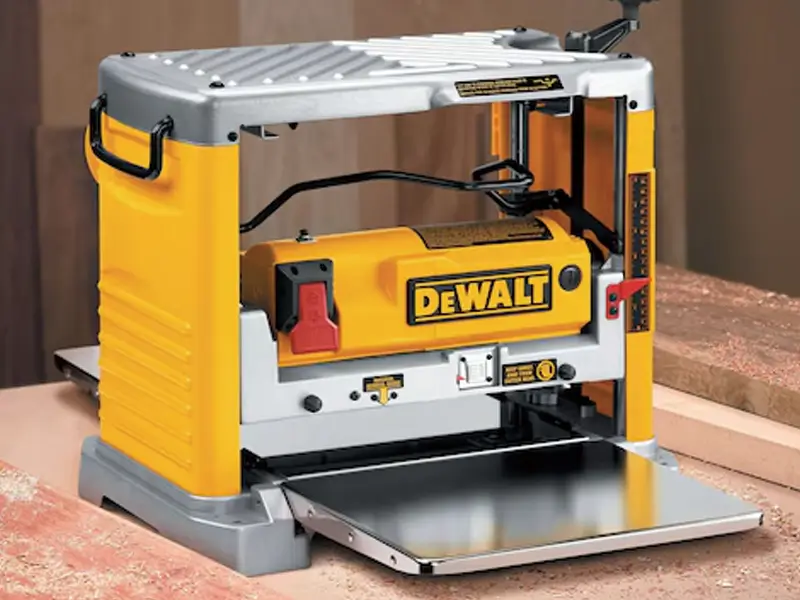
(Source: DeWalt)
Basic Definition and Purpose
A planer, often called a thicknesser, is a tool used to make a board a consistent thickness throughout its length. While a jointer focuses on flatness, a planer focuses on parallel surfaces. You need this tool to ensure that the top of your board is exactly the same distance from the bottom at every point.
How a Planer Works
Inside the machine, the cutter head is mounted above the table. Power rollers grab the wood and pull it through. The table serves as a reference point. Because the blades are fixed at a specific height above the table, they shave the top of the wood until the board reaches your desired thickness.
Pros and Cons of Using a Planer
Pros:
- It creates a uniform thickness across multiple boards.
- The machine can handle wider boards than most hobbyist jointers.
- It saves an incredible amount of time compared to hand-sanding or hand-planing.
Cons:
- It will not remove a warp or twist on its own.
- If you feed a bowed board into a planer, the rollers will press it flat while cutting, but it will spring back to its original shape later.
- You should generally avoid using it without a flat reference face.
Choosing the Right Cutterhead
Compare traditional planer blades and compatible insert cutterheads for your planer or jointer. Surface finish, noise, maintenance time, and cost depend on the actual head, machine, material, and cutting conditions.
The Tradition of HSS Straight Knives
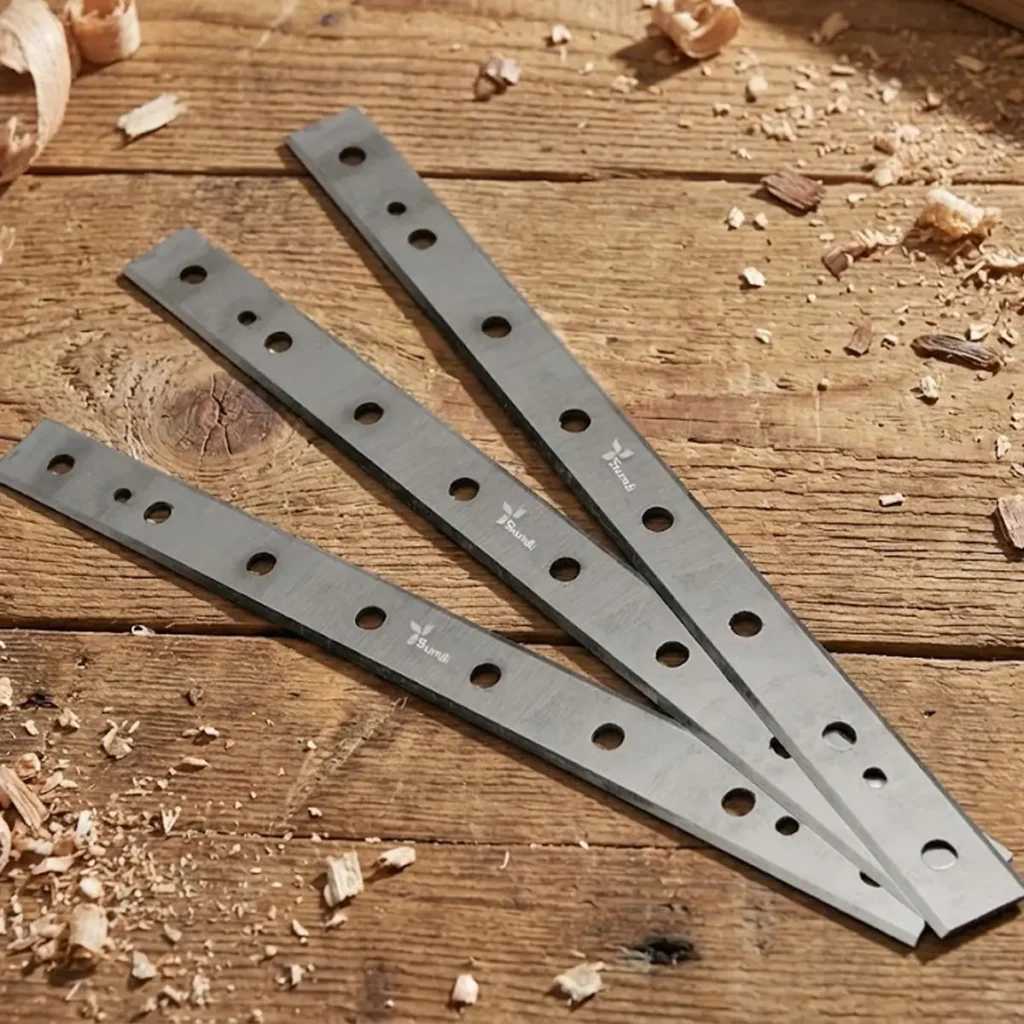
HSS Straight Knives are long knives used in many planers and jointers. Depending on the design, a dull or damaged knife may be resharpened, reversed, or replaced. Stop and isolate the machine after striking metal, and inspect for damage before following the specified knife-setting procedure.
Straight knives can machine both softwoods and hardwoods. Figured grain may tear out, so evaluate sharpness, grain direction, feed, and depth of cut on the actual material rather than excluding all straight-knife machines.
The Modern Helical Cutterhead and Carbide Inserts
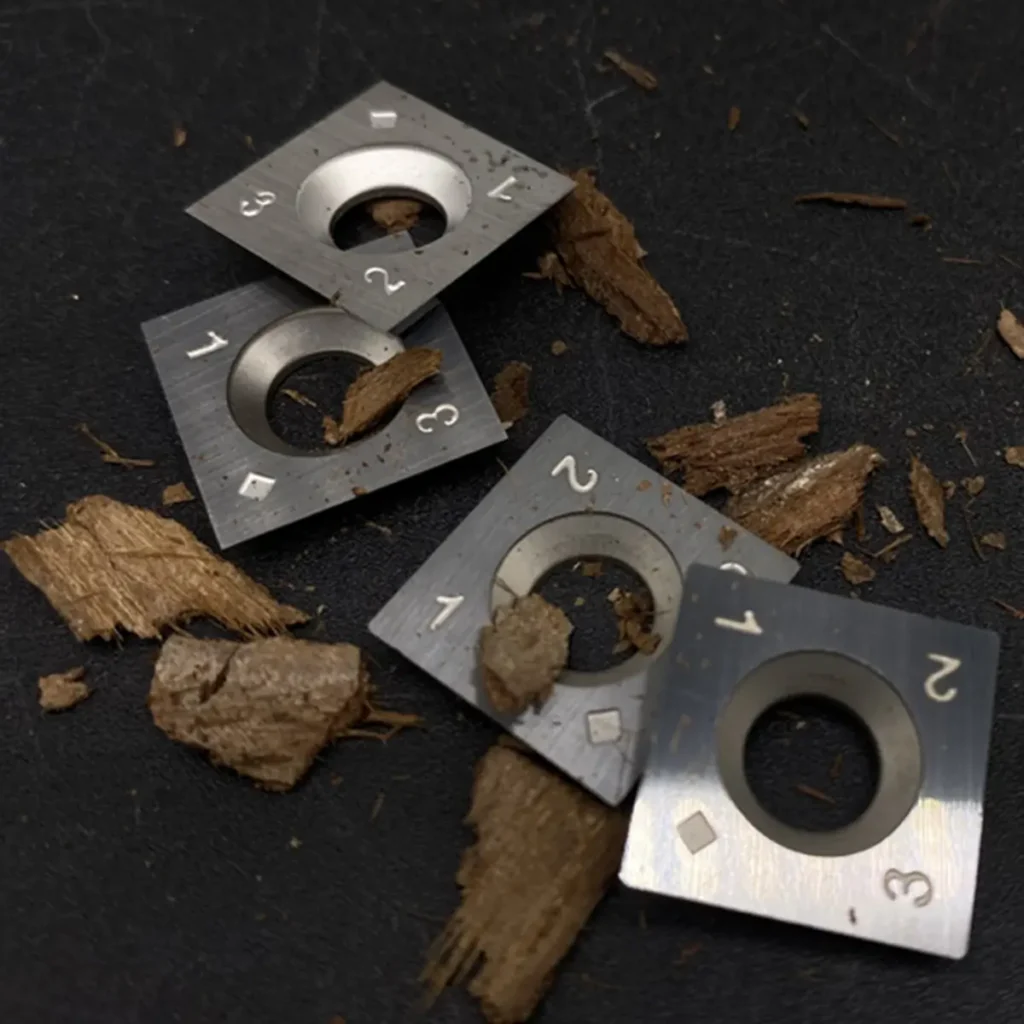
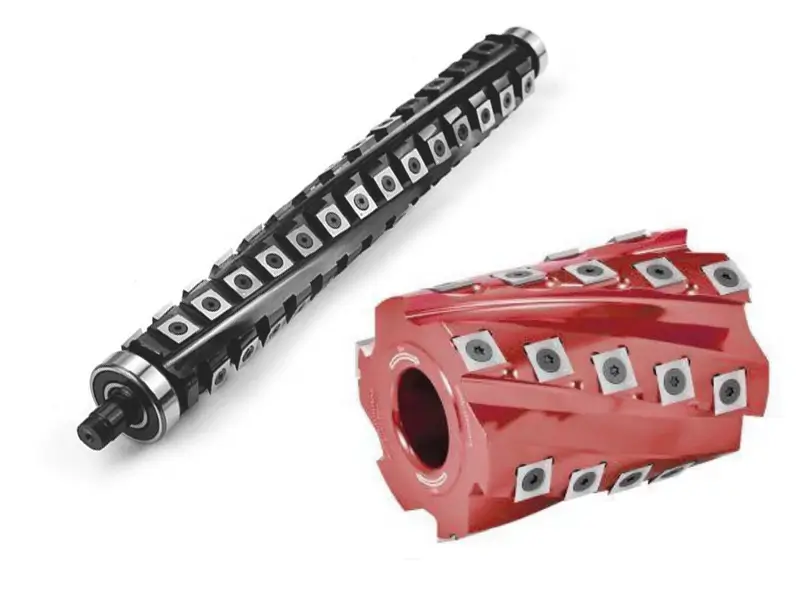
A Helical Cutterhead commonly carries small Carbide Inserts in staggered rows with skewed cutting edges. Supplier terminology varies, so inspect the actual geometry. A shearing cut may reduce tear-out and cutting noise in some applications, but does not eliminate either.
Carbide inserts can provide useful wear resistance on suitable wood. Life relative to steel knives depends on the grade, material, edge geometry, and cutting conditions.
Practical Benefits and Cost-Effectiveness
Skewed inserts may improve finish on difficult grain, but trials are needed. If the cutter strikes a nail, stop and isolate the machine and inspect the head, inserts, fasteners, and workpiece. Damage is not necessarily limited to one insert; follow the manufacturer’s repair or indexing procedure.
When refitting inserts, clean the seats and use the specified screws, procedure, and tightening torque. Compare purchase, insert, maintenance, and downtime costs for the actual workload rather than assuming an insert head always costs less over time.
Important Differences Between Jointers and Planers
You must understand that these tools are partners, not competitors. They solve different geometric problems during the milling process.
Primary Functions Compared
Feature | Jointer | Planer |
Primary Goal | Flattening and Squaring | Thicknessing and Paralleling |
Reference Surface | The machine table | The face of the board touching the bed |
Cutter Location | Underneath the wood | Above the wood |
Feeding Method | Manual push | Automatic rollers |
Flattening vs. Thicknessing
Starting off, the jointer handles the “truing” of the wood. It removes the “banana” shape from a board. On the other hand, the planer handles the “sizing.” If you want a 1-inch board to become exactly 3/4 of an inch, a thickness planer is a common tool for the job.
Blade Placement Differences
A jointer’s outfeed table is set relative to the cutter’s cutting circle according to the machine instructions. Support and feed the board without pressing a bow flat. A thickness planer cuts above its reference bed; an unsupported curved reference face can leave the board thinner but still warped.
Output Characteristics
A jointer produces one flat face or one square edge. It does not care about the other side of the board. Next, the planer takes that flat face and creates a second flat face that is perfectly parallel to the first. Without the jointer, your planer might just create a thinner, still-warped board.
Typical Machine Sizes and Capacities
In terms of size, jointers are usually narrower. Most home shops have a 6-inch or 8-inch jointer. Planers are typically wider, with common benchtop models reaching 12 or 13 inches. This often just means you can plane wider boards than you can joint.
When and Why You Need Each Tool
Order of Use in Woodworking
The sequence of your work is vital. First, you need to flatten one face on the jointer. After that, you should square one edge on the jointer by holding the flat face against the fence. Then, you should move to the planer. You place the flat, jointed face down on the planer bed. Finally, make sure to run the board through until the top face is parallel and the board reaches your target thickness.
Examples of Use Cases
For a tabletop, prepare mating edges and glue suitable boards together. After the glue has cured, a suitable thickness planer may size the panel if it fits the machine, has a flat reference face, and the grain and glued construction are permitted by the instructions. Remove glue squeeze-out before machining.
What Happens if You Skip One
Without a flat reference face, ordinary thickness planing may leave warp. Without controlled thicknessing, flat faces need not be parallel. A jointer and planer are common ways to establish these conditions, but other properly set up methods can do so; verify flatness and thickness by measurement.
Conclusion
A jointer establishes a flat reference face and square edge, while a thickness planer sizes the opposite face relative to that reference. Correct setup, suitable stock, and measurement are still needed; the workflow does not guarantee perfect lumber on every pass.
FAQs
Can a jointer replace a planer?
No, it cannot. While you can flatten both sides of a board on a jointer, there is no way to guarantee they are parallel. You would likely end up with a wedge-shaped board. A planer is a helpful addition because it handles the thicknessing that a jointer simply cannot do.
Can a planer replace a jointer?
In some cases, a suitable planer sled can support a warped board for flattening. Secure the board and shims so they cannot shift, follow the machine’s stock limits, and use an appropriate stop or retention arrangement. Edge squaring still requires a separate suitable method.
Which should you buy first?
Choose the first machine for the stock and operations you use. A planer may suit boards with a verified flat reference face, including suitably prepared purchased lumber. S2S describes surfacing, not a guarantee that stored lumber remains flat. Rough or warped stock needs a flattening method first.