


Dégauchisseuse et raboteuse : guide complet (2026)
Une dégauchisseuse aplanit une face et dresse un chant adjacent à angle droit. Une raboteuse utilise une face de référence plane pour rendre la face opposée parallèle à l’épaisseur choisie. La fabrication d’une planche S4S exige aussi de préparer le chant restant pour obtenir la largeur voulue ; ces deux machines constituent une méthode courante, mais pas la seule.
Quelle est donc la différence fondamentale entre raboteuse et dégauchisseuse ? Ce guide explique quelle machine choisir et s’il suffit d’acheter l’une ou l’autre pour vos travaux du bois.
Sommaire
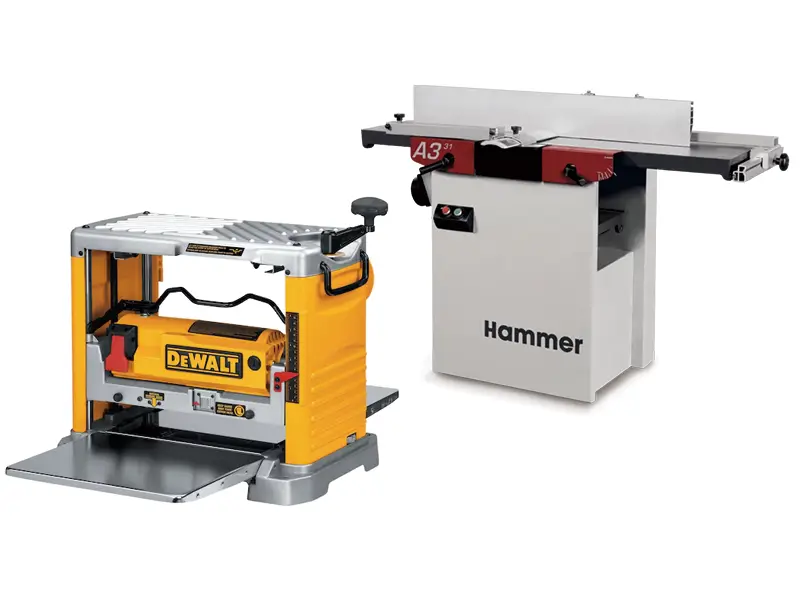
Qu’est-ce qu’une dégauchisseuse ?
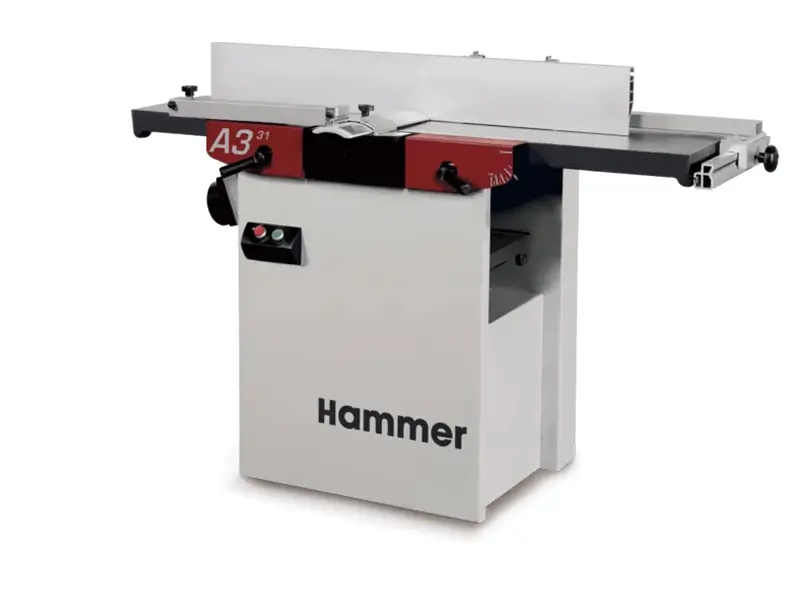
(Source : felder-group)
Définition et fonction de base
Une dégauchisseuse est une machine à bois qui crée une surface plane sur la longueur d’une planche. Autrefois, les artisans utilisaient de longs rabots manuels ; la dégauchisseuse motorisée automatise ce travail. Elle sert principalement à aplanir une face et à dresser un chant d’équerre.
Fonctionnement d’une dégauchisseuse
La machine possède une table d’entrée et une table de sortie, séparées par un arbre porte-outils rotatif. La table d’entrée se règle d’abord pour définir la profondeur de passe. Lorsque le bois passe sur l’arbre, les points hauts sont enlevés. La surface devient ainsi plane à mesure qu’elle arrive sur la table de sortie.
Avantages et inconvénients d’une dégauchisseuse
Avantages :
- Elle corrige les torsions, le tuilage et les courbures du bois brut.
- Le guide permet d’obtenir un angle précis de 90 degrés entre la face et le chant.
- Les opérations particulières, comme les chanfreins ou les feuillures, ne sont possibles que si la machine et ses protections les permettent.
Inconvénients :
- Elle ne permet pas de rendre deux faces opposées parallèles.
- La largeur de travail est limitée par celle de l’arbre, souvent de 6 ou 8 pouces.
- Cette machine ne permet pas d’obtenir une épaisseur précise.
Qu’est-ce qu’une raboteuse ?
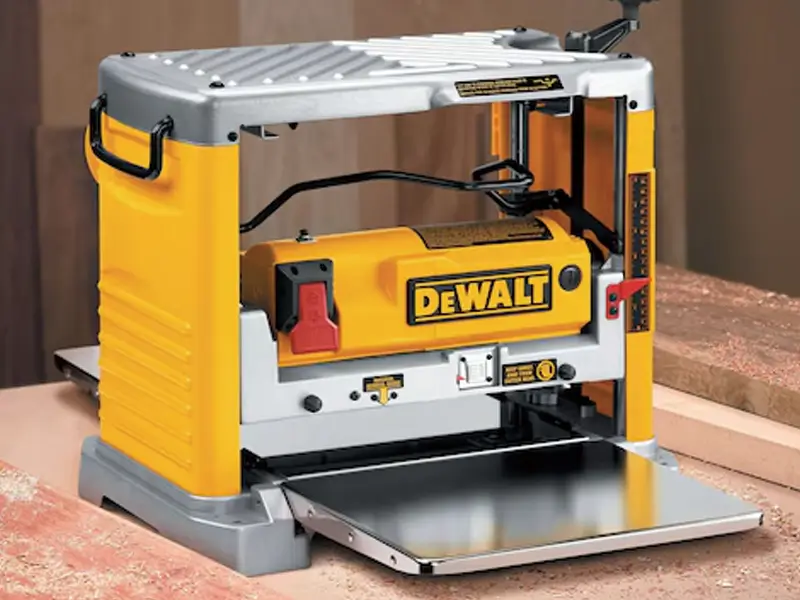
(Source : DeWalt)
Définition et fonction de base
Une raboteuse d’épaisseur amène une planche à une épaisseur constante sur sa longueur. La dégauchisseuse vise la planéité, tandis que la raboteuse vise le parallélisme des faces. Cet outil permet de maintenir la même distance entre les faces supérieure et inférieure en tout point.
Fonctionnement d’une raboteuse
À l’intérieur, l’arbre est monté au-dessus de la table. Des rouleaux motorisés entraînent le bois dans la machine. La table sert de référence. Les lames étant réglées à une hauteur donnée, elles enlèvent la matière supérieure jusqu’à l’épaisseur souhaitée.
Avantages et inconvénients d’une raboteuse
Avantages :
- Elle produit une épaisseur uniforme sur plusieurs planches.
- La machine peut traiter des planches plus larges que la plupart des dégauchisseuses de loisir.
- Elle fait gagner beaucoup de temps par rapport au ponçage ou au rabotage manuels.
Inconvénients :
- Elle ne corrige pas à elle seule le voile ou la torsion.
- Si une planche courbe est introduite, les rouleaux peuvent l’aplatir pendant la coupe, puis elle reprend sa forme initiale après le passage.
- Il convient généralement d’éviter de l’utiliser sans face de référence plane.
Choisir le bon arbre porte-outils
Comparez les lames de rabotage traditionnelles et les arbres à plaquettes compatibles avec votre raboteuse ou dégauchisseuse. La finition, le bruit, le temps d’entretien et le coût dépendent de l’arbre, de la machine, du matériau et des conditions de coupe réels.
La tradition des fers droits HSS
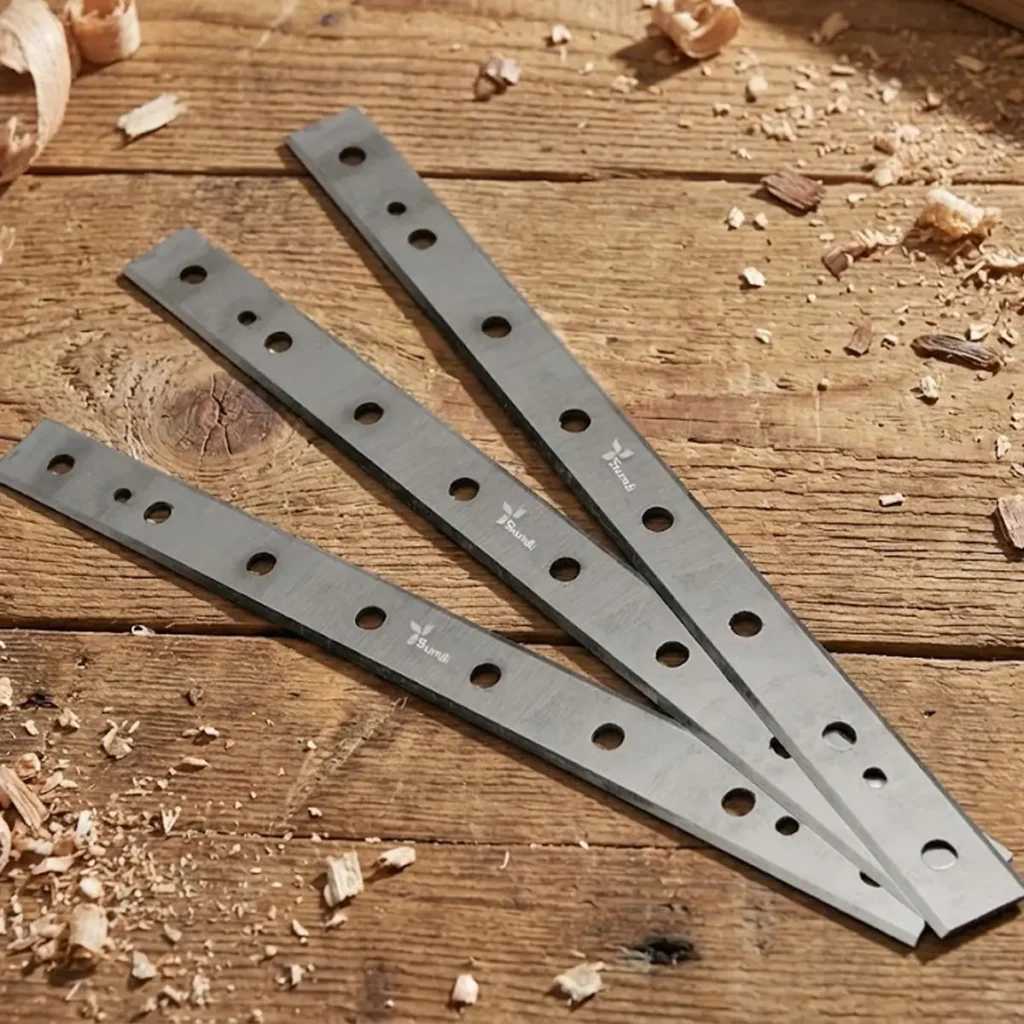
Les fers droits HSS sont de longues lames utilisées dans de nombreuses raboteuses et dégauchisseuses. Selon leur conception, les lames émoussées ou endommagées peuvent être réaffûtées, retournées ou remplacées. Après un choc contre du métal, arrêtez et isolez la machine, puis recherchez les dommages avant d’appliquer la procédure de réglage prescrite.
Les fers droits peuvent usiner des bois tendres comme des bois durs. Les bois figurés peuvent présenter de l’arrachement : évaluez l’affûtage, le sens du fil, l’avance et la profondeur de passe sur le matériau réel, plutôt que d’exclure toutes les machines à fers droits.
Arbres hélicoïdaux modernes et plaquettes carbure
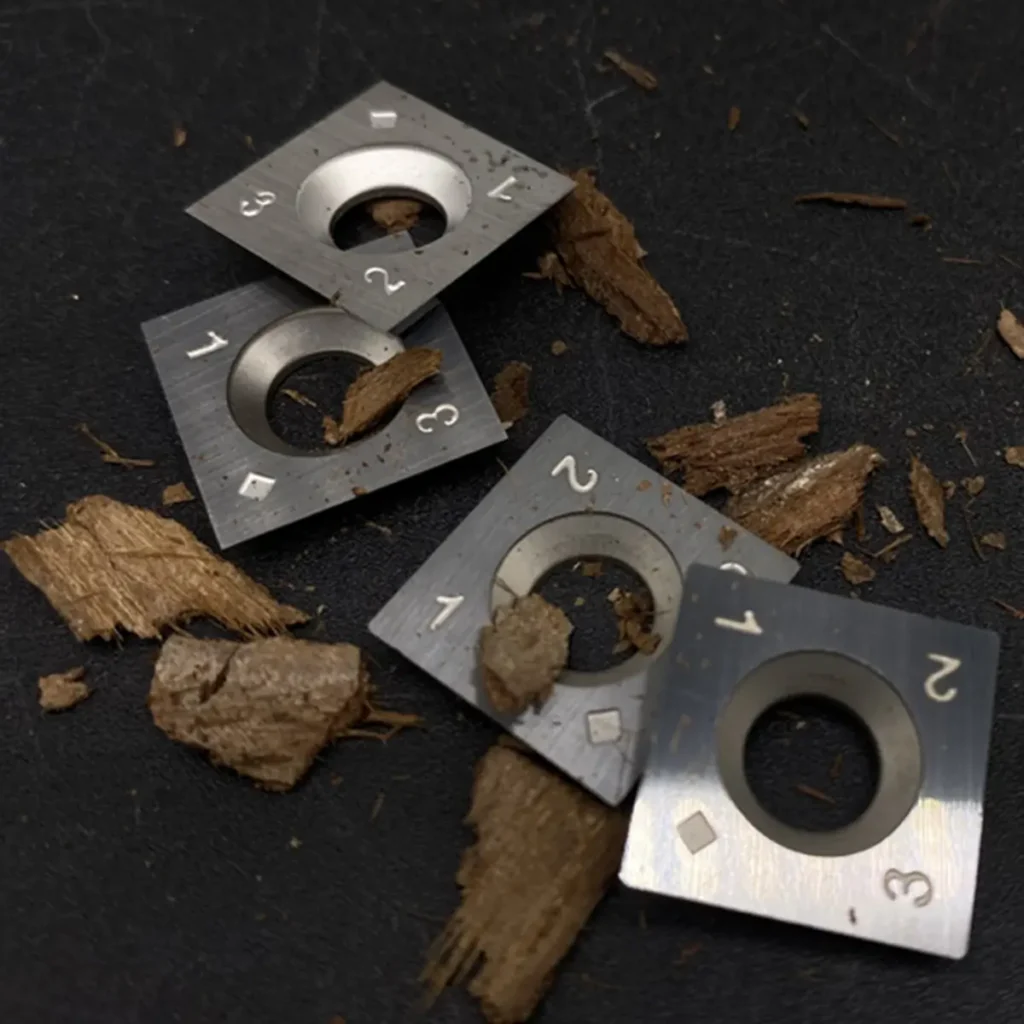
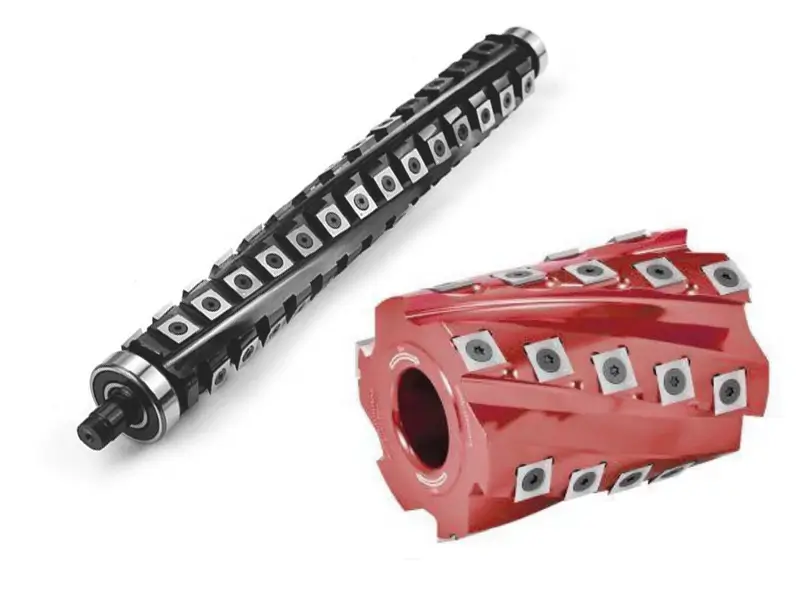
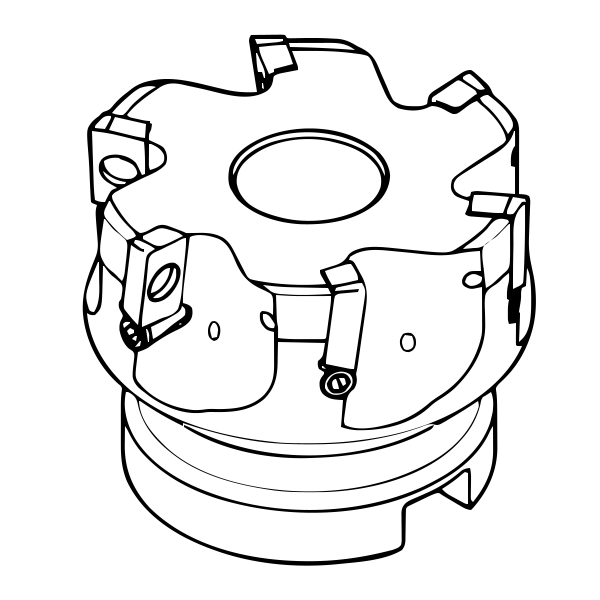
Un arbre hélicoïdal porte généralement de petites plaquettes carbure en rangées décalées avec des arêtes inclinées. La terminologie varie selon les fournisseurs : examinez donc la géométrie réelle. Une coupe par cisaillement peut réduire l’arrachement et le bruit dans certaines applications, sans les éliminer.
Les plaquettes carbure peuvent offrir une résistance à l’usure intéressante sur des bois adaptés. Leur durée de vie par rapport aux fers en acier dépend de la nuance, du matériau, de la géométrie d’arête et des conditions de coupe.
Avantages pratiques et rentabilité
Les plaquettes inclinées peuvent améliorer la finition sur un fil difficile, mais des essais sont nécessaires. En cas de choc contre un clou, arrêtez et isolez la machine, puis inspectez l’arbre, les plaquettes, les fixations et la pièce. Les dommages ne se limitent pas nécessairement à une plaquette ; respectez la procédure de réparation ou d’indexation du fabricant.
Au remontage, nettoyez les logements et utilisez les vis, la procédure et le couple de serrage prescrits. Comparez les coûts d’achat, de plaquettes, d’entretien et d’arrêt pour la charge de travail réelle, sans supposer qu’un arbre à plaquettes revient toujours moins cher à long terme.
Différences importantes entre dégauchisseuses et raboteuses
Ces machines sont complémentaires plutôt que concurrentes. Elles résolvent des problèmes géométriques différents lors de l’usinage du bois.
Comparaison des fonctions principales
Caractéristique | Dégauchisseuse | Raboteuse |
Objectif principal | Aplanir et équerrer | Calibrer l’épaisseur et rendre les faces parallèles |
Surface de référence | Table de la machine | Face de la planche en contact avec la table |
Position de l’arbre | Sous le bois | Au-dessus du bois |
Mode d’avance | Poussée manuelle | Rouleaux automatiques |
Dégauchissage et rabotage d’épaisseur
La dégauchisseuse sert d’abord à redresser le bois et à enlever la forme de « banane » d’une planche. La raboteuse assure ensuite la mise à épaisseur. Pour ramener une planche de 1 pouce exactement à 3/4 de pouce, la raboteuse est un outil couramment utilisé.
Différences de position des lames
La table de sortie d’une dégauchisseuse se règle par rapport au cercle de coupe selon la notice. Soutenez et avancez la planche sans aplatir sa courbure par pression. Une raboteuse coupe au-dessus de sa table de référence ; une face de référence courbe non soutenue peut laisser la planche plus mince, mais toujours voilée.
Caractéristiques du résultat
Une dégauchisseuse produit une face plane ou un chant d’équerre sans prendre l’autre face comme référence. La raboteuse utilise ensuite cette face plane pour créer une seconde face parallèle. Sans dégauchissage préalable, elle peut simplement rendre la planche plus mince tout en conservant son voile.
Dimensions et capacités usuelles des machines
Les dégauchisseuses sont généralement plus étroites. De nombreux ateliers amateurs utilisent des modèles de 6 ou 8 pouces. Les raboteuses sont souvent plus larges, avec des modèles d’établi courants de 12 ou 13 pouces. Il est donc souvent possible de raboter des planches plus larges que celles que l’on peut dégauchir.
Quand et pourquoi utiliser chaque machine
Ordre d’utilisation en travail du bois
L’ordre des opérations est essentiel. Dégauchissez d’abord une face, puis dressez un chant d’équerre en maintenant cette face contre le guide. Passez ensuite à la raboteuse, face dégauchie vers le bas sur la table. Usinez jusqu’à obtenir une face supérieure parallèle et l’épaisseur visée.
Exemples d’utilisation
Pour un plateau de table, préparez les chants d’assemblage et collez des planches adaptées. Après durcissement de la colle, une raboteuse appropriée peut calibrer le panneau s’il entre dans la machine, possède une face de référence plane et présente un fil et une construction collée autorisés par la notice. Retirez les débordements de colle avant l’usinage.
Que se passe-t-il si l’on omet une étape ?
Sans face de référence plane, le rabotage d’épaisseur ordinaire peut laisser le voile. Sans calibrage contrôlé, des faces planes ne sont pas nécessairement parallèles. Dégauchisseuse et raboteuse sont des moyens courants d’obtenir ces conditions, mais d’autres méthodes correctement réglées le permettent aussi ; vérifiez la planéité et l’épaisseur par mesure.
Conclusion
La dégauchisseuse établit une face de référence plane et un chant d’équerre ; la raboteuse calibre la face opposée par rapport à cette référence. Un réglage correct, des pièces adaptées et des mesures restent nécessaires ; cette méthode ne garantit pas un bois parfait à chaque passe.
Questions fréquentes
Une dégauchisseuse peut-elle remplacer une raboteuse ?
Non. Les deux faces peuvent être aplanies sur une dégauchisseuse, mais leur parallélisme n’est pas garanti ; on risque d’obtenir une planche en coin. Une raboteuse est donc complémentaire, car elle assure la mise à épaisseur.
Une raboteuse peut-elle remplacer une dégauchisseuse ?
Dans certains cas, un traîneau de rabotage adapté peut soutenir une planche voilée pour l’aplanir. Fixez la planche et les cales pour empêcher leur déplacement, respectez les limites de dimensions et utilisez une butée ou un dispositif de retenue approprié. L’équerrage des chants exige toujours une méthode distincte adaptée.
Laquelle acheter en premier ?
Choisissez la première machine selon le bois et les opérations prévus. Une raboteuse peut convenir aux planches dont la face de référence est vérifiée plane, y compris du bois acheté correctement préparé. S2S décrit un état d’usinage, sans garantir que le bois stocké reste plan. Le bois brut ou voilé nécessite d’abord une méthode d’aplanissement.