










Plunge Routers vs. Fixed Routers
Routers come in two base designs: fixed and plunge. You need to understand the differences to purchase tools smartly. Both plunge and fixed routers have some advantages at particular routing tasks that affect the quality of production.
Contents

Source: bosch
What Is a Fixed-Base Router?
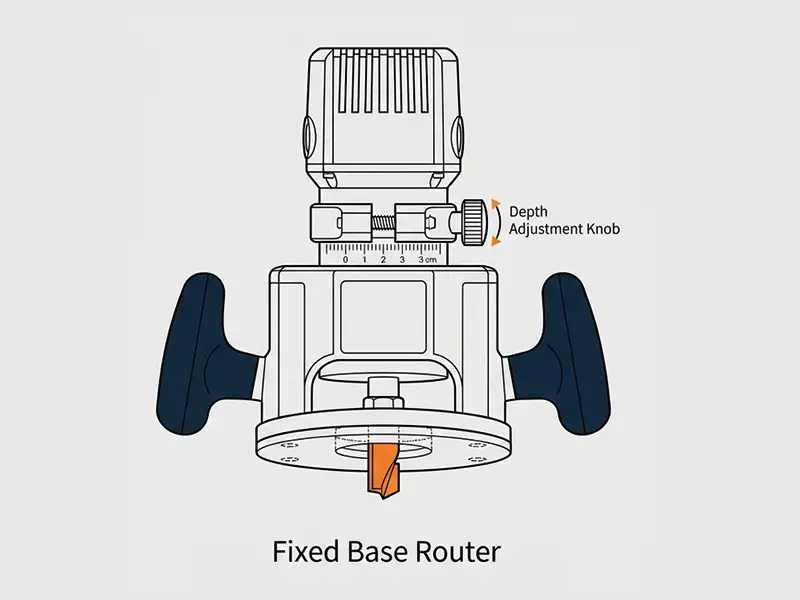
A fixed-base router holds the bit at a locked position. You set the cutting depth before starting work. The router bit extends a fixed distance from the base. It stays at that height until you adjust it. Most models have micro adjustment dials for precision. The design is compact and lightweight. So you generally use fixed-base routers to profile edges. Some models are suitable for router tables; confirm compatibility with the table and mounting system.
What Is a Plunge Router?
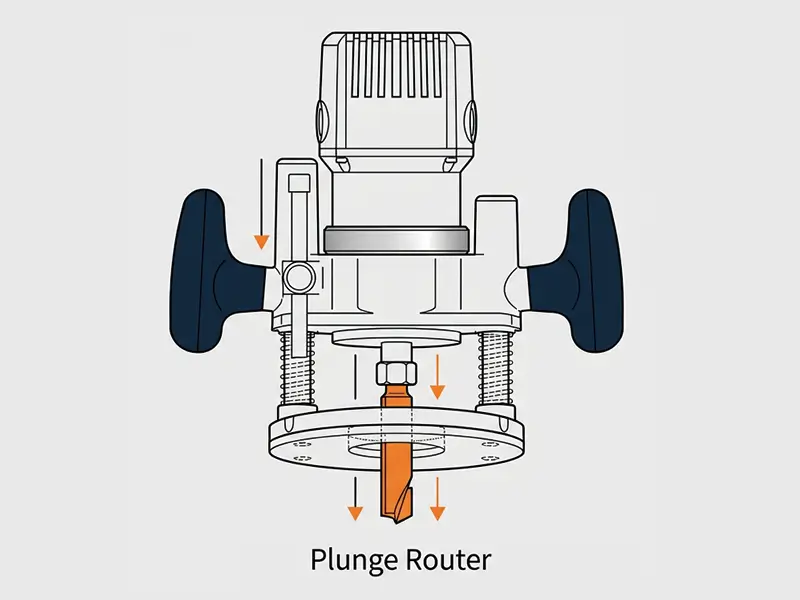
A plunge router allows controlled vertical bit movement. The motor moves on spring-loaded posts, with a lock and depth stops. It is useful for mortises and stopped cuts when fitted with a plunge-capable bit and supported correctly. Retraction and locking must follow the particular model’s instructions.
How Does Fixed and Plunge Router Work?
Fixed-Base Operation
Set and lock the cutting depth before starting a fixed-base router. Edge entry is common; an internal start requires an appropriate prepared opening or approved setup. Start with the bit clear of the work, guide the supported router as instructed, and allow the bit to stop before setting the tool down.
Plunge Router Operation
With the work secured and the base supported, position the plunge router with its bit clear of the surface. Use a plunge-capable bit, preset the depth, and follow the model’s starting and locking sequence. Take passes suited to the bit and material, and control retraction according to the instructions.
When to Use a Fixed-Base Router

Router Table Applications
Compatible fixed-base routers or removable motors can be mounted in suitable router tables and lifts. Height adjustment and access vary by model. Table routing can produce edge profiles and tongue-and-groove connections when the router, bit, table, guarding, and speed are suitable for the operation.
Edge Profiling and Decorative Work
Bearing-guided bits can be used with a suitable fixed-base router for edge profiles. Keep the base supported and use the grip specified by the manufacturer; light weight is not a general reason to operate a router one-handed. Finish depends on the bit, grain, feed, and setup.
Production Runs with Consistent Depth
A fixed-base router can repeat an edge profile without resetting depth for each piece. Check that the depth lock remains secure and verify the cut on a test piece. Repeated production still requires correct setup and inspection; a fixed base does not eliminate adjustment errors.
When to Use a Plunge Router
Mortising and Joinery
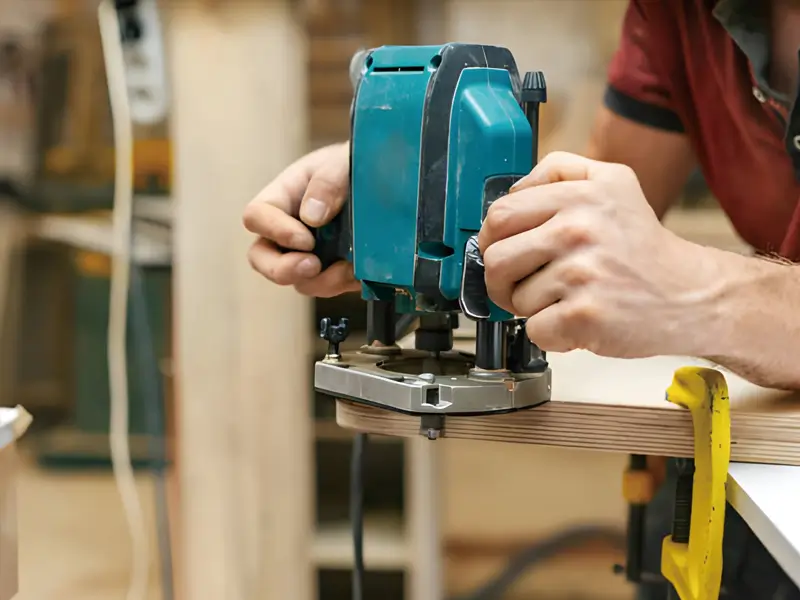
A plunge router with a suitable bit and guide is useful for mortises within a board. Depth stops help divide the cut into passes. Select each pass depth from the bit, material, router, and manufacturer’s limits; 1/4 inch is not universally suitable and does not eliminate breakage or motor strain.
Template and Pattern Routing
For template work, select a compatible guide bushing or bearing-guided bit and support the router on the template. A trim router may suit some operations, while plunge action helps with suitable internal starts. Dovetail jigs do not universally require a plunge router: use the router, bit, and guide combination specified for the jig.
Inlay Work and Decorative Routing
Plunge action can help with inlay recesses and stopped decorative flutes. Set depth and travel stops, test the setup, and use a suitable bit. For example, a flute may stop before either end of a furniture leg; the stopping distance follows the design.
Stopped Grooves and Dadoes
Stopped dadoes and flutes end before the workpiece edge. A plunge router provides controlled entry for suitable internal cuts. Other methods may use a prepared opening or jig; do not tip a fixed-base router into the work unless its instructions expressly permit that operation.
When Manufacturing Operations Benefit from Both Router Types
Production Efficiency Through Specialization
A shop that frequently switches between table work and handheld plunge work may benefit from dedicated routers. This can reduce base changes, but the value depends on workload and cost. Continue matching the right tool bit to each task.
Expanded Capability Range
Fixed and plunge bases suit overlapping tasks, with plunge action particularly useful for controlled internal entry. The proportion of work suited to each depends on the shop. Two bases do not provide every routing capability or remove every need for specialist equipment.
Quality and Consistency
Choose the base that provides suitable support, depth control, and access for the operation. Accuracy depends on the router, bit, guide, workholding, and setup; owning both base types does not itself guarantee better results.
Tool Investment Strategy
A combo kit provides fixed and plunge bases for one compatible motor. Compare its price and accessories with separate routers. A shared motor must be moved between bases and cannot run both stations at once; neither a fixed budget nor complete routing capability is guaranteed.
Combo Router Kits
What Combo Kits Include
A fixed/plunge combo kit typically includes one compatible motor and both bases. Motor size, collets, guides, dust fittings, and changeover mechanisms vary by kit. Check the included accessories and intended operations rather than assuming it is a complete routing solution.
Advantages of Combo Kits
A combo kit may cost less than comparable separate routers, but compare actual kit contents and current prices. One motor reduces duplicate motor components while requiring base changes; power alone does not make every operation suitable in both bases.
Leading Combo Kit Options
Examples include the Bosch 1617EVSPK fixed/plunge kit, the DeWalt DW618PK kit with soft start, and the compact Makita RT0701CX7 kit. Compare current specifications, collets, accessories, and regional availability for the intended work.
Conclusion
Fixed bases suit many edge-profiling and compatible table-routing tasks. Plunge bases help with controlled entry for mortises and stopped cuts. Choose a suitable kit or separate tools for your workflow; neither arrangement guarantees every capability or the lowest cost.
FAQs
Can you use a plunge router in a router table?
Some plunge routers can be table-mounted, but only with a compatible mounting arrangement permitted by the manufacturer. Height adjustment and spring mechanisms differ by model. Do not remove or alter springs unless the instructions explicitly provide for it.
Which router is better for beginners?
Choose a beginner’s router for the first intended operations, suitable support, and available instruction. A fixed base can suit edge work; plunge action can suit controlled internal entry. Neither base type is automatically forgiving of incorrect technique.
Do I need both a plunge and fixed-base router?
Not every workshop needs both. Select bases for the operations and compatible jigs you use. A combo kit can add plunge capability with one motor, but fixed bases are not limited by a universal 70–80% task share.
Are plunge routers heavier than fixed-base routers?
Plunge mechanisms can add weight, but the difference depends on the models being compared. Check operating weights with the intended base and accessories; there is no universal 30–50% difference or fixed weight range.