



Roughing vs. Finishing End Mill
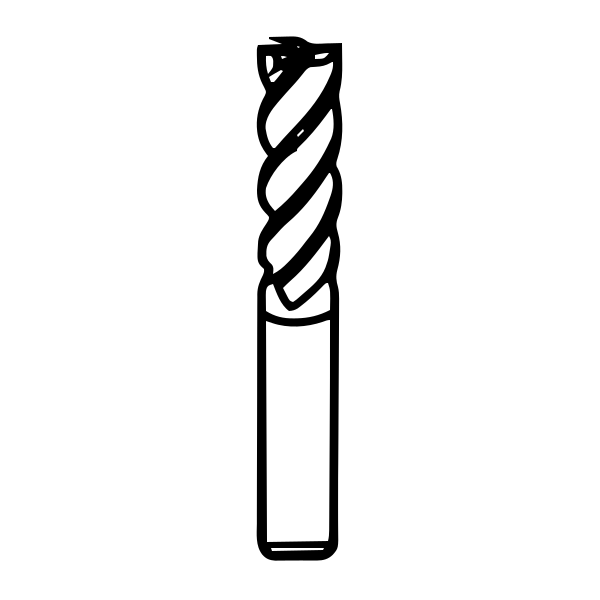
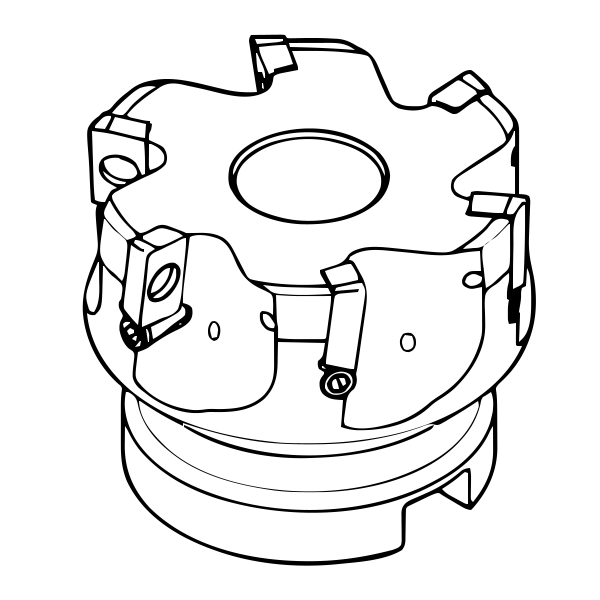
An end mill tool cuts with peripheral and end edges according to its design. Roughing removes stock efficiently, while finishing targets specified dimensions and surface quality. A separate tool for each stage can be useful, but some processes use one suitable cutter for both.
Contents
Understanding Roughing End Mills
Definition and Purpose of Roughing End Mills
Roughing end mills are important for one specific reason. They remove large volumes of material in a short amount of time. You use them when you start with a raw block of metal and need it to reach a shape that resembles the final part. At the onset, these tools take the brunt of the heavy cutting so your precision tools stay sharp for the final stages.
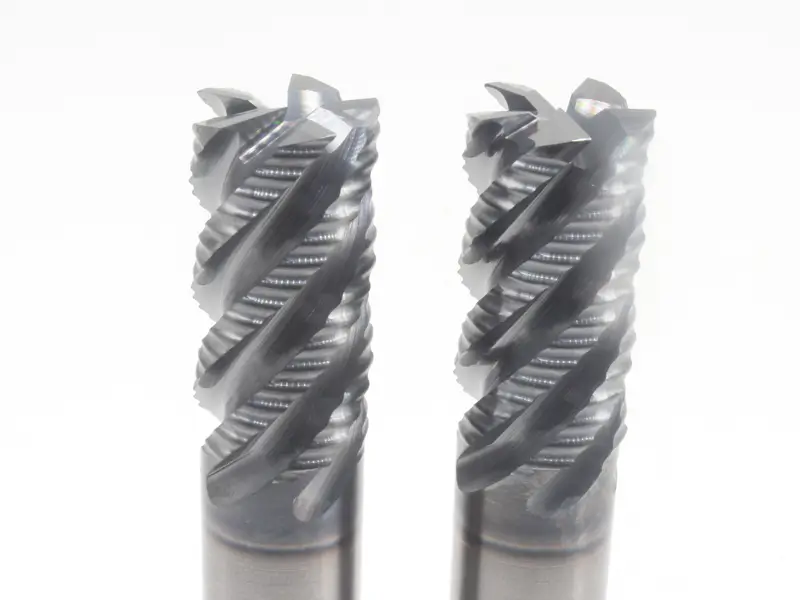
Design Features of Roughing End Mills
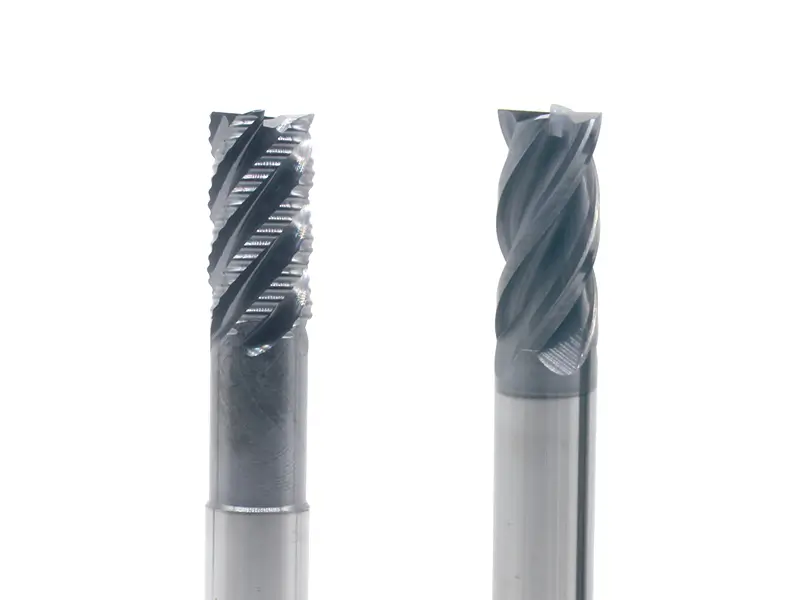
Serrated/Wavy Tooth Geometry
Serrated roughing end mills divide chips along the cutting edge. Other tools can also perform roughing without serrations. Chip packing remains possible, so provide suitable engagement and evacuation.
Flute Configuration
Roughing end mills are offered with various flute counts. Balance chip space with core strength and engagement; three or four flutes is not a defining limit, and larger gullets alone do not establish cutting temperature.
Coarse vs. Fine Tooth Options
Coarse and fine serration pitches suit different materials, engagements, and finish allowances. Follow the particular tool’s guidance; material hardness alone does not determine the pitch or allowable depth.
How Roughing End Mills Work
Chip Breaking Mechanism
Serrations can divide the chip and reduce cutting loads compared with a suitable smooth-edge reference tool. The actual load depends on engagement, cutting data, and geometry.
Material Removal Process
Roughing prioritises material removal rate while leaving controlled stock for later operations. It requires a stable, verified process rather than forcing the tool through the workpiece.
Cutting Force Distribution
A serrated edge distributes cutting along its profile, but does not prevent overload, chatter, or breakage. Respect the tool’s application limits.
Important Applications of Roughing End Mills
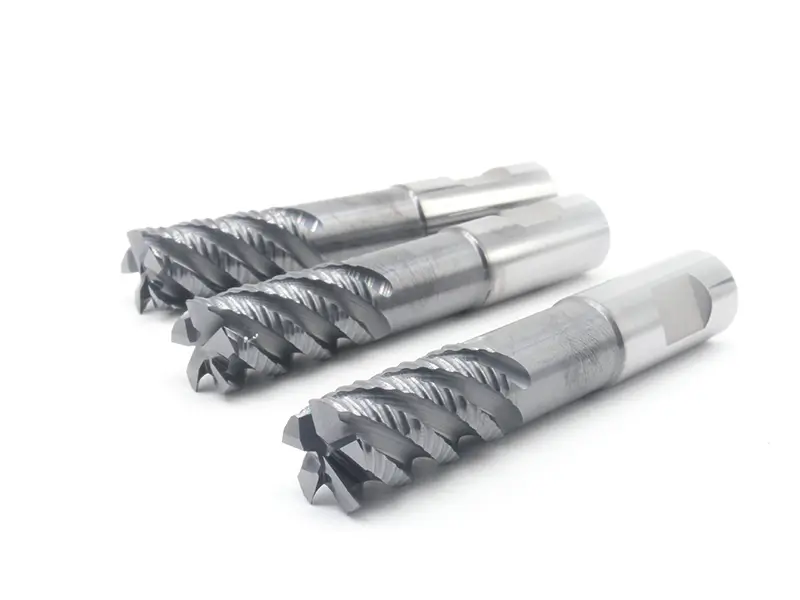
Heavy Material Removal
For substantial aluminium stock removal, choose a compatible roughing strategy and verify workholding. Select depth and feed within tool and machine limits; do not automatically use the maximum possible depth.
Slotting and Pocketing
Some roughing end mills are suitable for deep slots. Slotting still imposes demanding engagement and chip-clearance conditions; serrations do not guarantee freedom from stalling.
Initial Machining Stages
A separate roughing pass is useful when substantial stock must be removed, but not every part starts from a solid block or needs a dedicated roughing tool. Surface scale also requires suitable edge and grade selection.
Understanding Finishing End Mills
Definition and Purpose of Finishing End Mills
A finishing end mill is a precision tool. You use it to reach the final dimensions and make the surface smooth. It is a helpful tool for meeting tight tolerances that a roughing tool cannot achieve.
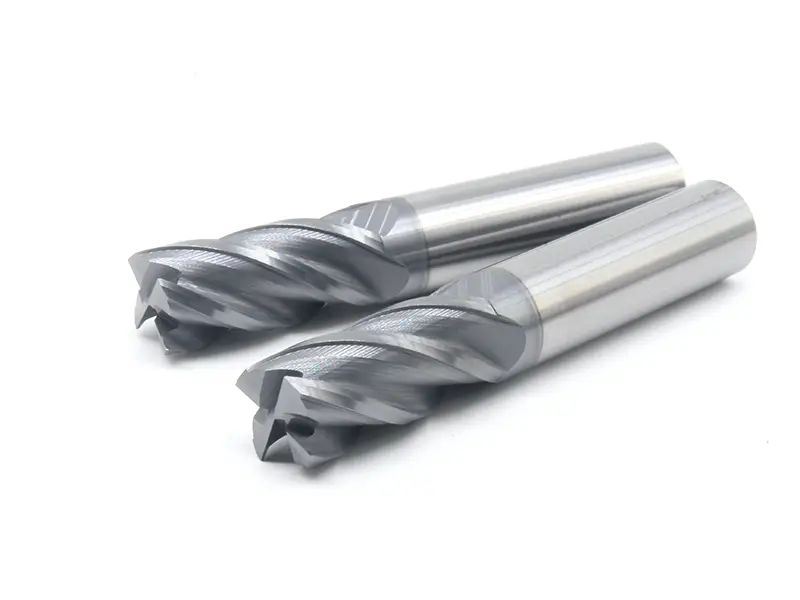
Design Features of Finishing End Mills
Smooth Cutting Edges
Finishing tools commonly have continuous cutting edges rather than roughing serrations. Helical edges are not literally straight, and a continuous edge alone does not guarantee flatness or accuracy.
Higher Flute Count
Finishing tools are available with different flute counts. More teeth can support greater table feed at a suitable chip load, but chip space and engagement still matter. A long axial finishing pass with light radial stock is different from a deep full-width slot.
Sharp Precision Geometry
The angles are ground to exact specifications. This is because the last thing you want to do is leave a rough edge on a finished part. The sharpness reduces the friction during the final pass.
How Finishing End Mills Work
A finishing pass removes a controlled allowance chosen for the tool, material, and specification. Neither 0.25 mm nor zero tool deflection is universal. Account for runout, wear, setup, and thermal effects, then inspect the result.
Important Applications of Finishing End Mills
Final Surface Preparation
Choose a tool and process capable of the specified surface-texture parameter, such as Ra or Rz. A high flute count alone does not establish a micron-level result or remove every preceding mark.
Precision Cuts
A ±0.01 mm tolerance requires a qualified process and appropriate measurement. A finishing tool alone does not guarantee that tolerance across the whole feature.
Dimensional Accuracy Requirements
Finishing brings features towards their final dimensions and texture. Positional accuracy also depends on setup, machine condition, and toolpath; verify holes and walls against the drawing.
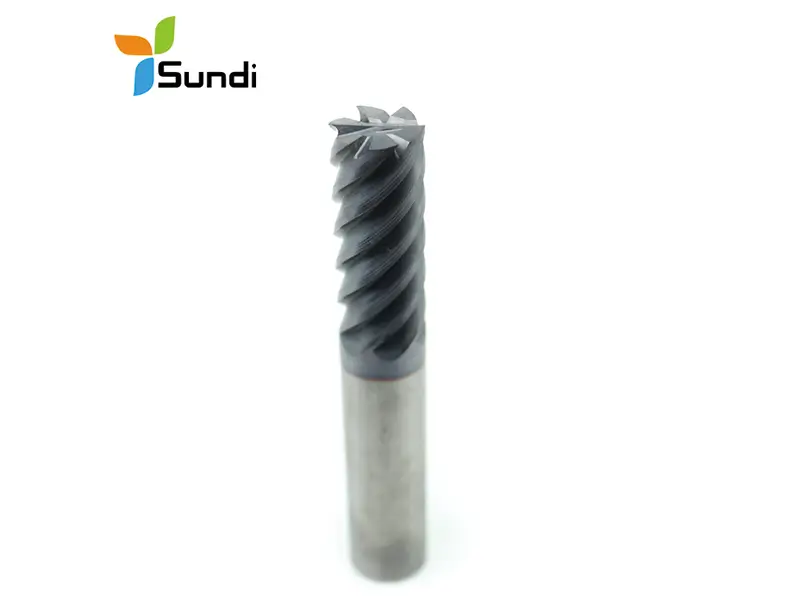
Important Differences Between Roughing and Finishing End Mills
Material Removal Rate Comparison
Roughing prioritises stock removal, while finishing prioritises final requirements. Actual removal rate and permissible depth depend on the tool and engagement, not solely on the roughing or finishing label.
Feed Rate and Cutting Speed Differences
Select cutting speed, feed per tooth, and table feed separately for each operation. Finishing does not universally mean higher RPM and lower table feed; diameter, flute count, material, and engagement matter.
Surface Finish Quality
Serrated roughers commonly leave a visible pattern. Whether it is acceptable depends on the drawing and function, not appearance alone. A finishing operation may be needed to meet the specified surface.
Dimensional Accuracy and Tolerances
Both roughing and finishing tools deflect under load. Controlled finishing allowance can help achieve dimensions, but following the programmed path does not guarantee the measured part geometry.
Cutting Edge Design and Geometry
Serrated roughers and continuous-edge finishers are common designs, but they do not cover all cases. Continuous-edge end mills and combined roughing/finishing designs can perform stock removal as well.
Number of Flutes Comparison
There is no fixed roughing-versus-finishing flute count. When you select the flute count, consider material, engagement, chip space, tool stiffness, and required finish.
Depth of Cut Capabilities
Permissible depth depends on the specific tool and both axial and radial engagement. Two diameters is not a universal roughing limit, and finishers are not restricted to shallow axial cuts. Check cutting length, overhang, and application data.
Tool Life and Durability
Tool life depends on grade, geometry, load, and wear criteria. Finishing tools are not inherently fragile, nor will every continuous-edge cutter fail after a few minutes of stock removal.
Performance Characteristics
Cutting Forces and Efficiency
Roughing tools are more efficient at moving large amounts of metal. They require significant torque from the machine. Next, you must consider if your machine spindle has the power to drive the tool through the material.
Heat Generation and Management
Heat generation and distribution depend on material, speed, chip thickness, engagement, and cooling. Neither operation has a fixed temperature advantage; avoid rubbing and chip recutting.
Chip Evacuation and Chip Formation
Chip form depends on material and cutting conditions. Finishing metal does not inherently produce powder; very fine debris may warrant checking for rubbing or other problems. Select evacuation and cooling for the process.
Vibration and Chatter Reduction
Serrations may help manage cutting loads, but they do not eliminate chatter. Toolholding, overhang, engagement, and machine dynamics must also be considered.
Power Requirements
Check power and torque at the intended RPM for both operations. Finishing does not always require high speed, and roughing does not imply a single torque requirement.
When to Use Roughing End Mills
Ideal Machining Scenarios
Use roughing where substantial allowance must be removed, leaving suitable stock for subsequent operations. A fixed eighty-percent share of the job is not a process rule.
Material Compatibility
Appropriate roughing tools can machine stainless steel and titanium alloys. Match the grade, edge, and parameters to the stock condition; these materials do not always have a hard outer layer.
Benefits and Advantages
Final Surface Preparation
A suitable rougher can reduce cycle time; confirm the saving for the complete operation.
Extended tool life
By letting the rougher take the heavy loads, you save your precision finishers for the light work.
Reduced machining costs
Compare tool cost, usable life, cycle time, and scrap. Roughers are not invariably cheaper to replace.
When to Use Finishing End Mills
Ideal Machining Scenarios
Use finishing where the remaining allowance and drawing requirements call for it. The allowance is application-specific, and inspection is still required.
Precision Requirements
Bearing seats and other close-fitting features require a process that achieves the specified geometry and surface. End milling, boring, reaming, or grinding may be appropriate; a particular finishing end mill is not mandatory for every fit.
Benefits and Advantages
Superior surface quality
A finishing pass may reduce later polishing, but omit polishing only when the measured surface meets the specification.
High dimensional accuracy
Measure the part rather than assuming it exactly matches the dimensions programmed into the CNC controller.
Minimal secondary finishing
Complete required inspection, deburring, cleaning, and any specified downstream operations before shipping or assembly.
Selecting the Right End Mill for Your Application
Material Type Considerations
Match cutting material, geometry, coating, and parameters to the actual alloy. Chip clearance and rigidity matter for both aluminium and steel; neither material dictates one universal speed.
Machining Stage Assessment
Select roughing and finishing steps from the stock allowance and final requirements. Some suitable end mills can perform both with different parameters.
Surface Finish Requirements
Use the specified functional and surface requirements to decide whether finishing is needed. A hidden bracket may require a precision surface, and a visible part does not automatically require a high-flute tool.
Production Volume Factors
In high volume production, every second is valuable. You might use a specialized rougher that can also perform a basic finish to save a tool change.
Budget and Cost Considerations
Do not be cheap on your finishing tools. A low-quality finisher will leave marks that cost you more in scrap than you saved on the purchase price.
Best Practices for Using Roughing and Finishing End Mills
Optimal Cutting Parameters for Roughing
Use the recommended chip load and engagement, adjusted for the operation. Excessively low feed can cause rubbing, but high feed is not always appropriate and sound alone cannot diagnose the cause.
Optimal Cutting Parameters for Finishing
Select finishing speed and feed for the tool, material, and target surface. Do not automatically lower feed and raise RPM; maintain suitable chip formation and avoid rubbing.
Tool Path Strategies
Controlled-engagement roughing paths can help manage load. For finishing, climb milling is often useful where the machine and setup permit it; neither strategy guarantees the best surface or a lower temperature.
Coolant and Lubrication Recommendations
Choose dry cutting, air, lubrication, or coolant as appropriate to the tool and material. High-pressure coolant or a continuous liquid stream is not universally required; check the supplier’s guidance.
Tool Maintenance and Care
Inspect cutting edges and replace or recondition tools at an appropriate wear limit. Distinguish an intentional edge preparation from wear; use process evidence rather than appearance alone.
Common Mistakes to Avoid
Using Finishing End Mills for Roughing Operations
Avoid stock-removal conditions outside a finishing tool’s rating. Some continuous-edge tools support both operations, so immediate breakage is not an inevitable result of roughing.
Using Roughing End Mills for Final Finishing
A serrated rougher may not meet a specified final finish. Check the drawing and measured surface rather than assuming every roughing operation fails inspection.
Incorrect Feed Rate and Speed Settings
Moving too slowly is just as bad as moving too fast. Use a chip load calculator to find the correct settings. You should be able to find these numbers from the tool manufacturer.
Poor Tool Selection for Material Type
Confirm tool compatibility with the actual alloy. A steel-oriented cutter may be unsuitable for aluminium, but adhesion and failure are not inevitable for every tool or immediate in every case.
Conclusion
Plan stock removal and finishing to meet the drawing. Separate tools may improve productivity, while a qualified combined tool may also be appropriate. Verify tool life, dimensions, and surface quality rather than assuming either approach meets every standard.
FAQs
Can roughing end mills be used for finishing?
A roughing tool can leave an acceptable final surface when it meets the drawing. Serrated tools often need a subsequent finishing pass for tighter texture requirements; appearance alone is not the acceptance criterion.
What happens if I use the wrong end mill type?
An unsuitable tool can increase wear, deflection, poor finish, or breakage risk. The outcome depends on the mismatch and conditions; failure is not automatic.
How do I determine which end mill I need?
Consider material, feature, stock allowance, engagement, machine capability, and required finish. More than one millimetre of stock is not a universal threshold for a dedicated rougher.
What is the difference in tool life between roughing and finishing end mills?
Compare tool life under defined cutting conditions and wear limits. Roughing and finishing labels alone do not establish which tool lasts longer.
Are there end mills that combine both roughing and finishing capabilities?
Yes. Combined roughing and finishing tools can be suitable. Compare measured quality, cycle time, tool changes, and cost with a separate-tool process.