



Thread Milling vs. Tapping: Mastering Precision Threads with Mills
Thread milling is a sophisticated machining technique that plays a crucial role in creating precise threads on workpieces. With the advent of thread mills and advanced threading tools, this process has become more efficient and accurate than ever before. In this article, we’ll explore the differences between thread milling and tapping techniques. Learn how to achieve accurate and precise threads using advanced mills for your machining needs.
What is a thread mill?
Thread milling uses a rotating cutter and a programmed helical toolpath to produce a specified thread. Circular motion around the thread axis is coordinated with axial travel; for a single-start thread, one circuit advances by one pitch.
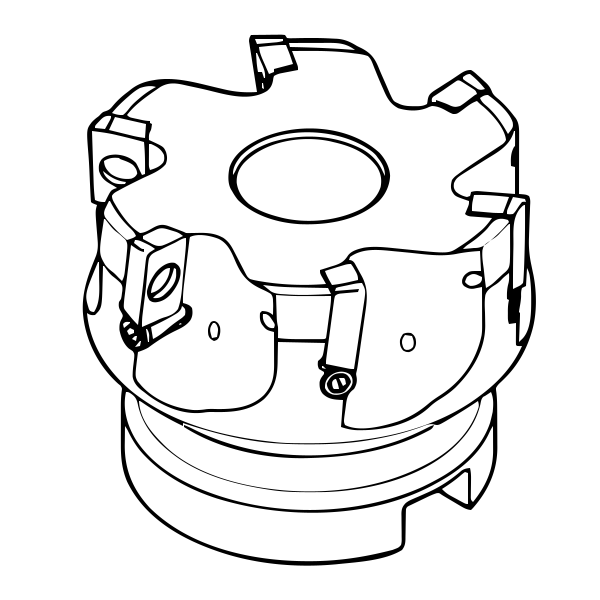
Solid carbide and indexable tools serve different size, access, and production requirements.
Internal or external threads and right- or left-hand threads require a compatible cutter and program; efficiency must be assessed for the application.
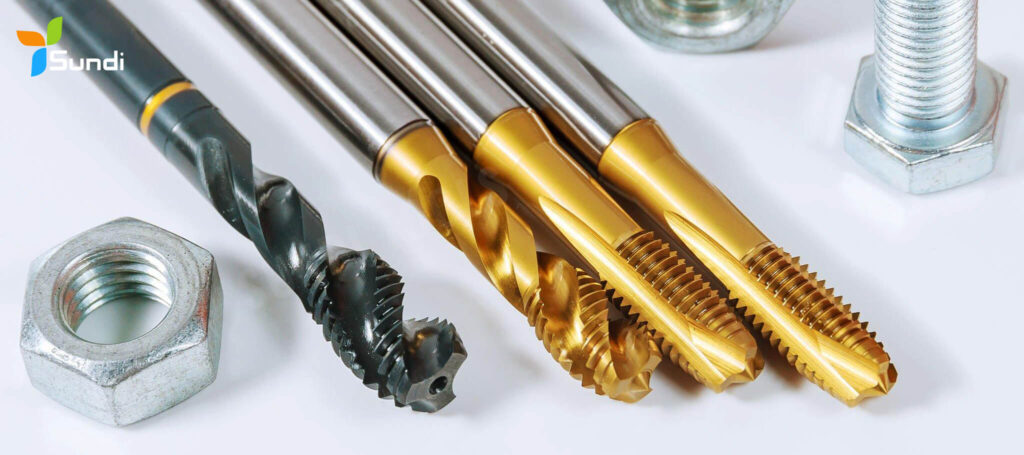
Key Points about thread mill:
Process Principle: The cutter rotates about its own axis while its centre follows a circular path coordinated with axial movement. This helical interpolation generates the thread lead; radial movement alone does not create a helix. For multi-start threads, distinguish lead from pitch when programming.
Material Compatibility: Thread milling can be applied to a wide range of materials, including metals, plastics, and composites. The process is suitable for both internal and external threads.
Thread Variability: Thread milling allows for the creation of threads with various sizes, pitches, and profiles. It’s particularly useful for specialized or custom threads that might not be readily available through standard threading methods.
Precision and Accuracy: The threading tool offers high precision and accuracy, making it ideal for applications where tight tolerances are required.
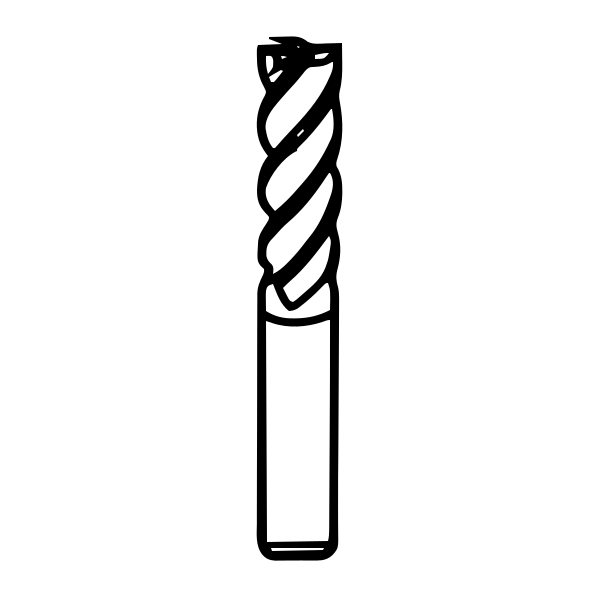
Tool Design: Thread mills may have a single axial thread form or multiple forms, with straight or helical flutes depending on the design. The cutting profile and programmed motion generate the thread; do not confuse flute helix with the thread’s helical path.
Chip Evacuation: Effective chip evacuation is essential during thread milling to prevent chip buildup and potential tool breakage. Proper coolant or lubrication helps manage chip removal.
CNC Machining: Thread milling is often performed using computer numerical control (CNC) machines, which accurately control the tool’s movements and cutting parameters.
Complex Threads: Suitable cutters and programs can produce some multi-start and special threads. Worms and other specialised profiles require specific geometry and process verification; they are not a universal capability of a standard thread mill.
Tool Longevity: Thread-mill life depends on grade, geometry, engagement, material, and cutting data. Taps also have multiple working teeth, so tooth count alone does not establish a life advantage.
Thread Milling vs. Tapping
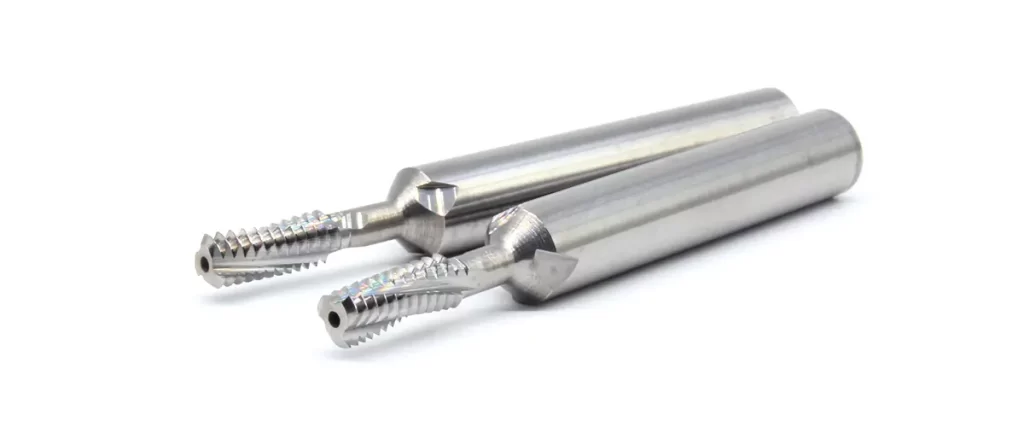
Thread mills and tapping are two common methods used to create threads on workpieces. Each method has its advantages and disadvantages, making them suitable for different scenarios. Here’s a comparison of thread milling and tapping:
Thread Milling:
Process: In thread milling, a rotating tool moves along a helical path to gradually cut threads into the workpiece.
Advantages:
Versatility: A compatible thread mill may cover several thread diameters or specifications within its stated profile, pitch, and reach limits.
Complex Threads: Capable of producing intricate thread profiles.
Thread Strength: Thread strength depends on material, profile, engagement length, and manufacturing quality; thread milling alone does not guarantee a stronger thread or more even stress distribution.
Tool Wear: Compare usable tool life under appropriate conditions for each tool; multiple cutting edges do not guarantee a longer life than tapping.
Custom Threads: Suited for specialized or custom threads.
Bottom Threads: Suitable thread mills can produce threads near a blind-hole bottom, subject to tool-end clearance, usable reach, and the required full-thread length.
Chip Control: The cutter-to-hole clearance can aid chip removal, but toolpath, chip form, and coolant or air delivery still need to suit the process.
Disadvantages:
Slower for Standard Threads: May be slower than tapping for standard threads.
Initial Cost: Thread mill cutters can be costlier than taps.
Tapping:
Process: A tap advances axially with its rotation synchronised to the thread lead. Cutting taps remove material, while forming taps displace suitable material. Repeated axial pecking is not the defining action of tapping; use the cycle specified for the tool and application.
Advantages:
Faster for Standard Threads: Tapping is generally faster for standard threads.
Simplicity: Simple process, especially for standard threads.
Lower Initial Cost: Taps are often more affordable than thread mill cutters.
Quick Changeover: Setup time depends on toolholding, alignment, hole preparation, and the machine’s tapping capability; minimal setup is not guaranteed.
Disadvantages:
Thread Range: Each tap is generally made for a specific thread size, pitch, and form. Special taps can produce non-standard threads where the design and application permit.
Cutting Loads: Tapping creates torque and axial loads. Incorrect hole preparation, synchronisation, alignment, or chip evacuation can cause failure; choose a suitable tap and process for the material.
Thread Quality: Either process can meet specified tolerances when properly controlled. Compare measured thread quality rather than assuming tapping is inherently less precise.
Tool Wear: Cutting taps have multiple cutting teeth, and forming taps use forming lobes. Their usable life depends on design and operating conditions; a single-tooth comparison with thread mills is incorrect.
Bottom Threads: The tap’s lead and the hole-bottom clearance limit the achievable full-thread depth. Select the tap style and hole depth for the requirement.
Main types of thread milling cutters
Single-Form, Partial-Profile Thread Mills:
A single axial thread form can reduce the number of simultaneously engaged forms. Some partial-profile tools cover a specified range of pitches and diameters, but profile angle, tip geometry, clearance, and reach still limit compatibility.
Check the supplier’s range rather than assuming every pitch or root form is possible.
Multi-Form Thread Mills:
Multiple axial forms can machine several thread turns during the same helical circuit and may reduce cycle time. Form spacing fixes the compatible pitch for that tool.
A full-profile design must also match the specified thread form; neither design guarantees final tolerance without correct programming and verification.
Helical-Flute Thread Mills:
Helical flutes can provide progressive engagement in suitable applications, but they are not mandatory for every high-speed operation. Cutting forces and finish depend on tool design, engagement, material, and setup; confirm suitability for thin walls or long reach.
Straight-Flute Thread Mills:
Straight-flute designs are available for specified threading applications. Their thread forms and approved internal or external uses depend on the tool design; flute shape alone does not make them best for the fastest cutting.
Chamfering Thread Mills:
Some combination tools incorporate chamfer-cutting edges so that compatible threading and chamfering operations can be performed with one tool. These are cutting features, not countersunk holes in the tool head. Check the permitted sequence, dimensions, and clearance.
Choosing Between Thread Milling and Tapping
Material and Thread Type: Compare cutter or tap compatibility with the actual material, thread form, diameter, depth, and machine. Thread milling can offer useful flexibility, while tapping may offer a shorter cycle for suitable standard threads; neither advantage is universal.
Efficiency: For mass production of standard threads, tapping is often more efficient due to its faster cycle times.
Accuracy: Thread milling permits programmed size adjustment, but achievable accuracy depends on the cutter, machine, and process. Tapping can also meet close tolerances; verify either method with appropriate thread inspection.
Tool Longevity: Compare acceptable threads per tool and total process cost under the actual conditions. Thread mills do not inherently last longer simply because they have multiple cutting edges.
Versatility: If your project involves diverse thread types or custom threads, thread milling offers more versatility.
Initial Cost: Thread Taps have a lower initial cost, making them suitable for simpler applications.
FAQs
Q: Can thread mills create threads of various profiles?
A: Appropriate thread mills can produce profiles such as V-threads or buttress threads, but each requires compatible cutting geometry and a suitable program. One ordinary cutter does not cover every profile.
Q: Is thread milling suitable for blind holes?
A: Yes, with a suitable cutter, prepared hole, and program. Check usable thread depth, bottom clearance, entry and exit moves, and chip evacuation.
Q: What materials can be threaded using thread mills?
A: Thread mills can be used on a wide range of materials, including metals, plastics, and composites.
Q: Are thread mills suitable for high-production environments?
A: Thread milling can serve low- or high-volume production when its cycle time, tool life, quality, and flexibility suit the job. Compare the actual process with tapping before selecting it for production.
Q: Can thread mills be used in CNC machines?
A: Yes, thread milling is well-suited for CNC machines and can be programmed for precise thread creation.
Conclusion
Thread milling has revolutionized the process of creating threads, offering enhanced precision, versatility, and efficiency. By understanding the intricacies of thread mills, their types, and best practices, machinists can achieve exceptional results in their threading endeavors.
Tagged tech news