










How to choose the right type of thread tap
Selecting a suitable thread tap helps reduce the risk of tool breakage, damaged threads, and rework, but correct hole preparation, alignment, lubrication, and cutting conditions also matter. This guide explains flute styles, chamfer lengths, tool materials, and selection factors for different tapping applications.
Contents

Common Types of Thread Taps
Spiral Point Tap (Gun Tap)
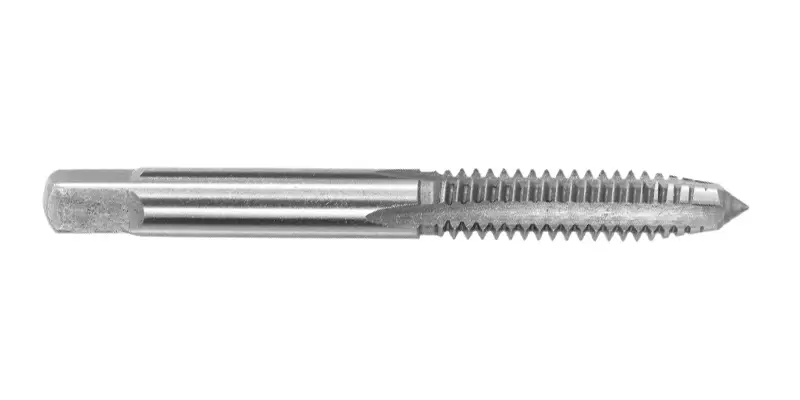
Suitable for through holes with adequate chip clearance.
These taps for cutting threads use a spiral point that pushes chips ahead of the cutting zone. Select the design for material and thread depth. Check chip clearance: chip accumulation can limit blind-hole use. A lathe or drill press requires a suitable tapping arrangement; ordinary drilling feed does not automatically provide the required synchronization.
Spiral Flute Tap
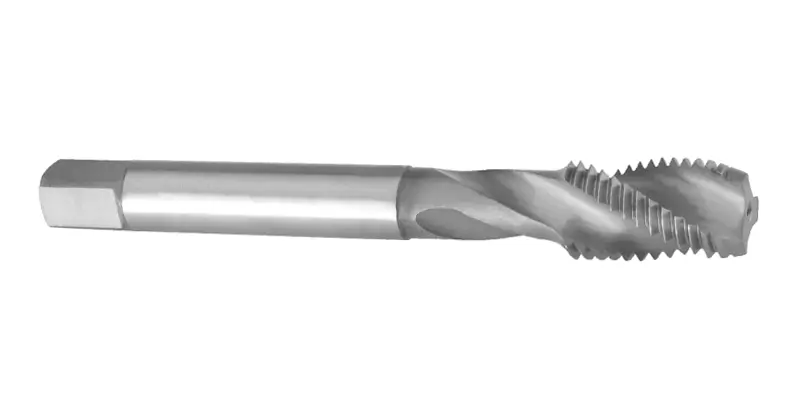
Suitable for blind holes in appropriate materials.
Spiral flute taps direct chips back toward the hole entrance. Choose helix, flute geometry, and chamfer for the material and depth. Chip evacuation occurs during cutting and is not guaranteed by a reversing cycle; wood or plastic requires a tap and process specifically suited to that material.
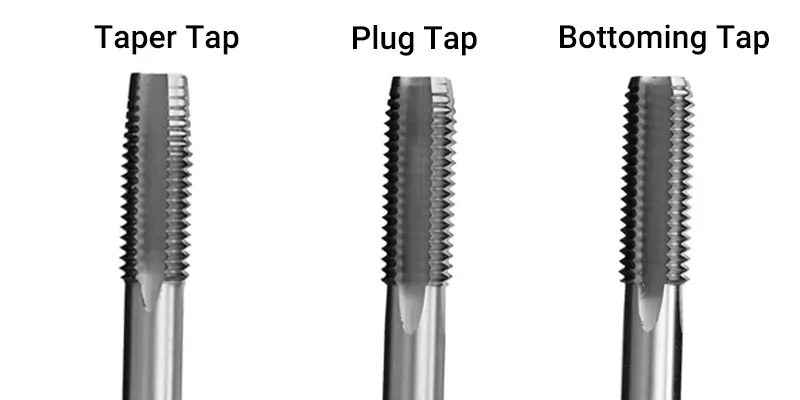
Bottoming Tap
Full threads closer to the bottom of a blind hole.
A bottoming tap has a short cutting chamfer; it does not cut a flat hole bottom or remove the need for clearance. Some hand-tapping procedures use a taper or plug tap first, while suitable machine taps with short chamfers can start in a correctly prepared hole. Follow the specific tool’s procedure.
Plug Tap
A plug tap has an intermediate cutting-chamfer length.
The exact number of chamfer threads depends on the standard and product; flute style and material suitability must be selected separately. Possible uses include:
Through-holes when the tap’s flute design and material range suit the job.
Blind holes with enough clearance for the chamfer, required thread depth, and chips.
Maintenance work where the thread specification and approved tapping procedure match the tool.
Taper Tap
A taper-chamfer tap has a longer cutting lead that spreads cutting over more teeth and can help start hand tapping.
The exact chamfer length depends on the product. It is distinct from a tap for a tapered pipe thread. Consider:
Material compatibility and chip behavior, including when tapping brittle materials.
A suitable guide or tapping fixture to maintain alignment; the chamfer alone does not guarantee a perpendicular thread.
Pipe thread taps for NPT/NPTF have a tapered thread form, which is different from the cutting chamfer of a taper hand tap. Match the specified thread standard.
Key Factors to Consider When Choosing a Thread Tap
Picking the right thread tap isn’t guesswork – here’s what actually matters in the shop:
Hole Type and Chip Evacuation
: Spiral point taps commonly serve suitable through-holes, while spiral flute taps can extract chips from suitable blind holes. Select chamfer length to achieve the required full thread depth with clearance. Flute style and bottoming chamfer are compatible design features, not necessarily separate sequential tools.Material Matters More Than You Think
Aluminum and other materials prone to adhesion: Choose a tap geometry, surface treatment, and lubricant recommended for the alloy. Uncoated tools can suit some applications, but neither an uncoated surface nor a spiral flute guarantees prevention of built-up material.
Stainless steel and other demanding materials: Select the substrate, coating, chamfer, and flute geometry for the specific grade and operation. Cobalt-alloyed HSS or suitable coated taps may be options, but gold color or a TiN label does not guarantee performance.
Pipe threads: Match the exact standard and sealing design, including whether the thread is tapered or parallel. Pipe thread taps for NPT/NPTF are not interchangeable with every pipe-thread system, and thread form alone does not guarantee a leak-tight joint. Follow the specified gauging and assembly requirements.
Machine vs Hand Tapping? Big Difference
Machine tapping: Use a machine, tapping head, or holder arrangement that controls the required feed per revolution and reversal. Choose flute geometry for chip evacuation and verify chip clearance; automated motion does not eliminate the need to monitor the process.
Hand tapping: Use the tool supplier’s recommended starting, cutting, and finishing sequence. A taper, plug, and bottoming sequence may be appropriate, but is not mandatory for every tap or hole. Keep the tap aligned and provide the required hole depth and chip clearance.
Thread specification
: Match nominal diameter, pitch or TPI, thread form, handedness, and tolerance to the drawing. Use the correct tap-drill size and thread gauge; UNF, UNC, and metric threads cannot be selected by pitch alone.
Which Thread Tap Material Should You Choose?
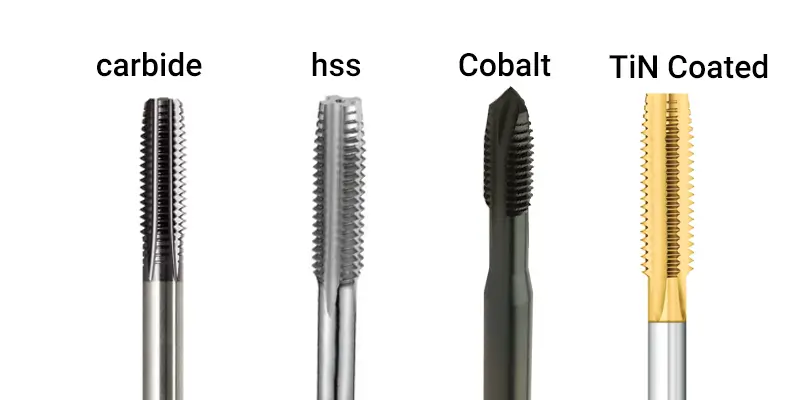
| Tool substrate / coating | Possible applications | Selection limits | Cost assessment |
|---|---|---|---|
| High-Speed Steel (HSS) | Suitable general-purpose tapping in materials within the product range | Check hardness, chip behavior, and cutting conditions | Compare tool price and cost per acceptable thread |
| Cobalt-alloyed HSS (HSS-E) | Suitable grades for demanding materials such as selected stainless steels | Choose geometry and cutting data for the actual alloy | Depends on product, life, and production conditions |
| TiN-Coated HSS | Applications approved for the complete coated tap design | Do not exclude all non-ferrous metals or infer suitability from coating alone | Compare with other coated and uncoated options |
| Carbide | Application-specific tapping where the material and setup suit the design | Requires suitable alignment and rigidity; not a general recommendation for all composites or ceramics | Include tool life, breakage risk, and any reconditioning |
For pipe thread taps, select the substrate, surface treatment, and cutting fluid for the workpiece and required thread standard. TiN-coated HSS is one option, not a universal requirement, and coating corrosion resistance alone does not ensure an accurate or sealed thread.
Conclusion & Quick Selection Guide
Match Tap to Hole:
Through-hole: Consider a spiral point or another tap design recommended for the material and chip behavior.
Blind hole: Select suitable chip evacuation and chamfer length; a spiral flute tap may already have a bottoming chamfer, so two separate taps are not always needed.
Select Substrate and Coating Together:
Steel and stainless steel: Choose a complete tap grade and geometry recommended for the specific material and operation.
Aluminum: Compare suitable bright-finish or coated taps with the recommended geometry and lubrication.
Pipe Threads Demand Precision: Match the specified thread standard, taper or parallel form, gauging method, and lubricant; not all pipe threads use a tapered tap.
When in Doubt: Consult the tool supplier using the material, hole type, thread specification, machine, and required depth rather than relying on an unsupported general-purpose percentage.
Taking time to select the right thread tap can reduce rework on damaged threads. Now – choose suitable taps for cutting threads and use them with the correct setup and cutting conditions.