



6 Advantages of Using PCD Cutting Tools in Your Manufacturing Operations
In this article, I’m going to show you the advantages of PCD cutting tools. If you’re still hesitating about whether or not to use them for your machining, don’t worry. By the time you finish reading, you’ll have a better understanding of how to choose, based on your own needs, whether PCD cutting tools are the right option for you.
Table of Contents
Overview of PCD Cutting Tools
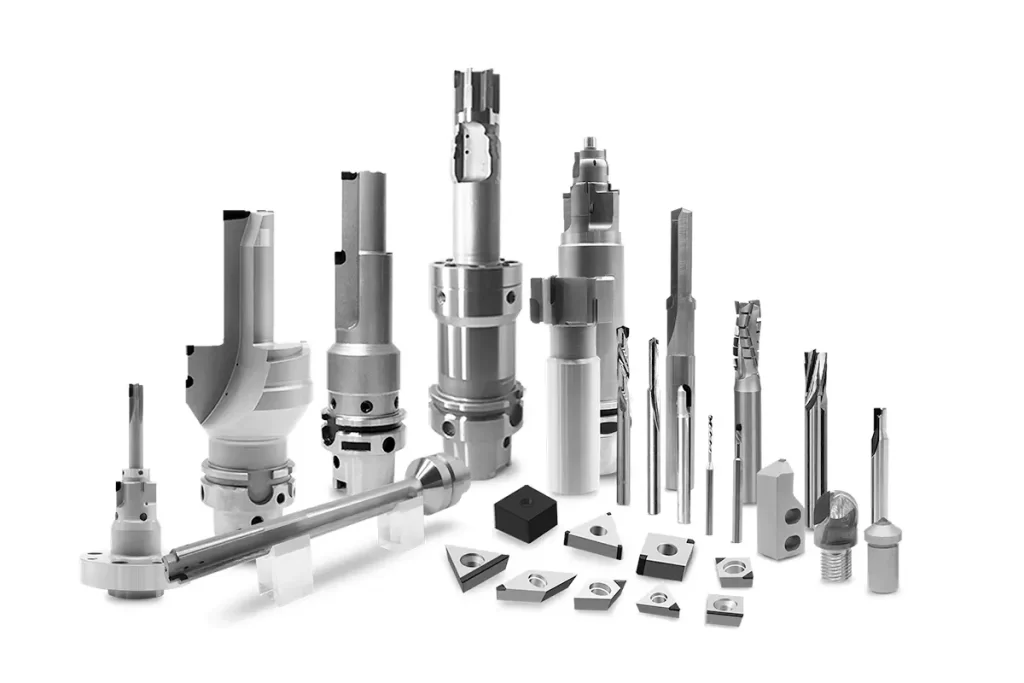
PCD (polycrystalline diamond) is a diamond-based cutting material valued for its hardness and abrasion resistance. It can be an effective option for suitable non-ferrous alloys and abrasive non-metallic materials. Whether it improves a process depends on the work material, tool grade, edge geometry, and cutting conditions. Evaluate tool life, part quality, cycle time, and cost per acceptable part rather than relying on a universal hardness or productivity multiplier.
Benefits of the PCD Cutting Tools
1. Exceptional Wear Resistance of PCD Cutting Tools
PCD cutting tools use a polycrystalline diamond cutting region; conventional PCD grades contain diamond grains and a metallic binder, and many tool blanks incorporate a tungsten carbide support. Grades and constructions differ. Suitable PCD tools can offer strong abrasion resistance in applications such as silicon-aluminum alloys, fiber composites, and abrasive wood-based boards. Titanium machining requires a specifically recommended grade and validated process; it should not be presented as a general application for every PCD tool.
2. High Cutting Speed and Efficiency with PCD Cutting Tools
In suitable applications, PCD tools can support higher productivity than an existing carbide or HSS process. The improvement is application-specific: cutting speed, feed rate, and material removal rate are different measures and should be compared separately. Use the tool maker’s cutting data and validate the result on the machine. Higher speed must still meet tool-life, dimensional, and surface-quality requirements; it does not eliminate wear or scheduled tool changes.
3. Superior Surface Finish Quality Achieved by PCD Cutting Tools
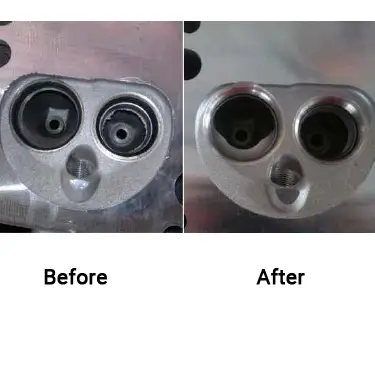
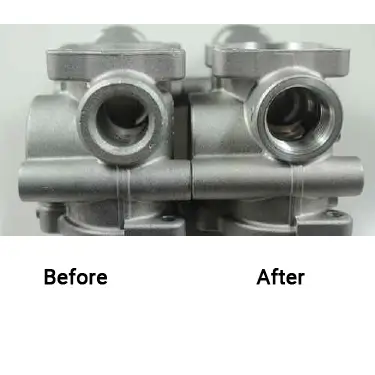
A properly selected PCD tool can help maintain the cutting edge and produce a consistent surface on suitable materials. This may reduce secondary finishing when the machined surface meets the part specification. Results still depend on the PCD grade, edge preparation, runout, rigidity, cutting parameters, and work material. Confirm the required finish and dimensional quality through inspection rather than assuming that PCD or a higher speed guarantees the result.
4. Long Cutting Lifetime of PCD Cutting Tools
PCD can extend usable tool life in appropriate abrasive-material applications, potentially reducing tool changes and downtime. The benefit must be measured for the actual process. Compare acquisition cost, achievable reconditioning, tool-change time, cycle time, and scrap or rework when calculating cost per acceptable part. High production volume can make longer tool life valuable, but the higher purchase price is not automatically justified in every job.
5. Excellent Thermal Conductivity in PCD Cutting Tools
PCD’s high thermal conductivity can help dissipate cutting heat, but this property alone does not make coolant unnecessary. Select dry machining, minimum-quantity lubrication, or wet machining according to the specific tool, work material, chip evacuation requirements, and process guidance. Some PCD tools are designed for validated dry applications; that result should not be extended to every aluminum, copper, composite, or plastic operation. Check heat control and part quality before changing the existing cooling strategy.
6. Versatility of PCD Cutting Tools in Material Processing
PCD tools are available for a range of applications, but different materials may require different grades, edge geometries, and cutting data. For CFRP or GFRP, a suitably designed tool and supported cutting process can reduce delamination and fiber pull-out; edge condition, laminate structure, support, and feed remain important. For precision components, verify surface and dimensional requirements in the intended material. Switching materials or machining a stack requires process validation, not an assumption of unchanged performance.
Conclusion
PCD can be a useful choice for selected non-ferrous alloys, abrasive wood-based boards, and fiber-reinforced composites. Ceramic applications require confirmation of the ceramic composition, condition, and suitable tool design. Select the tool for the actual operation and verify its effect on quality, usable life, and cost per acceptable part before adopting it for production.
SUNDI Tools is a professional cutting tool manufacturer. We are committed to providing high-quality cutting tools to our customers. Our engineering team has decades of industry experience and can offer you one-stop tooling solutions. Contact us now to learn more about our products!