



A Comprehensive Guide to Deep Hole Drilling
In the manufacturing industry, various techniques are used to produce precise holes. One widely used method is deep hole drilling. Deep hole drilling allows for greater depths than typical drills allow. They are used today to power devices such as medical instruments, aerospace engines, transportation vehicles, etc. Let’s take a look at what deep hole drilling is and how it works, along with its importance.
Contents
What is Deep Hole Drilling?
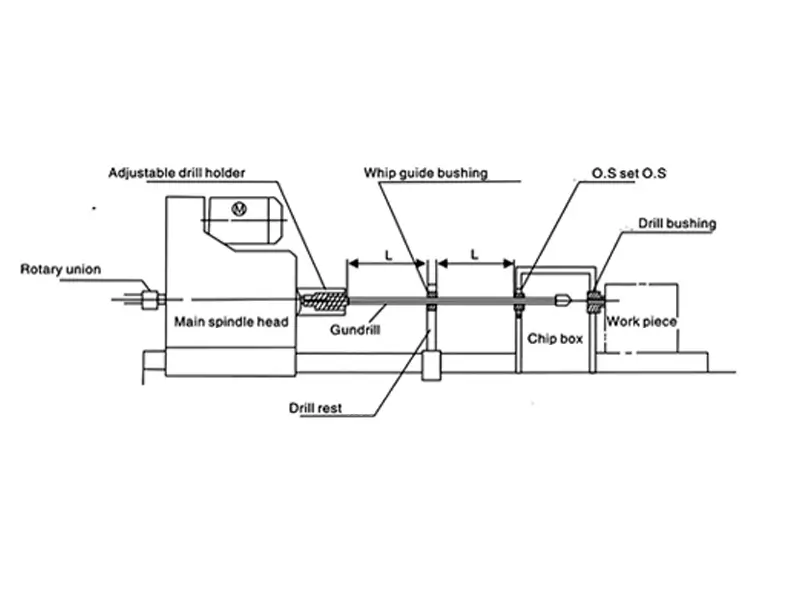
Deep hole drilling commonly refers to holes with a depth-to-diameter ratio around 10:1 or greater. A one-inch-diameter hole ten inches deep has a 10:1 ratio. Suitable deep-hole twist drills and dedicated systems can reach these depths; chip evacuation, guidance, and tool limits determine the appropriate method.
Deep-hole systems manage chip evacuation and tool guidance using a method-specific coolant supply and support arrangement. Guide pads on suitable drilling heads help support the cut, but do not eliminate drift or guarantee perfect alignment.
When a deep hole does not break through the opposite side, the same chip-control rules apply to blind hole drilling.
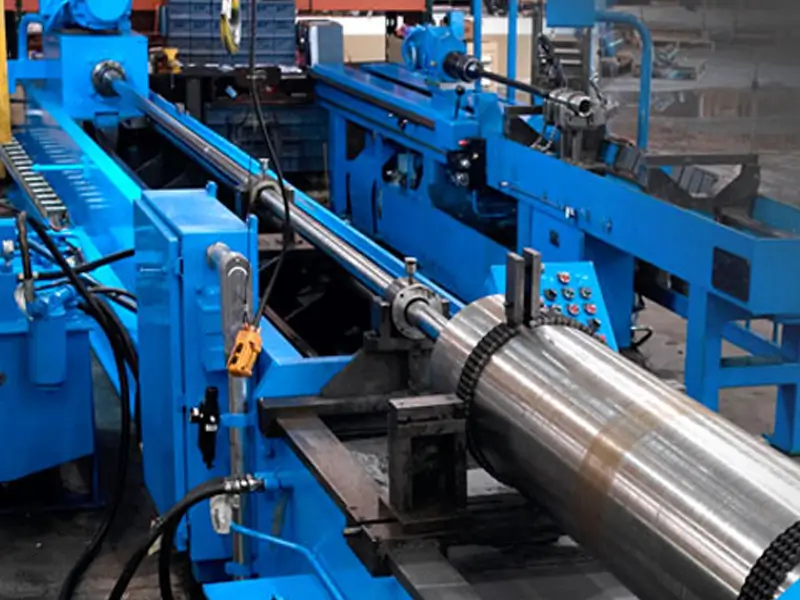
Deep Hole Drilling Process
The deep hole drilling process requires proper preparation and alignment of the drill. Let’s take a look at how deep hole drilling is carried out:
How It Works
Relative rotation and axial feed remove material; depending on the machine, the tool, workpiece, or both may rotate. Coolant delivery and feed must suit the selected drilling system. Coolant has two major purposes:
- Cooling the cutting edge of the drill to keep it from overheating
- Removing metal chips from around the work area as the hole is drilled
Without providing cooling and cleaning, the process would not work.
Guide pads on applicable drilling heads support the tool against the bore wall. Straightness also depends on entry guidance, alignment, workpiece condition, support, and cutting parameters.
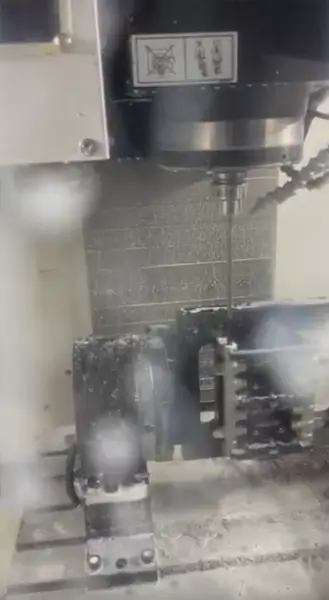
Types of Deep Hole Drilling Methods
There are three main types of deep hole drilling methods, each with unique advantages and applications.
Gun Drilling
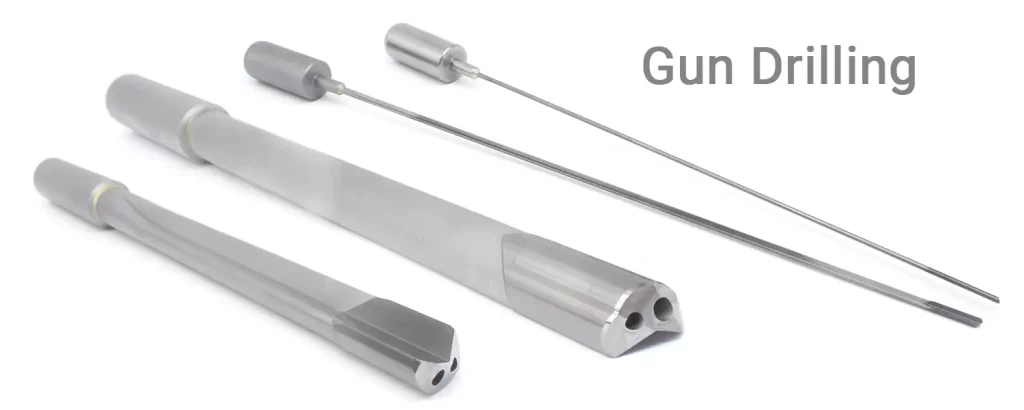
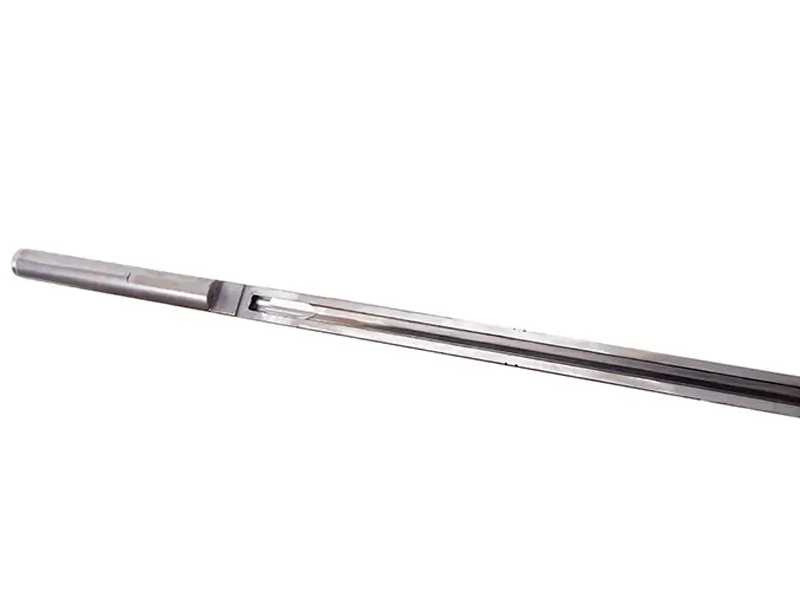
Gun drills commonly use a single cutting lip, an internal coolant passage, and an external chip-return groove. The original 1-40 mm diameter range is illustrative, not a universal limit; verify the selected tool and machine capacity. Guidance helps stability but does not guarantee centering.
Gun drilling is often suitable for small, deep holes requiring controlled straightness and finish. Selection depends on the hole specification, material, tooling, and machine capability.
BTA Drilling (Boring and Trepanning Association)
BTA (Boring and Trepanning Association) drilling supplies coolant around the outside of the drill tube and returns chips and coolant through its interior. The original 18-250 mm range is illustrative; actual diameter and depth limits depend on the system.
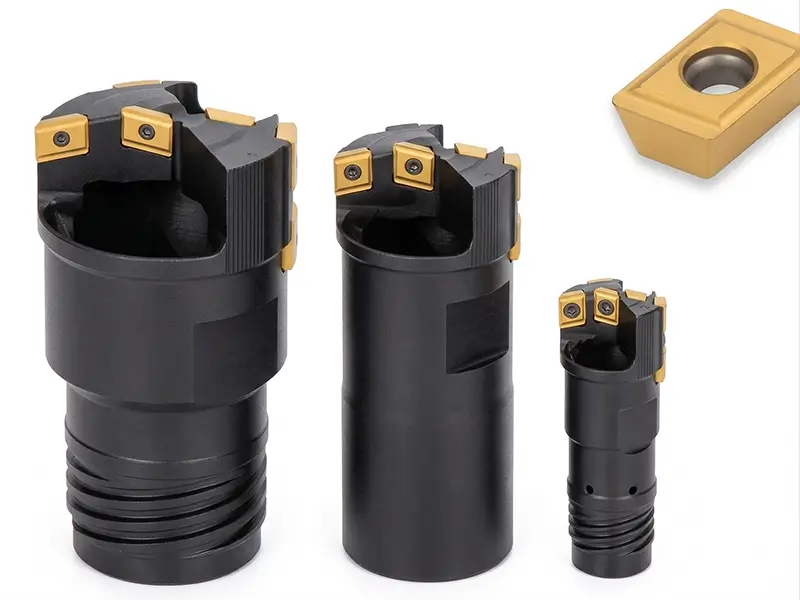
Ejector Drilling
Ejector drilling uses concentric tubes. Coolant flows between the tubes, and an ejector effect assists chip and coolant return through the inner tube. The original 25 mm to over 250 mm range must be checked against the chosen system; capacity is finite.
Ejector drilling is an option for suitable machines and hole requirements. It is not inherently the deepest, most accurate, straightest, or smoothest drilling method; compare validated application capability.
Comparison of Deep Hole Drilling Methods
Gun drilling, BTA drilling, and ejector drilling serve different application ranges. Select by diameter, depth, material, quality requirements, machine support, and coolant-system capability; no method is best for every demanding application.
Hole Sizes That Can Be Drilled
Gun drilling: the original 1-40 mm range is illustrative; confirm the selected system capacity.
BTA drilling: the original 18-250 mm range is illustrative; confirm the selected system capacity.
Ejector drilling: the original 25 mm to over 250 mm range is illustrative; confirm the selected system capacity.
Speed of Drilling
Compare cycle time using the actual material, hole dimensions, cutting data, chip control, and handling time. BTA can offer high productivity in suitable applications, but ejector drilling is not universally the fastest method.
Costs
Investment depends on existing equipment, tooling, coolant delivery, support, and production requirements. Compare total cost per accepted part; no drilling method guarantees the lowest initial cost or highest return.
Advantages of Deep Hole Drilling
Precision
Deep-hole drilling can achieve controlled straightness and finish with an appropriate process. The original 0.1 mm per 100 mm figure is not a universal capability or acceptance tolerance; use the drawing specification and verified process results.
Versatility
Steel, aluminium, titanium, and specialty alloys can be drilled using deep hole drilling. It is also ideal for use with both hard and soft materials, and is extremely adaptable to varying production volumes.
Reduced Time and Cost
Dedicated tooling can improve productivity. Some applications still require reaming, honing, or other finishing to meet size and surface specifications. Automation can reduce manual handling but does not remove the need for process monitoring.
Consistent Product Quality
Stable coolant delivery supports repeatable chip removal and tool performance. Consistent quality also requires controlled tool wear, alignment, material condition, and inspection; coolant alone cannot guarantee identical results at every depth.
Limitations of Deep Hole Drilling
High Initial Investment
Specialty machines for deep hole drilling require a substantial initial investment. Tooling costs for deep hole drilling will be greater than for a regular drilling system. Ongoing maintenance costs will also add to the overall costs involved.
Specialized Skills Required
The setup of the deep hole drilling equipment requires precision and special skills. The alignment procedure and associated processes must be completed with caution and attention to detail. To operate deep hole drilling equipment, operators must complete a specialized training program that will require both time and resources.
Speed Limitations
Greater depth generally adds cutting and chip-removal time when other conditions are comparable. Actual cycle time also depends on tooling, feed, handling, and any tool changes.
Applications of Deep Hole Drilling
Aerospace Industry
Coolant passages are necessary for the reliable functioning of aircraft engines.
- Hydraulic channels for precise and efficient usage of the landing gear
- Cooling systems within turbine blades
- These are based on deep hole drilling.
Automotive Industry
Engine blocks need lubrication systems with oil passages. Fuel injection systems require the ability to accurately deliver fuel, and hydraulic systems in transmissions use hydraulic passageways. Deep hole drilling is used in these applications.
Medical Devices
Deep-hole drilling can produce internal passages in selected surgical instruments and cannulated components. The passage function, material, cleanliness, and inspection requirements must follow the device design; drilling a hole alone does not establish patient safety.
Oil & Gas
Drilling collars need internal channels to carry away drilling fluids. Valve bodies need channels that control fluids and pipeline components require deep holes to ensure continuous fluid flow. Deep hole drilling is utilized for these applications.
Firearms
To create a rifle barrel, it is imperative to drill perfectly straight bores; suppressors require precisely drilled internal chambers; and various gun components utilize deep hole drilling to manage the gas cooling and/or passage process.
Mold & Die Making
The majority of plastic injection molds are designed with cooling channels running through their length; die cast molds are designed with temperature control channels; and drilled channels can improve the quality of molded parts, reduce the time required to complete a cycle, and yield consistent results for each cycle.
Heavy Machinery & Crane Industry
Some hydraulic components require accurately finished bores, while selected crane boom pins and shafts contain lubrication passages. Deep-hole drilling may form these features, with subsequent finishing where required. Component safety and load capacity depend on the complete design, manufacture, and inspection process.
Tools for Deep Hole Drilling
Equipment Needed
Use equipment qualified for the required depth, diameter, guidance, and coolant delivery. Dedicated deep-hole machines or suitably equipped machining centres may be appropriate. Do not assume that an ordinary drill press provides the necessary support and chip-control capability.
Types of Drills Used
Gun Drills – Gun drills are a single-lip drill that utilizes internal passages in the drill for cooling. BTA Tools – BTA tools are tubes that supply cooling fluid externally to the drill. Ejector Drills – Ejector drills are double-tube drills that allow for improved cooling and chip removal due to the design.
Materials Used to Make Drills
Deep-hole tools may use solid carbide, carbide tips, or replaceable cutting elements with suitable bodies. Select substrate, geometry, coating, and support for the application; not every drill has a tool-steel body or benefits from the same coating.
Maintenance Needed for Deep Hole Drilling Equipment
Regular inspection of deep hole drilling equipment is extremely important because failing to perform regular checks could lead to an expensive failure. All coolant systems must be maintained correctly and monitored for proper performance. Proper handling and storing of tools will greatly increase the life of your tools. Tools that are worn or have not been aligned properly will significantly affect the accuracy and finish of your holes.
FAQs About Deep Hole Drilling
What depth-to-diameter ratio qualifies as deep hole drilling?
A depth-to-diameter ratio around 10:1 or greater is a common deep-hole convention rather than a universal boundary. Much higher ratios are possible with suitable specialised systems; confirm capacity for the actual application.
Can deep hole drilling work on hardened materials?
Some hardened materials can be drilled with tools and cutting conditions specifically rated for their grade and hardness. Check manufacturer guidance; carbide and coating alone do not guarantee suitability.
What is the maximum deviation allowable when drilling straight deep holes?
The drawing defines allowable straightness deviation. The original 0.1 mm per 100 mm figure is not a universal limit, and gun drilling is not always the straightest option. Confirm measured capability for the selected setup.
What are the primary causes of drifting of deep holes?
During the drilling process, there are various material inconsistencies that can cause bends while the drill bit is still in the mounting fixture. Also improper tool setup, and anything from worn or damaged guide pads to low coolant pressure, causing a loss of accuracy.
Does deep hole drilling cost more when compared to standard drilling?
Deep-hole work can require additional tooling and equipment, but cost per accepted hole depends on depth, material, production volume, existing capacity, and finishing requirements. It is not necessarily higher in every comparison.
Conclusion
Deep-hole drilling produces demanding internal features using suitable tooling, guidance, coolant delivery, and process control. Select and validate the system against the actual drawing rather than relying on general claims of perfect accuracy.