




Cutting Tools for Camshaft Machining: Tool Selection Guide
Finding the right cutting tools for camshaft machining is the difference between a high-performance engine and a pile of scrap metal. You must balance speed with precision because camshafts move from soft turning to hard grinding stages. This guide shows you how to select tools that lower your cost per part.
For related engine components, see how cutting tools for cylinder head machining connect resurfacing, valve seats, guides, and porting.
Contents
Overview of Camshaft Machining Stages and Tooling
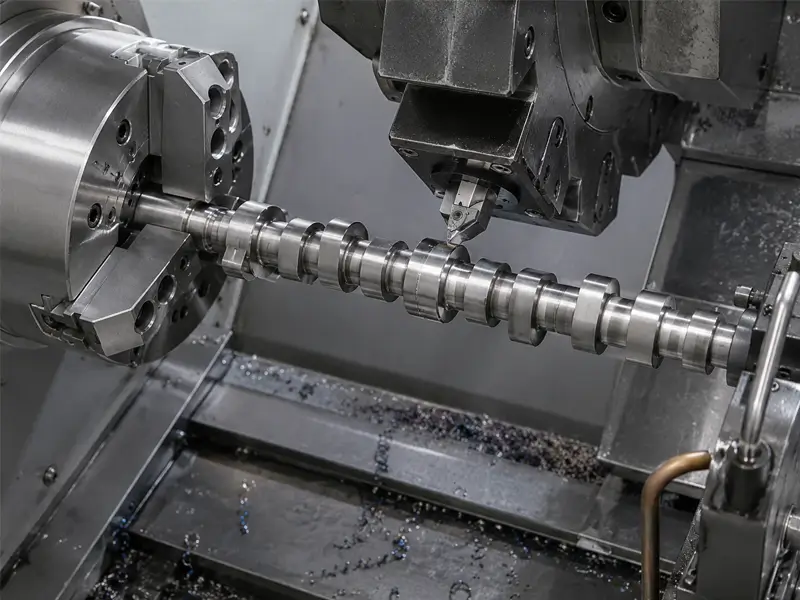
Camshaft production involves several stages, from casting or forging through rough machining, heat treatment, and finishing. The required surface texture, hardness, and profile depend on the component drawing and manufacturing route.
Rough Turning and Journal Machining
First, you must remove large amounts of material from the journals. The journal is the part of the shaft that remains in the engine block bearings. You usually use heavy-duty carbide inserts here. The goal is high metal removal rates without breaking the tool. Because the material is often uneven in this stage, your tools must handle interrupted cuts.
Cam Lobe Rough and Semi-Finish Milling
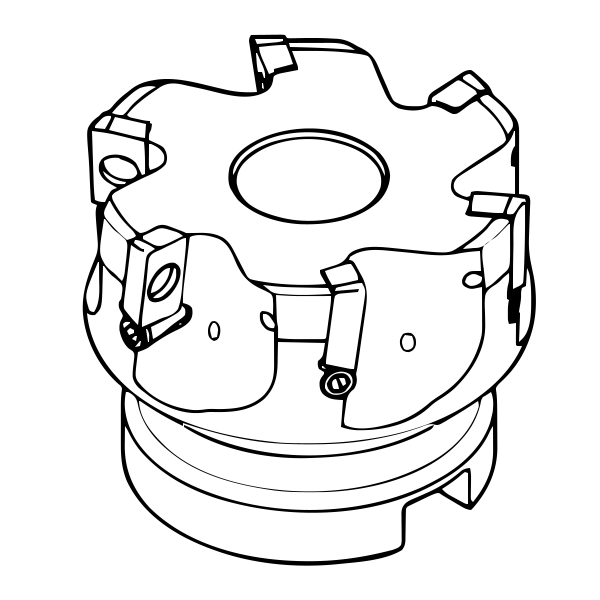
Next, you focus on the lobes. These are the egg-shaped parts that open the valves. Milling these is difficult because the tool path is not a simple circle. You need cutters that can handle the changing angles of the lobe. Most shops use indexable milling cutters to keep the process fast and the costs low.
Post-Hardening Finish Machining and Grinding
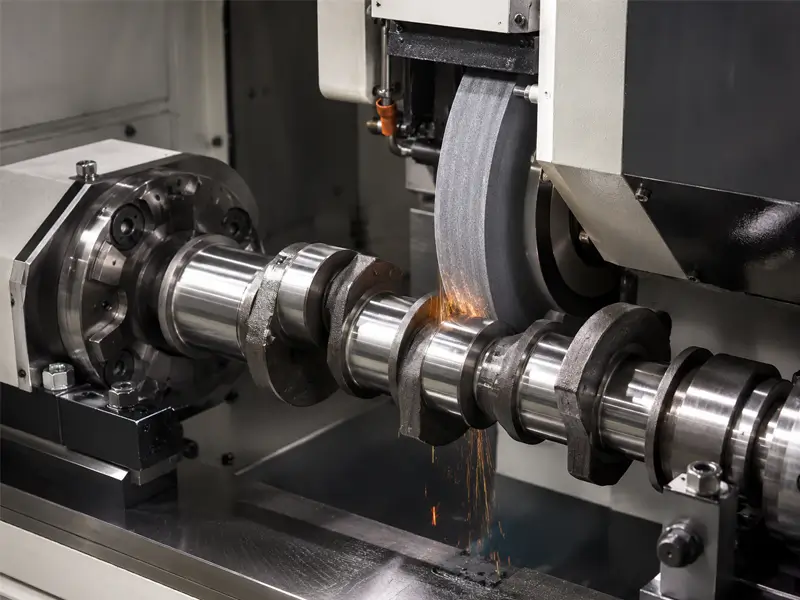
After roughing, the camshaft usually goes through heat treatment to improve surface hardness and wear resistance. After heat treatment, hardened camshaft surfaces often require grinding or hard turning solutions. For hard turning or hard finishing operations, CBN inserts are often preferred because of their heat resistance and wear resistance. At this stage, the goal is to achieve the required tolerance, surface finish, and profile accuracy for stable engine performance.
Carbide Inserts and Milling Cutters
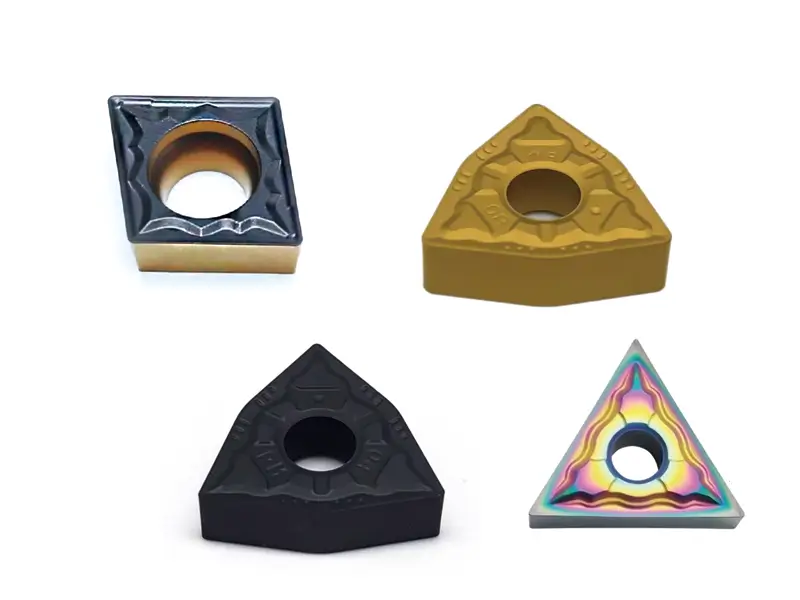
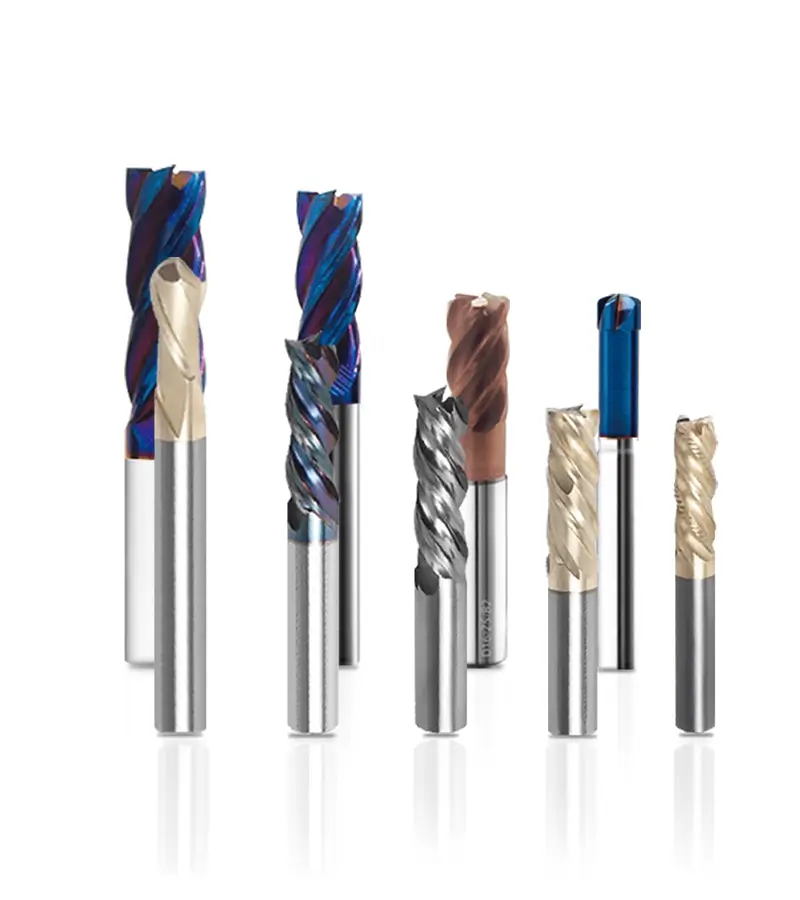
Carbide tools are widely used in camshaft roughing and semi-finishing. Their suitability and cost depend on the work material, tool grade, geometry, and production conditions.
What Carbide Inserts Are Used For
You use carbide for journal turning and rough milling of the lobes. These tools are good for removing the outer skin of a casting. You want a tool that stays sharp despite the abrasive nature of cast iron or forged steel.
Insert Grades and Coatings
The material of your camshaft changes everything.
For Cast Iron
Consider K-class carbide for cast iron. This is an application-group designation, not a complete grade specification; select the actual substrate, coating, and geometry for the iron type and cut.
For Forged Steel
For forged steel, consider carbide grades intended for the ISO P application group. Match toughness, wear resistance, and chip control to the steel condition and operation; the group label alone does not specify these properties.
Coatings
AlTiN is one possible coating, not a universal requirement. Select a qualified coating and carbide grade for the material, operation, and cooling strategy; confirm cutting data with the tool supplier.
Indexable Carbide Milling Cutters and Solid End Mills
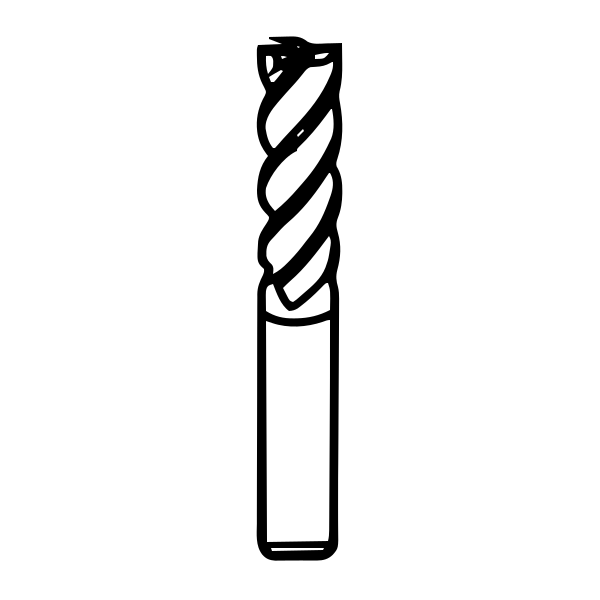
For lobe milling, Indexable cutters use replaceable inserts and may reduce tool replacement costs. Small features or restricted access may instead favor solid carbide end mills. Compare accessibility, runout, rigidity, attainable profile accuracy, and cost for the actual operation.
Edge Prep, Chipbreaker, and Insert Shape
Edge preparation includes honing or chamfering the cutting edge. A sharper edge can reduce forces; a stronger preparation may help withstand roughing loads. Select chipbreaker geometry for the material and feed range. CNMG inserts offer a robust shape, but the number of usable edges depends on the insert design, holder, and operation.
CBN Inserts for Hard Finishing
After hardening, select finishing tools for the actual hardness, material, allowance, and surface requirements. Above 45–50 HRC, CBN is a common option for suitable hard-turning operations, but the threshold is not a universal exclusion limit for every carbide or ceramic grade.
When to Consider CBN for Hardened Cam Lobes
For surfaces in the 50 to 65 HRC range, qualified CBN grades may provide useful wear resistance in suitable finishing operations. Performance depends on the work material, interruptions, edge preparation, rigidity, and thermal conditions; hardness alone is not a complete selection rule.
Solid CBN Inserts vs. Tipped CBN Inserts
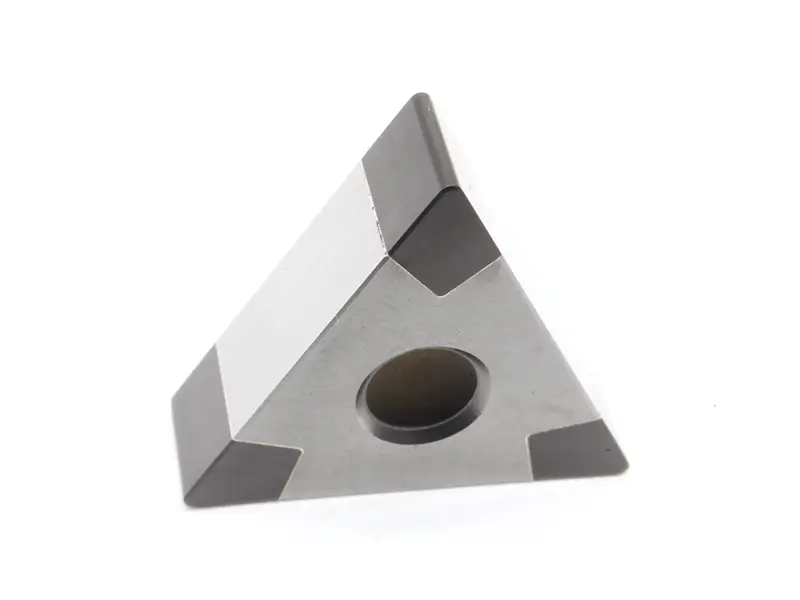
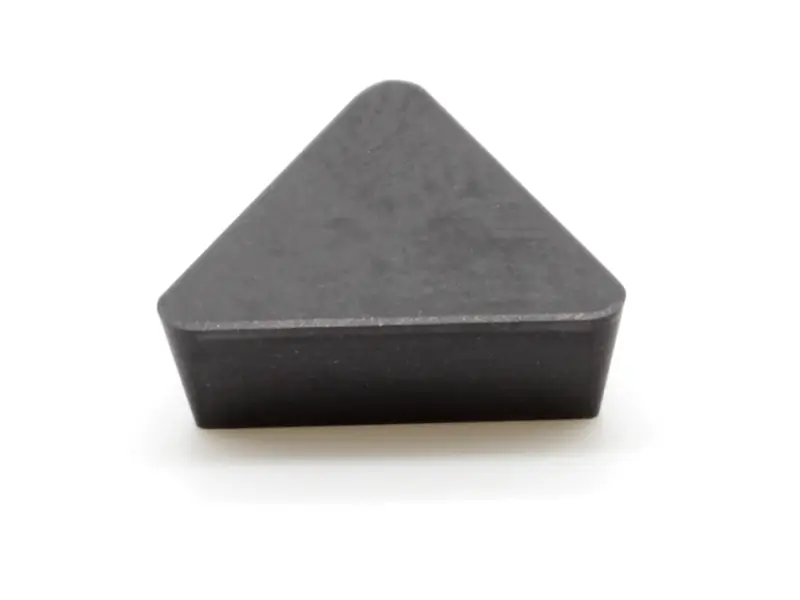
You will see two types of CBN tools.
Solid CBN inserts use a sintered CBN-based material, which can include a binder. Usable edges, toughness, thermal behavior, and price depend on the grade and insert design; neither double-sided use nor superior performance is automatic.
Tipped CBN inserts incorporate CBN cutting tips on a supporting body, commonly carbide. They may provide economical finishing edges. The number of tips and usable edges depends on the design; tipped inserts are not restricted to a single cutting edge.
CBN Grade Selection
Select the grade by its CBN content, grain size, binder system, edge preparation, and intended work material and cut. Use the manufacturer’s application guidance rather than CBN percentage alone.
High-CBN Content
Some high-content grades suit interrupted hard turning or particular cast irons. Check the specific grade, binder, edge preparation, and permitted interruption severity; high content alone does not establish suitability.
Low-CBN Content
Some lower-content grades suit finishing hardened steel under suitable conditions. Continuous or interrupted-cut capability depends on the complete grade and geometry, not content alone.
Hard Turning vs. Hard Milling with CBN
Hard turning machines a hardened workpiece with a turning tool; hard milling uses a milling tool. Either may reduce part of the grinding workload in a qualified process. Compare cycle time, profile accuracy, surface integrity, and finishing requirements before replacing grinding.
How to Select the Right Cutting Tool
You must choose your tools based on the reality of your shop floor, not just a catalog.
Workpiece Material and Hardness
Identify the actual material, heat treatment, and hardness before tool selection. Chilled cast iron and nitrided steel can require different grades and edge preparations. Hardened parts may be machined with qualified CBN, ceramic, or carbide tooling, or finished by grinding, depending on the operation.
Machining Stage
Do not use a finishing tool for a roughing job. Roughing tools need a macro-geometry that is strong. Finishing tools need micro-precision to hit tight tolerances.
Production Volume and Cost-per-Edge
For an illustrative annual volume of 100,000 camshafts, compare total cost per accepted part, including tool life, indexing time, scrap, and cycle time. Set a validated tool-change interval; running an entire shift on one edge is not a universal requirement or guarantee.
Machine Rigidity and Coolant
Check machine condition, workholding, tool overhang, and vibration before using CBN; machine age alone does not predict chipping. Follow the grade supplier’s dry or wet cutting guidance and avoid uncontrolled coolant delivery. For carbide roughing, choose coolant pressure and flow for the tool, material, and chip evacuation needs.
Quick-Reference Tool Selection Matrix
| Camshaft Machining Stage | Material Condition | Potential Cutting Tool — Validate for the Application | Main Purpose / Benefit |
|---|---|---|---|
| Rough Journal Turning | Raw casting / forging / soft steel | Carbide inserts | High metal removal rate, good edge strength, suitable for roughing unstable surfaces |
| Journal Semi-Finishing | Soft or pre-hardened material | Coated carbide inserts | Better dimensional control and improved surface consistency before heat treatment |
| Cam Lobe Rough Milling | Soft / raw material | Indexable carbide milling cutter | Fast and cost-effective material removal for lobe profiling |
| Cam Lobe Semi-Finish Milling | Soft or pre-hardened material | Carbide milling cutter / solid carbide end mill | More stable profile control and better preparation for heat treatment or finishing |
| Hard Turning of Journals | Hardened surface | Tipped CBN inserts | Potential option for qualified light finishing; validate finish and cost per edge |
| Hard Finishing of Cam Lobes | Hardened surface | Tipped CBN inserts / selected CBN grade | Suitable for finishing hardened surfaces where wear resistance and surface quality are required |
| Heavy Interrupted Hard Machining | Hardened material with interrupted cut | Solid CBN inserts / high-strength CBN grade | Consider only grades specifically rated for the actual load and interruption |
| Final Profile Accuracy / Ultra-Fine Finish | Hardened camshaft | Grinding / superfinishing / CBN hard finishing depending on tolerance | Used when very tight profile accuracy, surface finish, or final geometry control is required |
| Non-Standard Camshaft Features | Special geometry / limited tool access | Custom cutting tools | Designed for special lobe shapes, narrow spaces, combined operations, or improved cycle time |
Custom Cutting Tools
Sometimes, standard tools from a catalog do not fit your specific engine design.
When Standard Tooling is Not Enough
If you have a very narrow space between lobes, a standard milling cutter will hit the next lobe. Or, you perhaps have a concave lobe shape that a flat tool cannot reach.
Common Custom Tooling Scenarios
You need a step tool. This is one tool that can do a turn and a chamfer at the same time. It saves you from changing tools in the machine. Another scenario is a special boring bar for the oil hole that runs through the center of the camshaft.
What to Specify for Custom Tools
When you ask for a custom tool, you must provide three things:
- A 2D or 3D drawing of the part.
- The exact material and its hardness.
- The type of machine and the spindle connection.
Common Tooling Problems and Solutions
Even with the best tools, things go wrong. Here is how to fix the most common issues.
Premature Tool Wear on Hardened Surfaces
Diagnose rapid CBN wear by examining the wear pattern, grade, hardness, interruptions, cutting data, and coolant delivery. Too much or too little speed can be harmful in different conditions. Adjust within the supplier’s recommended range and validate tool life; do not apply an automatic percentage increase.
Poor Surface Finish on Bearing Journals
For poor journal finish, check edge wear or damage, feed, nose radius, rigidity, chip control, and material condition. Select feed within the tool’s operating range. A suitable wiper geometry may improve finish, but it is not required for every operation and must match the setup and feed direction.
Inconsistent Cam Lift Tolerances
If lobe dimensions drift, check tool wear, runout, clamping, thermal growth, machine calibration, and the programmed profile. A suitable hydraulic holder may improve toolholding stability, but it does not by itself eliminate all causes of profile error.
Vibration and Chatter in Lobe Milling
For chatter in lobe milling, check tool overhang, rigidity, workholding, engagement, and cutting data. A suitable differential-pitch milling cutter may help disrupt regenerative vibration, but it cannot compensate for every unstable setup.
Summary
Match the tool system to the camshaft material, machining stage, geometry, and required finish. Carbide is common in roughing, while qualified CBN or other finishing processes may suit hardened surfaces. Validate rigidity, tool life, profile accuracy, and cost per accepted part.
FAQs
What type of insert is best for finishing hardened camshaft lobes?
For finishing hardened camshaft lobes, tipped CBN inserts may be suitable when their grade and geometry match the material and cut. Solid CBN inserts may offer other usable-edge or strength options. Compare qualified grades, interruptions, surface requirements, and total cost rather than selecting by construction alone.
Can standard carbide inserts machine camshafts after heat treatment?
Some carbide grades can machine hardened materials under specified conditions. Above 45-50 HRC, compare qualified carbide, CBN, ceramic, and grinding options for the actual operation. Standard carbide is not automatically suitable, but failure cannot be inferred from hardness alone.
What is the difference between solid CBN inserts and tipped CBN inserts?
Solid CBN inserts use a sintered CBN-based body; tipped inserts use CBN cutting regions on a supporting body. Both constructions vary in grade, binder, geometry, and usable edges. Compare their published application ranges and actual cost per accepted part.
How do I choose between hard turning and grinding for cam journal finishing?
Compare hard turning and grinding using the required tolerance, profile, surface texture, surface integrity, cycle time, and total process cost. Either may be appropriate; a specified texture or very tight requirement can call for grinding or another dedicated finishing process.
Do you offer custom cutting tools for special camshaft geometries?
Yes, custom tools are common for unique lobe shapes or when multiple machining steps need to be combined into one tool.