



What is Swiss Machining?
Swiss machining is commonly used for small, complex turned parts. In guide-bushing operation, a sliding headstock feeds the bar through a bushing that supports it near the cut. Achievable accuracy depends on the machine, setup, material, and process control.
Contents
Swiss Machining Principles
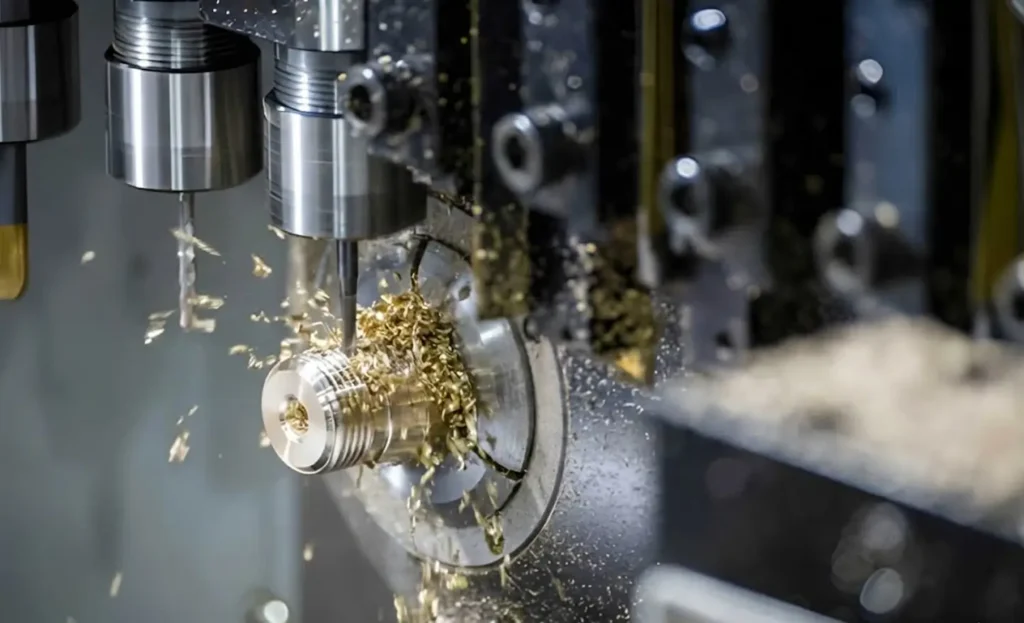
A Swiss-type lathe feeds the rotating bar axially with a sliding headstock. Tools also move on controlled axes; they are not all permanently fixed. Guide-bushing and non-guide-bushing modes depend on the machine configuration.
Sliding Headstock and Guide Bushing
In guide-bushing operation, the sliding headstock feeds the rotating bar through the bushing. The cutting tools work close to this support, reducing unsupported length and helping control deflection. This does not eliminate all bending or vibration.
Bar Feed and Automatic Feed Mechanism
Starting off, the machine uses an automatic bar feeder. You can load long metal rods into the machine to allow for continuous production. This helps you keep the machine running for hours without stopping to reload by hand.
Multiple Tool Stations and Live Tooling
Next, you should look at the tool layout. Swiss machines feature many tool stations that surround the workpiece. You can use live tooling, which means the tools spin like a drill while the part stays still. This allows you to perform different tasks, such as cutting slots or holes, in a single session.
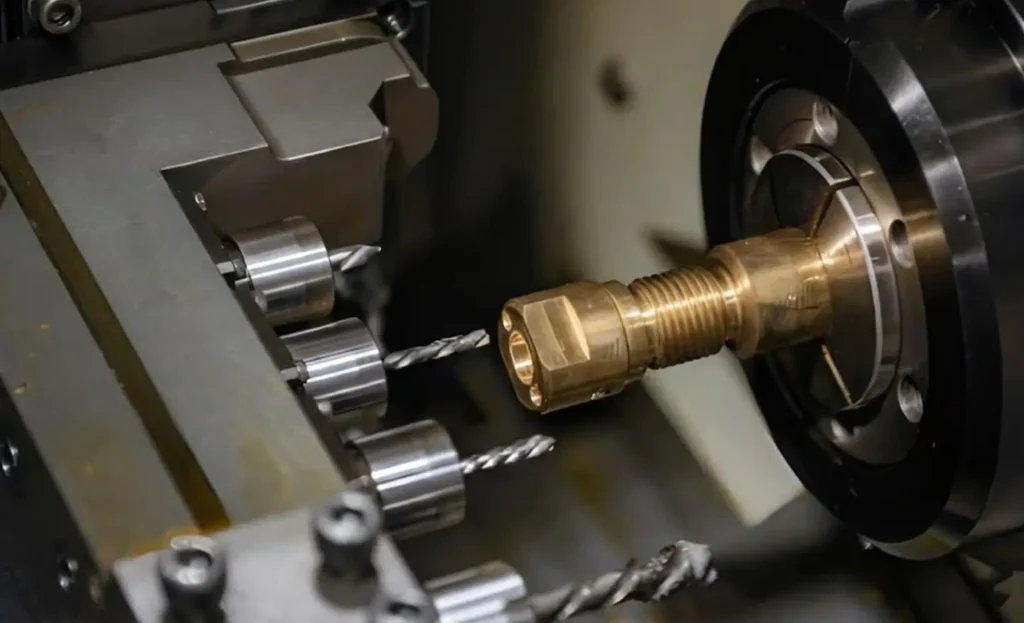
How Swiss Machining Works Step-by-Step
First, of course, the process starts with the raw material. Here is how you achieve such high precision during the build.
Material Feeding and Support
The bar advances through the guide bushing so machining can take place close to its support. Short unsupported length helps control deflection on slender parts, but correct clearance, stock quality, tooling, and cutting data remain important.
Simultaneous Operations
Depending on the machine and program, different tool groups can overlap operations. A sub-spindle can support backworking while the main spindle processes another part. The cycle-time benefit depends on the work and does not automatically double productivity.
Swiss Machining vs. Conventional Machining
In terms of engineering, Swiss machines work differently than traditional CNC turning centers.
Important Differences from Traditional CNC Turning
On a conventional fixed-headstock lathe, the rotating workpiece is held in a chuck or collet and the tool feeds along it; tailstocks and steadies can provide additional support. A guide-bushing Swiss-type machine feeds the bar axially near the cutting tool to limit unsupported length.
Workpiece Movement and Support Method
Supporting the bar close to the cut helps reduce bending under cutting forces. The actual result still depends on bushing clearance, stock quality, workpiece geometry, and the cutting conditions.
Tolerance and Precision Capabilities
A tolerance such as ±0.0002 inches must be validated for the specific part, machine, setup, and measurement method. It is not a universal Swiss-machine capability or proof that a conventional lathe cannot meet the same requirement.
Advantages of Swiss Machining
Select Swiss machining when its support and operation layout suit the part. Critical dimensions require a capable process and inspection regardless of machine type.
High Precision
The guide bushing supports the bar near the cut. Define accuracy with drawing tolerances and verified measurement results, rather than comparisons with the thickness of a human hair.
Complex, Small Parts
Swiss machining can suit small diameters and slender parts. A length-to-diameter ratio of 20 is an application example, not a universal limit or a shape that is impossible on a conventional lathe with suitable support.
Speed and Efficiency
Combining operations can reduce handling and cycle time when the machine supports the required features. Some parts still need secondary machining, finishing, or inspection outside the machine.
Less Waste
A stable, validated process can reduce rejected parts and material waste, including with costly materials such as titanium. The result depends on process capability and control, not the machine category alone.
Limitations and Challenges
Note that you want to always remember that no machine is perfect for every single job.
Not for Large Parts
Bar capacity and part size are machine-specific. A capacity of 1.25 inches describes some machines, not all Swiss-type lathes. A part 5 inches wide requires a machine and workholding system explicitly rated for its dimensions and loads.
High Initial Costs
Originally, these machines cost more to buy than basic lathes. The setup takes more time because you have to align the guide bushing and the tools perfectly. You also need a person with special training to program the complex paths.
Applications of Swiss Machining
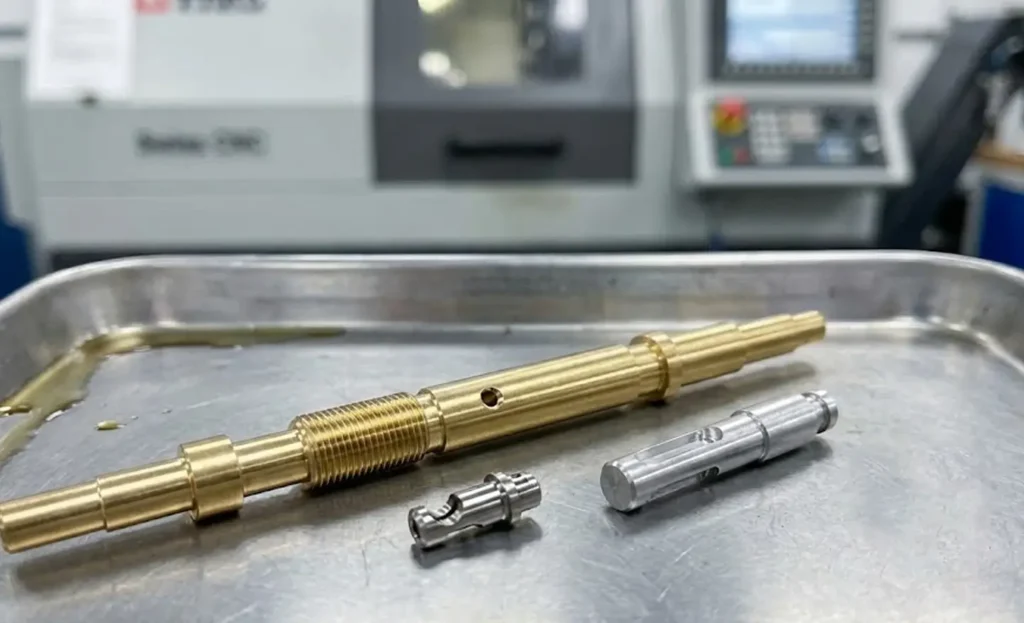
Here’s what the experts say about where you will see these parts most often in the world today.
Medical Devices
Bone screws, dental implants, and medical instruments may use Swiss-machined components. Their material, dimensions, surface condition, and any cleaning or sterilization requirements must be separately specified and validated.
Aerospace
Aerospace applications include selected fasteners, sensor components, and fuel-system parts. Material properties, dimensional conformity, and qualification requirements must be verified; the machining process alone does not establish service reliability.
Electronics
It is a helpful tool for making the tiny pins and connectors inside your phone or computer. As gadgets get smaller, the need for Swiss machining grows.
Automotive
Makers use it for fuel injectors, brake sensors, and precision valves. These parts help your car run smoothly and stay safe.
Materials Suitable for Swiss Machining
Material selection follows the component requirements. Suitable grades of stainless steel, aluminium, and titanium are used in Swiss machining. Strength, corrosion resistance, mass, machinability, and any medical or aerospace qualification depend on the particular grade and application.
In addition, you can use plastics like PEEK or Teflon for medical tubes and insulators. Just make sure the material is straight and smooth so it fits the feeder. This is a helpful way to avoid jams in the machine.
Conclusion
Swiss machining is a useful option for many small and slender components. Guide-bushing support and combined operations can help control deflection and reduce handling. Compare part requirements, process capability, setup effort, and total cost before choosing it over other methods.
FAQs
What makes Swiss Machining different from conventional lathe turning?
A guide-bushing Swiss-type lathe feeds the rotating bar axially with a sliding headstock while cutting close to the bushing. A conventional fixed-headstock lathe generally keeps the headstock axially fixed and feeds the tools; additional workpiece support may be used.
What industries use Swiss machining the most?
Applications include medical devices, aerospace, electronics, and automotive components. Suitability depends on part geometry and production requirements; this list is not a ranking of industry usage.
What part sizes is Swiss machining best suited for?
Swiss machining often suits slender bar-fed parts. Check the actual machine capacity; 1.25 inches is an example bar diameter, not a universal size limit.
What tolerances can Swiss machining achieve?
A requirement of ±0.0002 inches needs validation through process capability and suitable measurement. Do not assume every Swiss-type machine or part can achieve it.
Can Swiss machining perform multiple operations in one setup?
Machines with suitable live tools and spindle arrangements can combine turning, milling, and drilling. Whether operations overlap and whether secondary work is eliminated depend on the machine, program, and part.