



Why PCD Is the Wrong Tool for Cutting Steel
It's a common shop-floor mistake: a PCD insert that runs beautifully on aluminum goes onto a steel part, and the edge wears away far faster than anyone expected. PCD is much harder than steel, but hardness isn't the problem. The chemistry between diamond and iron at the cutting zone is. Read on and you'll know when PCD belongs on the job, when to switch to carbide or PCBN, and what to check before anyone approves a "diamond" trial on steel.
Hardness doesn't protect the diamond–iron interface
PCD stands for polycrystalline diamond: a mass of diamond grains bonded together. That structure gives it outstanding resistance to abrasive wear. What it doesn't give it is chemical stability against iron.
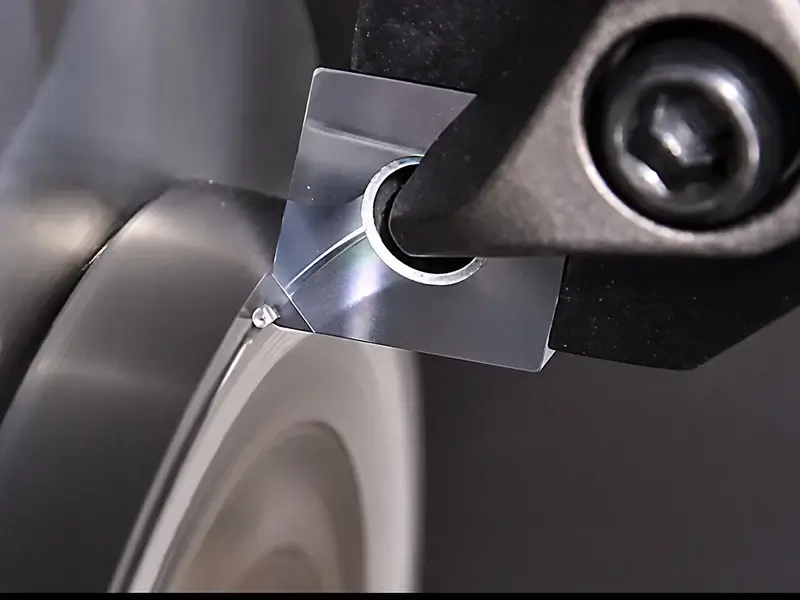
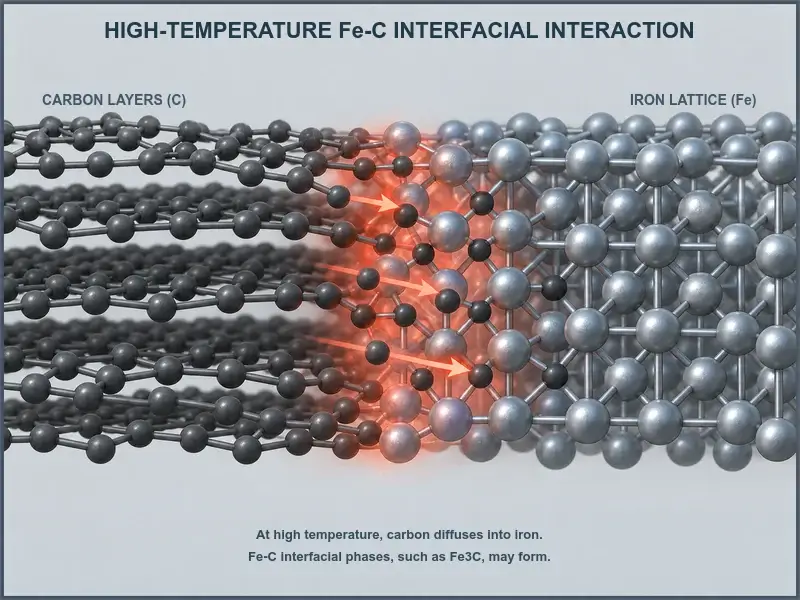
Under cutting conditions, the contact zone between diamond and an iron-rich workpiece turns into a reaction zone that consumes the cutting material. Iron-catalyzed graphitization is part of the story: carbon rearranges from the diamond structure toward graphite. Carbon also diffuses and transfers into the workpiece, and iron carbide can form. Put all of it under one heading: chemical wear.
Don't picture chemical wear as a fixed sequence that plays out identically in every tool and every cut. Tool composition, workpiece composition, temperature and contact conditions all change the interaction. That's why there is no published graphitization temperature you can treat as a "safe below this" line for running PCD on steel.
It's also why comparing hardness charts misses the point. Steel never has to be harder than the PCD edge; the interface wears the edge away regardless—a classic reminder that machinability and bulk hardness are two very different things, and hardness alone makes a weak selection metric.
One warning for failure analysis: chemistry is rarely the only thing happening. Abrasion, adhesion, chipping and other mechanical damage can all show up alongside chemical wear. Don't name a single root cause from one photo of a worn edge.
Steel job? Start with carbide or PCBN, not PCD
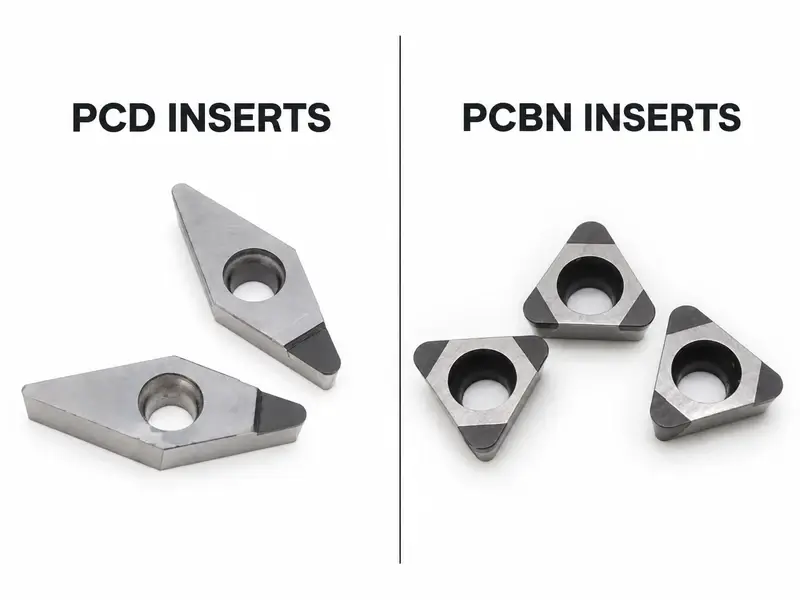
For routine steel turning, milling or drilling, start with a carbide grade recommended for the specific alloy, its condition and the operation. For suitable hard-ferrous work, such as hardened-steel finish turning and some cast-iron operations, go to a PCBN grade matched to the application.
PCBN is polycrystalline cubic boron nitride. It is not another name for PCD. It's less hard than diamond, but its low affinity for iron is exactly why it's the better cutting material in those jobs. That still doesn't make every PCBN grade right for every steel part. The decision depends on the exact material, hardness, cut, interruptions and required surface. There's no universal hardness number where every job flips to CBN. For the broader decision, see our CBN-versus-carbide selection guide.
Watch for two traps:
Stainless is still iron-based. A stainless designation on the drawing doesn't move the part out of PCD's chemical-wear problem.
Cast iron isn't steel, but it's still ferrous. Ordinary PCD runs into the same iron-compatibility limit.
A higher carbon content in the workpiece doesn't change the picture either.
Where PCD earns its keep
PCD is still an excellent tool on the right material. In suitable aluminum and copper alloys, and in abrasive non-metallic materials, its abrasion resistance pays off.
The boundary is simple. PCD on aluminum: a strong choice. The same insert on steel: expect the edge to be consumed by chemical wear. Move to carbide, or to PCBN where the hard-ferrous application suits it. Success on non-ferrous work gives you no license to carry that tool into steel.
The lab exception is real, but it's no production recipe
Research does include genuine PCD cutting of ferrous material. In a 2020 study, Yan Jin Lee, Yung-Kang Shen and Hao Wang used real PCD tools to face-turn low-carbon magnetic iron on an ultraprecision machine. They applied a surface-active treatment to the workpiece and compared tool wear against untreated cutting. The treatment reduced measured flank wear. It did not eliminate it.
Look at what that experiment actually was: low-carbon magnetic iron, specified micromachining conditions, and a deliberately modified workpiece surface. It wasn't an ordinary PCD insert replacing steel-qualified tooling in general production. And it doesn't mean pouring a standard cutting fluid on the job will reproduce the result.
What the study does prove is that "diamond can never cut any iron-based material" is too absolute a statement. What it can't do is overturn conventional tool selection. A specialized process has to be judged on its own workpiece, tool, assistance method and measured results. Treat a research exception as a qualification project, not a purchasing recommendation.
Before you approve a trial, check what "diamond" means
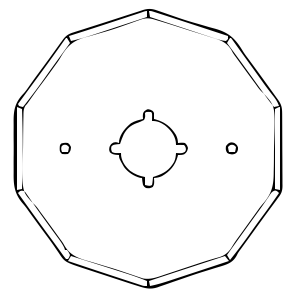
First, pin down the cutting material. A PCD edge, a single-crystal diamond tool and a CVD diamond film are three different tool systems. A diamond-shaped carbide insert is named for its geometry, not its cutting material. A diamond abrasive cutoff blade is a different tool with a different removal process entirely; a video of that blade slicing metal proves nothing about a PCD turning or milling edge on the same workpiece.
For a real steel job, get the information a tool recommendation actually needs:
The workpiece: exact alloy, heat treatment and hardness, not just "steel."
The cutting edge: the actual material family, grade and geometry, not a "superhard" label or an insert shape.
The operation: turning, milling, drilling or another process; continuous or interrupted cut; and the required dimensions and surface finish.
The validation: supplier cutting data for that exact combination, plus trial results measured against part quality, usable edge life and cost per acceptable part.
If someone proposes a special diamond-machining method, ask how it matches your material and machine, and what evidence supports running it in production. No evidence? Start with tooling built for the steel operation. Tool selection starts with chemical compatibility and a qualified process, not with the biggest hardness number on the spec sheet.