



Drill Bits for Hardened Steel
Drilling hardened steel requires a tool rated for the workpiece grade and hardness, along with suitable support, chip control, and cutting conditions. General-purpose drills may be unsuitable, but failure is not determined by the label hardened steel alone.
For closed-bottom features, drilling hardened steel blind holes requires extra attention to bottom clearance and chip evacuation.
Contents
Properties of Hardened Steel
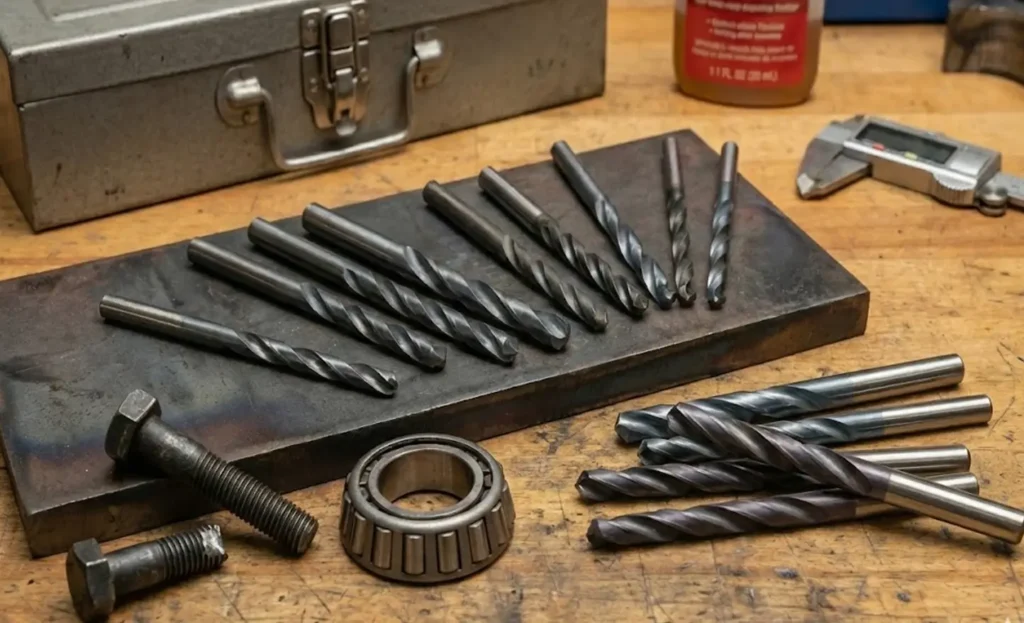
First, you need to understand why this metal is so difficult to cut. Hardened steel undergoes heat treatment to change its internal structure.
Hardness and Strength Characteristics
Hardened steel is often specified using Rockwell C hardness. The original 45-65 HRC range describes some conditions, not every hardened steel. Obtain the grade, heat-treatment condition, and measured hardness before selecting a drill.
Heat and Wear Challenges During Drilling
Cutting forces, friction, and chip formation generate heat; hardening does not make steel difficult to drill simply by increasing its density. Tool selection requires suitable wear resistance and red hardness, meaning the ability to retain useful hardness at elevated temperature, not permission to run a tool visibly glowing.
Types of Drill Bits for Hardened Steel
Starting off, you must pick a material that is harder than the steel you are cutting.
High-Speed Steel Drill Bits
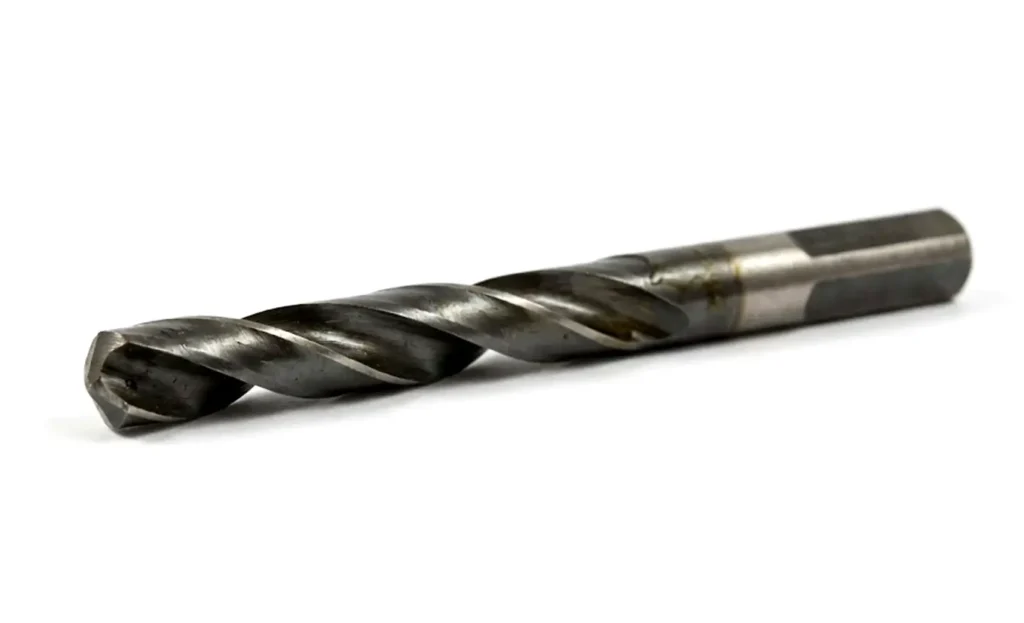
HSS bits cover more than wood and plastics, but general-purpose designs may be unsuitable for highly hardened steel. Check the exact grade and hardness limits of the selected tool instead of assuming all untreated steels are mild or that every HSS drill has the same capability.
Cobalt Alloy Drill Bits M35, M42
M35 and M42 are cobalt-alloyed HSS, commonly with about 5% and 8% cobalt respectively. They may suit selected prehardened or moderately hard steels. The original 35-40 HRC range is not a universal rating; follow the specific drill’s application limits.
Carbide-Tipped and Solid Carbide Bits
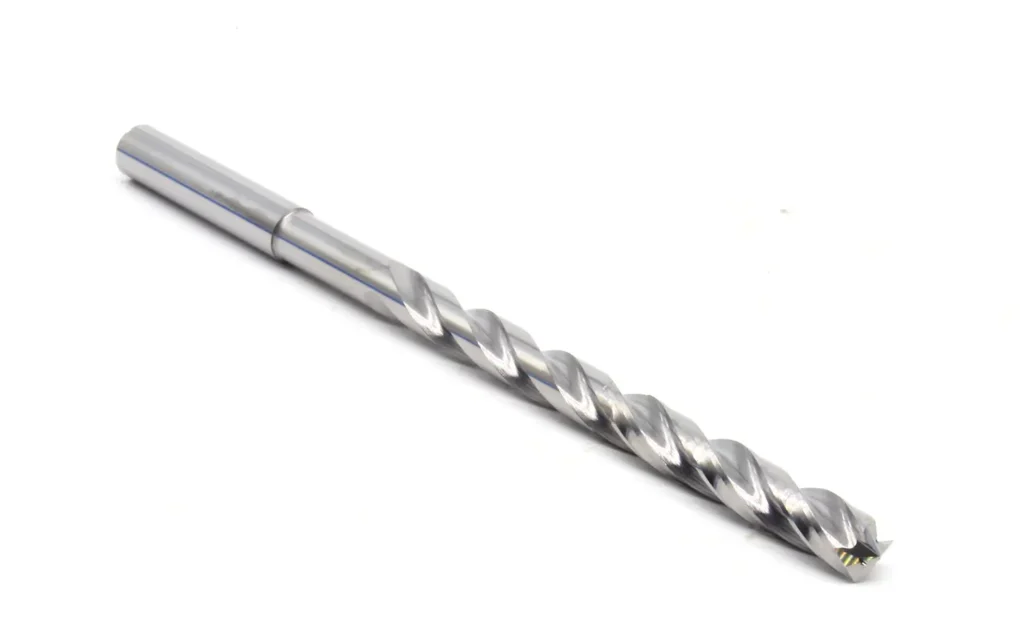
Solid carbide bits designed for hard materials can machine selected hardened steels within their rated range. Carbide is sensitive to shock and poor support, and does not cut almost any steel or always outlast cobalt HSS. Verify grade, hardness, geometry, and setup.
Coated Drill Bits
Appropriate TiN or TiAlN coatings can improve wear behaviour for a qualified tool and application. They are thin engineered layers, not shields that simply reflect heat away from the core. Substrate capability remains essential.
Drill Bit Geometry and Design Features
How the bit is shaped determines how well it starts the hole.
Point Angle and Tip Geometry
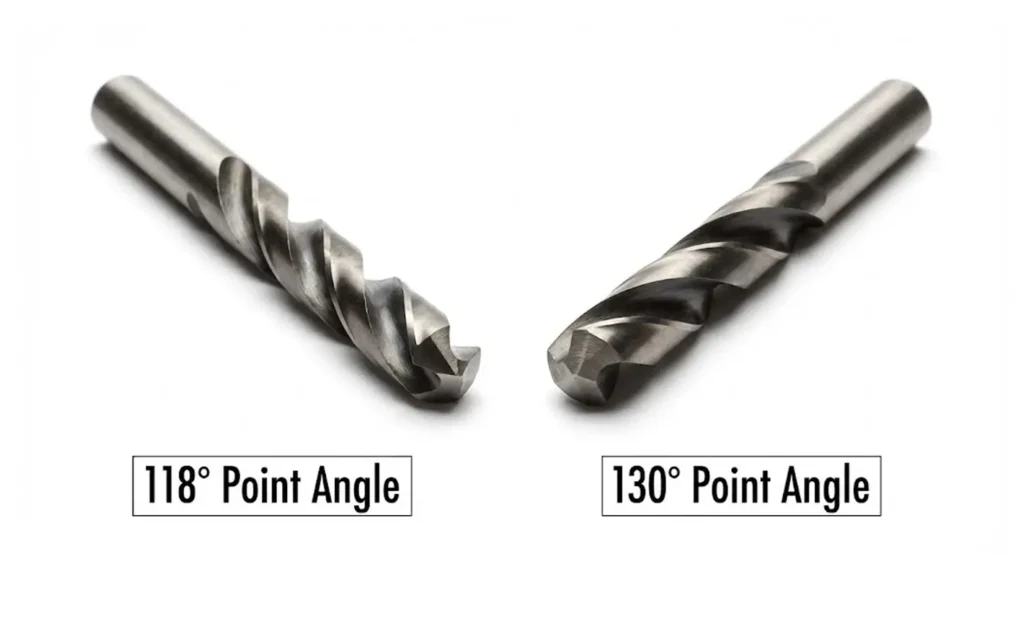
A 135-degree split point is one drill design, not a universal requirement for hardened steel. Point angle, edge preparation, thinning, and support must match the selected tool and material. Split-point geometry can assist starting but cannot guarantee freedom from walking.
Flute Design and Chip Evacuation
The flutes are the grooves that wrap around the bit. For hard materials, you need a design that pulls chips out quickly. If the metal shavings get stuck, they will rub against the bit and create even more heat.
How to Choose the Right Drill Bit
Confirm hardness from material certification or a suitable hardness test. An ordinary file test is only a rough indication influenced by file condition and surface treatment; failure to scratch does not reliably establish that the steel is above 45 HRC.
Material Hardness
Select a drill specifically rated for the steel grade and hardness. The original 35-45 HRC and above-50 HRC divisions are not universal selection rules, and M42 is not automatically the best choice throughout that range. Tool geometry, coating, and machine capability also matter.
Cost vs. Performance
Carbide drills require suitable rigidity, alignment, and runout control; an ordinary drill press is not automatically sufficient. Cobalt HSS can be more tolerant in some applications, but no drill should be deliberately bent or used outside its hardness rating.
Coating Selection
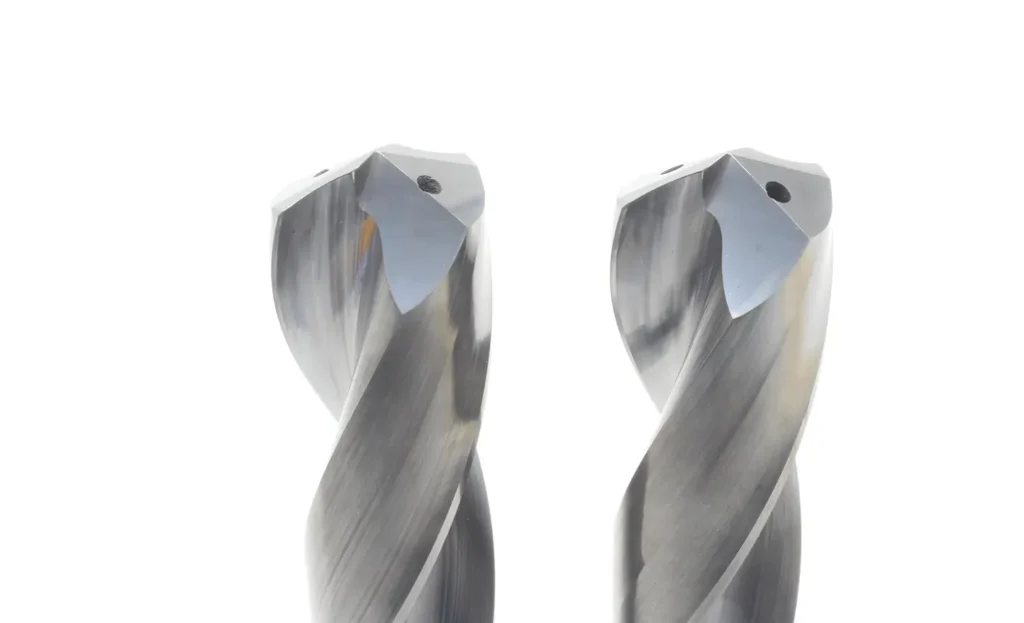
TiAlN may provide useful high-temperature wear and oxidation behaviour in appropriate applications. It does not simply become progressively harder as temperature rises, and its coating cannot compensate for an unsuitable substrate or cutting process.
Best Practices for Drilling Hardened Steel
Select and validate cutting conditions for the specific tool, material, and hole. A universal slow-speed rule is not a substitute for application data.
Speed and Feed Rates
Select cutting speed and feed from data for the specific carbide bit in hardened steel, diameter, hardness, and hole depth. The original 300-500 RPM for a 1/4-inch bit is not a universal setting. Work hardening is caused by plastic deformation, not simply by heat; avoid rubbing, overload, and unvalidated heavy pressure.
Use of Cooling
Use the cooling or lubrication strategy specified for the tool and material. Cutting oil, emulsion, or another approved strategy may be appropriate; sulfur-based oil is not universally required. Unexpected smoke requires investigation of the process and fluid conditions, not simply adding more oil.
Peck Drilling and Chip Control
Use a peck cycle only where recommended for the drill, material, and hole depth. Other tools require continuous feed with adequate coolant and chip evacuation. Chip adhesion is not necessarily melting, and repeated re-entry does not guarantee freedom from it.
Applications of Hardened Steel Drill Bits
Here’s what the experts do with these tools in industrial and repair settings.
Industrial Machine Shops
Professionals use carbide bits to modify injection molds and stamping dies. These parts are often made of D2 or A2 tool steel, which are incredibly difficult to cut after they have been heat-treated.
Automotive Repair
Removing hardened bolts or studs requires identification of the fastener grade, hardness, and repair constraints. Cobalt HSS can suit some applications, but should not be assumed appropriate for every Grade 8 bolt or engine stud.
Locksmithing
Specialized “hardplate” drill bits are used to bypass safes. These bits are often solid carbide with a unique tip shape to punch through thick armor.
DIY and Tool Making
In a home workshop, you might need these bits to drill holes in a saw blade to make a custom knife, or to modify a hardened steel gear for a project.
Comparison of Drill Bit Types
Bit Type | Hardness Suitability | Heat Resistance | Best Use |
HSS | Qualified softer or moderately hard materials; verify tool limits | Hot-hardness capability depends on HSS grade and heat treatment | Wood, Plastic, Aluminum |
Cobalt | The original up-to-40 HRC figure is not a universal tool rating | High | Application-specific; verify hardness and geometry |
Carbide | The original up-to-65 HRC figure requires a specifically rated drill | Very High | Qualified hardened-steel applications within tool limits |
Conclusion
Choosing drill bits for hardened steel requires the actual material grade and hardness, suitable tool geometry, and a controlled setup. Match speed, feed, and coolant strategy to the specific tool. Avoid rubbing and overload rather than relying on a universal slow-speed, heavy-pressure rule.
FAQs
Can regular drill bits drill hardened steel?
General-purpose HSS may be unsuitable for highly hardened steel. Determine the workpiece hardness and the drill’s rated application range; density is not the reason a hardened steel becomes difficult to drill.
What drill bit material is best for hardened steel?
There is no universal best material. A specifically rated carbide drill may suit highly hardened steel, while cobalt HSS may suit some lower-hardness applications. Confirm the actual tool rating and setup requirements.
Do drill bit coatings matter for hardened steel drilling?
A suitable coating can support wear resistance within the tool’s intended application. It does not guarantee edge retention at any elevated temperature or extend the substrate beyond its usable limits.
How should I drill hardened steel without breaking the bit?
Use a machine, holder, and workholding arrangement that meet the drill’s rigidity and runout requirements. Control alignment, chip evacuation, and cutting loads. A drill press alone does not guarantee straightness or prevent breakage.
Are solid carbide drill bits worth the extra cost?
Evaluate carbide using its rated application, expected tool life, productivity, and setup requirements. It may justify the cost for appropriate hardened-steel work, but resistance to a hand scratch or indentation is not a valid tool-selection test.