










HSS Drill Bit: Complete Guide to High-Speed Steel Drilling
HSS drill bits are made from alloy tool steels designed to retain useful hardness during cutting. Composition and performance vary by grade; M2 and cobalt-alloyed M35 are examples, not the only two types. The original 650°C figure is not a universal safe operating limit. Choose geometry and cutting conditions for the specified material and application.
Contents
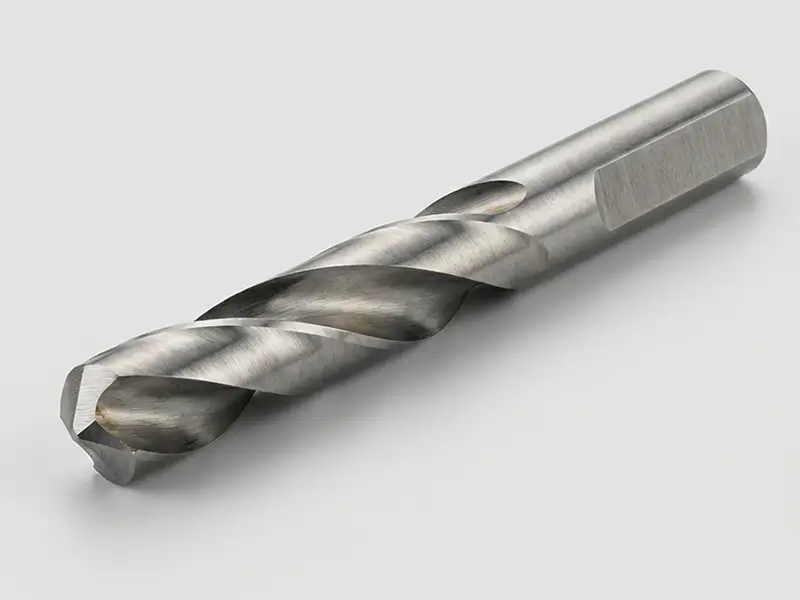
What is an HSS Drill Bit?
An HSS drill bit is a steel cutting tool. High-speed steels contain alloying elements such as chromium, vanadium, molybdenum, or tungsten in grade-specific proportions. Their hot hardness can support higher cutting speeds than plain carbon-steel tools, but drill bits still have application limits; 650°C is not a universal temperature at which every grade retains its edge.
How HSS Differs from Standard Steel Drill Bits
HSS generally retains hardness at elevated cutting temperatures better than plain carbon tool steel. Suitable HSS tools can be resharpened, but attainable speed, edge life, and cost depend on grade, geometry, heat treatment, and application; heat resistance does not prevent all cutting-edge damage.
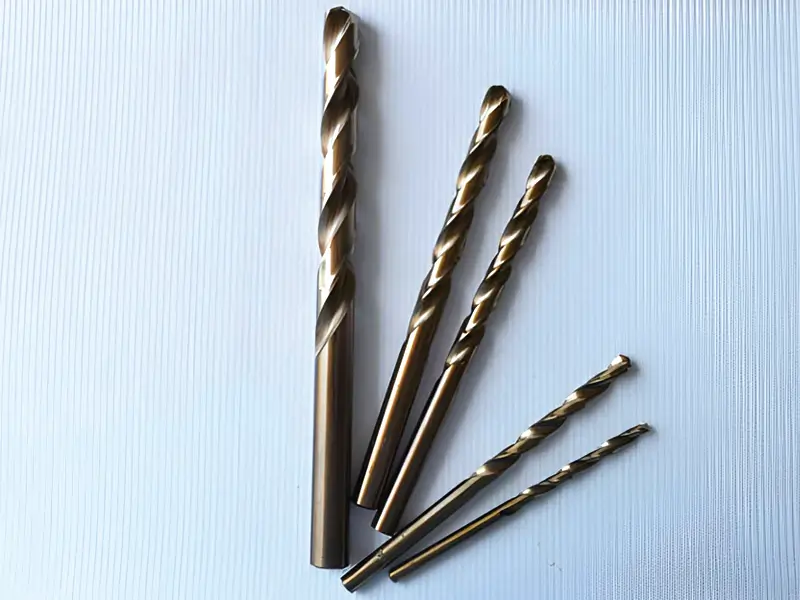
HSS Drill Bits Types and Variations
M1 vs M2 HSS Drill Bits
M1 and M2 are different molybdenum-series HSS grades with different alloy balances. M2 is widely used for drills, but bending resistance and wear performance depend on heat treatment and tool geometry as well as grade. Do not assume every general-purpose drill set uses M2.
Molybdenum HSS
The M-series designation identifies molybdenum-type high-speed steels. Iron remains the principal constituent; molybdenum is an alloying element, not the main ingredient by mass. The complete alloy and heat treatment determine hot hardness and wear behaviour.
Tungsten HSS
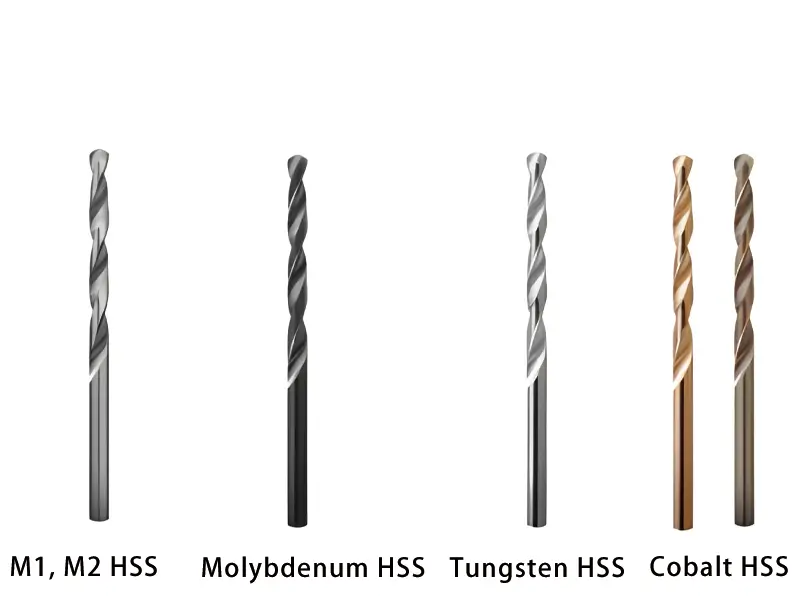
Tungsten-type HSS grades are another family of high-speed steels. Select the actual grade, heat treatment, and drill geometry for the material and operation; tungsten content alone does not establish suitability for aluminum or predict failure in interrupted cutting.
Cobalt HSS
M35 commonly contains about 5% cobalt and M42 about 8%. These cobalt-alloyed HSS grades can provide useful hot hardness. Suitability for stainless steel, cast iron, titanium, or hardened steel still depends on the specific drill, workpiece grade and hardness, and cutting conditions.
Standard HSS vs HSS-Co
Conventional and cobalt-alloyed HSS tools overlap in their applications. Suitable conventional HSS drills can machine some stainless steels, while cobalt HSS can offer advantages under demanding conditions. Neither family is automatically suitable for every hardened steel.
HSS Drill Bit Coatings and Surface Treatments
Bright Finish HSS Bits
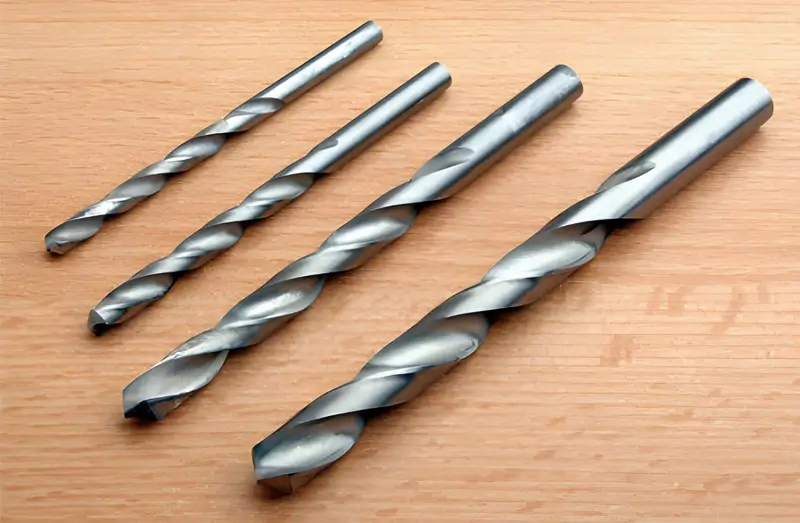
Bright-finish HSS drills are normally uncoated and can be reground according to supplier instructions. Their suitability depends on geometry, grade, and material; an uncoated finish does not guarantee the lowest purchase price or define the operating temperature limit.
Black Oxide Coating
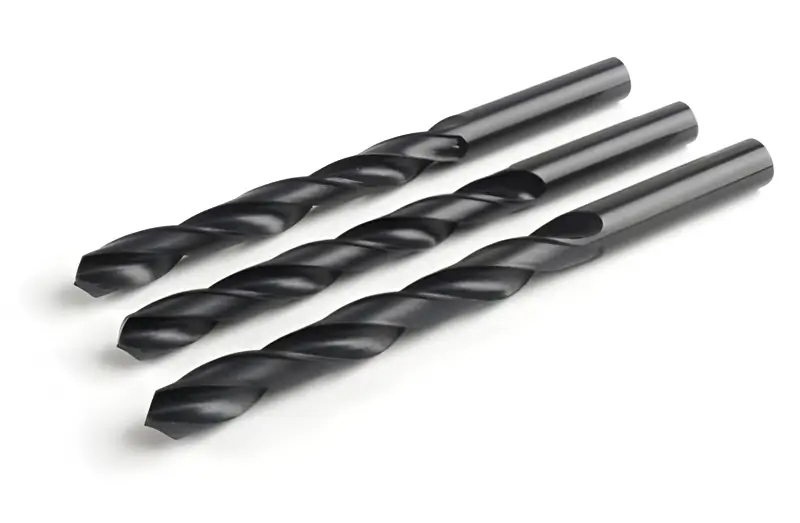
Black oxide coating or steam-oxide treatment is a surface treatment rather than a hard PVD coating. Its function and processing conditions depend on the specified treatment. The original 950°F figure is not a universal manufacturing temperature, and black oxide alone does not establish suitability for abrasive composites.
Titanium Nitride Coating
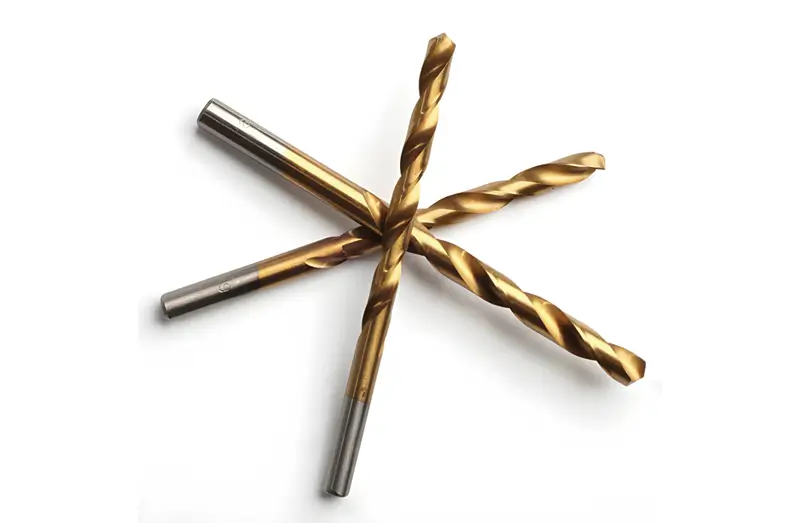
TiN is a hard coating that can improve wear performance in suitable applications. The original 30-100% tool-life claim has no stated test conditions and is not a general guarantee. A TiN-coated HSS step drill must still have geometry and cutting data appropriate to the sheet material and thickness.
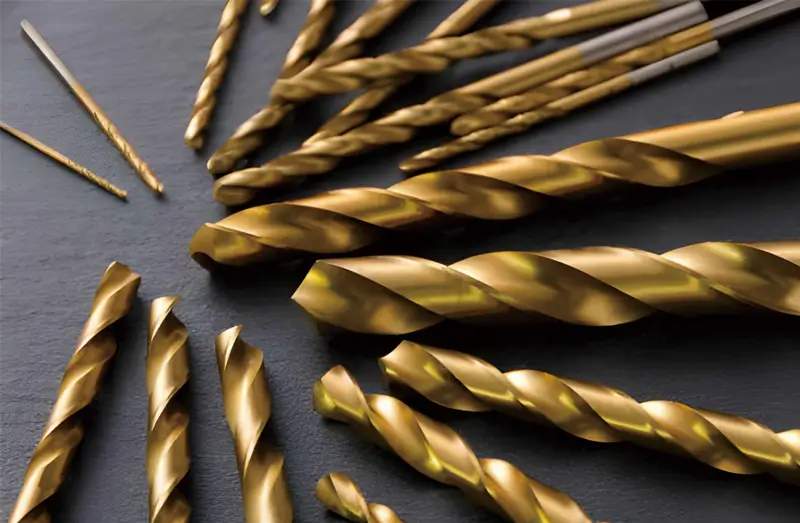
A suitable TiAlN coating can improve wear and oxidation resistance in certain applications. It does not automatically permit dry drilling, higher speeds, or reduced coolant. Follow data for the complete coated tool, substrate, work material, and hole depth.
Titanium Carbonitride Coating
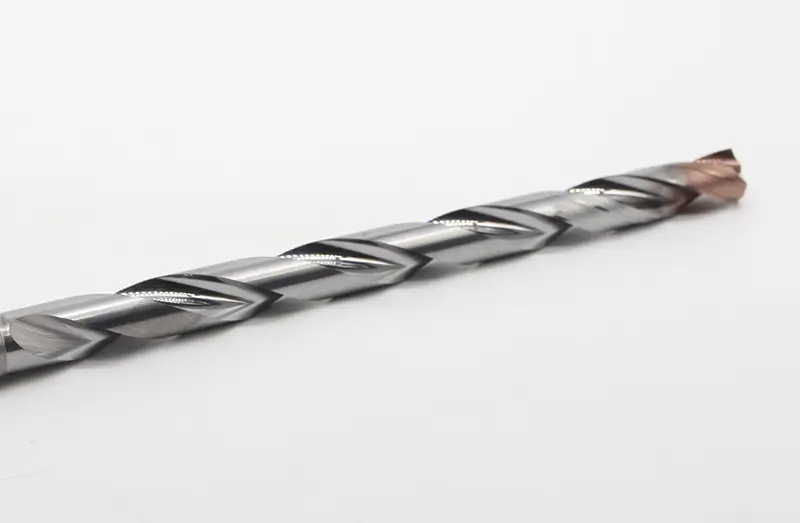
TiCN can provide high coating hardness and wear resistance in suitable applications. Colour and properties vary with the coating system, and coating hardness alone does not establish tool toughness or suitability for hardened steel.
Bronze Oxide Finish
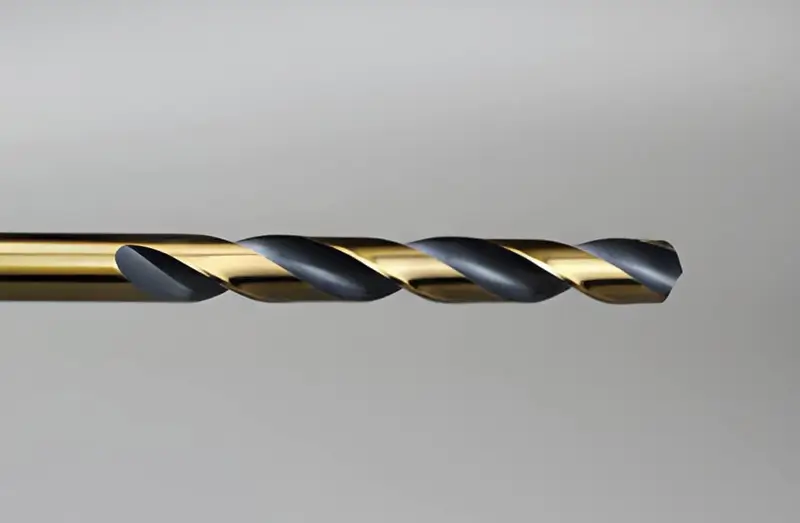
Bronze-coloured oxide finishes are surface treatments whose specification and intended application should be checked with the tool supplier. Colour alone does not prove a particular heat resistance, corrosion performance, price, or advantage over every uncoated tool.
Best Applications for HSS Drill Bits
Drywall and Masonry
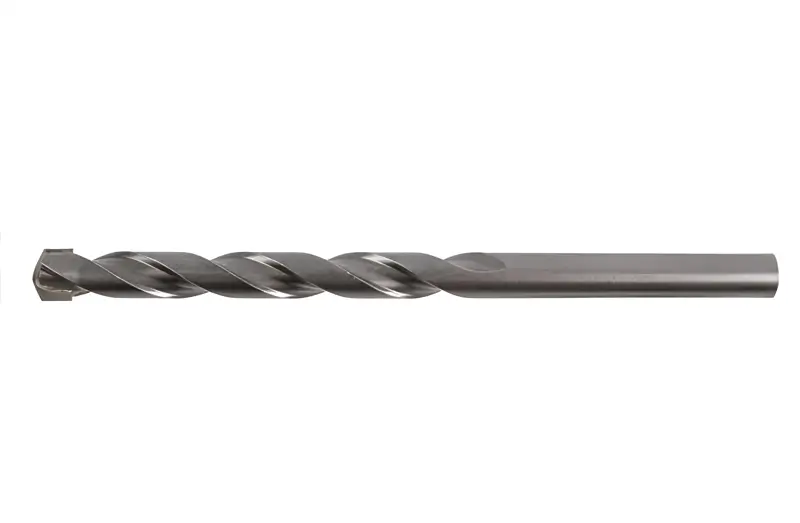
HSS drills can suit some nonmetallic materials but are not the standard choice for concrete. Select a masonry or other construction drill for the substrate and required drilling mode; not every construction material or bit is suitable for hammer action.
Removing Broken Screws and Bolts
For removing a damaged fastener, first identify its material, hardness, and the risk to the surrounding part. Cobalt HSS is not suitable for every hardened fastener. Use a pilot hole only where the selected tool and repair method require it, with approved cutting data and lubrication.
Professional vs DIY Applications
Ground and roll-forged HSS drills can serve different requirements. Manufacturing method, grade, geometry, dimensional quality, and application data matter more than a simple professional-versus-DIY label. Compare performance and cost for the actual task.
HSS vs Other Drill Bit Materials
HSS vs Cobalt Drill Bits
Cobalt drill bits are HSS with cobalt in the alloy. They can justify a higher price in suitable demanding applications, while conventional HSS can also be appropriate. Check the drill’s material and hardness ratings instead of assuming cobalt HSS can drill every hardened steel.
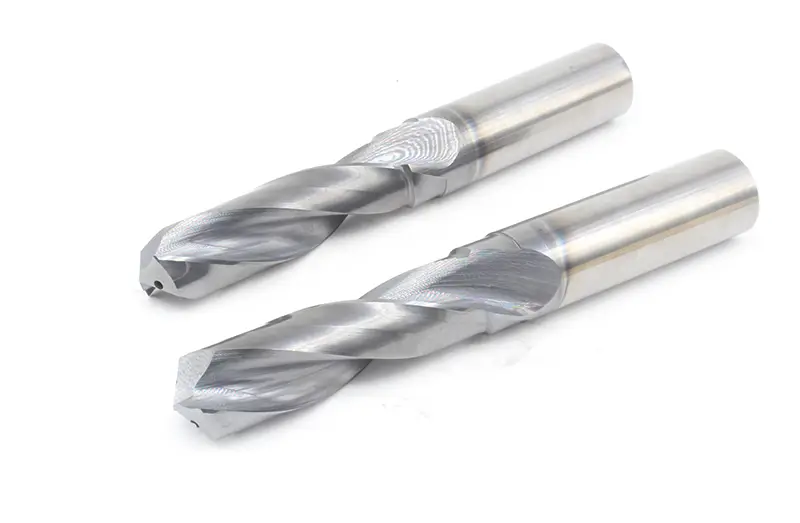
Carbide drill bits can offer high hardness, stiffness, and productivity, but require appropriate runout, support, and cutting conditions. HSS may be more tolerant in some general-purpose applications. Select the tool and machine as a system rather than assuming price or material alone determines suitability.
HSS vs Carbon Steel Bits
HSS generally offers better hot hardness than plain carbon tool steel. Actual tool life, permissible speed, regrinding capability, and cost depend on the specific tool and task; improved life is not guaranteed by the material name alone.
HSS vs Masonry Bits
Masonry bits are designed for particular mineral substrates and drilling modes. Many use carbide cutting elements, but not all are intended for hammer action. Use the specified bit and mode for concrete, brick, tile, or other construction materials.
Common Problems and Troubleshooting
Drill Bit Walking
Drill walking can result from unsuitable point geometry, poor entry preparation, runout, misalignment, or unstable workholding. Use the entry method and feed recommended for the tool; extra pressure or a centre-punch mark is not a universal remedy.
Bits Getting Dull Quickly
Premature dulling can indicate unsuitable cutting data, inadequate cooling, rubbing, abrasive material, or incorrect tool selection. Identify the cause and use data for the actual material and hardness; changing to cobalt HSS alone may not resolve it.
Overheating Issues
Excessive temperature can reduce tool hardness and accelerate wear. Verify tool condition, cutting speed, feed, and coolant delivery. If the approved strategy uses cutting oil, apply it safely. Do not prescribe short bursts or repeated pecking for every drill; use the recommended cycle.
Broken or Chipped Bits
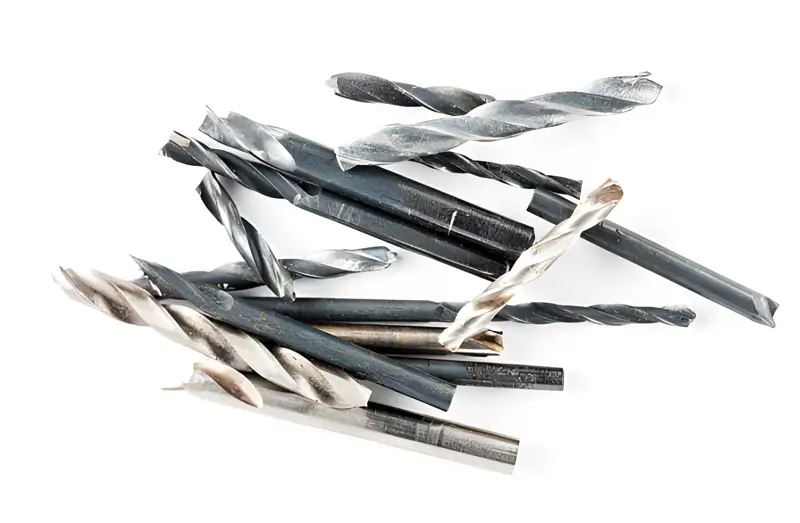
Breakage or chipping can arise from overload, chip packing, runout, misalignment, or unsuitable entry and exit conditions. Use a pilot hole or pecking cycle only where recommended. Keep the setup aligned and supported; toughness varies with grade and geometry.
Uneven and Off Center Holes
Unbalanced grinding causes bits to drill oversized holes. Simultaneously, bent bits will also lead to accuracy problems. Verify bit sharpness and balance, check chuck alignment, and ensure bits are straight.
Bit Slipping in Chuck
Stop the spindle before checking tool retention. Clean the shank and jaws as directed and tighten the chuck using its manufacturer’s procedure; not every chuck uses a key or three tightening positions. Remove any chuck key before starting, and replace damaged or worn holding equipment.
Conclusion
Your investment in quality hss drill bits provides flexible, economical drilling solutions for multiple materials. Understanding bit types, coatings, and proper usage techniques maximizes performance and tool life for professional work and DIY projects.
FAQs
What is an HSS drill bit?
HSS means high-speed steel: a family of alloy tool steels formulated for useful hot hardness. Composition varies by grade. These steels can support higher cutting speeds than plain carbon tool steel in appropriate conditions, but do not define one universal speed or temperature limit.
Are cobalt drill bits better than HSS?
Cobalt-alloyed HSS can offer useful hot hardness and wear performance in demanding applications. It is not universally better than conventional HSS, nor suitable for every hardened steel. Choose using tool-specific application data and total process cost.
Are HSS drill bits for metal?
HSS drill bits are good for drilling various metals including steel, aluminum, brass, and copper. They also work well on wood, and plastic. These features make hss drill bits highly flexible for the general purpose drilling tools.
Can HSS drill bits be used for concrete?
Standard HSS drills are not intended for concrete. Use a tool rated for the particular construction material and drilling mode; hammer drilling is not appropriate for every substrate or bit.