










Types of CNC Coolants: Your Complete Selection Guide
When it comes to precision machining, the right CNC coolant makes all the difference. You need more than just any fluid to keep your cutting tools sharp and your parts within tolerance.
Coolant selection affects tool life, surface finish, and maintenance. Unsuitable fluid can contribute to problems, but tooling, cutting data, workholding, and fluid condition must also be considered.
However, before you select a CNC coolant, you should understand the capabilities and limitations of each coolant.
Contents
What Is CNC Coolant?
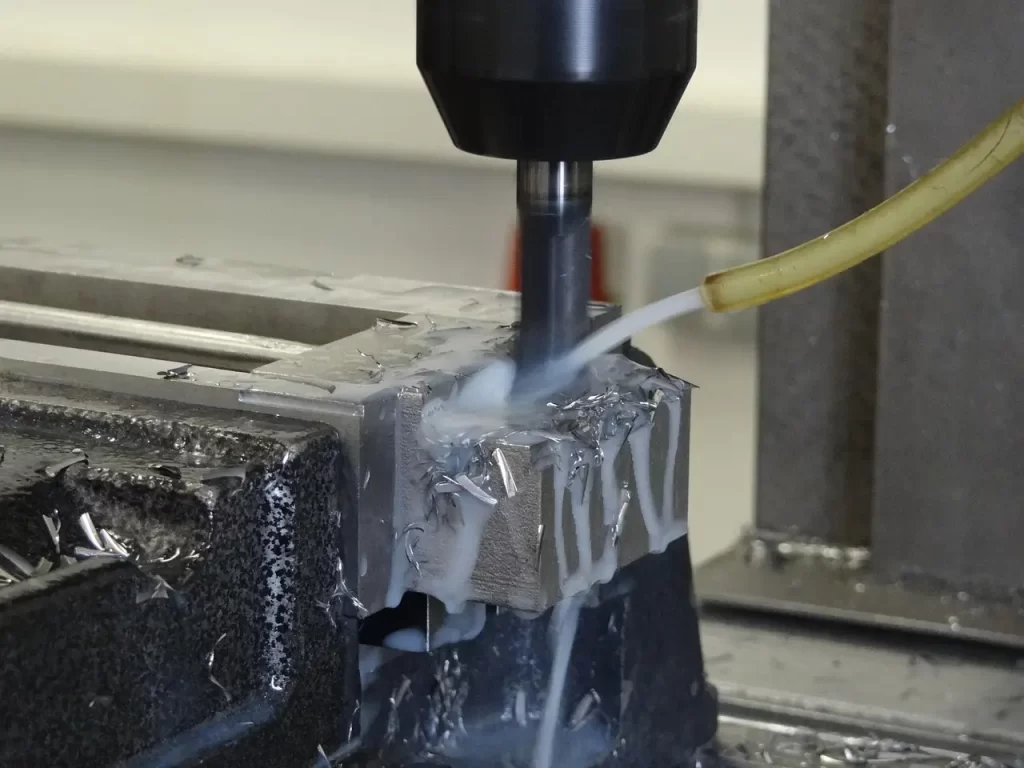
CNC coolant is a special fluid for CNC machining. It has three major functions:
- It controls heat
- Reduces friction
- And removes chips from the cutting area.
Its main role is to improve tool life and part quality.
Cutting generates heat through deformation and friction. Temperature and cooling needs depend on the operation; 1000°F is not a universal value. Select the fluid and delivery method for the tool, workpiece, and process.
Beyond cooling, CNC coolants also do following functions:
- Heat dissipation
- Lubrication
- Chip removal
- Corrosion prevention
Main Types of CNC Coolants
Common metalworking-fluid categories are straight oils, soluble oils, semi-synthetics, and synthetics. Distinguish neat products from concentrates that require dilution.
These are:
- Straight oils
- Soluble oils
- Semi synthetic coolants
- Synthetic coolants
Each category gives you knowledge to match coolant properties to your machining requirements.
Straight Oils
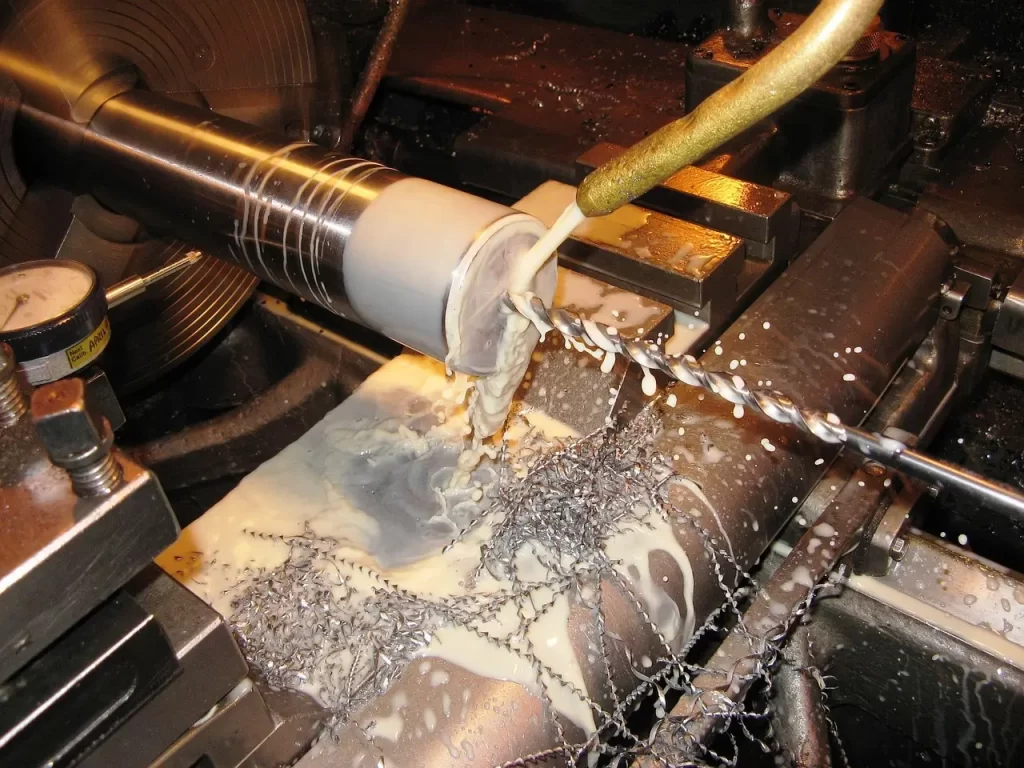
Straight oils are used without water dilution. They can use mineral or other base oils with additives; neither 100% petroleum content nor a dark appearance defines every product.
Composition and Performance
Some formulations use extreme pressure sulfur or chlorine compounds; others use different additive systems. Check the actual product specification and compatibility rather than assuming all cutting oils contain the same additives.
Lubricating films can reduce friction and contact. Performance depends on formulation and application; viscosity alone does not guarantee longer tool life than a water-miscible fluid.
Soluble Oils
Soluble-oil concentrates form emulsions when diluted. Use the supplier’s recommended concentration and water quality; 5% to 10% is not a universal mixing instruction.
Formulation and Characteristics
The base mineral oil has emulsifiers that easily mixes with water. When you mix it properly, tiny oil droplets suspend throughout the water, creating a stable emulsion. This combination gives both cooling from water and lubrication from oil.
Corrosion protection and microbial control depend on formulation and fluid management. Monitor the working fluid and follow supplier guidance; do not assume every product contains a biocide.
Semi-Synthetic Coolants
Semi-synthetics combine an oil component with water-miscible ingredients. Oil content varies by product; distinguish concentrate composition from working dilution instead of treating 2 to 8 percent and 30 to 50 percent as universal ranges.
Formulation and Benefits
The balance of oil, lubricants, and additives is product-specific. Compare actual cooling and lubrication performance rather than ranking all semi-synthetics above other categories.
Sump life and cleanliness also depend on concentration, water, contamination, filtration, and maintenance. A semi-synthetic formulation does not automatically remove tramp oil.
Synthetic Coolants
Fully synthetic metalworking fluids generally omit mineral oil and use water-miscible ingredients. Consult the product data for its actual lubricants, inhibitors, and additives.
Chemical Composition
Synthetic fluids are commonly solution-type products rather than conventional oil emulsions. This distinction does not by itself establish superior machining performance.
Lubrication comes from the specific formulation. Polymer and extreme-pressure additives are not mandatory ingredients in every synthetic fluid.
CNC Coolant Delivery Methods
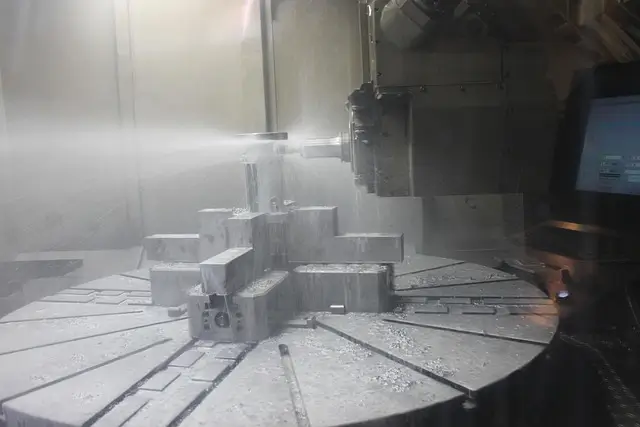
The delivery method affects coolant performance as significantly as the coolant type itself. This is the reason, you need to match the delivery approach according to your machining requirements.
Flood Coolant Systems
Flood systems direct a substantial fluid flow toward the cut. Required flow depends on the application and nozzle arrangement; 30,000 to 60,000 mL per hour is not a universal specification.
For stainless steel and Inconel, select delivery with the tool supplier’s application guidance. When machining 316 stainless steel, coolant alone does not prevent work hardening or guarantee tool life.
Minimum Quantity Lubrication
MQL supplies small amounts of lubricant, commonly with air, near the cutting zone. Less than 50 mL per hour is an application-dependent example, not a definition or universal setting.
MQL may reduce fluid use, but a reduction of 95 to 99 percent requires a defined comparison. Cleaning, extraction, process suitability, and total costs still need assessment.
High-Pressure Coolant Systems
Through-tool delivery can bring fluid close to the cutting edge. Use pressure and flow ratings specified for the machine, holder, and tool; 300 to 1500 PSI is not a universal operating range.
For deep-hole drilling, match flow and pressure to the drill system and chip evacuation requirements. A depth-to-diameter ratio exceeding 5:1 does not, by itself, specify the required pressure.
Directed coolant can improve access to the cutting zone. A tool-life gain of 200 to 300 percent needs application-specific evidence; evaluate performance and equipment costs in the actual process.
Conclusion
Match coolant properties to the operation. Straight oils and water-miscible products offer different balances of lubrication, cooling, and maintenance; no category is best for every heavy-duty or general-purpose cut.
Subsequently, Semi-synthetics share balanced properties for more precision work. It is important to always consult with coolant manufacturers to optimize performance according to your applications.