



Machining Cast Iron with the Right Tooling, Speeds, and Dust Control
Machining cast iron often looks calm until the insert loses finish, black abrasive dust settles through the enclosure, or one casting behaves differently from the previous batch. A useful diagnosis starts with three questions: which cast-iron grade is in the machine, what wear pattern is forming at the edge, and whether dry cutting or coolant gives the cleaner, more stable process.
Cast iron usually avoids the gummy edge buildup seen in many softer materials. Its cost appears elsewhere: abrasive wear, dust management, grade variation, and tooling that must match the real operation rather than a generic material label.
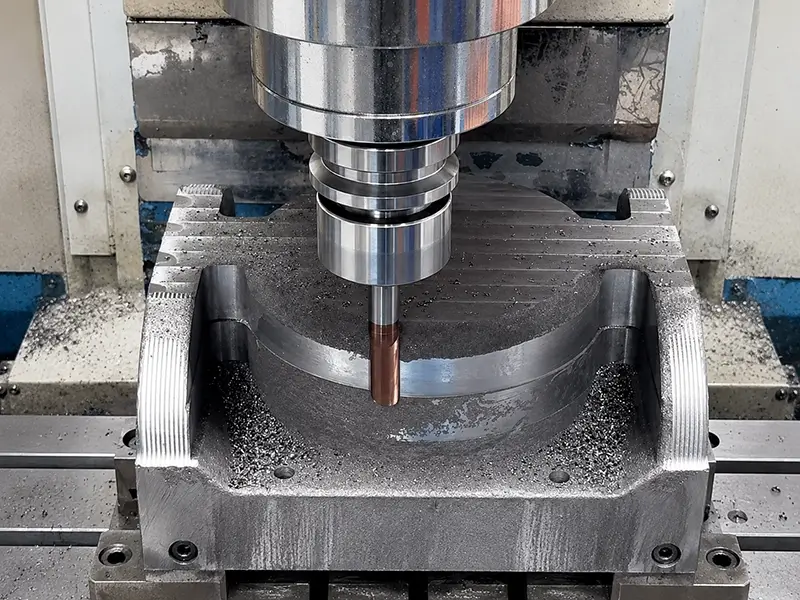
Quick answer: machine cast iron around abrasion, dust, and grade behavior first
The right starting move is not to copy one universal speed-and-feed recipe. First identify the cast iron, decide whether the process benefits from dry cutting, and determine whether the cutting edge is failing from abrasion, impact, heat cycling, or an unstable setup.
| Practical cast-iron question | Better starting answer |
|---|---|
| Why is the tool wearing so fast? | Assume abrasion and material variation before assuming coolant is the cure. |
| Should this run dry? | Dry cutting is common, but only if dust handling and tool fit make it sensible. |
| When do harder grades or tougher inserts matter? | When ordinary carbide cannot hold tool life, size, or finish under the actual wear pattern. |
| Why does the finish vary between parts? | Inspect grade variation, edge wear, dust, workholding, and setup stiffness. |
Why cast iron behaves differently
Cast iron contains graphite structures and matrix conditions that change chip behavior, damping, and surface response. This helps explain why some cast irons break chips cleanly and machine more pleasantly than expected while still wearing the cutting edge steadily.
Grey cast iron
Grey cast iron is often the material people picture first. It can machine relatively well and break chips cleanly, but it also produces abrasive dust and fine particles that affect tool life and machine cleanliness. It is frequently machined dry because the loose chips and dust may be easier to collect than contaminated coolant sludge, depending on the enclosure and extraction setup.
Nodular and tougher cast irons
Nodular or ductile cast iron behaves differently. The tool may see higher force, greater toughness, and a different wear pattern than it would in brittle grey cast iron. A setup proven on one cast-iron grade should not be copied blindly to another.
Tooling choices for machining cast iron
Tool choice should follow the wear pattern, workpiece hardness and structure, part geometry, cut continuity, and whether the process is milling, drilling, or turning.
Carbide as the usual baseline
Carbide is the normal starting point in many cast-iron processes because it combines wear resistance and stiffness without immediately moving into premium hard-turning economics. The grade, coating, edge preparation, and geometry still matter. When the application sits near the boundary between ordinary carbide and CBN, use this CBN-versus-carbide selection guide to compare hardness, cut type, stability, and production economics.
Where CBN Inserts fit
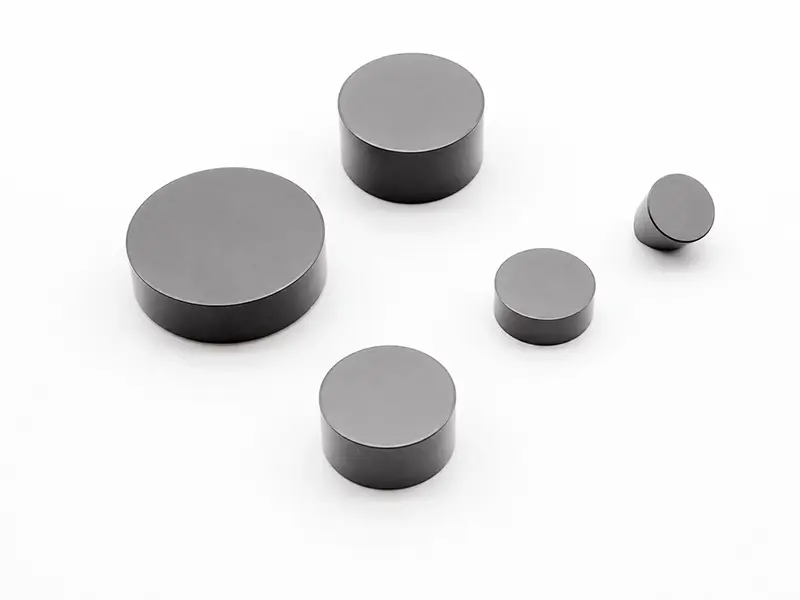
CBN Inserts become relevant when the cast iron is harder, the wear burden is higher, or the operation moves into demanding turning where carbide life becomes poor. They are not the default answer for every cast-iron job; they are a focused solution when their abrasion resistance and hard-material behavior materially improve the process.
Where Solid CBN Inserts make sense
Solid CBN Inserts belong in a more specialized conversation. They may be justified where tool life, material hardness, interrupted behavior, or production economics support their higher cost. Move upward only when the process needs the edge strength, CBN volume, or wear resistance that a less expensive construction cannot provide.
Dry cutting versus coolant in cast iron
Dry cutting is common in cast iron for good reasons, but it is not a rule that overrides the real machine, tool, and dust-control conditions.
Why dry cutting is common
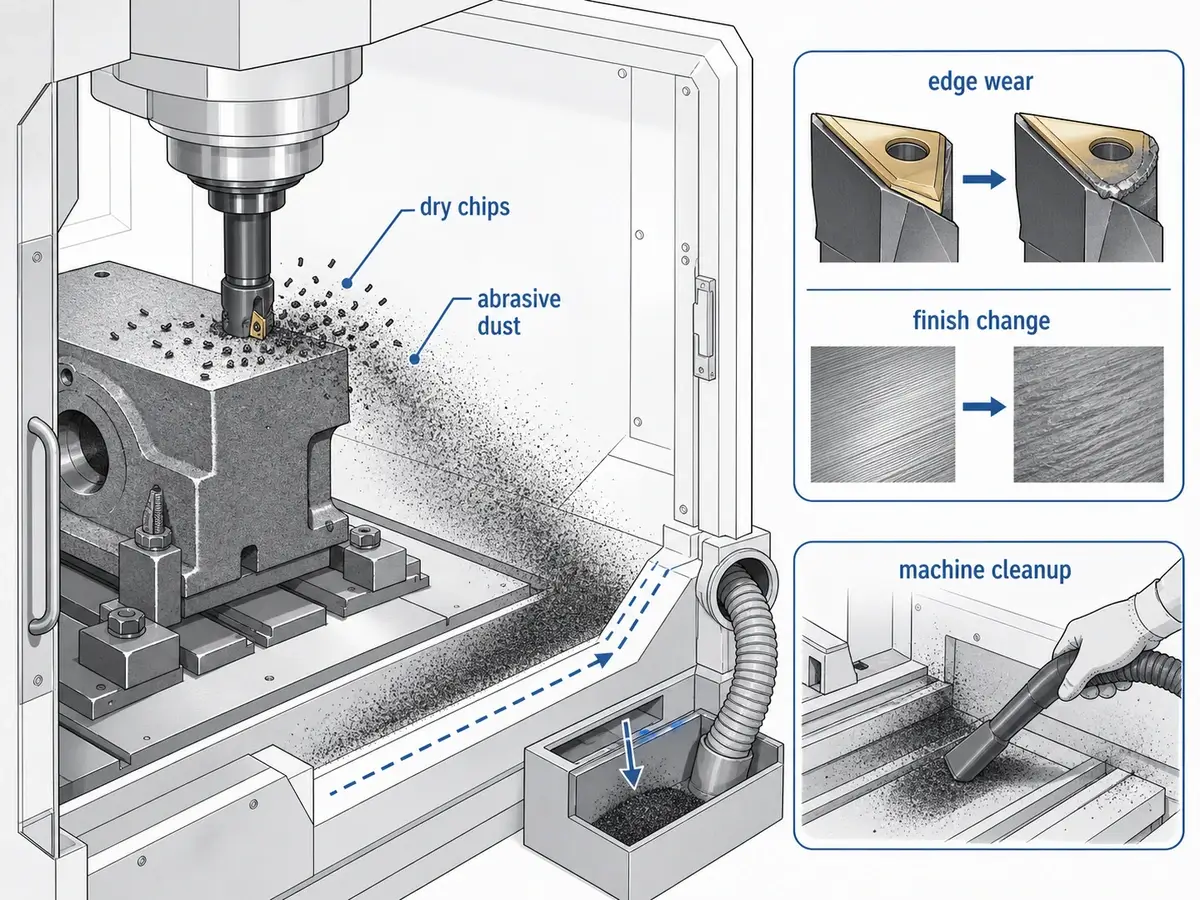
Dry cutting can avoid turning fine graphite and abrasive particles into a dirty slurry that coats the machine and enters the sump. It can also avoid thermal cycling in insert applications that are sensitive to intermittent coolant delivery.
Why coolant is still sometimes used
Coolant may still have a place depending on the operation, enclosure, dust-control strategy, and tooling behavior. The real question is whether dry or wet cutting gives better stability, machine care, and tool life for this application. When wet cutting is selected, the broader cutting-fluid troubleshooting guide helps diagnose delivery, concentration, contamination, and sump-maintenance problems.
Wear, dust, and machine care
Cast iron punishes weak machine-care routines because its dust and chips settle into the enclosure, covers, ways, and cleanup system.
Abrasive wear is not a side effect
The material can wear the cutting edge steadily even when the cut sounds calm. Cast-iron jobs may decline gradually in finish before the tool looks obviously damaged. Treat a repeatable finish change as a tool-life signal, not only as an aesthetic problem.
Dust control matters for people and machines
Fine cast-iron dust affects breathing conditions, machine cleanliness, and long-term maintenance. Use enclosure, source capture, disciplined cleanup, and a chip-management method suited to the process. OSHA’s guidance explains why properly designed local exhaust ventilation is generally more effective than relying on general dilution ventilation alone for machining contaminants.
Common cast-iron mistakes
| Mistake | Why it hurts |
|---|---|
| Treating all cast iron the same | Material structure, hardness, toughness, and wear behavior vary. |
| Choosing tooling only by hardness | Geometry, cut continuity, wear mode, and process style still matter. |
| Assuming dry cutting is always better | Some setups benefit from a controlled, consistent coolant strategy. |
| Ignoring dust and cleanup | Abrasive contamination damages machines and creates avoidable exposure. |
| Waiting for total failure before changing tools | Finish drift and dimensional change often provide earlier warning. |
Practical checklist for machining cast iron
- Identify the cast-iron type and hardness as clearly as possible.
- Decide whether the operation is limited by abrasion, toughness, impact, heat cycling, or geometry.
- Choose tooling for the observed wear pattern, not only brand familiarity.
- Make an explicit dry-versus-coolant decision instead of following habit.
- Keep coolant delivery continuous if the selected insert and process require wet cutting.
- Watch finish, size, sound, and spindle load for gradual wear changes.
- Treat dust capture and cleanup as part of the machining plan.
Conclusion
Machining cast iron is less about one heroic cutting number and more about managing abrasion, dust, material behavior, and tooling fit. Begin with realistic material identification, sound edge selection, and a deliberate decision about dry cutting versus coolant. Then decide whether ordinary carbide is enough or whether CBN Inserts or Solid CBN Inserts make technical and economic sense.
The payoff is not only longer tool life. It is more predictable finish, less machine contamination, and fewer false conclusions about what the material or tool should have done.
FAQ
Is cast iron usually machined dry?
Often, but not always. Dry cutting can simplify chip and dust handling and avoid inconsistent thermal cycling, while some operations still benefit from controlled coolant. The toolmaker’s guidance and the exact setup should decide.
Why does cast iron wear tools quickly?
Many cast irons are abrasive. That abrasion steadily attacks the cutting edge even when the cut sounds stable, so finish and size may drift before obvious edge failure appears.
Are CBN Inserts necessary for cast iron?
No. Carbide remains the practical baseline for many jobs. CBN becomes more relevant in harder, faster, or more abrasive applications where carbide cannot hold acceptable life, size, or finish.
What is the biggest cast-iron machining mistake?
Treating every cast iron as the same material. Grade behavior, hardness, cut continuity, dust handling, and the observed wear pattern all change the tooling decision.