










DLC vs PVD Coating for Cutting Tools: Which One Should You Choose?
Choosing the right coating is important for cutting tool performance. A good coating can reduce wear, improve tool life, lower friction, and help the tool work better with specific materials.
DLC coating describes a family of carbon-based materials, while PVD coating describes a deposition process. Some DLC coatings are deposited by PVD, so these categories overlap. Here, the comparison is between suitable DLC systems and conventional nitride-based PVD tool coatings; properties depend on the actual coating formulation.
For CNC machining, the question is not simply “Which coating is better?” The better question is:
Which coating is more suitable for your material, cutting condition, and tool type?
In this article, we will compare DLC vs PVD coating from a cutting tool application point of view.
Contents
What Is PVD Coating?
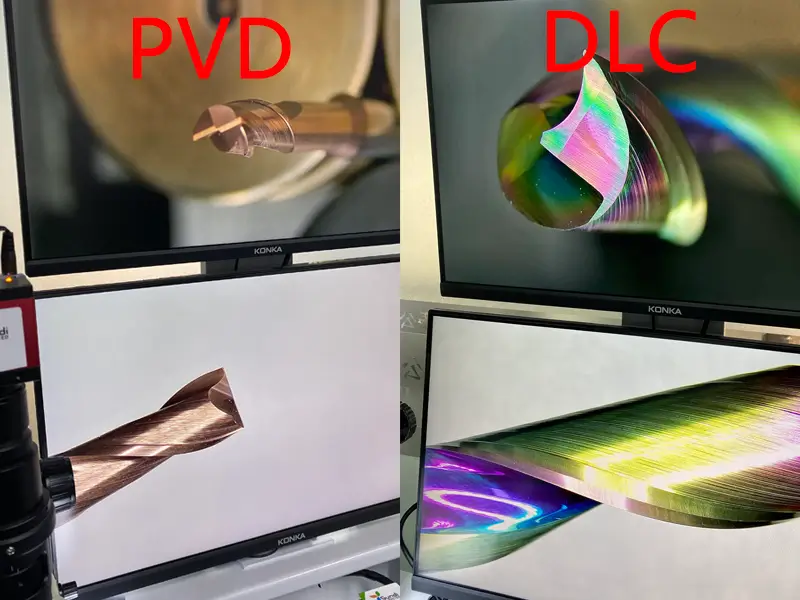
PVD stands for Physical Vapor Deposition. It is a coating process carried out in a vacuum chamber. During the process, coating materials are vaporized and deposited onto the tool surface to form a thin, hard protective layer.
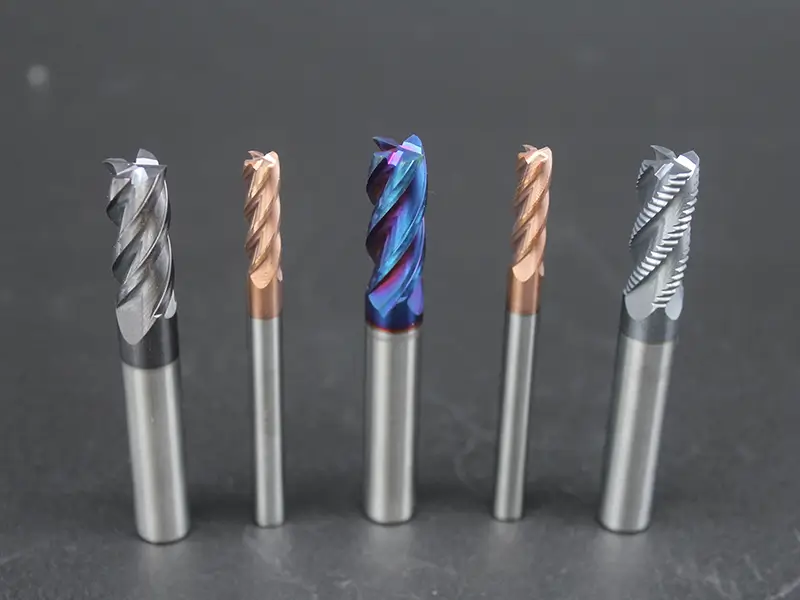
PVD is not one single coating. It is a coating technology. Many common tool coatings are made by PVD, such as:
- TiN coating
- TiAlN coating
- AlTiN coating
- CrN coating
- TiCN coating
For cutting tools, PVD coated cutting tools are widely used because they can improve wear resistance, surface hardness, oxidation resistance, and tool life.
PVD coatings are commonly used for machining:
- Steel
- Stainless steel
- Cast iron
- Alloy steel
- Heat-treated materials
- General metal parts
Because different PVD coatings have different properties, the right choice depends on the material and cutting conditions.
What Is DLC Coating?
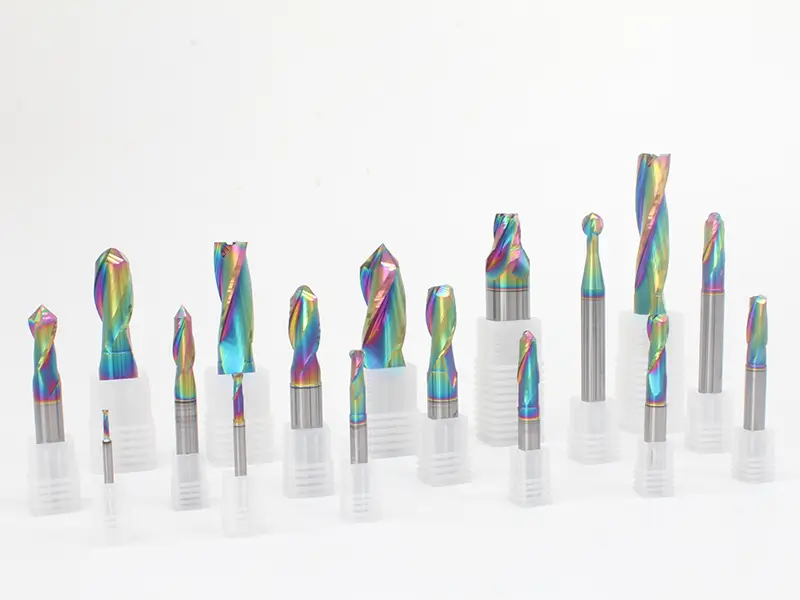
DLC stands for Diamond-Like Carbon. It is a carbon-based coating with some diamond-like properties. Compared with many traditional coatings, DLC coating is known for its low friction, high hardness, and excellent anti-adhesion performance.
For cutting tools, DLC is especially useful when machining materials that easily stick to the cutting edge.
Potential applications for appropriately qualified DLC grades include:
- Aluminum alloy machining
- Copper machining
- Brass machining
- Graphite machining
- Plastic machining
- Carbon fiber composite machining
- Other non-ferrous material machining
In these applications, the main problem is often not only wear. It can also be built-up edge, material sticking, poor surface finish, or unstable cutting.
This is where DLC coated tools can offer strong value.
DLC vs PVD Coating: Main Differences
DLC is a coating material family, and PVD is a deposition process that can also produce DLC. The table contrasts typical DLC characteristics with conventional nitride-based PVD tool coatings; it is not a universal specification or a comparison of mutually exclusive categories.
| Item | DLC Coating | PVD Coating |
|---|---|---|
| Full name | Diamond-Like Carbon | Physical Vapor Deposition |
| Coating type | Carbon-based coating | Deposition process; here, conventional nitride-based tool coatings |
| Main advantage | Low friction and anti-adhesion | Wear resistance and heat resistance |
| Common color | Often dark; appearance depends on the complete coating system | Gold, bronze, black, purple, blue, grey, etc. |
| Friction | Coating- and test-dependent; often low | Depends on coating type |
| Heat resistance | Grade-dependent; verify the specified service temperature | Suitable nitride coatings can support hot cutting; grade-dependent |
| Potential applications; validate the selected system | Aluminum, copper, graphite, plastic, composites | Steel, stainless steel, cast iron, alloy steel |
| Common tools | End mills, drills, reamers, inserts | End mills, drills, inserts, reamers, taps |
In simple terms:
Suitable DLC systems can reduce friction and material adhesion. Conventional nitride-based PVD coatings are often selected for wear and hot-cutting performance. Confirm the specific coating, substrate, work material, and operating conditions.
Black DLC and Colored DLC Coating
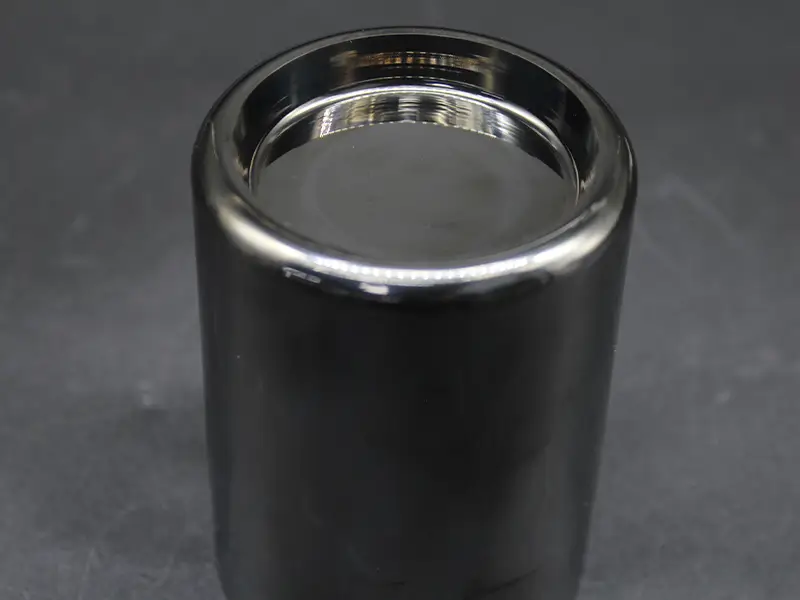
DLC appearance depends on the coating system and surface condition. Color alone cannot identify composition, deposition method, or cutting performance.
In cutting tools, black DLC coating is very common. It has a dark, smooth appearance and is often used for aluminum, copper, graphite, and other non-ferrous machining applications.
However, DLC coating can also appear in different colors. Depending on the coating structure, base layer, thickness, and surface treatment, some tools may show a colored DLC coating effect, such as rainbow-like, bronze, blue, or metallic tones.
The following labels describe appearance, not two standardized DLC material classes:
- Black DLC coating tools
- Colored DLC coating tools
But it is important to understand one thing:
Color does not decide cutting performance.
For CNC machining, customers should pay more attention to:
- Coating structure
- Friction coefficient
- Adhesion resistance
- Coating hardness
- Tool substrate
- Cutting material
- Cutting speed and feed
- Cooling condition
Black and colored tools may use different coating stacks or finishes. Confirm that the specified layer is actually DLC and obtain its composition, thickness, service limits, and application data; appearance is not a qualification test.
When Should You Choose DLC Coated Tools?
You should consider DLC coated cutting tools when the workpiece material is easy to stick to the cutting edge.
This is common in aluminum machining. Aluminum is soft compared with steel, but it can easily stick to the tool during cutting. Once built-up edge appears, the tool may lose sharpness, the surface finish becomes worse, and tool life becomes unstable.
DLC coating can help because it has low friction and good anti-adhesion properties.
Depending on the qualified coating and tool system, potential applications include:
- Aluminum alloy parts
- Automotive aluminum components
- Aerospace aluminum parts
- Copper electrodes
- Graphite electrodes
- Plastic parts
- Carbon fiber composite parts
For example, DLC coated end mills are often used in aluminum machining to reduce material sticking and improve surface finish.
When Should You Choose PVD Coated Tools?
For hot cutting or demanding work materials, suitable nitride-based PVD coatings may offer useful wear and oxidation resistance. PVD alone does not define those properties: select a named coating system and verify its application limits.
For steel and stainless-steel machining, suitable TiAlN or AlTiN coatings are possible options. Cutting temperature and wear depend on speed, engagement, geometry, material condition, and cooling, not only on the broad material name.
PVD coated tools are commonly used for:
- Steel machining
- Stainless steel machining
- Cast iron machining
- Mold steel machining
- Alloy steel machining
- General CNC machining
For many general-purpose machining applications, PVD coated cutting tools are still a reliable and cost-effective choice.
DLC Coated End Mills
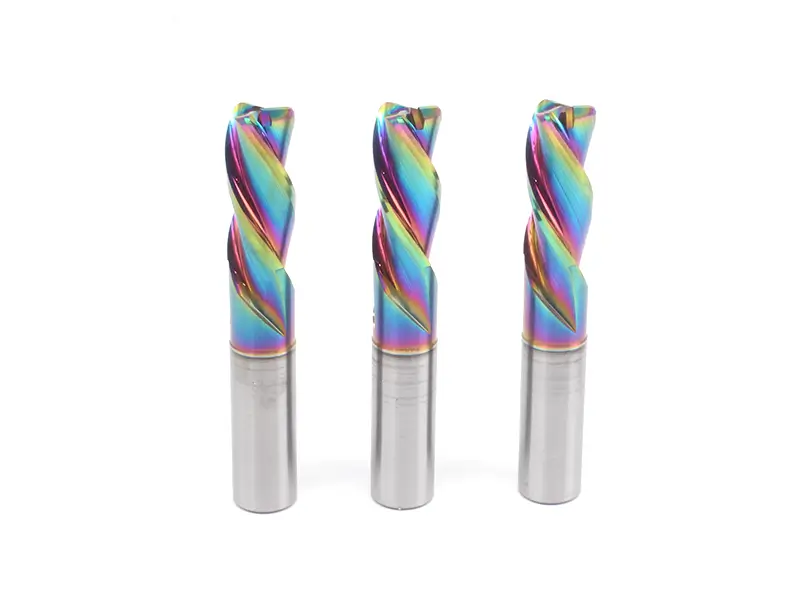
Among all DLC coated tools, DLC coated end mills are one of the most common product types.
They are often used for high-speed machining of aluminum and non-ferrous metals. With a sharp cutting edge and low-friction coating, they can help reduce chip sticking and improve machining stability.
DLC coated end mills are suitable for:
- Slot milling
- Side milling
- Pocket milling
- Finishing
- High-speed aluminum machining
For aluminum parts with high surface finish requirements, DLC coated end mills can be a good choice.
DLC Coated Drills
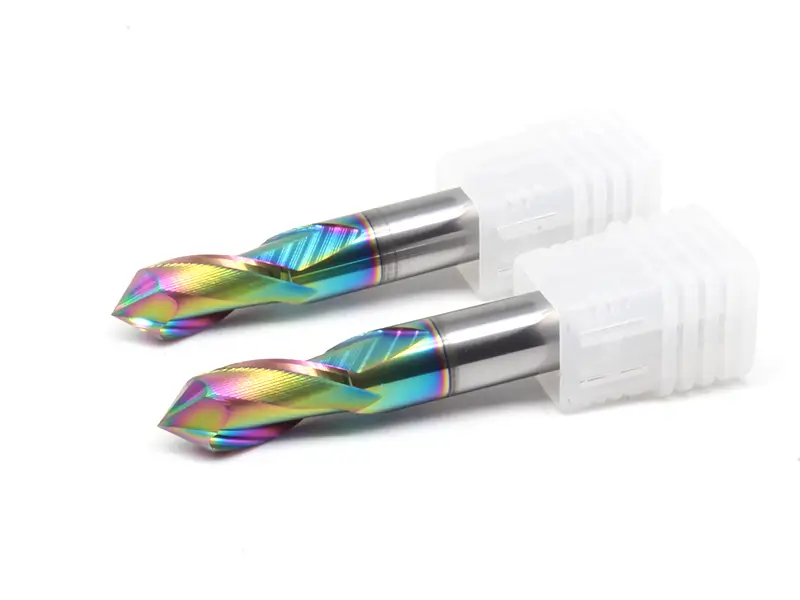
DLC coated drills are also widely used in aluminum, copper, and composite material drilling.
During drilling, chip evacuation is very important. If chips stick to the flute, the drill may generate more heat, lose accuracy, or even break.
DLC coating can make the drill surface smoother and help chips move out more easily.
DLC coated drills are suitable for:
- Aluminum drilling
- Copper drilling
- Composite material drilling
- Plastic drilling
- Precision hole machining
For customers who need stable hole quality and better chip evacuation, DLC coated drills are worth considering.
DLC Coated Reamers
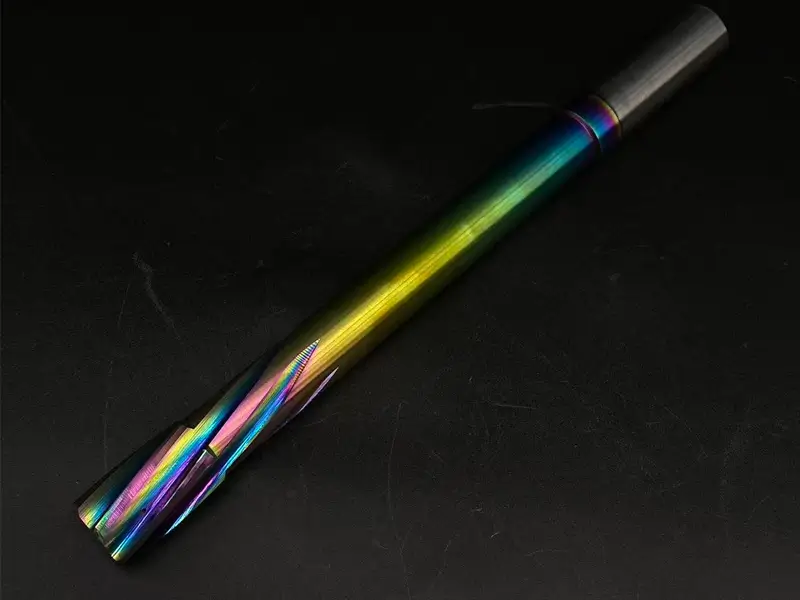
For precision hole finishing, DLC coated reamers can also be used, especially when machining non-ferrous materials.
A reamer requires good dimensional accuracy and surface finish. If the material sticks to the cutting edge, the hole quality may become unstable.
DLC coating can help reduce friction and improve surface consistency.
DLC coated reamers are often used for:
- Aluminum precision holes
- Copper parts
- Non-ferrous components
- High surface finish applications
- Custom hole finishing tools
For high-precision machining, the coating should be selected together with the tool geometry, tolerance, and cutting parameters.
DLC Coated Inserts
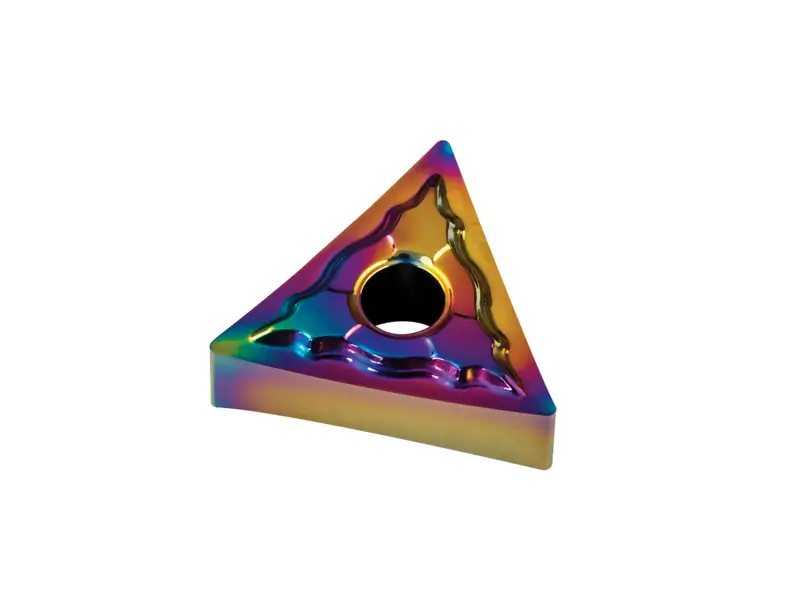
DLC coated inserts can be used for turning and milling non-ferrous materials. They are especially useful when the customer needs better surface finish and lower friction.
Common applications include:
- Aluminum turning
- Copper turning
- Non-ferrous metal finishing
- Plastic machining
- Light cutting applications
DLC is not automatically suitable for steel or stainless steel. Some nitride-based PVD coatings may be preferable for the actual thermal and wear conditions. Verify the coating manufacturer’s recommendations; neither category guarantees suitability.
Is DLC Always Better Than PVD?
No. DLC and PVD are overlapping terms, and neither label alone establishes better cutting performance.
This is a common misunderstanding.
Qualified DLC systems can help with friction and adhesion. For demanding steel machining or high cutting temperatures, a suitable nitride-based coating may be preferable. The exact formulation, substrate, edge preparation, and process determine the result.
For example:
- For aluminum machining, DLC is often a good choice.
- For steel machining, TiAlN or AlTiN PVD coating may be better.
- For stainless steel machining, coating selection depends on cutting speed, coolant, and tool geometry.
- For graphite machining, DLC or diamond coating may be considered depending on the application.
So the right coating should be selected based on the real working condition.
How to Choose Between DLC and PVD Coating
Before choosing a coating, you should first confirm the following details:
- What material will be machined?
- Is it roughing or finishing?
- Is the cutting speed high or low?
- Will coolant be used?
- Is material sticking a problem?
- Is tool wear mainly caused by heat, friction, or abrasion?
- What surface finish is required?
- What tool type is needed?
If the main problem is material sticking, built-up edge, or poor surface finish on aluminum or non-ferrous materials, DLC coating may be the better option.
If the main challenge is cutting heat, a hard material, or abrasive wear, compare qualified nitride-based PVD coatings with other suitable tool systems. Match the choice to the wear mechanism and operating limits; deposition method alone is not sufficient.
Final Recommendation
Select the coating system for the actual machining need. DLC identifies a material family and may itself be deposited by PVD; the comparisons here concern particular DLC and conventional nitride-based tool coatings.
Choose DLC coated tools when you need:
- Low friction
- Good anti-adhesion performance
- Better surface finish
- Aluminum machining
- Copper machining
- Graphite or composite machining
- Non-ferrous material cutting
Choose PVD coated tools when you need:
- Good wear resistance
- Better heat resistance
- Steel machining
- Stainless steel machining
- Cast iron machining
- General-purpose CNC cutting
If you are not sure which coating is suitable for your application, the best way is to check the workpiece material, machining process, cutting parameters, and tool type first.
As a cutting tool manufacturer, Sundi can provide DLC coated tools, PVD coated tools, and custom coated cutting tools based on different machining needs.
Whether you need black DLC coating tools, colored DLC coating tools, or a customized coating solution, we can help you choose the right option for your CNC machining application.
FAQs
Is DLC coating better than PVD coating?
Neither label is universally better. DLC is a material family that can be deposited by PVD. Suitable DLC systems may help with friction and adhesion, while selected nitride-based PVD coatings can suit hot steel cutting. Compare named coating systems under the actual work material and cutting conditions.
What materials are suitable for DLC coated tools?
Appropriate DLC grades can be considered for aluminum, copper, brass, plastics, and selected composite or graphite applications. Abrasive graphite and composites may instead require other qualified coatings or diamond tooling. Confirm wear behavior, edge geometry, dust or chip handling, and the manufacturer’s application data.
Can DLC coated tools machine steel?
In most cases, DLC coated tools are not the first choice for steel machining. Steel cutting usually generates higher heat, and some PVD coatings such as TiAlN or AlTiN may be more suitable. However, the final choice depends on the exact material and cutting condition.
What is the difference between black DLC and colored DLC coating?
Black or colored describes appearance, not a standardized DLC performance class. Coating stacks, thickness, surface finish, and optical effects can influence color. Verify the actual coating specification and application data rather than identifying composition or suitability from color.
What tools can be made with DLC coating?
Common DLC coated tools include DLC coated end mills, DLC coated drills, DLC coated reamers, DLC coated inserts, and custom DLC coated cutting tools. These tools are often used for aluminum and non-ferrous material machining.
Is DLC coating suitable for aluminum machining?
A suitable DLC system can be useful for aluminum machining because reduced friction and adhesion may limit built-up edge. Results depend on alloy composition, coating type, edge geometry, cutting conditions, and coolant. Validate finish and tool life in the intended operation rather than assuming every DLC grade is suitable.