


DLC- und PVD-Beschichtungen für Zerspanungswerkzeuge: Welche ist die richtige Wahl?
Die Wahl der richtigen Beschichtung ist wichtig für die Leistung eines Zerspanungswerkzeugs. Eine gute Beschichtung kann Verschleiß verringern, die Standzeit verlängern, Reibung reduzieren und das Werkzeug besser auf bestimmte Werkstoffe abstimmen.
DLC-Beschichtung bezeichnet eine Familie kohlenstoffbasierter Werkstoffe, während PVD-Beschichtung ein Abscheidungsverfahren bezeichnet. Manche DLC-Schichten werden mittels PVD abgeschieden; diese Kategorien überschneiden sich daher. Hier werden geeignete DLC-Systeme mit herkömmlichen nitridbasierten PVD-Werkzeugschichten verglichen. Die Eigenschaften hängen von der tatsächlichen Schichtzusammensetzung ab.
Bei der CNC-Bearbeitung lautet die Frage nicht einfach: Welche Beschichtung ist besser? Die bessere Frage ist:
Welche Beschichtung eignet sich besser für Ihren Werkstoff, Ihre Schnittbedingungen und Ihren Werkzeugtyp?
In diesem Artikel vergleichen wir DLC- und PVD-Beschichtungen aus Sicht ihrer Anwendung auf Schneidwerkzeugen.
Inhalt
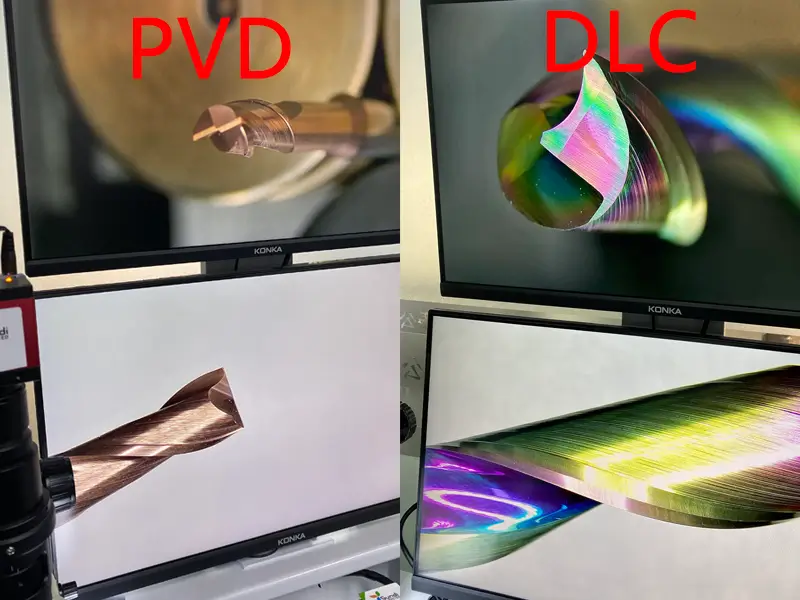
Was ist eine PVD-Beschichtung?
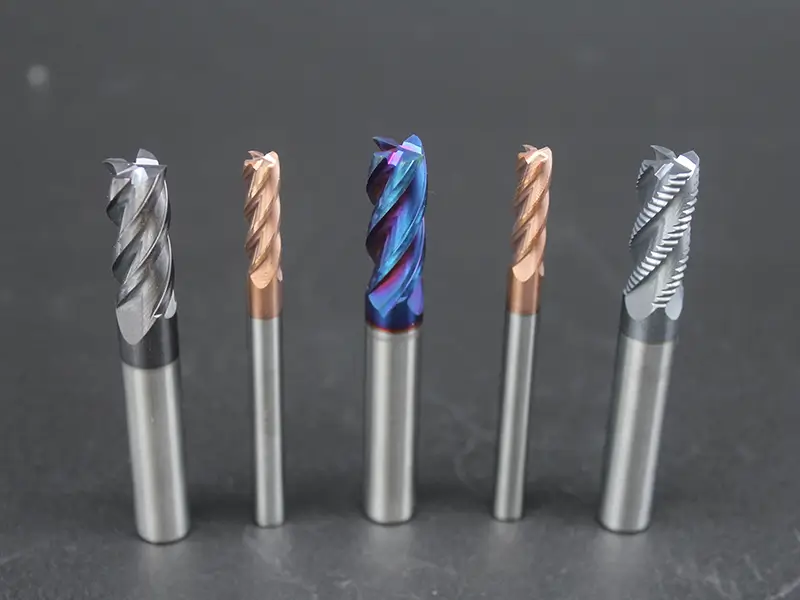
PVD steht für Physical Vapor Deposition (physikalische Gasphasenabscheidung). Dieses Beschichtungsverfahren findet in einer Vakuumkammer statt. Dabei werden Beschichtungswerkstoffe verdampft und auf der Werkzeugoberfläche abgeschieden, um eine dünne, harte Schutzschicht zu bilden.
PVD ist keine einzelne Beschichtung, sondern eine Beschichtungstechnologie. Viele gängige Werkzeugschichten werden mittels PVD hergestellt, zum Beispiel:
- TiN-Beschichtung
- TiAlN-Beschichtung
- AlTiN-Beschichtung
- CrN-Beschichtung
- TiCN-Beschichtung
Im Bereich der Zerspanung werden PVD-beschichtete Schneidwerkzeuge häufig eingesetzt, weil sie Verschleißbeständigkeit, Oberflächenhärte, Oxidationsbeständigkeit und Standzeit verbessern können.
PVD-Beschichtungen werden häufig zur Bearbeitung folgender Werkstoffe eingesetzt:
- Stahl
- Edelstahl
- Gusseisen
- Legierter Stahl
- Wärmebehandelte Werkstoffe
- Allgemeine Metallbauteile
Da verschiedene PVD-Schichten unterschiedliche Eigenschaften besitzen, hängt die richtige Wahl von Werkstoff und Schnittbedingungen ab.
Was ist eine DLC-Beschichtung?
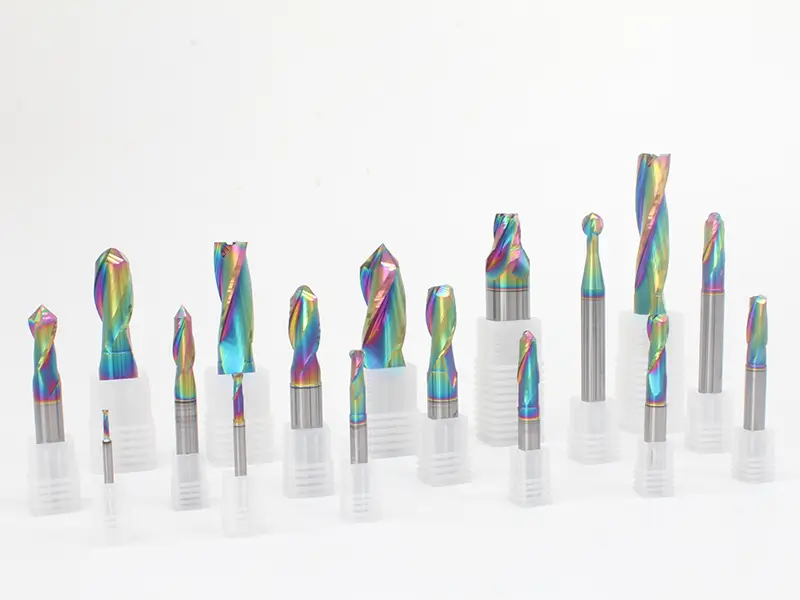
DLC steht für Diamond-Like Carbon (diamantähnlicher Kohlenstoff). Diese kohlenstoffbasierte Schicht besitzt einige diamantähnliche Eigenschaften. Im Vergleich zu vielen herkömmlichen Beschichtungen ist DLC bekannt für geringe Reibung, hohe Härte und ausgezeichnete Antihaftwirkung.
Bei Schneidwerkzeugen ist DLC besonders nützlich, wenn Werkstoffe zur Anhaftung an der Schneide neigen.
Mögliche Anwendungen entsprechend qualifizierter DLC-Sorten sind:
- Bearbeitung von Aluminiumlegierungen
- Kupferbearbeitung
- Messingbearbeitung
- Graphitbearbeitung
- Kunststoffbearbeitung
- Bearbeitung von Kohlefaserverbundwerkstoffen
- Bearbeitung weiterer Nichteisenwerkstoffe
Bei diesen Anwendungen ist Verschleiß häufig nicht das einzige Problem. Hinzukommen können Aufbauschneidenbildung, Materialanhaftung, schlechte Oberflächengüte oder instabile Zerspanung.
Hier können DLC-beschichtete Werkzeuge einen deutlichen Nutzen bieten.
DLC- und PVD-Beschichtungen: wesentliche Unterschiede
DLC ist eine Familie von Schichtwerkstoffen; PVD ist ein Abscheidungsverfahren, mit dem auch DLC hergestellt werden kann. Die Tabelle stellt typische DLC-Eigenschaften herkömmlichen nitridbasierten PVD-Werkzeugschichten gegenüber. Sie ist weder eine allgemeingültige Spezifikation noch ein Vergleich sich gegenseitig ausschließender Kategorien.
| Merkmal | DLC-Beschichtung | PVD-Beschichtung |
|---|---|---|
| Vollständige Bezeichnung | Diamond-Like Carbon (diamantähnlicher Kohlenstoff) | Physical Vapor Deposition (physikalische Gasphasenabscheidung) |
| Beschichtungsart | Kohlenstoffbasierte Beschichtung | Abscheidungsverfahren; hier herkömmliche nitridbasierte Werkzeugschichten |
| Hauptvorteil | Geringe Reibung und Antihaftwirkung | Verschleiß- und Temperaturbeständigkeit |
| Typische Farbe | Häufig dunkel; das Erscheinungsbild hängt vom gesamten Schichtsystem ab | Gold, Bronze, Schwarz, Violett, Blau, Grau usw. |
| Reibung | Schicht- und prüfabhängig; häufig niedrig | Abhängig vom Schichttyp |
| Wärmebeständigkeit | Sortenabhängig; vorgeschriebene Einsatztemperatur prüfen | Geeignete Nitridschichten ermöglichen hohe Schnitttemperaturen; sortenabhängig |
| Mögliche Anwendungen; gewähltes System validieren | Aluminium, Kupfer, Graphit, Kunststoffe, Verbundwerkstoffe | Stahl, nichtrostender Stahl, Gusseisen, legierter Stahl |
| Übliche Werkzeuge | Schaftfräser, Bohrer, Reibahlen, Wendeschneidplatten | Schaftfräser, Bohrer, Wendeschneidplatten, Reibahlen, Gewindebohrer |
Vereinfacht gesagt:
Geeignete DLC-Systeme können Reibung und Werkstoffanhaftung reduzieren. Herkömmliche nitridbasierte PVD-Schichten werden häufig wegen ihres Verschleißverhaltens und ihrer Eignung für hohe Schnitttemperaturen gewählt. Prüfen Sie die konkrete Beschichtung, das Substrat, den Werkstoff und die Einsatzbedingungen.
Schwarze DLC- und farbige DLC-Beschichtungen
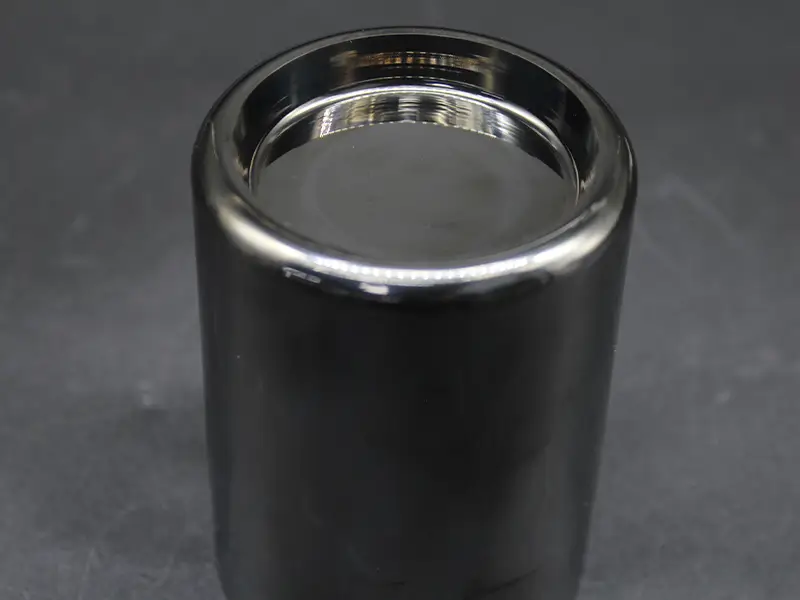
Das Erscheinungsbild von DLC hängt vom Schichtsystem und Oberflächenzustand ab. Die Farbe allein erlaubt keine Bestimmung von Zusammensetzung, Abscheidungsverfahren oder Zerspanungsleistung.
Bei Schneidwerkzeugen ist eine schwarze DLC-Beschichtung sehr verbreitet. Sie besitzt ein dunkles, glattes Erscheinungsbild und wird häufig zur Bearbeitung von Aluminium, Kupfer, Graphit und anderen Nichteisenwerkstoffen eingesetzt.
DLC-Beschichtungen können jedoch auch unterschiedliche Farben zeigen. Je nach Schichtaufbau, Grundschicht, Dicke und Oberflächenbehandlung können manche Werkzeuge einen Effekt zeigen, der als farbige DLC-Beschichtung bezeichnet wird, etwa regenbogenartige, bronzene, blaue oder metallische Farbtöne.
Die folgenden Bezeichnungen beschreiben das Erscheinungsbild, keine zwei genormten DLC-Werkstoffklassen:
- Werkzeuge mit schwarzer DLC-Beschichtung
- Werkzeuge mit farbiger DLC-Beschichtung
Eines ist dabei wesentlich:
Die Farbe bestimmt nicht die Zerspanungsleistung.
Bei der CNC-Bearbeitung sollten Kunden stärker auf folgende Punkte achten:
- Schichtaufbau
- Reibungskoeffizient
- Beständigkeit gegen Anhaftung
- Schichthärte
- Werkzeugsubstrat
- Schneidstoff
- Schnittgeschwindigkeit und Vorschub
- Kühlbedingungen
Schwarze und farbige Werkzeuge können unterschiedliche Schichtaufbauten oder Oberflächenbehandlungen besitzen. Prüfen Sie, ob die angegebene Schicht tatsächlich DLC ist, und beschaffen Sie Daten zu Zusammensetzung, Dicke, Einsatzgrenzen und Anwendungen. Das Erscheinungsbild ersetzt keine Eignungsprüfung.
Wann sollten Sie DLC-beschichtete Werkzeuge wählen?
Ziehen Sie DLC-beschichtete Schneidwerkzeuge in Betracht, wenn der Werkstoff leicht an der Schneide haftet.
Dies tritt häufig auf bei der Aluminiumbearbeitung. Aluminium ist im Vergleich zu Stahl weich, kann jedoch beim Schneiden leicht am Werkzeug haften. Sobald eine Aufbauschneide entsteht, kann das Werkzeug an Schärfe verlieren, die Oberfläche schlechter werden und die Standzeit schwanken.
Eine DLC-Beschichtung kann durch geringe Reibung und gute Antihaftwirkung helfen.
Je nach qualifizierter Beschichtung und Werkzeugsystem kommen folgende Anwendungen infrage:
- Bauteile aus Aluminiumlegierungen
- Aluminiumbauteile für die Automobilindustrie
- Aluminiumteile für die Luft- und Raumfahrt
- Kupferelektroden
- Graphitelektroden
- Kunststoffteile
- Bauteile aus Kohlefaserverbundwerkstoff
Beispielsweise werden DLC-beschichtete Schaftfräser häufig bei der Aluminiumbearbeitung eingesetzt, um Materialanhaftung zu reduzieren und die Oberfläche zu verbessern.
Wann sollten Sie PVD-beschichtete Werkzeuge wählen?
Bei hohen Schnitttemperaturen oder anspruchsvollen Werkstoffen können geeignete nitridbasierte PVD-Schichten nützliche Verschleiß- und Oxidationsbeständigkeit bieten. PVD allein definiert diese Eigenschaften nicht. Wählen Sie ein konkret bezeichnetes Schichtsystem und prüfen Sie seine Einsatzgrenzen.
Für die Bearbeitung von Stahl und nichtrostendem Stahl kommen geeignete TiAlN- oder AlTiN-Schichten infrage. Schnitttemperatur und Verschleiß hängen von Geschwindigkeit, Eingriff, Geometrie, Werkstoffzustand und Kühlung ab, nicht allein von der allgemeinen Werkstoffbezeichnung.
PVD-beschichtete Werkzeuge werden häufig für folgende Aufgaben eingesetzt:
- Stahlbearbeitung
- Bearbeitung von nichtrostendem Stahl
- Gusseisenbearbeitung
- Bearbeitung von Formenstahl
- Bearbeitung legierter Stähle
- Allgemeine CNC-Bearbeitung
Für viele allgemeine Zerspanungsaufgaben bleiben PVD-beschichtete Schneidwerkzeuge eine zuverlässige und wirtschaftliche Wahl.
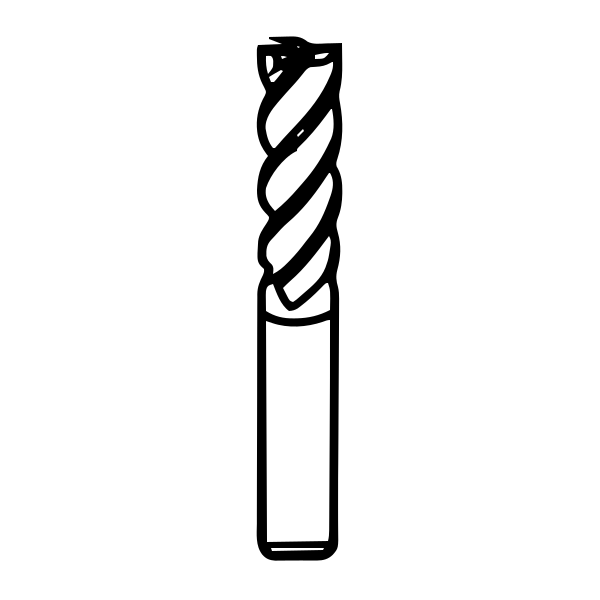
DLC-beschichtete Schaftfräser
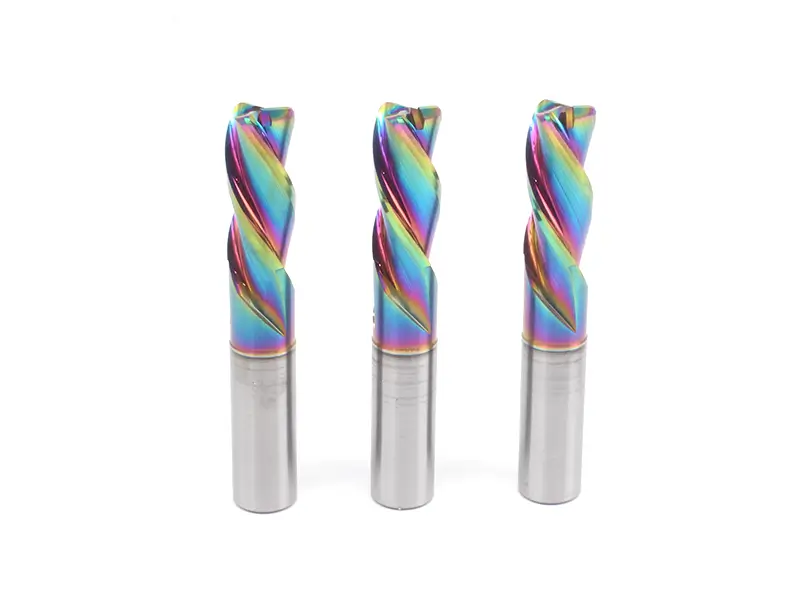
Unter den DLC-beschichteten Werkzeugen gehören DLC-beschichtete Schaftfräser zu den häufigsten Produktarten.
Sie werden häufig für die Hochgeschwindigkeitsbearbeitung von Aluminium und Nichteisenmetallen eingesetzt. Eine scharfe Schneide und eine reibungsarme Beschichtung können die Spananhaftung reduzieren und die Bearbeitungsstabilität verbessern.
DLC-beschichtete Schaftfräser eignen sich für:
- Nutfräsen
- Seitenfräsen
- Taschenfräsen
- Schlichten
- Hochgeschwindigkeitsbearbeitung von Aluminium
Für Aluminiumteile mit hohen Oberflächenanforderungen können DLC-beschichtete Schaftfräser eine gute Wahl sein.
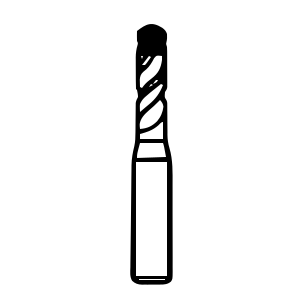
DLC-beschichtete Bohrer
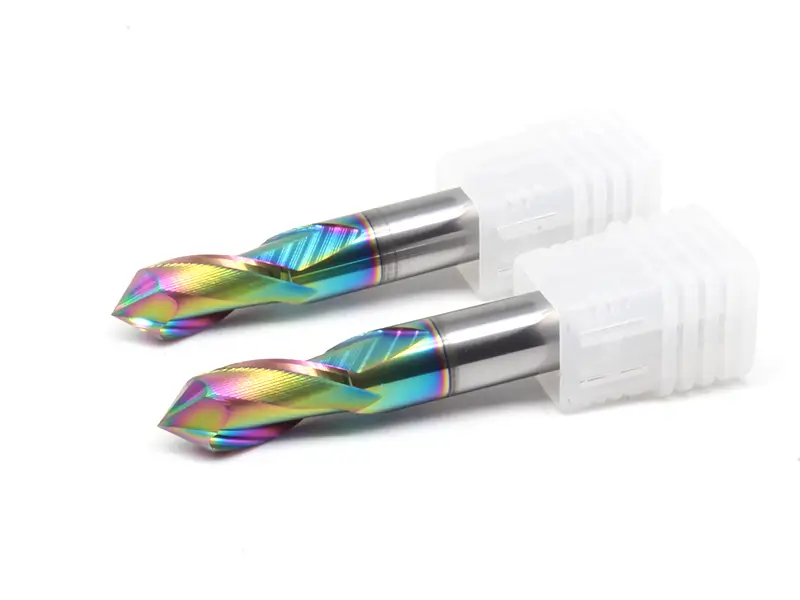
DLC-beschichtete Bohrer werden auch häufig zum Bohren von Aluminium, Kupfer und Verbundwerkstoffen eingesetzt.
Beim Bohren ist die Spanabfuhr entscheidend. Haften Späne in der Nut, kann der Bohrer stärker erwärmt werden, an Genauigkeit verlieren oder sogar brechen.
Eine DLC-Beschichtung kann die Bohreroberfläche glatter machen und die Spanabfuhr erleichtern.
DLC-beschichtete Bohrer eignen sich für:
- Bohren in Aluminium
- Bohren in Kupfer
- Bohren in Verbundwerkstoffen
- Bohren in Kunststoff
- Präzisionsbohrungsbearbeitung
Für stabile Bohrungsqualität und bessere Spanabfuhr sind DLC-beschichtete Bohrer eine prüfenswerte Option.
DLC-beschichtete Reibahlen
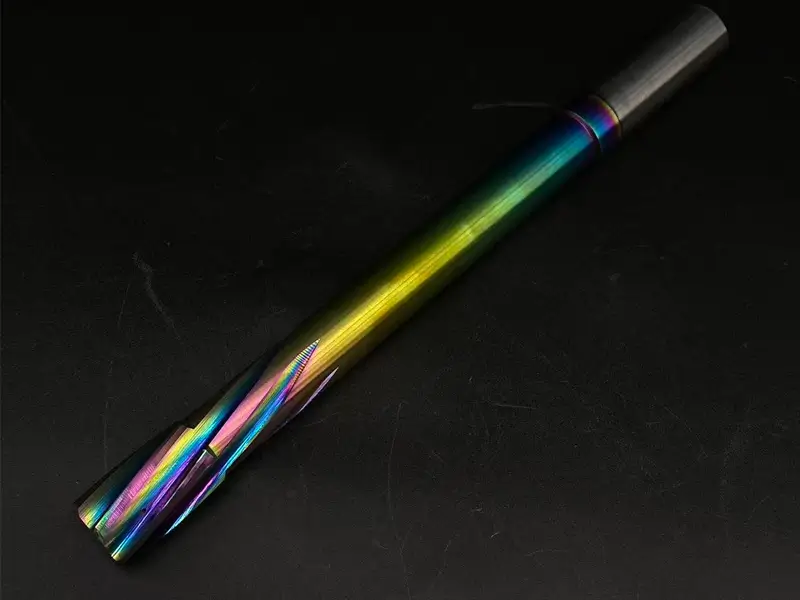
Für die Präzisionsfeinbearbeitung von Bohrungen können auch DLC-beschichtete Reibahlen verwendet werden, insbesondere bei Nichteisenwerkstoffen.
Beim Reiben sind hohe Maßgenauigkeit und Oberflächengüte erforderlich. Haftet der Werkstoff an der Schneide, kann die Bohrungsqualität instabil werden.
Eine DLC-Beschichtung kann Reibung reduzieren und eine gleichmäßigere Oberfläche unterstützen.
DLC-beschichtete Reibahlen werden häufig eingesetzt für:
- Präzisionsbohrungen in Aluminium
- Kupferteile
- Nichteisenbauteile
- Anwendungen mit hohen Oberflächenanforderungen
- Sonderwerkzeuge für die Bohrungsfeinbearbeitung
Für hochpräzise Bearbeitung sollte die Beschichtung gemeinsam mit Werkzeuggeometrie, Toleranz und Schnittparametern gewählt werden.
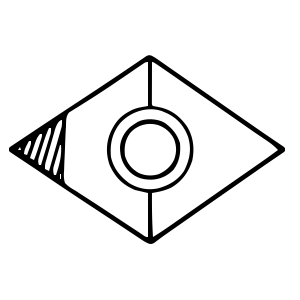
DLC-beschichtete Wendeschneidplatten
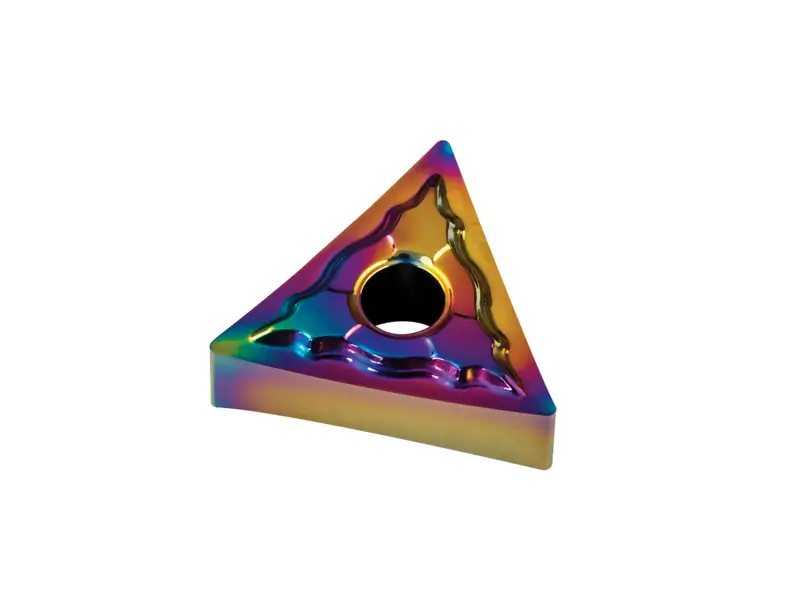
DLC-beschichtete Wendeschneidplatten können zum Drehen und Fräsen von Nichteisenwerkstoffen eingesetzt werden. Sie sind besonders nützlich, wenn bessere Oberflächen und geringere Reibung benötigt werden.
Typische Anwendungen sind:
- Aluminiumdrehen
- Kupferdrehen
- Feinbearbeitung von Nichteisenmetallen
- Kunststoffbearbeitung
- Anwendungen mit leichten Schnitten
DLC eignet sich nicht automatisch für Stahl oder nichtrostenden Stahl. Manche nitridbasierten PVD-Schichten können unter den tatsächlichen Temperatur- und Verschleißbedingungen vorteilhafter sein. Prüfen Sie die Empfehlungen des Schichtherstellers; keine der Kategorien garantiert die Eignung.
Ist DLC immer besser als PVD?
Nein. DLC und PVD sind sich überschneidende Begriffe; keine der Bezeichnungen allein belegt eine bessere Zerspanungsleistung.
Dies ist ein verbreitetes Missverständnis.
Qualifizierte DLC-Systeme können bei Reibungs- und Anhaftungsproblemen helfen. Für anspruchsvolle Stahlbearbeitung oder hohe Schnitttemperaturen kann eine geeignete nitridbasierte Schicht vorteilhafter sein. Die genaue Zusammensetzung, das Substrat, die Schneidkantenpräparation und der Prozess bestimmen das Ergebnis.
Zum Beispiel:
- Für die Aluminiumbearbeitung ist DLC häufig eine gute Wahl.
- Für die Stahlbearbeitung kann eine TiAlN- oder AlTiN-PVD-Beschichtung besser geeignet sein.
- Bei nichtrostendem Stahl hängt die Beschichtungswahl von Schnittgeschwindigkeit, Kühlschmierstoff und Werkzeuggeometrie ab.
- Bei der Graphitbearbeitung kommen je nach Anwendung DLC- oder Diamantbeschichtungen infrage.
Die richtige Beschichtung sollte daher anhand der tatsächlichen Einsatzbedingungen gewählt werden.
Wie wählt man zwischen DLC- und PVD-Beschichtungen?
Vor der Auswahl einer Beschichtung sollten Sie folgende Punkte klären:
- Welcher Werkstoff wird bearbeitet?
- Geht es um Schruppen oder Schlichten?
- Ist die Schnittgeschwindigkeit hoch oder niedrig?
- Wird Kühlschmierstoff verwendet?
- Ist Materialanhaftung ein Problem?
- Wird der Werkzeugverschleiß hauptsächlich durch Wärme, Reibung oder Abrasion verursacht?
- Welche Oberflächengüte ist gefordert?
- Welcher Werkzeugtyp wird benötigt?
Wenn Materialanhaftung, Aufbauschneidenbildung oder schlechte Oberflächen bei Aluminium oder Nichteisenwerkstoffen im Vordergrund stehen, kann DLC die bessere Option sein.
Wenn die Hauptanforderung Schnittwärme, ein harter Werkstoff oder abrasiver Verschleiß ist, vergleichen Sie qualifizierte nitridbasierte PVD-Schichten mit anderen geeigneten Werkzeugsystemen. Stimmen Sie die Wahl auf Verschleißmechanismus und Betriebsgrenzen ab. Das Abscheidungsverfahren allein reicht nicht aus.
Abschließende Empfehlung
Wählen Sie das Schichtsystem für die tatsächliche Bearbeitungsaufgabe. DLC bezeichnet eine Werkstofffamilie und kann selbst mittels PVD abgeschieden werden. Die Vergleiche hier betreffen konkrete DLC- und herkömmliche nitridbasierte Werkzeugschichten.
Wählen Sie DLC-beschichtete Werkzeuge, wenn Sie Folgendes benötigen:
- Geringe Reibung
- Gute Antihaftwirkung
- Bessere Oberflächengüte
- Aluminiumbearbeitung
- Kupferbearbeitung
- Graphit- oder Verbundwerkstoffbearbeitung
- Zerspanung von Nichteisenwerkstoffen
Wählen Sie PVD-beschichtete Werkzeuge, wenn Sie Folgendes benötigen:
- Gute Verschleißbeständigkeit
- Bessere Temperaturbeständigkeit
- Stahlbearbeitung
- Bearbeitung von nichtrostendem Stahl
- Gusseisenbearbeitung
- Allgemeine CNC-Zerspanung
Wenn Sie bei der Beschichtungswahl unsicher sind, prüfen Sie zunächst Werkstoff, Bearbeitungsverfahren, Schnittparameter und Werkzeugtyp.
Als Schneidwerkzeughersteller kann Sundi DLC-beschichtete, PVD-beschichtete und individuell beschichtete Schneidwerkzeuge für unterschiedliche Bearbeitungsanforderungen liefern.
Ob Sie Werkzeuge mit schwarzer DLC-Beschichtung, Werkzeuge mit farbiger DLC-Beschichtung oder eine individuelle Beschichtungslösung benötigen: Wir helfen Ihnen, die richtige Option für Ihre CNC-Bearbeitung zu wählen.
Häufige Fragen
Ist eine DLC-Beschichtung besser als eine PVD-Beschichtung?
Keine Bezeichnung ist grundsätzlich besser. DLC ist eine Werkstofffamilie, die mittels PVD abgeschieden werden kann. Geeignete DLC-Systeme können bei Reibung und Anhaftung helfen, während ausgewählte nitridbasierte PVD-Schichten für hohe Temperaturen bei der Stahlzerspanung geeignet sein können. Vergleichen Sie konkret benannte Schichtsysteme unter den tatsächlichen Werkstoff- und Schnittbedingungen.
Für welche Werkstoffe eignen sich DLC-beschichtete Werkzeuge?
Geeignete DLC-Sorten kommen für Aluminium, Kupfer, Messing, Kunststoffe sowie ausgewählte Verbundwerkstoff- oder Graphitanwendungen infrage. Abrasiver Graphit und Verbundwerkstoffe können stattdessen andere qualifizierte Schichten oder Diamantwerkzeuge erfordern. Prüfen Sie Verschleißverhalten, Schneidengeometrie, Staub- oder Spänehandhabung und die Anwendungsdaten des Herstellers.
Können DLC-beschichtete Werkzeuge Stahl bearbeiten?
In den meisten Fällen sind DLC-beschichtete Werkzeuge nicht die erste Wahl für Stahl. Bei der Stahlzerspanung entsteht üblicherweise mehr Wärme, und bestimmte PVD-Schichten wie TiAlN oder AlTiN können geeigneter sein. Die endgültige Wahl hängt jedoch vom konkreten Werkstoff und den Schnittbedingungen ab.
Was unterscheidet schwarze DLC- von farbigen DLC-Beschichtungen ?
Schwarz oder farbig beschreibt das Erscheinungsbild, keine genormte DLC-Leistungsklasse. Schichtaufbau, Dicke, Oberflächenfinish und optische Effekte können die Farbe beeinflussen. Prüfen Sie die tatsächliche Schichtspezifikation und Anwendungsdaten, statt Zusammensetzung oder Eignung aus der Farbe abzuleiten.
Welche Werkzeuge können mit DLC beschichtet werden?
Übliche DLC-beschichtete Werkzeuge sind DLC-Schaftfräser, DLC-Bohrer, DLC-Reibahlen, DLC-Wendeschneidplatten und kundenspezifische DLC-Schneidwerkzeuge. Sie werden häufig für Aluminium und Nichteisenwerkstoffe eingesetzt.
Eignet sich eine DLC-Beschichtung für die Aluminiumbearbeitung?
Ein geeignetes DLC-System kann bei der Aluminiumbearbeitung nützlich sein, weil geringere Reibung und Anhaftung die Aufbauschneidenbildung begrenzen können. Das Ergebnis hängt von Legierungszusammensetzung, Schichttyp, Schneidengeometrie, Schnittbedingungen und Kühlschmierstoff ab. Validieren Sie Oberfläche und Standzeit in der vorgesehenen Bearbeitung, statt jede DLC-Sorte als geeignet anzusehen.