



Tournage dur ou rectification : quand le tournage CBN peut remplacer la rectification et quand il ne le peut pas
Le tournage dur peut remplacer la rectification si la pièce trempée, la machine, le bridage, la plaquette, le comportement thermique et la tolérance conviennent au procédé. La rectification reste plus sûre lorsque dimensions, circularité, coaxialité, état de surface ou répétabilité exigés dépassent les capacités du tournage. Il ne s’agit pas de savoir quel procédé est « meilleur », mais lequel maîtrise l’exigence finale avec le moins de risque.
Réponse pratique : le tournage dur ne remplace la rectification que dans une fenêtre adaptée
Le tournage dur est intéressant parce qu’il finit l’acier trempé sur un tour, réduit les montages et le temps de cycle et évite le passage à une rectifieuse. Mais ce n’est pas un substitut universel. Il fonctionne au mieux avec une géométrie stable, une machine rigide, la bonne plaquette, des tolérances réalistes et des mesures répétables.
La rectification reste la réponse la plus claire dans une fenêtre de tolérance très étroite, surtout lorsque circularité, rectitude, coaxialité ou état de surface dominent.
Tableau de décision rapide
| Condition | Le tournage dur est favorisé lorsque… | La rectification est favorisée lorsque… |
|---|---|---|
| Tolérance | La plage dimensionnelle est réaliste pour le tour, le mandrin, la plaquette et la mesure. | Le travail exige des dix-millièmes de pouce ou une précision micrométrique, et la répétabilité prime sur la réduction des montages. |
| Circularité/coaxialité | La pièce est courte, rigide et bien soutenue. | La circularité, la coaxialité ou une géométrie de type palier est l’exigence déterminante. |
| État de surface | Un fini tourné convient et la plaquette coupe proprement. | Un fini fin, un faible Ra ou l’intégrité de surface est décisif. |
| Dureté du matériau | Les outils CBN ou céramique conviennent à la dureté et au comportement du matériau. | Chaleur, conicité ou usure de plaquette rendent le tournage dur instable. |
| Géométrie | La pièce est accessible et pas trop flexible. | Une géométrie longue, mince, interrompue ou sensible aux déformations domine le résultat. |
| Équipement | Un centre de tournage rigide est disponible et la rectification est le goulot d’étranglement. | Un procédé de rectification/honage performant est disponible et garantit la tolérance finale. |
La limite du procédé en une phrase
Le tournage dur remplace bien la rectification lorsqu’il atteint directement l’exigence finale ; il devient une préfinition si rectification ou honage restent nécessaires pour garantir cote, circularité ou fini.
Ce que le tournage dur et la rectification doivent maîtriser
Tournage dur et rectification peuvent finir un matériau trempé, mais le maîtrisent différemment. Le tournage dur enlève la matière avec une arête unique. La rectification utilise une meule abrasive et de nombreux points de coupe pour retirer des copeaux beaucoup plus petits. Cette différence modifie les risques.
Tournage dur des aciers trempés
Le tournage dur concerne généralement les aciers trempés, souvent au-delà du milieu de la plage des 40 HRC et fréquemment vers le haut des 50 HRC, avec des plaquettes CBN, PCBN, céramique ou d’autres matériaux de coupe durs. Il convient si le tour reste rigide, la coupe maîtrisée et si conicité, broutement et dérive thermique peuvent être évités.
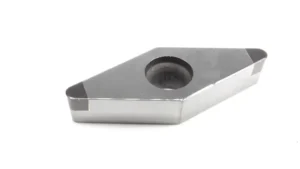
Le tournage dur peut être remarquablement performant. Des ateliers tournent des aciers de moules, de roulements, du 4140 trempé, du 440C, D2, A2, H13 et d’autres aciers à outils avec le bon équipement. Mais la faisabilité ne garantit pas le procédé. Arête, porte-outil, mandrin, état machine, soutien et moment de mesure comptent tous.
La rectification comme finition de précision
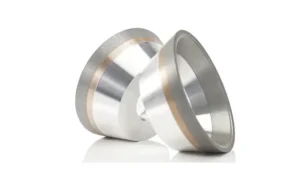
La rectification est plus lente dans bien des cas, mais conçue pour la finition précise. Rectification cylindrique, sans centres, intérieure, sur tour, honage et rodage existent parce que certaines pièces exigent plus qu’une surface tournée ne peut garantir.
La rectification est souvent la solution pratique pour une circularité serrée, un fini fin, une géométrie traitée thermiquement difficile ou des pièces dont elle assure déjà la finition finale. Elle peut être la seule voie raisonnable si le plan impose une tolérance qu’un montage de tournage classique ne tient pas avec confiance.
Pourquoi comparer selon l’exigence finale plutôt que le nom du procédé
La question n’est pas de savoir si le tournage dur peut usiner l’acier trempé : il le peut. Il faut demander si ce montage peut respecter de façon répétée l’exigence finale de cette pièce.
Si la pièce exige seulement un diamètre extérieur trempé propre dans une tolérance raisonnable, le tournage dur peut être idéal. Si coaxialité, circularité ou fini sont extrêmement exigeants, la rectification peut rester nécessaire après une passe de tournage réussie.
Quand le tournage dur est préférable
Le tournage dur est le plus efficace avec une fenêtre maîtrisée et une pièce n’exigeant pas la précision d’une rectifieuse.
La tolérance est réaliste pour la machine
Un centre rigide peut tenir de très bonnes tolérances, mais tout le système doit être répétable : broche, mandrin, tourelle, porte-outil, plaquette, état thermique et mesure. Les praticiens considèrent souvent une tolérance inférieure à environ +/-0.0004 pouce comme un signal pour envisager la rectification. Ce n’est pas une norme officielle, mais un avertissement utile en atelier.
Si la tolérance est serrée sans être extrême, le tournage dur peut convenir. Si elle se mesure en micromètres et inclut circularité ou coaxialité, une analyse plus poussée s’impose avant de promettre une production uniquement par tournage.
Le montage est rigide et thermiquement stable
Le tournage dur exige de la rigidité. Porte-à-faux court, serrage ferme, bon soutien, porte-outil stable et chaleur maîtrisée sont essentiels. Une petite correction d’outil ne produit pas toujours la même correction sur la pièce, surtout en présence de chaleur, conicité et flexion.
Le diamètre côté mandrin est donc souvent plus fiable que celui d’une extrémité flexible. La pièce peut se couper différemment près de la broche et au bout non soutenu. Si compensation de conicité, passes à vide ou gestion du moment thermique deviennent les principaux moyens d’atteindre la cote, le procédé approche déjà de sa limite.
Les outils CBN ou céramique conviennent au matériau et à sa dureté
Le tournage dur exige des outils adaptés au matériau. Les plaquettes CBN sont courantes en tournage dur, car elles usinent des aciers trempés très exigeants pour le carbure ordinaire. Les plaquettes céramique peuvent être plus économiques dans certaines plages de dureté ou applications. Le choix dépend de la dureté, de la composition, des coupes interrompues, du fini requis et du coût.
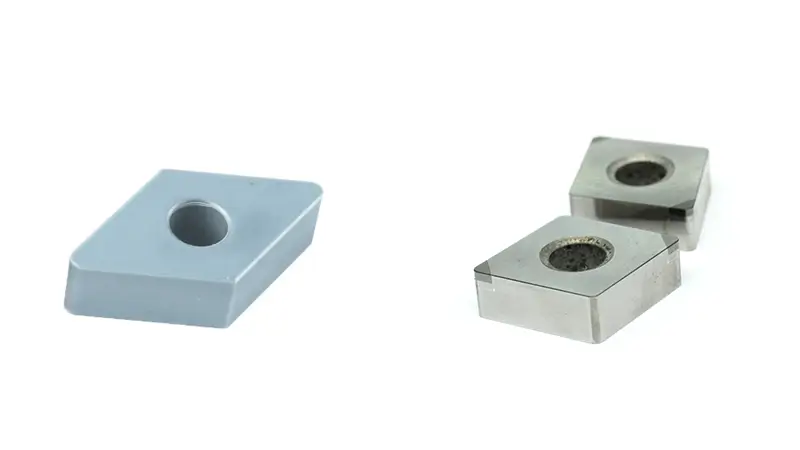
Le CBN n’est pas automatiquement limité à un seul seuil de dureté. Les retours d’atelier montrent l’utilisation du CBN vers le haut des 50 HRC, parfois plus bas, notamment pour les aciers à outils et les moules. Mais si le matériau n’est pas assez dur ou si l’économie ne justifie pas le CBN, la céramique peut être préférable.
Le temps de cycle ou la réduction des montages prime sur une circularité extrême
Le tournage dur réduit les manipulations. La pièce peut être finie sur le même type de machine que les opérations précédentes, sans transfert vers une rectifieuse. Cela peut réduire délai, changements de montage, encours et complexité de réglage.
Cet avantage compte si l’exigence finale le permet. Si l’on rectifie par habitude, le tournage dur peut remplacer l’opération. Si la rectification répond à une circularité ou un fini sans compromis, il ne faut pas la remplacer à la légère.
Quand la rectification est plus sûre
La rectification est privilégiée lorsque l’exigence finale dépasse ce que le montage de tournage maîtrise avec confiance.
Tolérances très serrées de cote, circularité ou coaxialité
Circularité et coaxialité ne se résument pas à tenir un diamètre. Un tour peut produire la bonne cote tout en peinant à garantir rondeur, concentricité et répétabilité à l’échelle micrométrique. Un mandrin hydraulique ou motorisé standard peut manquer de répétabilité.
Si le plan impose une géométrie très serrée, rectification ou honage doivent souvent définir la finition finale. Le tournage dur peut préparer la pièce, mais la rectification garantit le résultat final.
Exigences de fini fin ou d’intégrité de surface
Un fini tourné dur peut être excellent, mais sa texture diffère d’un fini rectifié ou honé. Si Ra, étanchéité, contact de palier, tribologie ou uniformité visuelle dominent, rectification ou honage peuvent être plus prévisibles.
Le tournage dur doit aussi maîtriser chaleur et état d’arête. Plaquette usée, mauvais rayon de bec, copeaux mal formés ou dérive thermique peuvent entraîner un fini variable, inacceptable en précision.
Pièces longues, minces, interrompues ou thermosensibles
Les pièces longues et minces fléchissent. Les coupes interrompues choquent la plaquette. Les pièces thermosensibles dérivent pendant coupe et mesure. Ces conditions n’excluent pas automatiquement le tournage dur, mais augmentent le risque.
Quand la céramique peut être plus économique
La céramique peut être plus économique lorsque matériau et dureté conviennent. Si elle réalise le travail fiablement, une plaquette CBN beaucoup plus chère peut être inutile. C’est notamment le cas si la dureté n’exige pas le CBN ou si la pièce ne justifie pas cet investissement.
Quand envisager des plaquettes CBN monoblocs
Les plaquettes CBN monoblocs ou les variantes entièrement en CBN se justifient lorsque durée de vie, résistance d’arête, construction ou conditions sévères compensent le coût. Elles ne sont pas la réponse par défaut. Pour beaucoup de travaux, les plaquettes à pointe CBN brasée, la céramique ou d’autres nuances de tournage dur sont plus pratiques.
Employez le terme CBN monobloc avec précision. Il relève du choix d’outil et de son adéquation à l’application, pas d’un mot-clé à imposer dans chaque décision.
Pourquoi ne pas copier aveuglément vitesses et avances
Les paramètres dépendent du matériau, de la dureté, de la nuance, de la préparation d’arête, de la profondeur, du rayon de bec, des interruptions et de la rigidité. Les exemples d’atelier aident à comprendre le procédé, sans constituer des recettes universelles.
Si le montage change, les valeurs changent. Copier avance ou vitesse sans les mêmes hypothèses de pièce, plaquette et machine peut provoquer broutement, rupture, conicité ou mauvais fini.
Tourner dur avant de rectifier : la voie hybride nécessaire à de nombreuses pièces
Tournage dur et rectification ne s’opposent pas forcément. Beaucoup de pièces nécessitent les deux.
Ébaucher avec surépaisseur avant traitement thermique
Le procédé commence souvent par l’ébauche avant traitement thermique. Il faut retirer le gros de la matière tout en gardant une réserve pour la déformation et la finition. Si le traitement déforme la pièce, assez de matière doit rester pour corriger la géométrie.
Tournage dur léger après traitement thermique
Après traitement, le tournage dur rapproche la pièce de sa cote finale. Il peut réduire le temps de rectification, améliorer la régularité avant sous-traitance ou préparer une meilleure finition. La passe doit rester légère et maîtrisée, sans chercher à enlever trop de matière sur une pièce déformée.
Laisser l’état adapté à la rectification ou au honage
Si la pièce doit être rectifiée ou honée, le tournage dur doit laisser la bonne surépaisseur et une surface stable. Trop peu risque d’empêcher une reprise complète ; trop ralentit la rectification et peut surcharger le procédé abrasif.
Faire définir la surépaisseur par le responsable de la finition finale
Si un spécialiste de rectification, honage ou rodage garantit la tolérance finale, demandez-lui la surépaisseur et l’état de surface souhaités. Cela évite une pièce techniquement « proche » mais inadaptée à la finition.
Erreurs courantes dans le choix du tournage dur ou de la rectification
Les plus grandes erreurs surviennent avant le démarrage de la machine.
Promettre une tolérance de rectification pour du tournage seul
Certains devis supposent qu’un tour tient une tolérance de rectification sans machine, mandrin, plaquette, métrologie et validation adaptés. Cela met l’opérateur sous pression et expose l’atelier aux rebuts.
Ignorer conicité et dérive thermique
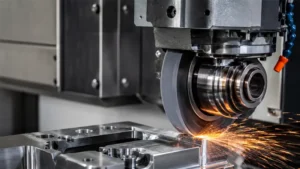
Conicité et chaleur peuvent rendre le tournage dur imprévisible. Si la cote change au refroidissement ou si l’extrémité se coupe autrement que le côté mandrin, modifier seulement les correcteurs peut ne pas suffire.
Choisir le CBN pour son image plutôt que pour le besoin réel
Le CBN est performant, mais pas automatiquement économique. Si la céramique suffit ou si la rectification reste nécessaire, acheter une plaquette plus chère ne résout pas forcément le vrai problème.
Considérer les exemples de paramètres comme universels
Les exemples d’atelier révèlent le raisonnement. Ils doivent guider les questions : dureté, plaquette, coupe sèche ou humide, interruptions, rigidité et fini visé. Il ne faut pas les copier hors contexte.
Liste pratique de choix du procédé
Utilisez cette liste avant de décider.
| Question | Si oui | Si non |
|---|---|---|
| Le tour répète-t-il la tolérance après stabilisation thermique ? | Le tournage dur peut être viable. | Envisager rectification/honage ou une gamme hybride. |
| Les exigences de circularité/coaxialité sont-elles modérées ? | Le tournage dur reste envisageable en finition finale. | La rectification est probablement plus sûre. |
| La pièce est-elle courte, rigide et bien soutenue ? | Le risque du tournage diminue. | Prévoir flexion, conicité ou dérive dimensionnelle. |
| Matériau et dureté conviennent-ils au CBN ou à la céramique ? | Tester le tournage dur avec des paramètres maîtrisés. | Revoir l’outillage ou le procédé de finition. |
| La coupe est-elle continue ou les interruptions maîtrisées ? | La durée de vie de la plaquette est plus prévisible. | Prudence : le tournage dur interrompu exige une stratégie spécifique. |
| Un procédé de rectification validé est-il disponible ? | Comparer coût total et risque du procédé. | Le tournage dur peut être nécessaire, mais doit être validé soigneusement. |
| La rectification/le honage garantit-il la tolérance finale ? | Laisser ce procédé définir la surépaisseur. | Le tournage dur peut finir directement si les exigences le permettent. |
Conclusion
Il n’y a pas de vainqueur unique entre tournage dur et rectification. Le tournage dur remplace la rectification si les exigences correspondent à la machine, la plaquette, le montage, le comportement thermique et le contrôle. La rectification reste plus sûre si circularité, coaxialité, fini fin ou répétabilité micrométrique dominent.
Une bonne gamme reconnaît ses limites : tourner dur si cela garantit l’exigence finale, rectifier si elle l’impose, et tourner dur avant rectification si la pièce bénéficie des deux.
Questions fréquentes
Le tournage dur peut-il remplacer la rectification ?
Oui, mais seulement dans une fenêtre adaptée. Tolérance, fini, rigidité de pièce, outillage et maîtrise thermique doivent être réalistes pour le tournage.
Le tournage dur coûte-t-il moins que la rectification ?
Il peut coûter moins s’il élimine un montage, raccourcit le cycle et respecte l’exigence finale. Mais plaquettes, rebuts, contrôle ou reprises peuvent annuler l’économie et le rendre plus cher.
Quelle dureté convient au tournage dur avec CBN ?
Le CBN est courant sur les aciers trempés, souvent vers le haut des 50 HRC et au-delà, sans seuil universel. Comportement matière, nuance, coût et conditions de coupe comptent.
Le tournage dur donne-t-il le même fini que la rectification ?
Il satisfait parfois le besoin fonctionnel, mais ne produit pas la même texture que rectification ou honage. Si le plan ou la fonction exige spécifiquement cette texture, la rectification peut rester nécessaire.
Quand rectifier une pièce trempée après tournage dur ?
Rectifiez après tournage dur si celui-ci ne garantit pas cote, circularité, coaxialité, fini ou intégrité de surface. Il peut néanmoins réduire la surépaisseur et préparer une passe de rectification mieux maîtrisée.