










Drill Bits for Stainless Steel
Since stainless steel is tough and tends to work-harden, drilling into it is a unique task. Picking the right drill bit isn’t just an idea; it’s necessary for speed, safety, and a clean, professional finish.
This guide will show you the best drill bits for stainless steel, what features to look for, and how to use them correctly so that every hole is drilled properly. Using the right bit will save you time, money, and stress, whether you’re working in a factory or on a small job.
Contents
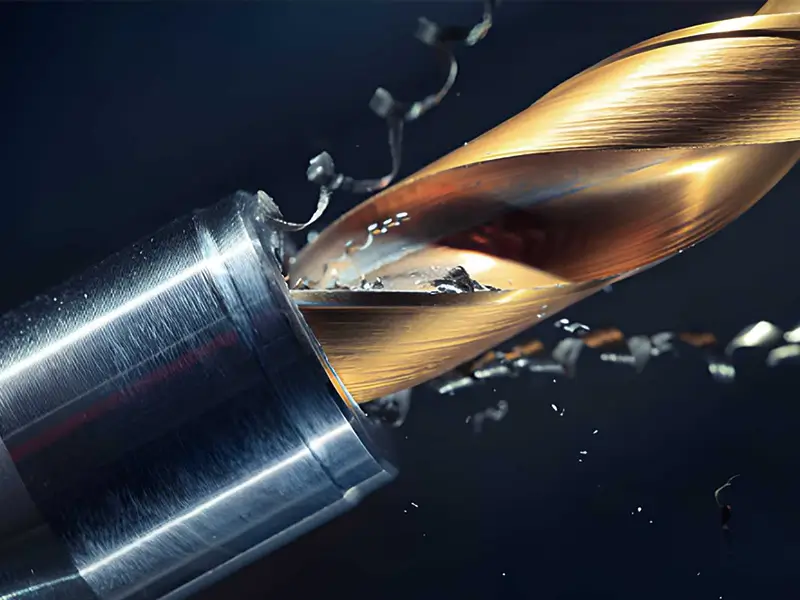
Types of Drill Bits for Stainless Steel
The most important thing for success is the material of your drill bit. For drilling in stainless steel, you need bits that are both harder than the steel and strong enough to handle the high temperatures that develop during the drilling process.
1.Cobalt (M35 & M42): An Option for Demanding Applications
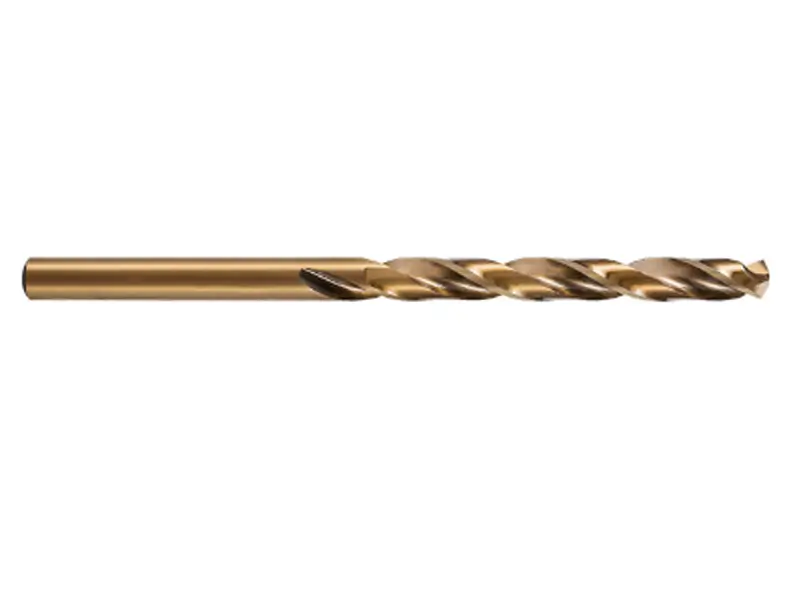
M35 and M42 are cobalt-alloyed high-speed steels, commonly containing about 5% and 8% cobalt respectively. The cobalt is part of the substrate rather than a surface coating. These drills may also have a coating or surface treatment.
Cobalt additions can improve the hot hardness of an appropriately heat-treated HSS grade. Performance still depends on geometry, cutting conditions, cooling, and the stainless steel grade; cobalt content alone does not establish suitability.
Resharpening does not remove the cobalt from the underlying alloy, but it changes the cutting geometry and may remove a surface coating locally. Follow the tool supplier’s regrinding instructions; an alloy designation does not guarantee longer life than every coated drill.
2.High-Speed Steel (HSS): The Standard
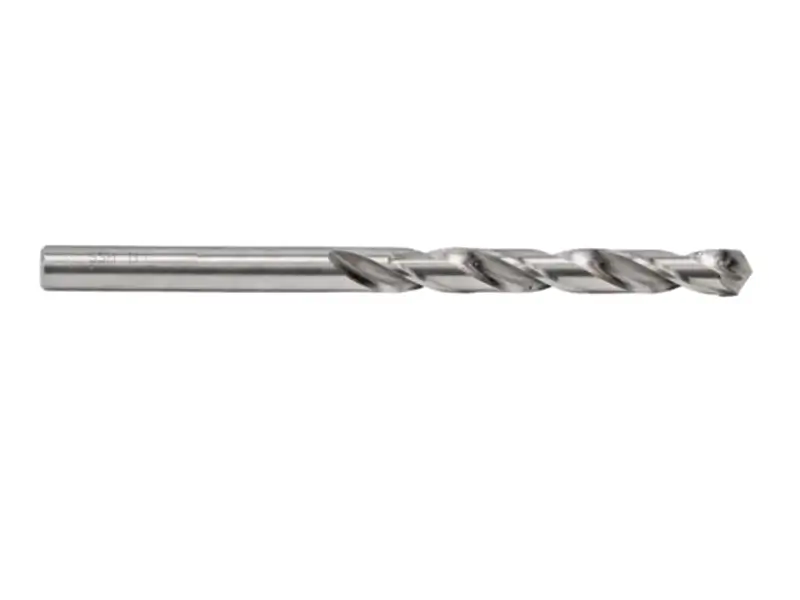
HSS is a popular and cheap material for drill bits. There are things in this kind of tool steel that make it stronger than regular carbon steel against heat and wear.
Suitable HSS bits can drill stainless steel when their geometry and cutting conditions match the grade and application. General-purpose designs may wear faster or struggle with chip control. Cobalt HSS or carbide may offer advantages, but standard HSS does not automatically become unusable.
3.Titanium-Coated HSS: An Improvement, But With Limitations
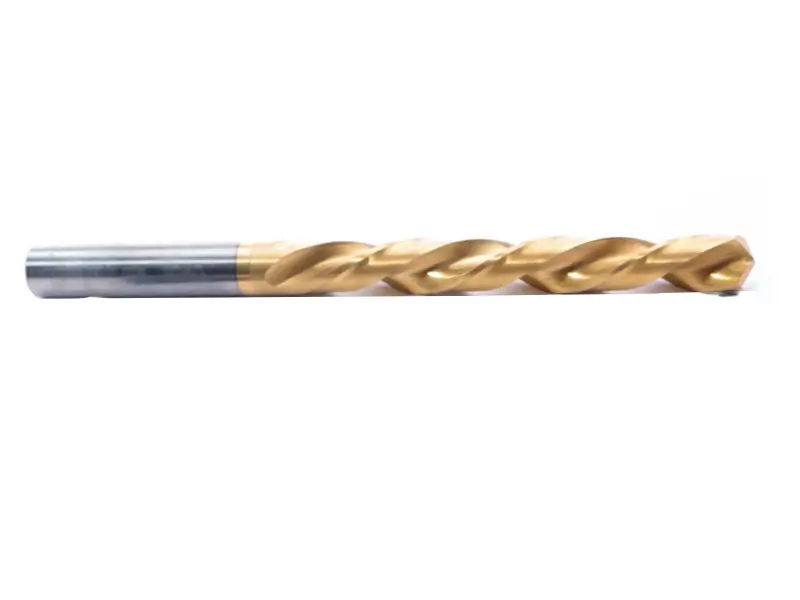
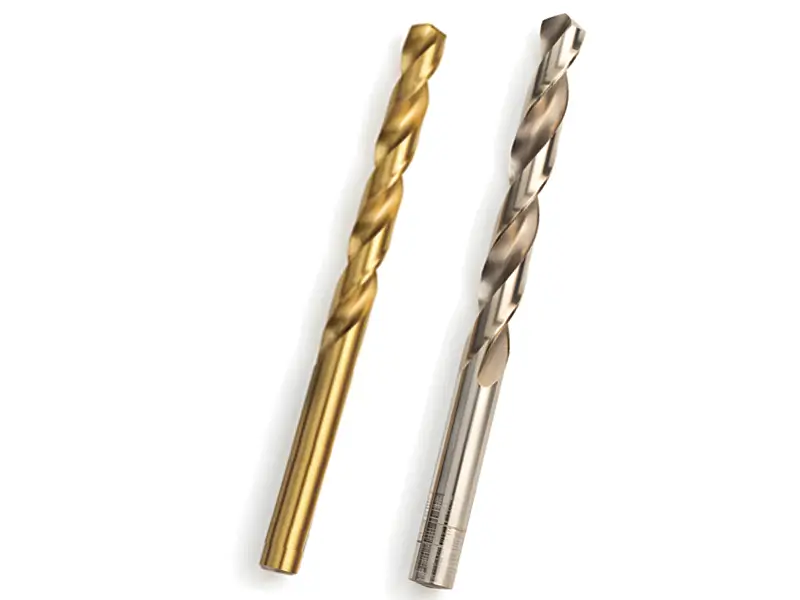
Titanium Nitride (TiN) is a hard coating that often appears gold. It can be applied to different HSS substrates, including cobalt-alloyed HSS; colour alone does not establish coating identity or quality.
A suitable TiN coating can improve wear behaviour in some applications. Its benefit depends on substrate, geometry, material, and cutting conditions; it does not prevent heat generation or universally outperform an uncoated drill.
Coating wear exposes the substrate locally. Regrinding normally removes coating from the reground surfaces, not necessarily from the entire drill. Follow supplier guidance on regrinding and recoating rather than assuming the drill immediately becomes unusable.
4.Solid Carbide: For Specialized Industrial Applications
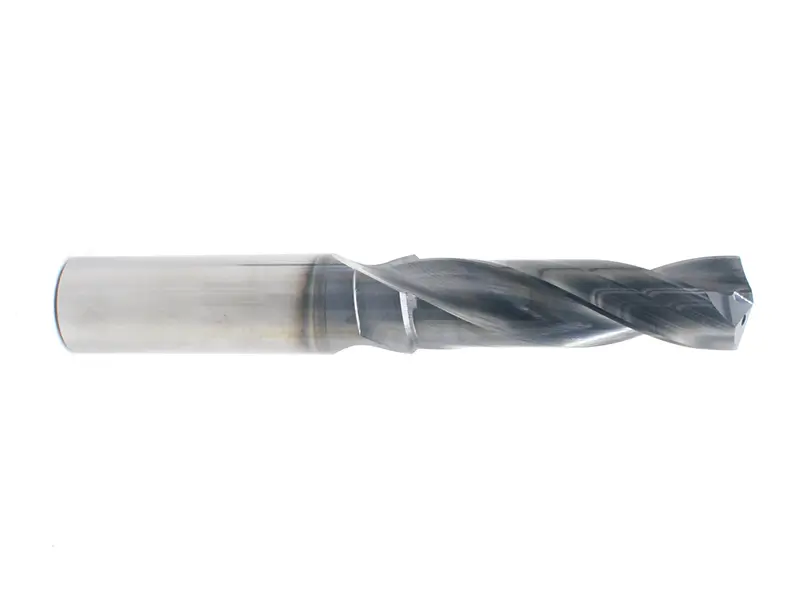
Solid carbide drills can provide high wear resistance and productivity in suitably rigid setups. Select a drill qualified for the stainless grade, hole depth, and coolant delivery. Solid carbide drill bit performance is application-specific; carbide does not guarantee the highest speed, accuracy, or finish in every material.
Choosing Between Cobalt Drill Bits and High-Speed Steel (HSS) Drill Bits for Stainless Steel
The comparison is between conventional HSS and cobalt-alloyed HSS, not between two unrelated materials. Both are high-speed steels; alloy grade, heat treatment, geometry, and surface treatment determine their properties.
For your project to go well and your tools to last, it is crucial that you make the right choice of drill bit. Compare these two things side by side to help you decide.
Strength and Heat Resistance
The biggest problem with drilling stainless steel is that it gets very hot. This is the part where the difference between HSS and Cobalt is most visible.
Cobalt-alloyed HSS can retain useful hardness under demanding cutting conditions. It is one option for stainless steel, but the correct tool depends on material grade, geometry, production needs, and the machine.
Standard High-Speed Steel can also be suitable for stainless steel. Excessive temperature can reduce tool hardness, whereas work hardening is deformation-induced hardening of the workpiece. These are different mechanisms, not a single hardening process that softens the tool.
Flexibility vs. Brittleness
Hardness and toughness depend on the particular HSS grade and heat treatment. Cobalt-alloyed drills can be less tolerant of misuse than some conventional HSS tools, but should not be deliberately bent. Use secure workholding, alignment, and a suitable machine such as an appropriate drill press.
Conventional HSS can offer useful toughness, but no drill should be selected on the assumption that bending is acceptable. Thermal and mechanical failure depend on the actual conditions; failure from heat is not inevitable when drilling stainless steel.
Cost-effectiveness
While affordability is always important, long-term value over initial cost in the long run is even more crucial. The cost of buying cobalt drill bits is higher at first. The reason for their higher price is the cost of the materials used to make them and the process of making them. Cobalt drill bits are usually used by engineers, fabricators, and other related tradespeople who need to work reliably with metals like stainless steel.
Conventional HSS is often economical for general work and can be suitable for stainless steel in an appropriate design. Compare cost per accepted hole, tool life, regrinding, and productivity rather than declaring it uneconomical for all stainless applications.
Suitability of the Material
Cobalt-alloyed HSS can suit selected stainless steels and other demanding materials. Check the specific drill’s material and hardness limits; it is not suitable for all hardened steels. It can also cut some softer materials when the geometry is appropriate, though it may not be the most economical choice.
HSS tools cover a range of metals and nonmetals when designed for the application. Stainless performance depends on grade, geometry, cutting data, and chip control; cobalt content alone does not establish the result.
Tips for Drilling Stainless Steel
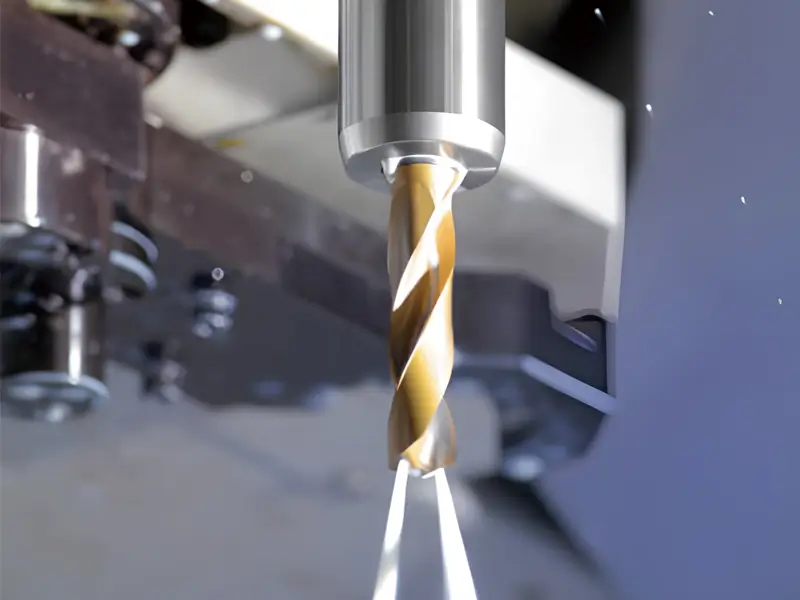
It is not enough to just have the best drill bit, you equally need to employ proper drilling technique. Below are few important tips to guide you:
- Safety first, ensure that you protect your eyes with safety goggles. Drill bits can break under pressure, sending sharp metal pieces flying.
- Preparation is key, always clamp the stainless steel firmly to the surface of your work. If the bit gets stuck as it comes out of the hole, it can spin the material very fast and cause injury.
- Use a centre punch or spotting operation only where appropriate to the drill and workpiece. Some self-centring and carbide drills require different entry preparation; follow the selected tool’s instructions.
- Pilot Hole: Use one only when recommended for the selected drill and hole. The original 1/4-inch (about 6 mm) threshold is not a universal rule; some drills work from solid, while others require a correctly sized pilot.
- Select cutting speed and feed from tool data for the stainless grade, diameter, and hole depth. Do not apply an arbitrary slow-speed rule or a fixed comparison with mild steel. Maintain suitable cutting action and avoid rubbing or dwell.
- Use the coolant or lubricant strategy recommended for the material, tool, and machine, with adequate delivery to the cutting zone. Do not reach toward rotating tooling to apply fluid; follow the machine’s safe operating procedure.
Conclusion
Reliable stainless drilling requires suitable tooling, secure workholding, chip control, and validated cutting conditions. A cobalt-HSS drill with a 135-degree split point is one possible choice, not a universal requirement. Match feed and cooling to the selected tool rather than relying on slow speed and heavy pressure.
If you are unsure which drill bit is best suited for your project, we are more than happy to help out. Send a message now, and someone from our team of experts will attend to all your concerns immediately.
Are you ready to get the best tools for the job for your workshop? Check out our extensive catalog of drill bits including Cobalt, HSS, and Solid Carbide.
FAQs
Q: Is it alright to use regular HSS drill bits to work on stainless steel?
A: Yes, a suitable conventional HSS drill can machine stainless steel within its application limits. Work hardening is influenced by material behaviour and cutting conditions such as rubbing and dwell; it is not an unavoidable result of using HSS.
Q: Is there any difference between a cobalt drill bit and a titanium-coated bit?
A: Cobalt describes an alloying addition within HSS, while a titanium-based coating is a surface layer. A cobalt-HSS drill can also be coated, so these descriptions are not mutually exclusive.
Q: Is cutting oil necessary?
A: Suitable lubrication and cooling often improve drilling performance, but the fluid type and delivery must match the tool and application. Cutting oil is not the only strategy, and no lubricant guarantees a particular increase in tool life.