



What Size Drill Bit for 5/16 Tap
For 5/16 cutting taps, first check the pitch. Common drill-chart values are F for 5/16-18 UNC and I for 5/16-24 UNF, at approximately 75% theoretical thread height. These are starting references, not universal specifications; forming taps require different holes. Confirm the tap maker’s recommendation and drawing tolerances.
In this article, you will read the basics of drilling Taps and drill bits and how you can select the correct drill bit for a 5/16 tap.
If the tapped feature is a closed-bottom hole, leave extra clearance and check our notes on blind hole tap drill size.
Contents
Understanding Tap and Drill Basics
What Is a Tap?
A cutting tap produces internal threads by removing material from a pre-drilled hole. A forming tap displaces material instead and needs a different pre-hole size. Select the tap type for the work material and thread specification.
What Is a Tap Drill Size?
The tap drill size is the pre-hole diameter specified for the tapping operation. It balances the required thread geometry against cutting load or forming requirements; it is not selected simply to produce the deepest possible thread.
For a cutting tap, the pre-hole is smaller than the thread major diameter so that material remains for the thread profile. The permitted size depends on the pitch, tolerances, material, and tap design.
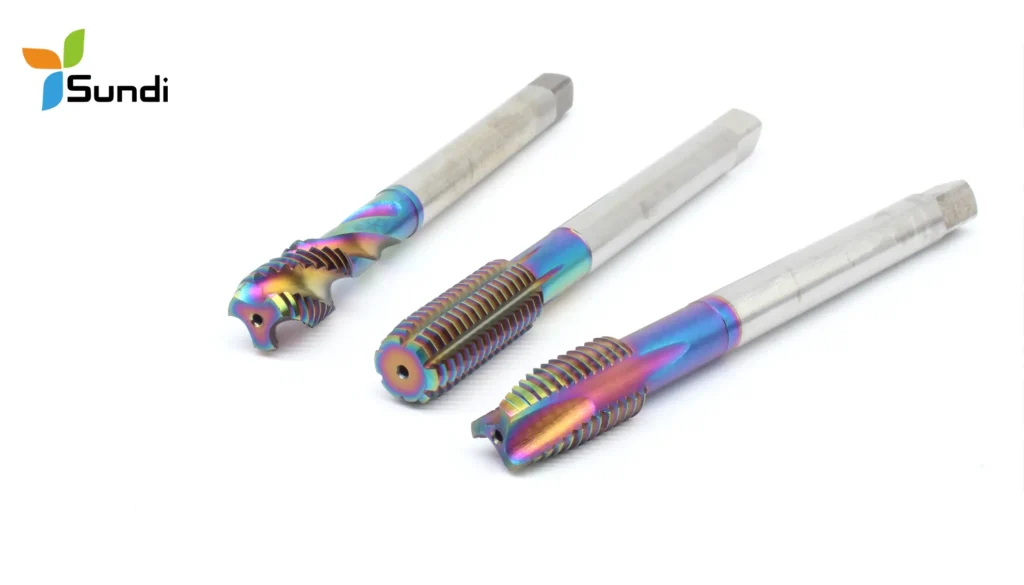
5/16 Tap Thread Types and Drill Bit Sizes
Overview of Common 5/16 Tap Variants
Common 5/16-inch threads include 5/16-18 UNC with 18 threads per inch and 5/16-24 UNF with 24 threads per inch. They share a nominal major diameter but have different pitches and are not interchangeable.
Recommended Drill Bit Sizes
For a 5/16-18 UNC cutting tap, a common chart reference is a Letter F drill at 0.2570 inches. For a 5/16-24 UNF thread tap used for cutting, the corresponding reference is a Letter I drill at 0.2720 inches. These entries target approximately 75% theoretical thread height; confirm the actual tap specification.
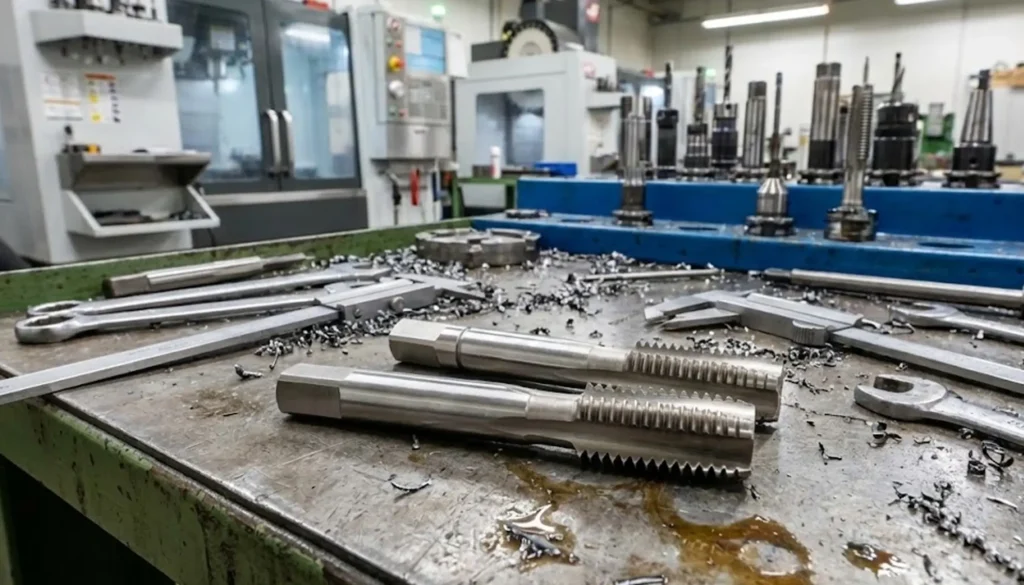
Drill Bit Size Chart for 5/16 Tap
Tap Designation | Thread Type | Letter Drill Bit | Decimal Inch Equivalent |
5/16 – 18 | Coarse | F | 0.2570″ |
5/16 – 24 | Fine | I | 0.2720″ |
How to Choose the Proper Drill Bit for Your Project
Why Thread Pitch Matters
At the same nominal diameter, a finer pitch generally uses a larger cutting-tap pre-hole for a comparable percentage of thread height. An undersized hole can increase torque and the risk of tap failure.
Material Considerations
Select the pre-hole from the thread specification and the tap maker’s material-specific data. A larger hole reduces the thread height and may reduce cutting torque, but it must remain within the required thread limits. Material hardness alone does not authorize changing the diameter.
Using Metric vs Letter/Number Bits
Metric drills are not exact replacements for letter drills. A 6.5mm drill is smaller than F, while a 6.9mm drill is slightly smaller than I. Check the actual metric diameter against the tap maker’s recommended range and the finished-thread requirements before substitution.
Step-by-Step Drilling and Tapping Procedure
Preparing the Workpiece
Mark and secure the workpiece. For suitable manual work, a center punch can help locate the drill bit. For machine drilling, use the spotting or entry method specified for the drill; a deep punch mark or pilot hole is not required for every tool.
Drilling the Correct Hole
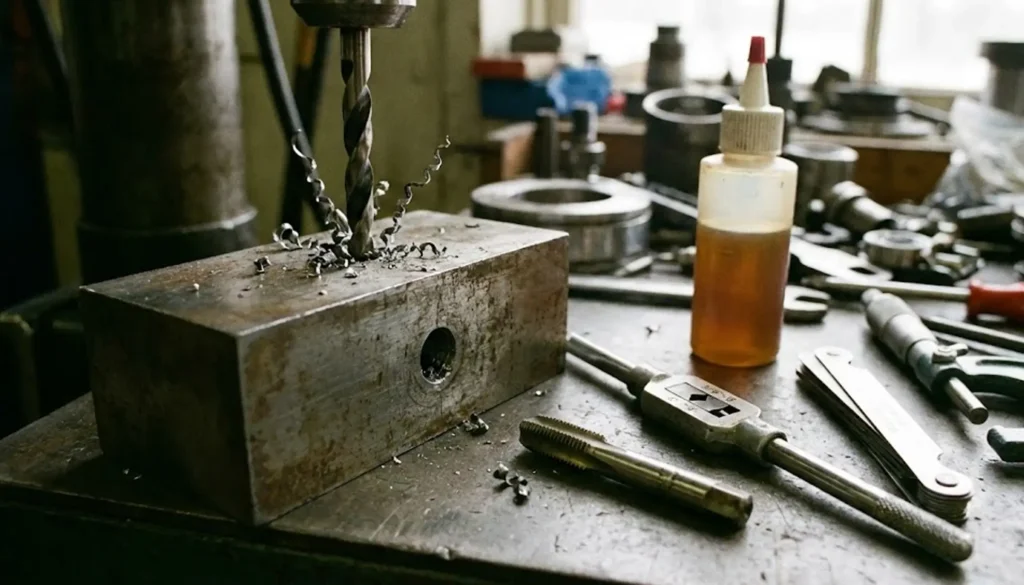
Mount the specified drill securely and select speed, feed, and cutting fluid for its diameter, geometry, and work material. Use the tool supplier’s cutting data rather than a generic medium or high speed.
Keep the drill aligned with the specified hole axis. Use a feed and chip-evacuation strategy appropriate to the drill and hole depth; pecking is not suitable or necessary for every drill design.
Tapping the Hole
For manual cutting with a right-hand 5/16 tap, use a suitable tap wrench, align the tool with the hole, and apply the recommended lubricant. Begin carefully in the cutting direction without forcing the tool.
Follow the tap maker’s operating method. Periodic reversal may be appropriate for some manual cutting taps, but a fixed forward-and-back pattern must not be applied to all machine, spiral-flute, or forming taps.
Deburring and Finishing
Remove entry burrs with a controlled deburring operation without damaging the thread or enlarging its mouth beyond the drawing. Clean chips using the shop’s approved method, then inspect the thread and hole depth.
Common Mistakes and How to Avoid Them
Wrong Drill Size
A 1/4-inch drill measures 0.250 inches, whereas a Letter F bit measures 0.257 inches. The smaller hole leaves more material to cut and can raise torque. Do not substitute it for the specified tap drill without an approved process.
Misidentifying Thread Pitch
Check whether the thread has 18 or 24 threads per inch using the drawing and an appropriate pitch gauge. A matching major diameter does not make different pitches compatible; forcing a mismatched fastener can damage the threads.
Improper Drilling/Tapping Technique
Align the drill and tap with the axis specified on the drawing and maintain stable workholding. Select lubrication and operating conditions for the tool and material. Misalignment, poor chip control, or unsuitable lubrication can cause damage.
Practical Tips and Pro Tools
Keep a Tap & Drill Chart Handy
Use a current manufacturer’s tap-drill chart and distinguish cutting taps from forming taps. A value such as 75% refers to theoretical thread height, not axial engagement length or a guarantee of maximum joint strength.
Keep the relevant manufacturer’s chart near the machine or use its current digital version. Confirm the thread standard, tap type, and chart assumptions before selecting a drill.
Using Drill Bit Gauges
A drill-size gauge can help identify a drill when its shank marking is unreadable. It is an identification aid, not a complete measurement of drill condition or the hole it produces.
A fit in the gauge hole marked F does not verify the finished pre-hole diameter. Check tool wear and runout, measure the actual hole as required, and verify the finished thread with suitable gauges.
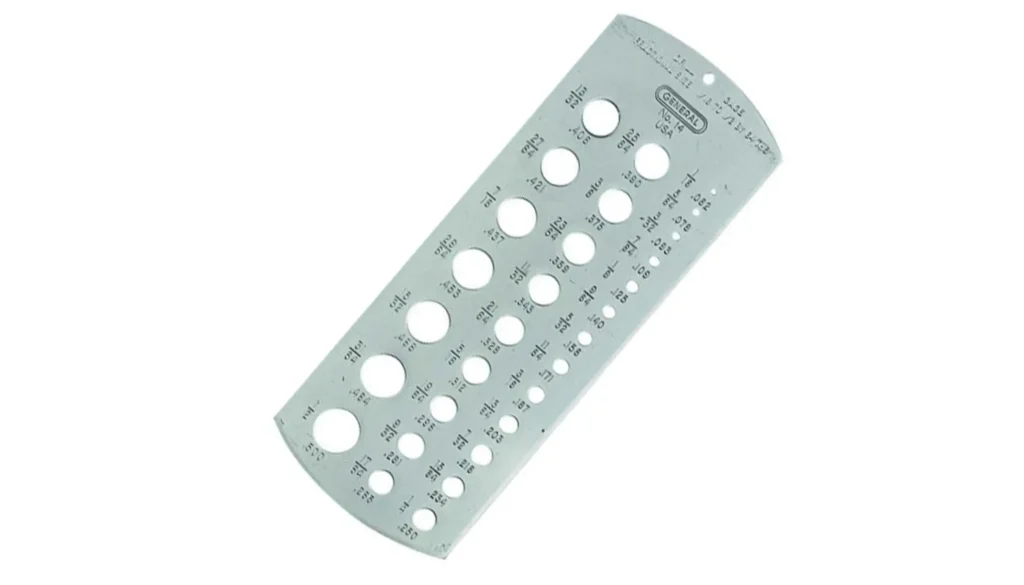
Tap and Drill Sets
Fractional sets commonly use 1/64-inch increments, which may be too coarse for a specified tap-drill range. Letter, number, and metric drills provide additional choices; select the actual diameter required by the process.
Having the specified F or I drill available avoids an unverified substitution. These letter sizes remain references for the stated cutting-tap conditions, not defaults for every tap design.
Conclusion
For common cutting-tap chart conditions, F is a reference for 5/16-18 UNC and I for 5/16-24 UNF. Confirm the tap type, actual hole size, thread tolerance, and depth, then validate the finished thread.
FAQs
Can I use a 1/4" drill bit for a 5/16 tap?
A 1/4-inch drill is smaller than the common F reference for a 5/16-18 cutting tap. It leaves more material and can increase torque; follow the specified tap-drill size instead.
What if I don’t have F or I drill bits?
Do not treat 17/64 inch as an automatic substitute for both threads. Some cutting-tap charts list it for 5/16-18 at approximately 65% theoretical thread height, rather than the approximately 75% associated with F. It is not equivalent to I for 5/16-24. Check the required limits and tap data.
Why is my tap not cutting threads smoothly?
Check the pre-hole diameter, tap condition, alignment, material, lubrication, and chip evacuation. Stop if torque rises unexpectedly and investigate before continuing; do not force the tap.
How deep should I drill before tapping?
For a blind hole, allow for the required full-thread length, tap chamfer, chip clearance, and drill-point geometry. Set the drilling and tapping depths from the drawing and tool dimensions; there is no universal extra-depth allowance.