


Reaming vs Boring: Why a Reamer Follows the Hole
Choose reaming when the existing hole is correctly located and needs controlled diameter and surface finish. Consider boring when the hole's position or axis must be established or corrected, provided sufficient material remains and the machine and setup can hold the required geometry. A smoother hole is not necessarily a better-located hole.
This distinction also explains a less obvious tool-design choice: a reamer may have a reduced neck to provide limited compliance. That flexibility can help it accommodate the existing hole. It is not a mechanism for pulling a misplaced hole back onto the drawing's axis.
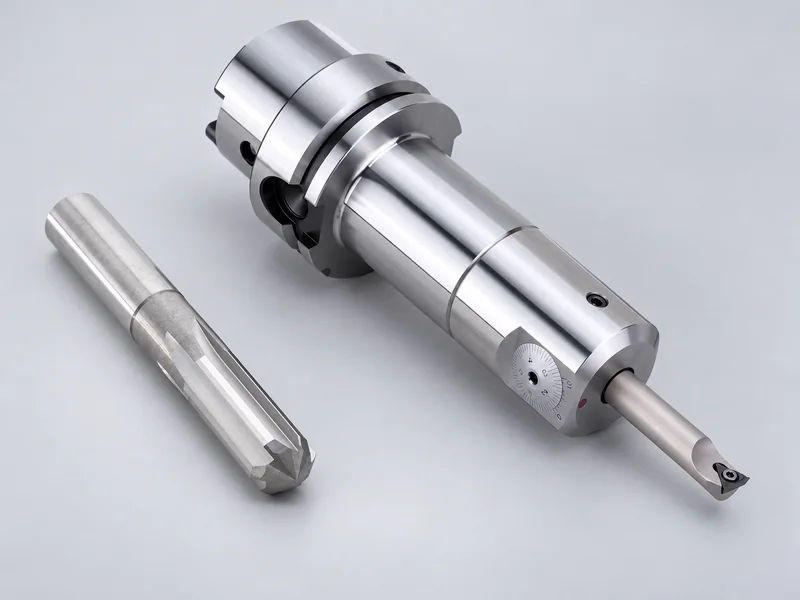
Choose the sequence from the feature that needs control
| Starting condition | Process direction | What to verify |
|---|---|---|
| Location is acceptable; diameter and finish need improvement | Evaluate reaming with a suitable finishing allowance. | Pre-hole consistency, tool alignment, diameter and finish after machining. |
| Location or axis is wrong, with sufficient stock remaining | Evaluate boring to establish the feature. | Full-depth cleanup, datums, stiffness and final geometric requirements. |
| Position must be established before a productive finishing pass | Boring followed by reaming may divide the tasks. | That boring leaves the intended axis and allowance for the reamer. |
| The existing hole exceeds the permitted finished envelope | Assess an approved repair or reject the part. | Whether a repair is permitted; neither ordinary reaming nor boring adds material. |
The combined route is useful only when each operation has a purpose. Adding a reaming pass after a bore already meets every requirement may add cost without improving the result. Conversely, removing the positioning operation to save cycle time can leave a fast process that repeatedly makes an unacceptable hole.
First identify what has failed: size, surface or position
Before changing a finishing tool, separate the measurements. Diameter, surface roughness, roundness, straightness and position describe different characteristics. A hole can pass a diameter gauge while failing its location relative to a datum.
If diameter and finish are the problem, examine the reaming allowance, cutting condition, tool condition and assembled alignment. If position is already wrong before finishing, the process needs a way to establish the required axis. Asking a conventional reamer to do both jobs hides the real defect.
For related finish defects, see the separate guide to reaming surface-finish problems. Here the focus is the decision between following the existing hole and recutting it around a controlled axis.
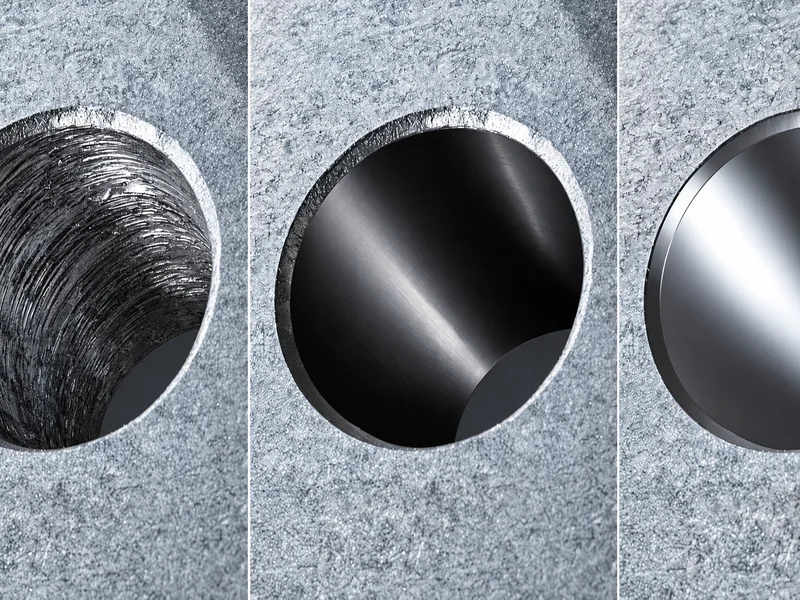
Following a hole can be the intended behaviour
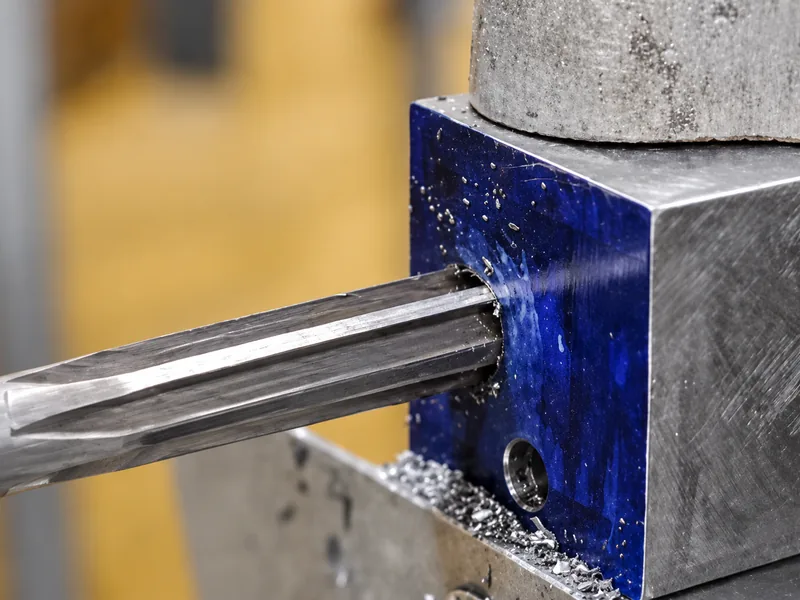
A conventional reamer removes a controlled allowance from a previously made hole. Its cutting lead and guiding surfaces interact with that hole as it advances. That makes the quality and alignment of the previous operation part of the reaming process, rather than something the finishing tool can simply erase.
Suppose a drilled hole is slightly displaced from its specified position. Reaming may bring its diameter and finish into tolerance while leaving the positional error. The finished surface looks better, but a locating pin may still be in the wrong place relative to the rest of the component.
This is a process-planning rule for conventional reaming, not a claim that every specialised reaming system behaves identically. Some dedicated tools and guiding arrangements have different capabilities. Their demonstrated function must be established separately.
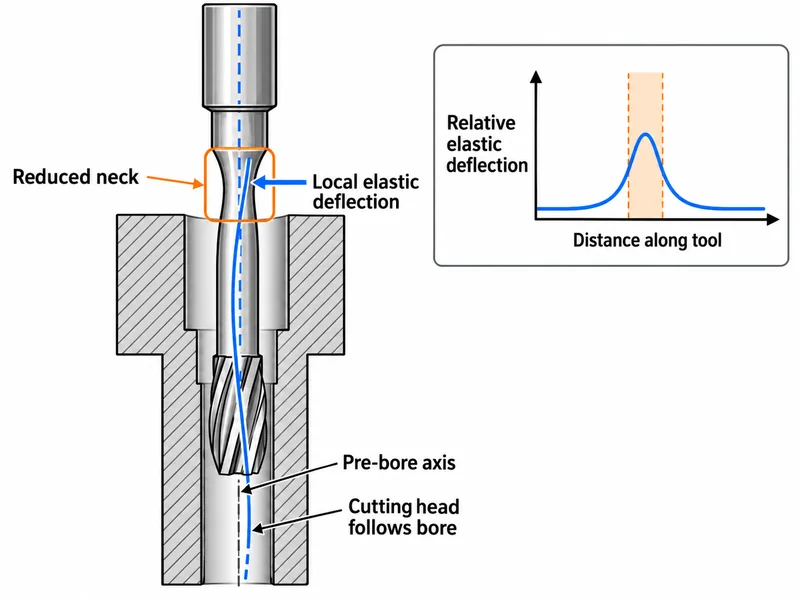
How a reduced reamer neck helps the head follow the hole
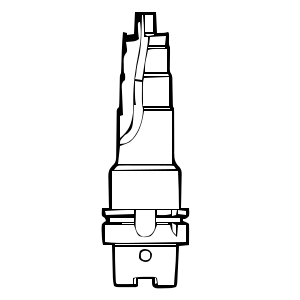
The neck connects the cutting head to the shank. Reducing its section can allow limited elastic movement of the head. In a design intended for this purpose, that compliance helps the cutting head accommodate small alignment differences while it follows the prepared hole.
Three design ideas should remain distinct:
Clearance: a reduced section avoids unwanted contact with a wall, shoulder or other feature.
Compliance: the section and length allow a controlled amount of elastic movement under load.
Guidance: the tool and hole contact determine how the cutting head is supported during machining.
These functions can interact, but the presence of a narrow neck does not prove which one the designer intended. Reduced-neck end mills also exist for reach and clearance; neck relief is not exclusive to reamers.
Do not make the neck thinner simply because the reamer is struggling to enter. Additional flexibility also reduces resistance to deflection and can worsen chatter or breakage. First identify whether the mismatch comes from the pre-hole, spindle alignment, holder or tool. A neck design is part of a controlled solution, not a substitute for that diagnosis.
Boring establishes a cutting path, but needs stock to do it
In a suitable boring setup, the cutting edge follows a path referenced to the machine's controlled axis or programmed location. The tool can remove more material on one side of an existing hole than the other, bringing the finished surface toward the intended geometry.
That is why the remaining material matters. Imagine the desired finished circle superimposed on the existing hole at each depth. If the old hole already extends outside that circle, material removal alone cannot restore the missing wall. Checking only the entry diameter is insufficient when the original hole is angled.
Stock remains around the target
Evaluate boring and full-depth cleanup.
The old hole crosses the target
Cutting cannot replace the missing wall.
Dashed green: target hole. Solid brown: existing hole.
Boring also does not eliminate the mechanics of cutting. A single cutting edge still experiences forces, and a long or poorly supported boring bar can deflect or vibrate. Available stock, tool reach, machine geometry, workholding and the specified tolerance all limit the correction that can be achieved.
If the hole is already oversized, boring cannot restore its diameter. Assess an approved repair or reject the part before spending time on another finishing pass.
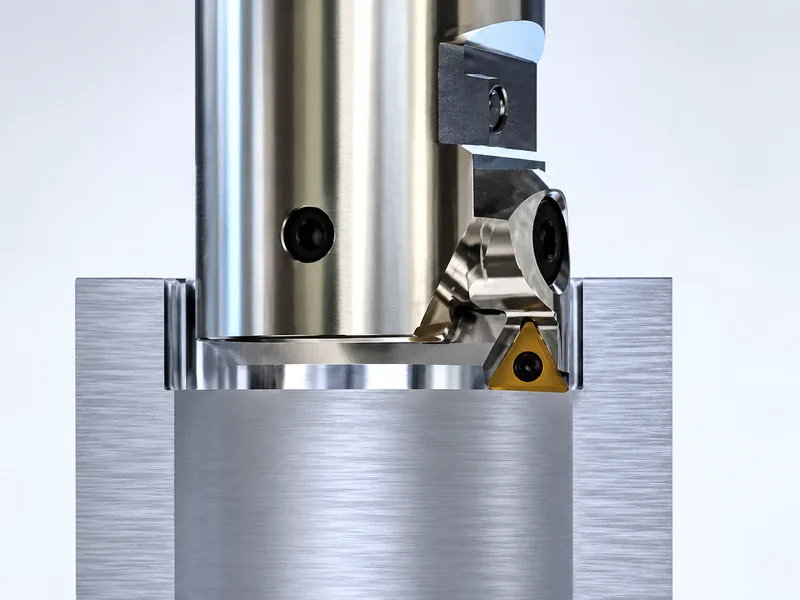
Boring demonstration supplied with this article. Confirm the actual tool, stock allowance and setup for your own process.
Use reaming for repeatable finishing and boring for control of the axis
In a production run with consistent, correctly located pre-holes, a multi-edge reamer can provide an efficient finishing pass. Its several cutting edges share the finishing work, and the process can be organised around a repeatable allowance, diameter and surface requirement. This is a practical reason to choose reaming when the previous operation has already done the positioning job.
If pre-hole position varies beyond what the drawing permits, fast reaming will not recover those parts. Establish the hole with a suitable boring operation where stock and setup allow, then decide whether a reaming pass adds useful productivity or finish. For a small batch, boring may already meet the complete requirement without a dedicated finishing reamer.
Compare actual accepted cycle time, including setup, adjustment and inspection. More cutting edges can support productive reaming, but permitted feed and the rest of the cycle determine the advantage; flute count alone is not a cycle-time multiplier.
A reduced-neck reamer can help finish along an existing hole through limited compliance. A suitable boring setup can establish the required cutting path. Choosing between them starts with which of those tasks the part needs.
For a finishing-tool discussion, see our solid carbide reamers and PCD reamers. Send the tool or workpiece drawing, material and current machining sequence so our team can review the hole requirements.